

PROTECT YOURSELF with Orgo-Life® QUANTUM TECHNOLOGY
Orgo-Life the new way to the future Advertising by Adpathway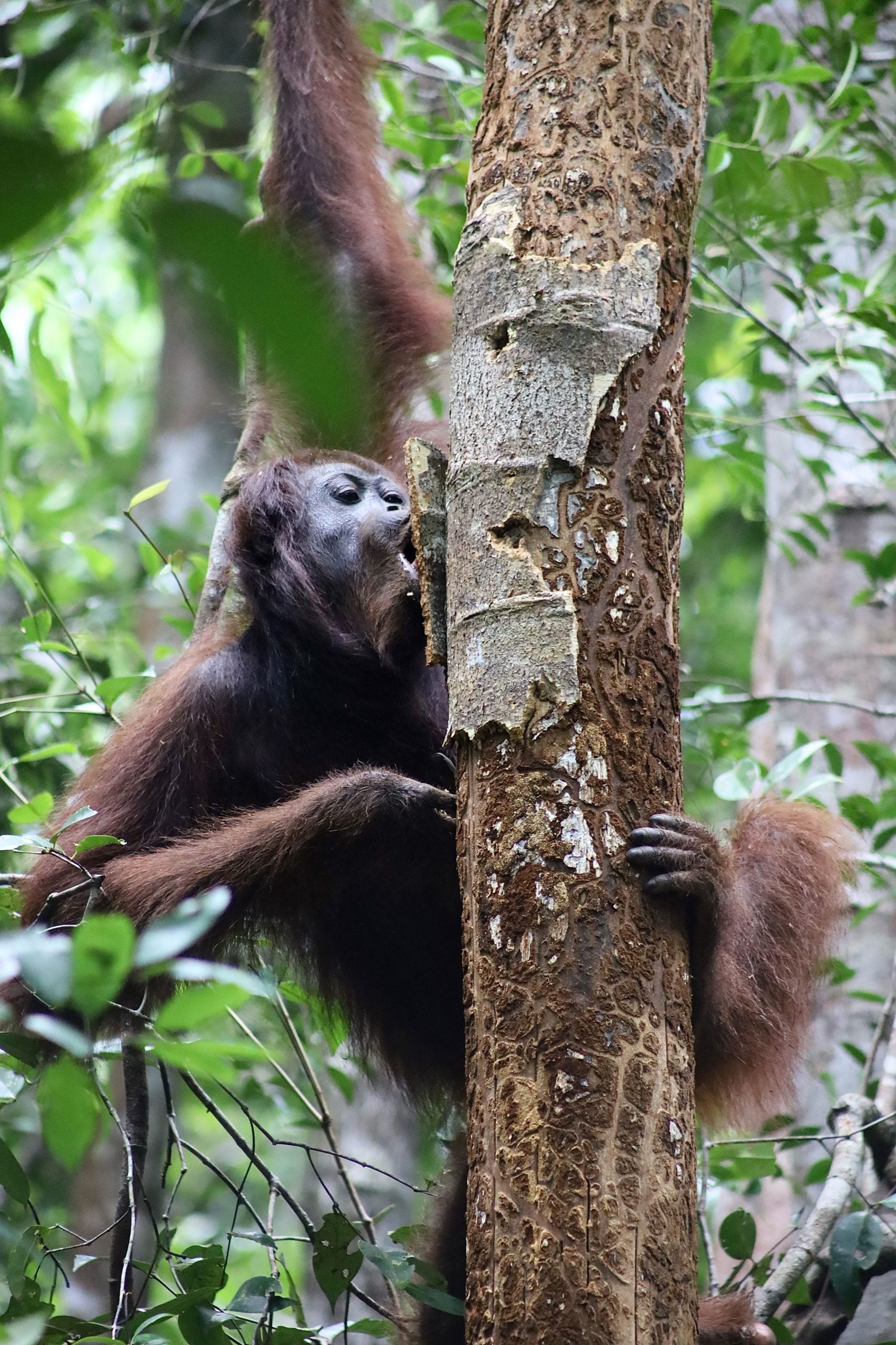 Bornean orangutans feeding in tree. Credit: Georgia Allen
Orangutans may use specific plants for benefits beyond ordinary nutrition.
For centuries, humans have relied on the medicinal properties of plants. Now, growing evidence suggests we may not be the only species that knows how to use nature’s pharmacy.
A 20-year study of wild orangutans in Indonesian Borneo found that the great apes selectively consumed plants with antimicrobial, anti-inflammatory, and wound-healing properties. Rather than eating these species as regular food, the researchers found patterns suggesting the animals may deliberately seek out specific medicinal plants.
Diet hints at self-medication
The study found that orangutans appear to eat certain plant combinations in particular sequences, a pattern that resembles “self-medication” documented in other animals.
How orangutans acquire this behavior remains uncertain. Georgia Allen and her colleagues think it may come from instinct, behavior passed down across generations, or both.
Bornean orangutan feeding in tree. Credit: Georgia Allen
“At this stage, we cannot say that orangutans are consciously ‘diagnosing’ themselves in the same way humans would,” said Georgia Allen, who led the study as part of her Masters in Conservation and Biodiversity at the University of Exeter.
“However, our findings suggest they selectively consume certain plants with medicinal properties in ways that go beyond simple nutrition. What makes the findings interesting is that some plant species appeared together in the orangutan diet far more often than we would expect by chance. Several of these plants are known to contain compounds linked to antimicrobial, anti-inflammatory, or wound-healing effects.”
She continues, “Importantly, many of these plants are not major parts of the orangutan diet overall, suggesting they may be eaten for specific benefits rather than as everyday food sources.”
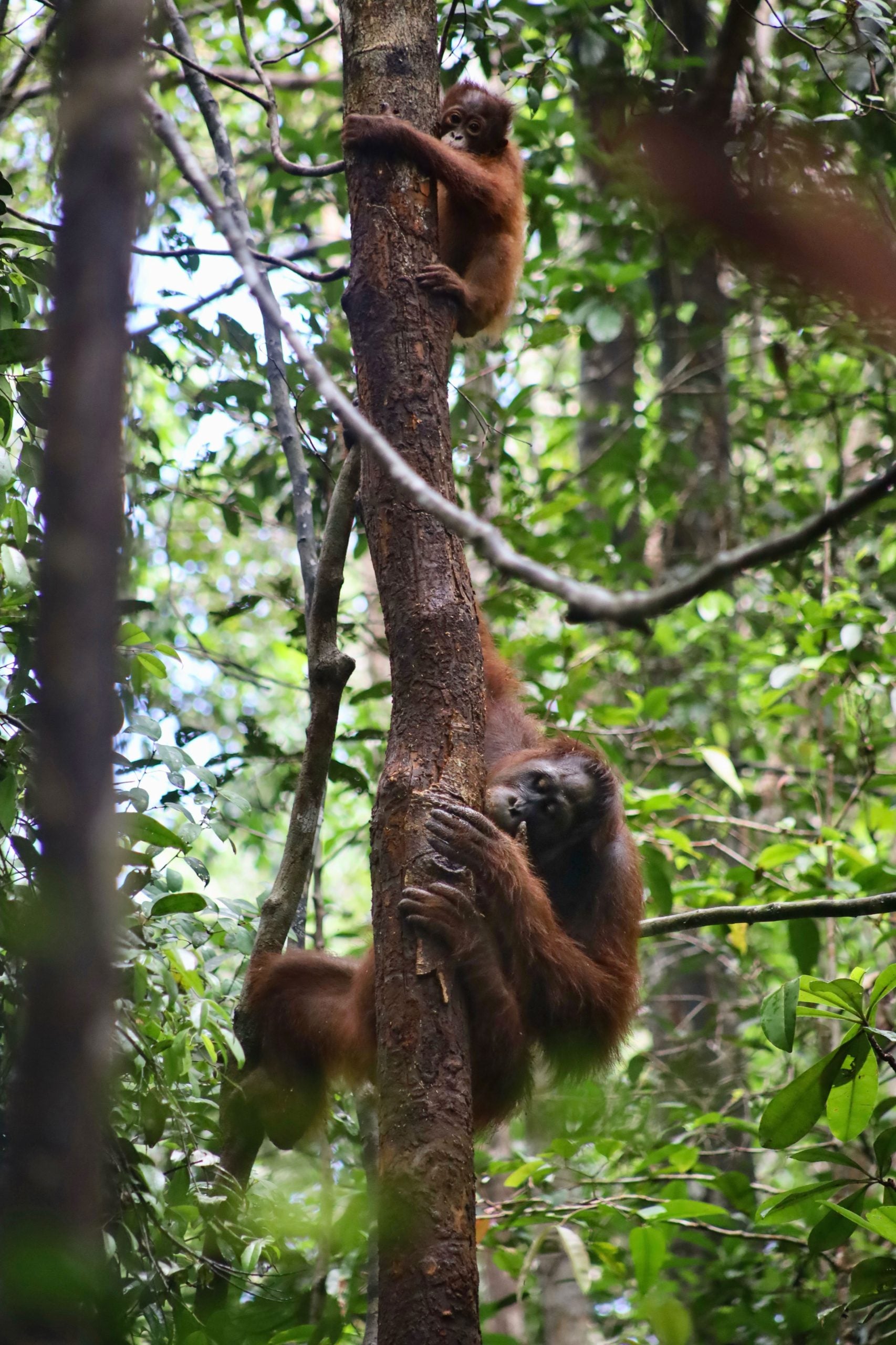 Bornean orangutans feeding in tree. Credit: Georgia Allen
Other apes show similar patterns
Chimpanzees are already known to use plants in ways consistent with “self-medication”, including eating species that can reduce internal parasite infections. Similar behaviors have also been reported in bonobos, gibbons and gorillas.
The new work draws on long-term observations of orangutans living in a peat swamp forest in Central Kalimantan.
Some of the plants eaten by the orangutans are also used medicinally by local Indigenous communities. The findings point to the value of preserving Indigenous knowledge for biodiversity conservation and global health research.
Reference: “Investigating medicinal resource combinations in the Bornean orangutan diet” by G. Allen, E. Freymann, J. d’Oliveira Coelho, H. Shagara, I. Shinyo, A. Panda, A. Jaya, K. J. Hockings and H. C. Morrogh-Bernard, 13 May 2026, Scientific Reports.
DOI: 10.1038/s41598-026-52614-4
The research was made possible with the generous support of the US Fish and Wildlife Service, Great Ape Conservation Fund, the L.S.B. Leakey Foundation, ARCUS, The Orangutan Project (TOP) and Re:Wild.
The research used long-term orangutan behavioural data collected through the Orangutan Behaviour Project in collaboration with the University of Palangka Raya – CIMTROP.
Never miss a breakthrough: Join the SciTechDaily newsletter.
Follow us on Google and Google News.




















 English (US) ·
  French (CA) ·
  French (FR) ·