

PROTECT YOURSELF with Orgo-Life® QUANTUM TECHNOLOGY
Orgo-Life the new way to the future Advertising by Adpathway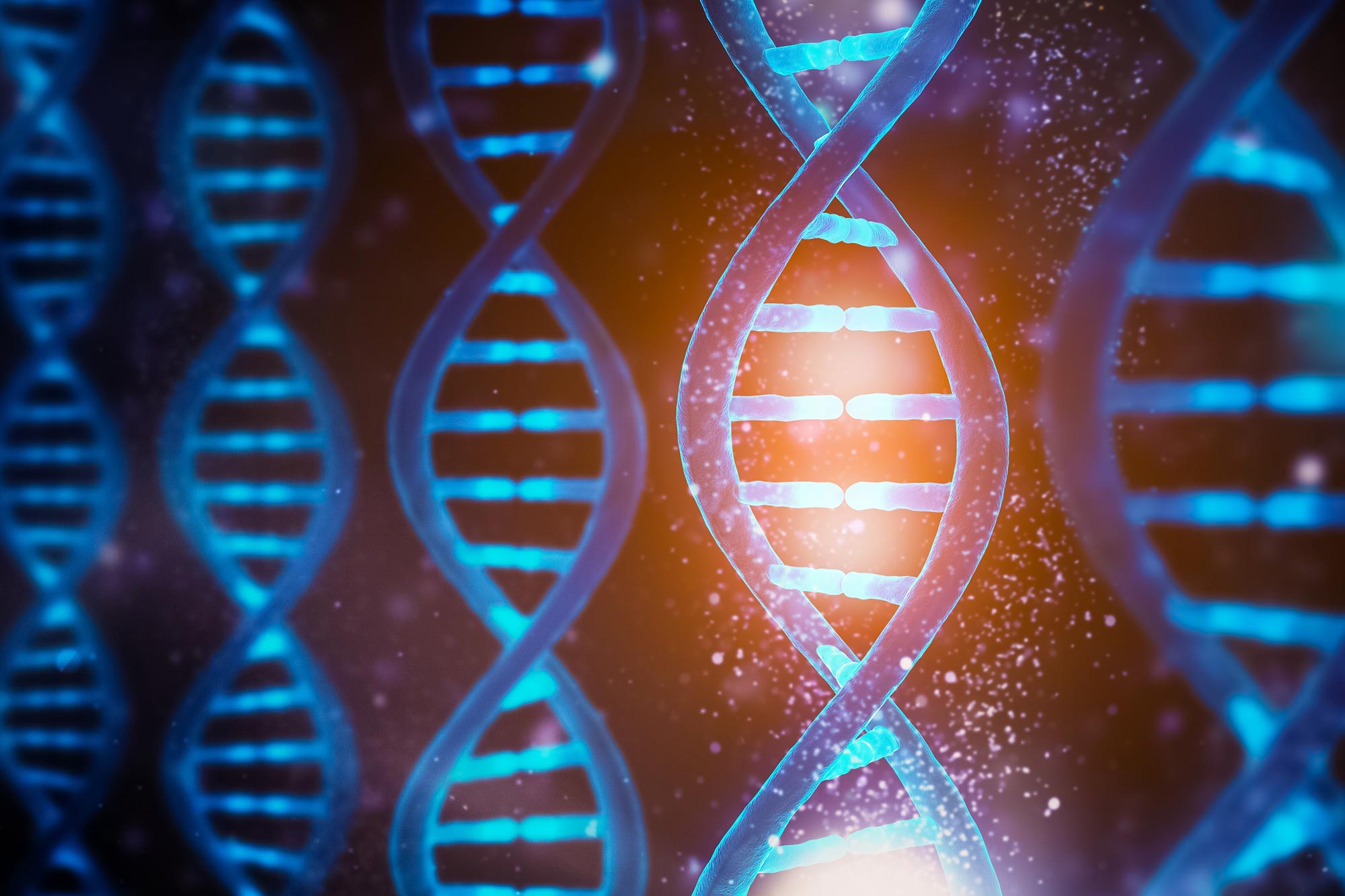 A building block of DNA may have served as a molecular sunscreen, with laboratory tests suggesting thymine could have helped early genetic molecules survive by making UV damage easier to reverse. Credit: Stock
On an early Earth exposed to intense ultraviolet radiation, the evolution of DNA may have depended on an unexpected molecular advantage.
Early life on Earth faced intense ultraviolet (UV) radiation from the sun without the protection of an ozone layer. Yet DNA came to rely on thymine, a chemical building block that is more prone to UV damage than uracil, its counterpart in single-stranded RNA.
A study at Texas A&M University suggests that thymine may have helped early genetic molecules survive by directing that damage into a form that was easier to reverse. The findings, published in Proceedings of the National Academy of Sciences (PNAS), offer a possible explanation for why thymine replaced uracil as genetic systems evolved toward DNA.
Thymine favors more reversible UV damage
Dr. Peter Rentzepis, a professor in the university’s Department of Electrical and Computer Engineering, and his research assistants, Keyvan Khosh Abady and Negar Karpourazar, compared thymine and uracil under controlled UV conditions designed to mimic the intense radiation environment of primordial Earth. They used biophotonics, a field that applies light-based methods to biological questions. Their tools included absorption, fluorescence, and Raman spectroscopy, which examine how molecules absorb, emit, or scatter light.
“We found that thymine tends to direct UV damage into a more reversible form, suggesting that early genetic molecules may have survived intense sunlight not by avoiding damage, but by controlling it and making it easier to self-repair,” said Khosh Abady. “In that sense, thymine may have acted as a molecular sunscreen, absorbing harmful UV energy and keeping the damage confined to the genetic bases rather than allowing it to harm more vulnerable parts of the molecule.”
Genetic ingredients from Earth or space
Rentzepis and his team plan to extend their investigation to an earlier stage in the origin-of-life process by examining the forces that brought thymine, uracil, and other components of early genetic systems together.
“We hope to explore whether life’s chemical building blocks formed and assembled entirely on Earth or whether some were delivered to our planet from elsewhere by meteorites and later incorporated into early genetic systems,” said Khosh Abady. “We are grateful to Texas A&M University and our research sponsors for supporting this work and enabling us to explore fundamental questions about life’s origins.”
Light signatures could help detect pathogens
The measurements also establish a new reference framework that could support research beyond molecular evolution. The team identified distinct spectral signatures, recognizable patterns in how the molecules interact with light, that may eventually have practical uses.
“The distinct spectral signatures we measured could support applications in faster, more sensitive pathogen detection and in monitoring whether UV disinfection has effectively inactivated microorganisms, particularly in water-treatment systems,” said Khosh Abady.
Reference: “UV photodamage pathways and the evolutionary selection of thymine over uracil in early genetic systems” by Keyvan Khosh Abady, Negar Karpourazar and Peter M. Rentzepis, 3 August 2026, Proceedings of the National Academy of Sciences.
DOI: 10.1073/pnas.2615278123
This study was supported by Air Force Office of Scientific Research Grant number FA9550-20-1-0139 and Texas A&M Engineering Experiment Station funds.
Never miss a breakthrough: Join the SciTechDaily newsletter.
Follow us on Google and Google News.



















 English (US) ·
 French (CA) ·
 French (FR) ·