

The U.S. Air Force is opening up about the SpaceX Starfall cargo capsule it flew on a recent rideshare mission to orbit — and showing off what the capsule carried.
The Air Force Research Laboratory (AFRL) completed a point-to-point rocket cargo delivery test using the secretive uncrewed reentry vehicle, confirming on social media its recovery of the package in the Pacific Ocean. "With support from SpaceX, the AFRL agile cargo pods were recovered after splashdown," the AFRL wrote in an X post on Oct. 26.
The Starfall capsule launched on a Falcon 9 rocket as a part of SpaceX's Bandwagon-5 mission, which lifted off from Cape Canaveral Space Force Station on Oct. 20. Starfall carried a number of AFRL-developed cargo pods designed to transport military equipment through space and back to Earth. The successful recovery of the pods marks a big step forward in the Air Force's effort to examine the viability of point-to-point (P2D) rocket cargo missions.
"This was a critical achievement to demonstrate the potential of Rocket Cargo delivery for point-to-point rapid global mobility for the Future Force," said AFRL Technology Transition Office director Adam Remaly in a press release on Oct. 20.
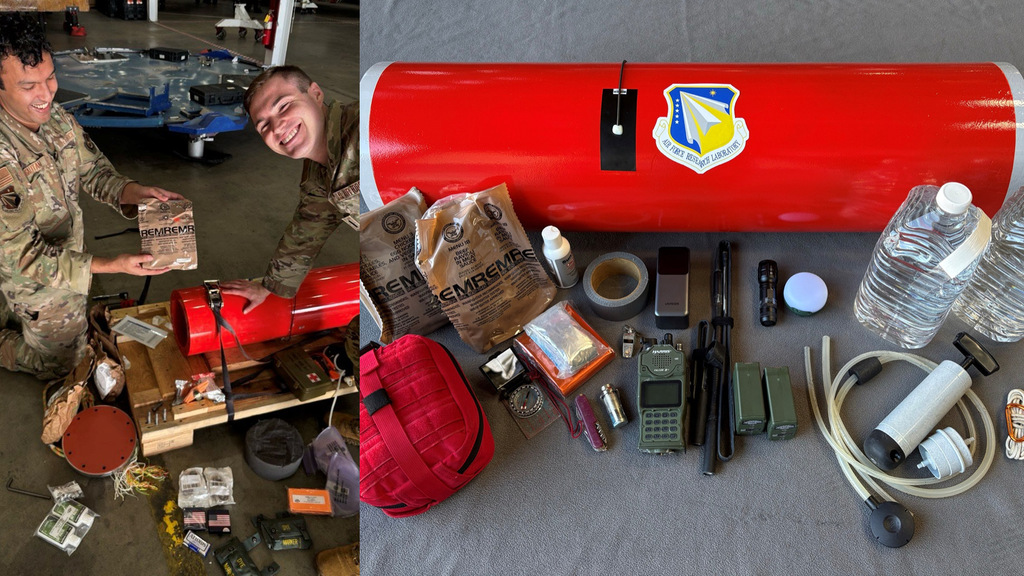
Photos included in the AFRL social media post show military personnel unpacking a recovered cargo pod for inspection. Each pod contained sensors to monitor temperature conditions through launch, reentry and splashdown, as well as to measure the shock and vibration forces exerted on its cargo.
For its first Starfall mission, AFRL packed its cargo pods with representative items like medical equipment, food ration packs and other military kit that might be helpful for surviving an emergency somewhere that's tough to reach via conventional transportation. To that end, AFRL said it also conducted a fit check of a UNI-PAC III life raft inside Starfall, which could potentially be included in future tests.
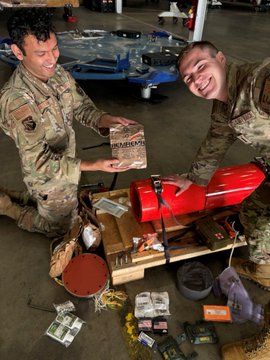
With support from SpaceX, the AFRL agile cargo pods were recovered after splashdown in the Pacific Ocean.
Image credit: AFRL
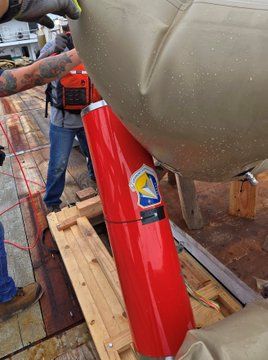
Each pod contained representative mission equipment to study the effects of temperature, shock, and vibration of the cargo environments during launch and reentry.
Image credit: AFRL
With support from @SpaceX, the AFRL agile cargo pods were recovered after splashdown in the Pacific Ocean. Each pod contained representative mission equipment to study the effects of temperature, shock, and vibration of the cargo environments during launch and reentry. #Readiness https://t.co/yWoND13ur4October 26, 2026
"Researchers paid special attention to the electronics equipment and survival gear, including a SATCOM-enabled tracker, batteries, a reverse osmosis desalinator, survival gear and emergency medical equipment," AFRL said in its release.
SpaceX's disk-shaped Starfall capsule made a quiet debut on a Falcon 9 launch in June, and the company has remained relatively quiet about the vehicle to date. Most of what we do know comes from a Federal Aviation Administration environmental assessment published earlier this year.
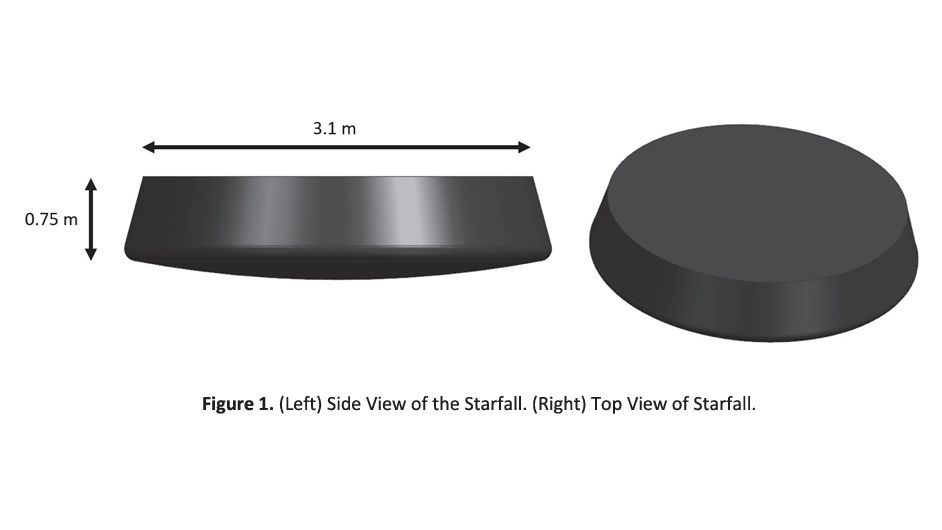
Starfall measures about 3.1 meters across.
Image credit: Federal Aviation Administration (FAA).
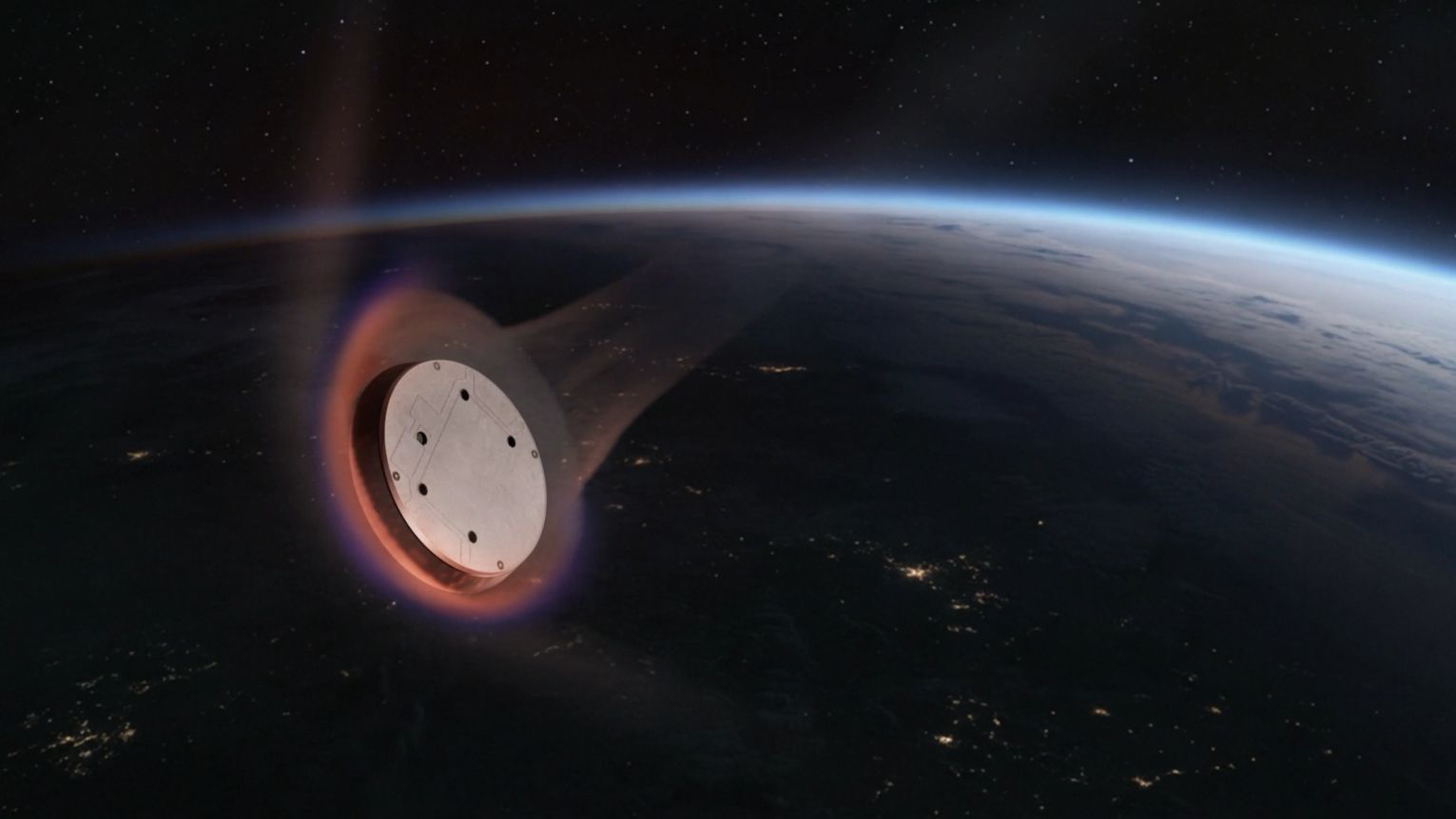
Artist rendering of Starfall entering the atmosphere.
Image credit: SpaceX
The hockey-puck-looking vehicle measures approximately 10.2 feet (3.1 meters) across and can return up to 2,200 pounds (1,000 kilograms) of cargo from orbit, according to that report. And it sports a carbon fiber heat shield and compressed gas thrusters for attitude control during reentry, as well as a parachute system for precision landings.
AFRL will assess the data recovered from the Oct. 20 mission to contribute to its broader Rocket Cargo initiative, which the Air Force hopes can evolve to the transportation of tens of tons of cargo per launch. That would exceed Starfall's mass capacity, but Starfall isn't the only vehicle the military has considered for its Rocket Cargo program.
SpaceX's much larger Starship rocket, which is still under development, was a likely candidate for tests at Johnston Atoll, a remote Pacific bird sanctuary where the Air Force proposed building a pair of landing pads for cargo delivery tests. However, those plans were suspended in July 2025 amid environmental concerns, and the status of the search for an alternative site is unclear.



















 English (US) ·
 French (CA) ·
 French (FR) ·