

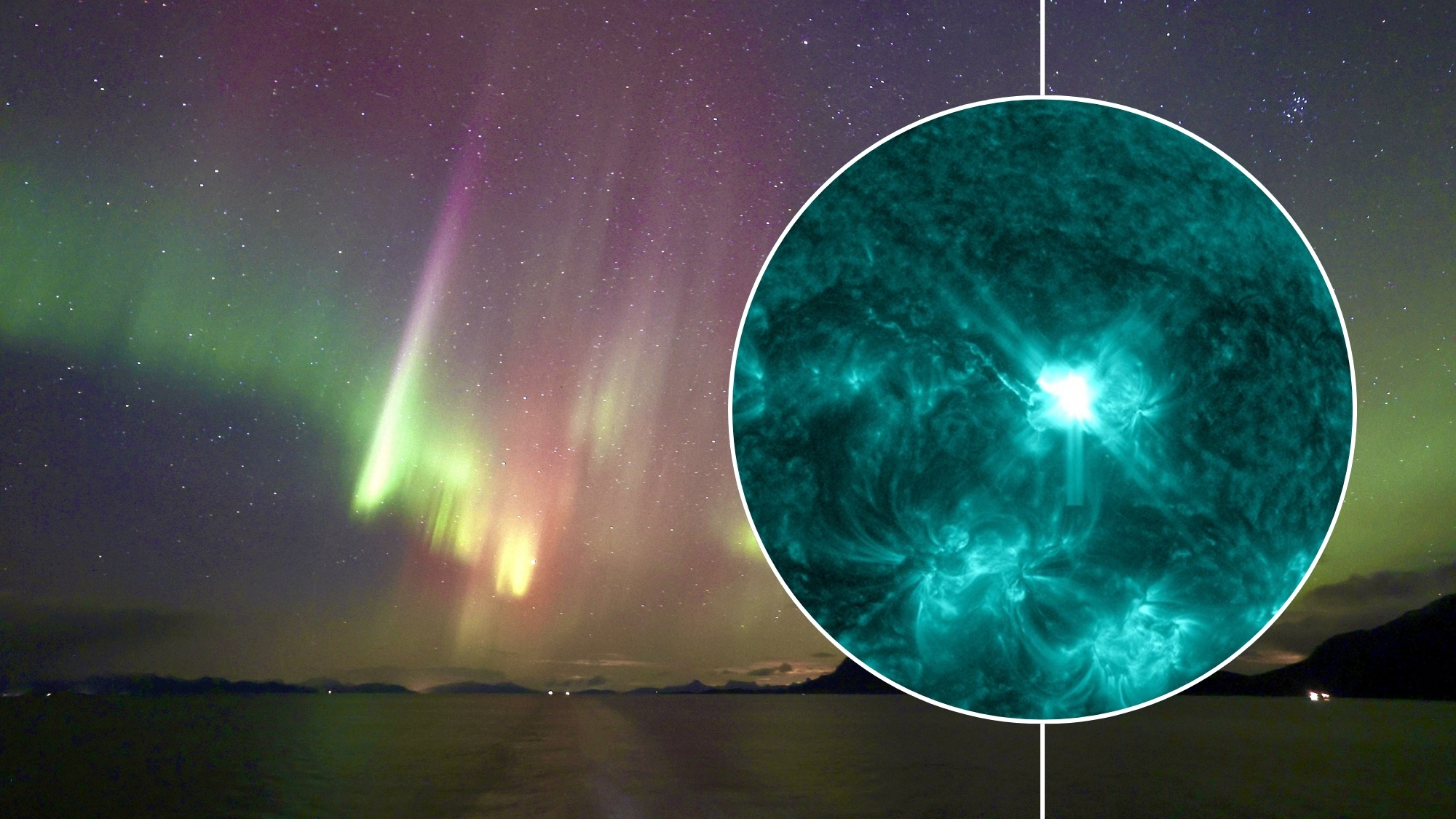
Heads up aurora chasers! The sun has been very busy.
After unleashing an X1.1 solar flare on June 30, the sun continued its outburst by firing off 10 M-class solar flares in 24 hours! Several of these eruptions were accompanied by coronal mass ejections (CMEs) that appear to be at least partially Earth-directed.
Exactly how many of these solar storms will reach Earth (and how effective they will be) is still being calculated, but space weather forecasters say the coming days could bring heightened geomagnetic activity and increased chances of seeing the northern lights.
Solar physicist Tamitha Skov described the recent activity as a "Machine-gun sun" in a recent post on X, writing that more than five solar storms are on their way to Earth, with at least three offering "good chances" for aurora displays.
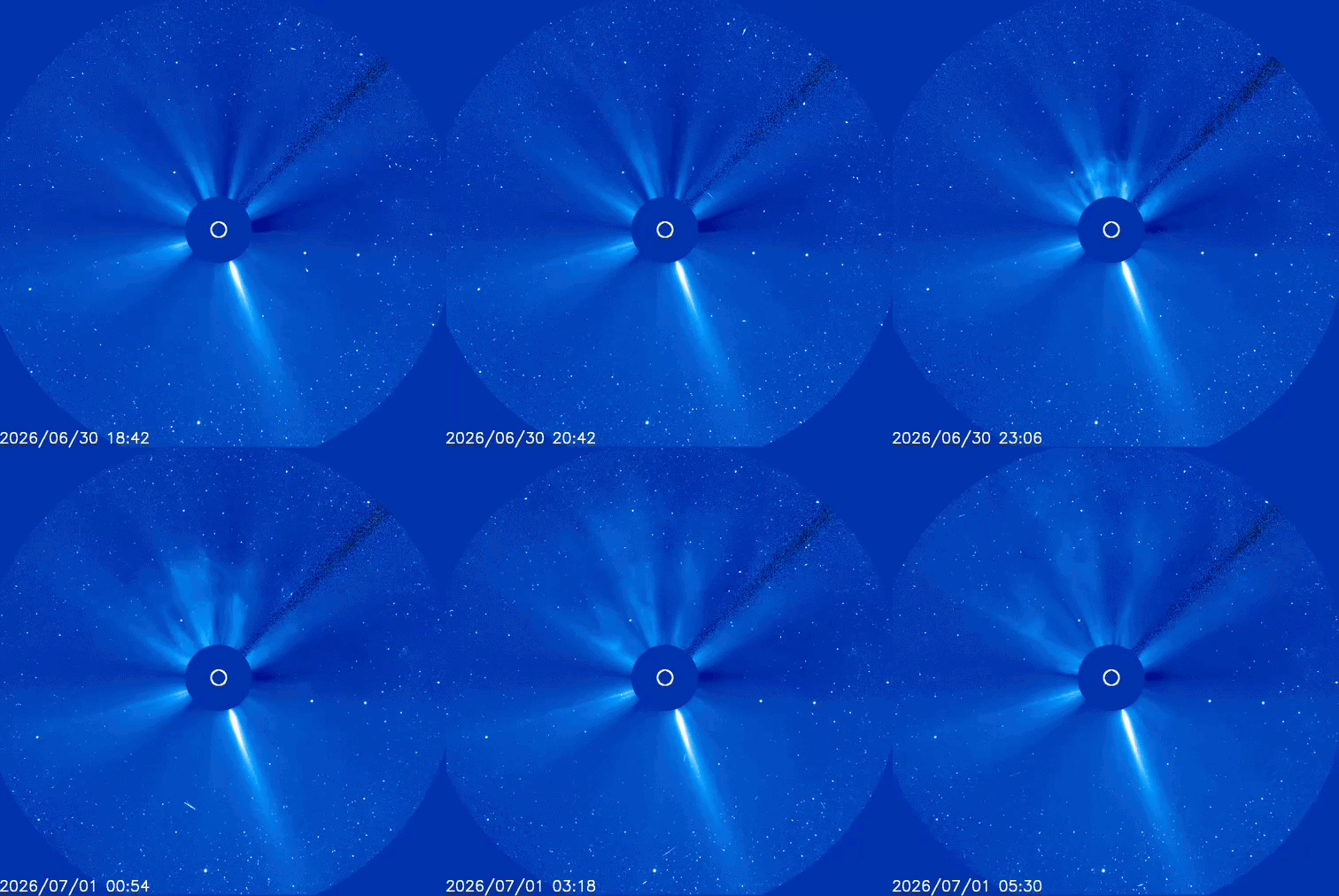
"NOAA and NASA model predictions do not show all the storms yet," Skov wrote, explaining that the rapid succession of eruptions has made them difficult to model. Skov added that the first storm could arrive before 8 a.m. EDT (1200 GMT) on July 3, with G2 or stronger geomagnetic storm conditions possible if the incoming CMEs carry a favorable magnetic orientation, allowing them to connect more efficiently with Earth's magnetic field.
According to NOAA's Space Weather Prediction Center, at least one CME from July 1 appears to have an Earth-directed component, although further analysis is still underway. The agency continues to forecast moderate (G2) geomagnetic storm conditions beginning tonight, driven primarily by the CME launched during the June 30 X-class flare, while noting that additional CMEs from the barrage of July 1 eruptions are still being analyzed.
Will the northern lights be visible?
The forecasts are looking increasingly promising for aurora chasers.
NOAA's latest forecast calls for moderate (G2) geomagnetic storm conditions around 8-11 p.m. EDT tonight (0000-0300 GMT July 3), with minor (G1) storm conditions for much of July 3. That could push the northern lights farther south than usual, potentially making them visible across parts of the northern U.S., including New York and Idaho, provided skies are dark and clear.
Exactly how impressive any display becomes will depend on how the incoming CMEs interact with one another and, crucially, the orientation of their magnetic fields when they arrive. When a magnetic field within a solar storm aligns the right way, it can more effectively transfer energy into Earth's magnetic field, producing stronger geomagnetic storms and brighter auroras.
However, nights remain short for observers in the northern hemisphere and lingering twilight could make auroras harder to spot.
That being said, it's worth making sure your cameras are charged and your aurora alerts are switched on. With multiple CMEs heading our way, there could be some natural fireworks lighting up the skies this July 4 weekend.





















 English (US) ·
  French (CA) ·
  French (FR) ·