

 2 months ago
18
2 months ago
18
PROTECT YOURSELF with Orgo-Life® QUANTUM TECHNOLOGY
Orgo-Life the new way to the future Advertising by Adpathway4 min readNew DelhiMay 8, 2026 05:00 AM IST
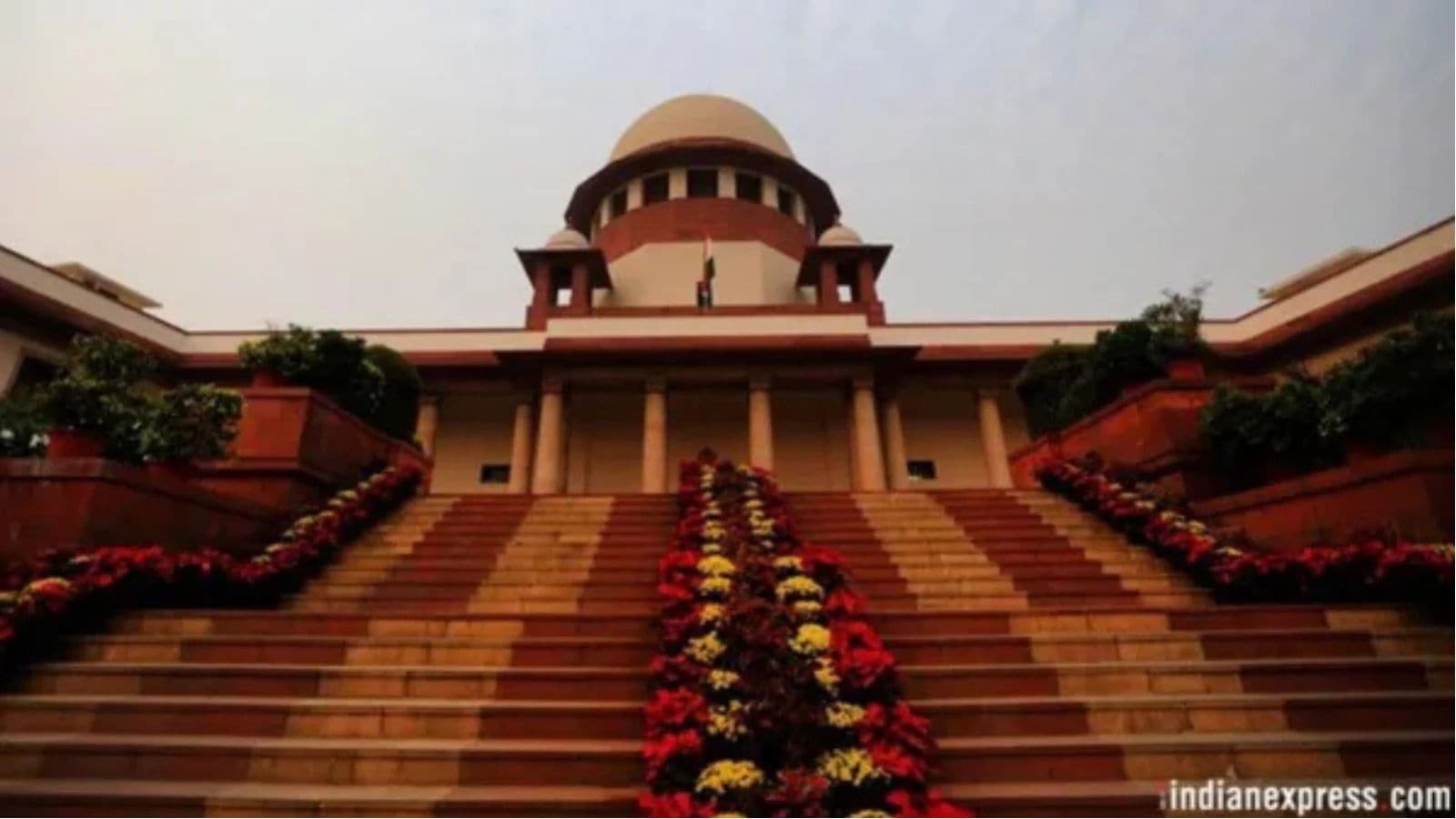 Tied to the Sabarimala case are also questions of practices among religious communities like Parsis and Dawoodi Bohras.
UNDERLINING THAT India’s civilisational status is closely linked to its religion, the Supreme Court on Thursday wondered whether it would not be harming that identity if it starts interfering with every religious dispute.
“What is unique about India? Why are we a civilisation despite having so much plurality and diversity? One of the constants in our society is the relationship between humans — man, woman and child — and religion; it is so intimate to everyone,” said Justice B V Nagarathna, who is a part of the nine-judge SC bench hearing the Sabarimala reference.
The bench, presided by Chief Justice of India Surya Kant and comprising Justices Nagarathna, M M Sundresh, Ahsanuddin Amanullah, Aravind Kumar, Augustine George Masih, Prasanna B Varale, R Mahadevan and Joymalya Bagchi, is hearing constitutional questions arising from petitions seeking review of the SC’s September 28, 2018 judgment striking down age restrictions on entry of women to the Sabarimala temple in Kerala.
Tied to the Sabarimala case are also questions of practices among religious communities like Parsis and Dawoodi Bohras.
On Thursday, Senior Advocate Raju Ramchandran, appearing for the Central Board of Dawoodi Bohra Community, questioned the power of the religious head of the community to excommunicate persons, saying it violated the fundamental rights of the faithful.
The court asked if the power to excommunicate isn’t protected under Article 26(b), which gives religious denominations and every section thereof the right to manage their own affairs in matters of religion.
Justice Nagarathna, while underlining India’s a civilisational identity, said, “Once everyone starts questioning certain religious practices or matters of religion before a constitutional court, then what happens to this civilisation, where religion is so intimately connected with Indian society? There will be hundreds of petitions questioning this right, that right, closure of the temple, right? We are very, very conscious of this.”
Story continues below this ad
Ramachandran said the right under Article 26 should not be used to curtail the right of the state to make laws to manage the secular affairs of religion and the restrictions on ground of public order, morality and health. He urged the need to interpret the two provisions harmoniously.
Justice Sundresh too expressed doubts about courts getting into every religious dispute. “Everybody will question everything. It’s more like an in-house setup where you are saying what you are doing is wrong, and the other person will say it’s absolutely obnoxious. How can court (intervene) when the legislature has been given a conscious right under Article 25(2),” he asked.
Justice Nagarathna said, “Now, when a religious practice or a matter of religion is questioned, where it is questioned, why it is questioned, whether it can be questioned, whether the questioning has to come from within the denomination itself for reform, or whether the State has to do it, or whether you want the court to adjudicate upon all these aspects, these are the things troubling us. See, what we lay down as a nine-judge Bench is for a civilisation. That civilisation is India. India has progressed despite all its developments, economy and everything else. There is still a constant within us. We cannot break that constant. That is what is troubling us.”
Ramachandran said India is a civilisation under a constitution and “nothing which goes against the grain of the constitution can be countenanced in a civilised society governed by a constitution”.















 English (US) ·
  French (CA) ·
  French (FR) ·