

.png) 2 days ago
8
2 days ago
8
PROTECT YOURSELF with Orgo-Life® QUANTUM TECHNOLOGY
Orgo-Life the new way to the future Advertising by AdpathwayKey events
That's all, folks!

Patrick Barkham
Thanks everyone for your interesting questions and for sharing the invertebrate love. Our shortlist of 10 incredible inverts for the 2026 competition continues, with voting opening in a week’s time. Please do exercise your democratic right to vote spineless and spread the word. Thank you!
We need to wake up to the value of invertebrates
BobGramsci says: This is a great idea, to celebrate invertebrates and discover their wondrous diversity.
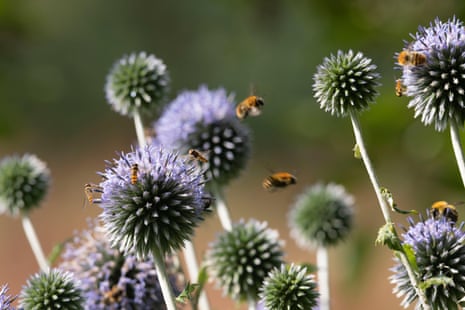
But at the same time, let’s remember that many of them are in danger.For instance, the Buglife survey has found that the number of flying insects in the UK fell by 59% over a five-year period. 59% in five years is truly frightening! Habitat loss, pesticides and climate change are mainly responsible. We need flying insects, and without them ecosystems would collapse. The same is true for many other insects and other invertebrates.
Our celebration of invertebrates should also be a wake-up call - we are in the middle of a crisis and need to act now to prevent catastrophe.
Patrick:
Absolutely, and we hope this competition contributes to a growing awareness of the extinction crisis we are in, and the imperative on us to change the way we live on Earth. At one level, this is simple self-preservation. As you say, we depend on invertebrates to perform billion-dollar services in every country from rubbish cleaning to water purification to pollination of crucial crops and food sources.
But there is also a moral dimension as well, isn’t there? We are the predominant species now, we shape the planet more than any other and our fellow inhabitants have as much right to life as we do. We have a duty to do our best to stop species decline and enable non-human lives to flourish as well as our own.
Deep sea invertebrates are bizarre!
Vastariner says: I want to give a shoutout to Parakaryon, because it’s such a genuine mystery. It’s a bacterial animal, or an animalistic bacterium, or an archaeal plant, or something. And the only one ever found was living on a bristle on a scaleworm on an oceanic vent.
My guess though is that it’s some poor sod of a single-celled creature which got attacked by several bacteria at once and got partly internally digested. Then there is Symbion, a genus of two species which make up their own phylum, which live on the mouthparts of lobsters. Their breeding cycle is utterly, utterly bizarre. Basically adults - which are all asexual - start to make mini-males inside their bodies, then mini-females with one egg each, the mini-males fertilize the mini-females as soon as they pop out, and the fertilized egg then starts to devour the female to become an asexual adult.
Patrick:
Thank you for sharing. Parakaryon hasn’t made the shortlist this year but it sounds like a good candidate to be nominated next year! And the bizarreness of many invertebrates’ reproductive strategies is incredible and never ending. We mammals are very staid in our reproductive techniques.
Is the southern small white in Britain because of climate change?
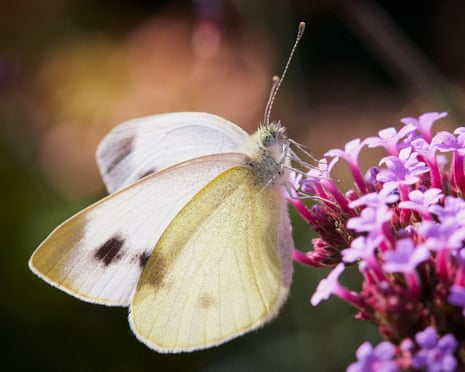
Jasonbirder says: I’d have been tempted to vote for southern small white (a nondescript butterfly that looks like the “cabbage white”), on the back of its meteoric range expansion across Europe (presumably driven by climate change).
It used to be an exclusively Mediterranean species, and it was being recorded breeding north and west of the Alps by 2008, and was occurring in Holland and the Pas de Calais by 2019… and has now been recorded in England.
Patrick:
Oh yes, as a butterfly geek, I’m very excited about the arrival of the southern small white in Britain. Its rampaging march across north-western Europe has been amazing, and as you say is a consequence of global heating. In theory, in Britain, global heating should be good for butterflies because these mostly heat-loving insects are often at the most northerly limits of their natural range.
That range is now expanding northwards, although this also means that some northerly-inclined, cool condition butterflies, such as the mountain ringlet, are being driven further north too, and will ultimately run out of land. But there are winners in the climate crisis, and the southern small white is one of them. I’ve been checking small whites (which are often called “cabbage whites” alongside the similar large white and green-veined white) but I haven’t yet found a southern small white, and the difference between these and the small white is really, really hard to spot. Huge respect to anyone who has identified one.
This summer in Britain has been a really good one for butterflies, and we’ve had lots of exciting migratory species arrive such as the Queen of Spain fritillary which could in future set up permanent home here. But for that to happen, we have to make more wildlife-friendly space for nature – less chemical farming, less chemical gardening, less shorn-to-oblivion parks, golf courses and gardens. We can do it, and have more wild joy and wild nature in our daily lives.
Will humans eventually kill off even the hardiest of insects?
Narethosyne asks: It’s often said that insects will outlast humanity, as they’ve managed to survive in some very inhospitable environments for millions of years. Do you think that human stupidity might actually be able to kill even the hardiest of insects off if we don’t take better care of our planet?
Patrick:
I agree we need to take much better care of the planet. However the more I learn of other invertebrate life (and I don’t know much), the more I believe that other species will survive whatever toxic horrors we unleash upon the planet. It seems more likely that we will become extinct before many other species.
We are such a strange species, so capable of goodness and so easily moved to argument and greed, but I still think we can learn to think and act for the long-term. There is a big awakening of eco-consciousness in the global north and perhaps we can belatedly re-learn the wisdom of many indigenous peoples who have lived in better balance with their fellow species.
How do I make a home for invertebrates in my garden?
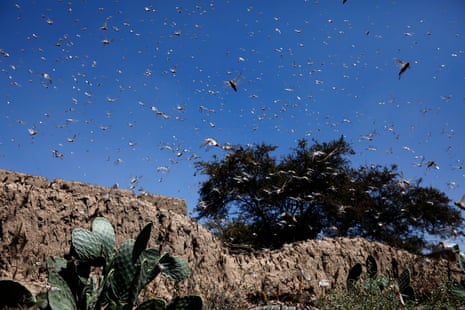
Sprockertime asks: Is building an invertebrate home in the garden just lobbing a log in the herbaceous border?
Patrick:
Thanks Sprockertime, I love your question. The answer is yes!
I’ve done all kinds of fancy things for wildlife in my garden (filling in a “sunken garden” with five tonnes of chalk raised a few eyebrows in my neighbourhood) and I salute everyone who has erected bird boxes and bug hotels.
But you can help wildlife with no budget and by doing nothing. Let your grass grow wild, lob a log to slowly decompose in your border, tolerate ivy on your wall or fence – all these are fantastic acts of kindness for multiple species.
I still think the best thing I’ve done is leave a pile of sticks in the corner of the garden underneath the hedge. As well as housing countless spiders and woodlice (vote chucky pig!), it’s become the local voles’ safe house against my marauding dachshund.
Can I have three nominations for Invertebrate of the Year, please? I can't decide between them
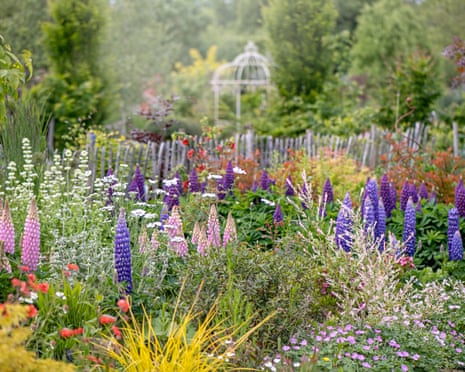
Cathy247 says: I’d like to nominate the insect that has chosen to use one of the holes in my bug hotel. I don’t know which insect species it is but something has plugged up a hole and I’m hoping to get to see what emerges.
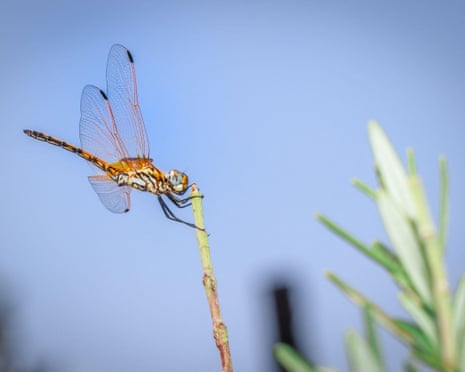
Or maybe I should nominate dragonflies. I have one darting about my pond for the second year running. Is it the same one or a different one? Who knows.
Or maybe I should nominate the humble cabbage white butterfly which yet again has laid eggs on my sprouting broccoli, long before it got a chance to sprout, and the caterpillars have eaten every leaf to leave only bare stalks! So I now call it sacrificial broccoli.
I love the idea of invertebrate of the year, and can’t wait to see who wins!
Patrick:
Thanks for your contribution Cathy247, I am picturing your garden and your respect and curiosity for the tiny lives around you and hooray for all that!
I suspect your insect is a solitary bee or wasp, and it is great to know the bug hotel is being used. As your comments show, it is so easy to help invertebrate life; even if we have no garden, we can live alongside woodlice and spiders in our flats and houses.
I just heard today of a warden at Norfolk Wildlife Trust, an environmental charity local to me, who is bravely sharing her office this summer with an enormous wasps’ nest. It’s grown so big now that she is only returning to do a bit of photo-copying and definitely leaving the filing cabinet alone because that’s where the nest is.
We can live peaceably alongside species. The nature writer Richard Mabey has a nice way of describing this: neighbourliness. Let’s all be good neighbours to the animals, plants and fungi around us.
PS - on dragonflies, it is fantastic to watch these ancient predators zipping around the airspace (and they’ve been doing really well in Britain in the hot weather). I can confirm that there is a wonderful dragonfly among the shortlist of 10 for this year’s Invertebrate of the Year. It will all be revealed soon…
What would you make the flagship UK species to encourage interest in our native wildlife?
EsIstGeschlossen asks: The more time I spend seeking and watching British wildlife, the less inclined I feel to go abroad in search of more “exotic” species. Our native fauna is every bit as special and fascinating as any other, especially if you’re prepared to put the effort in to see it. If Alaska has bears and whales, and India its tigers and elephants, and Australia its sharks and koalas, what would you make the flagship UK species to encourage interest in our native wildlife?
Patrick:
Yes, let’s hear it for the little guys! Macro photography has really helped many of us deepen our appreciation for the small species because we are very visual animals and most of us respond more emotionally to mammal-like faces. When I first saw a close-up of an Essex skipper butterfly (I’m a big butterfly fan), I couldn’t believe how it resembles a space-age teddy bear with lots of golden brown fur and huge limpid black eyes.
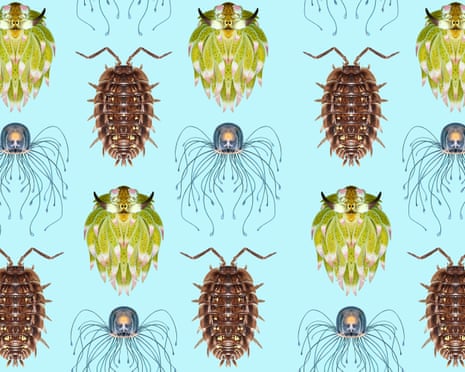
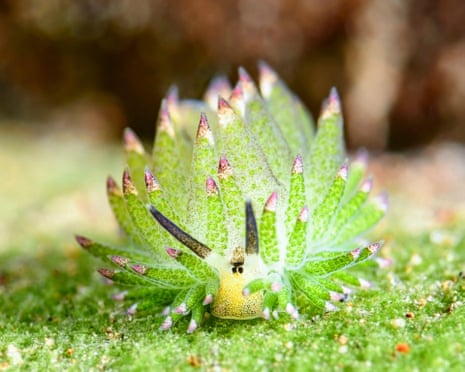
This year, one of the early favourites for Invertebrate of the Year is the leaf sheep, an amazing looking creature which has come of age (in the human world) thanks to advances in underwater and microscopic photography. We had so many nominations for it, especially considering that this is not an animal which many of us will ever encounter in the natural world because it is so tiny and camouflaged.
Britain isn’t known for having many endemic species which are only found on our isles, due to the fact that we were under ice until so recently but flagship small UK species might include the swallowtail butterfly (we have a unique subspecies), the elephant hawkmoth, the ash-black slug, St Piran’s hermit crab, the distinguished jumping spider – we have so many spectacular and interesting smaller forms of life.
How are invertebrates coping with the drought?
Sam_Jenks asks: How do they manage in this hot weather? What happens to the worms when the ground dries out?
Patrick:
In Europe we are enduring a serious heatwave, and of course many wild animals are struggling. Clearly sustained drought and the new extremes of global heating will challenge many species, and is contributing to the very real extinction crisis we find ourselves in. But small invertebrates are often surprisingly resilient.
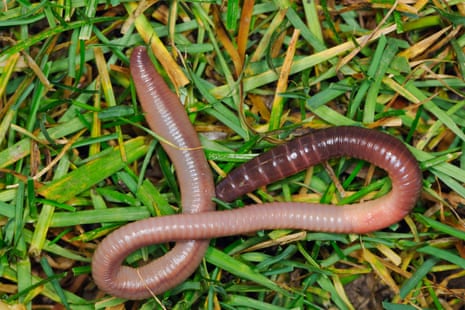
Earthworms, for instance, will burrow deeper into the soil to find moisture. During sustained dry spells, they can enter estivation, where they wrap their bodies into tight balls to reduce the surface area exposed to the soil and seal themselves in a mucus-lined chamber to retain humidity and stop themselves from drying out. They’ve been found to survive in this state for three weeks.
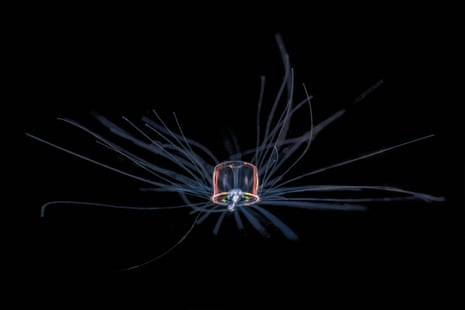
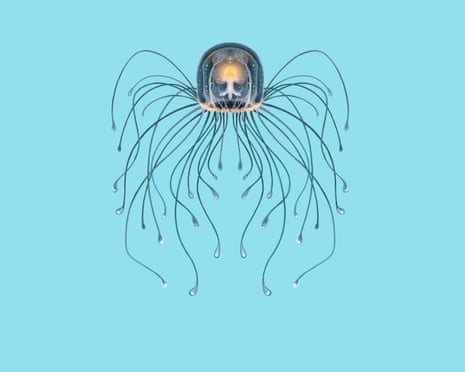
Two of our popular nominations last year, the tardigrade and the rotifer, are virtually indestructible, while this year we have featured the immortal jellyfish, which drops to the ocean floor as if dead, shrinks into a ball, and then buds off a new polyp with the same identical genome.
I’m going to give a lot of butterfly examples in this conversation because they are my thing but we think of butterflies as being these delicate, fragile insects. Lots of people keep expecting the swallowtail butterfly to become extinct in Britain and recent climate-induced winter floods of its few remaining wild sanctuaries left many people fearing the worst. But not only can the swallowtail’s chrysalis survive being submerged by floodwater, but the butterfly actually did better after a winter of floods because the flooding seems to have reduced the predation of its chrysalises by mice and other rodents who were flooded out.
Small is often strong. In the climate and nature crisis, we, homo sapiens, have made ourselves one of the most vulnerable species.
Tell us more about the fascinating immortal jellyfish
Dopfnord is fascinated by the immortal jellyfish, which sounds like something which would give old Howard Phillips Lovecraft conniptions. Can you tell us more about it?
Patrick:
I’m glad the immortal jellyfish is getting some love. As I’ve mentioned below, it has this miraculous ability to regenerate, so it really does do what it says on the tin.
My colleague Petra Stock has written about it brilliantly here and Guardian readers have saluted its ability to continually sustain itself in this way. As one says: “They have the very enviable ability to simply turn back into a juvenile at any sign of stress, which is something that I’m sure we all wish extended to humans.” I can’t put it better than that.
I should just say, one of the joys of running this competition is that we hear so many superb nominations from so many Guardian readers around the world. I read every nomination, and you really are a very clever, witty, deeply knowledgeable bunch (far more so than most of us journos!)
How are the tardigrades on the Moon getting on?
Goldgreen asks: I’ve just read that there have been tardigrades on the Moon since 2019. I’d like to know how they’re getting on.
Patrick:
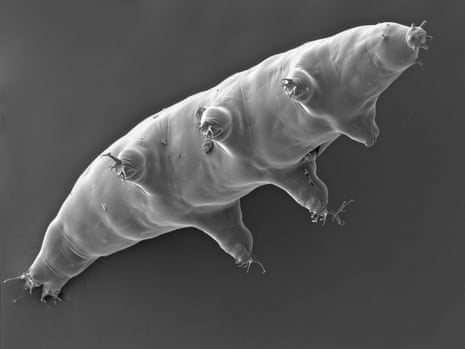
Great question, and a fantastic story about last year’s runaway winner of Invertebrate of the Year, the virtually indestructible tardigrade, or water bear.
In 2019, an Israeli spacecraft crashed into the moon while attempting the first privately-funded lunar landing. On board was the “Lunar Library”, a DVD-like disc holding around 30 million pages of texts and images. Tucked between sheets of nickel were several thousand dried tardigrades. Earlier studies have shown that dehydrated (dried) tardigrades can be exposed to outer space, brought back to earth and revived. So tardigrades can survive space but did they survive the crash?
A 2021 study in Astrobiology measured what kind of crash impacts that tardigrades can survive. For all their superpowers, they were not resilient enough to survive the sort of shock pressure that they would’ve experienced on the space craft. But could one have survived in the wreckage? We don’t know, because no-one has been out to check. Nevertheless, if one had survived the impact, this is not life on the moon. A dehydrated tardigrade is inert, it cannot move, eat or reproduce. It cannot “wake up” or do anything without water, and there is no liquid water at the crash site. I should say I’m indebted to Space Daily for the facts behind this answer, not being an astrophysicist or an expert on tardigrades in space. One of the wonderful things about our invertebrate world is that you quickly realise how little we know!
Tell me quirks of woodlice
Vegansruletheplanet asks: I’d love to know more about the woodlouse. Any quirky fun facts?
Patrick:
Woodlice live alongside us so we have many amazing names for them across human cultures without perhaps knowing a huge amount about them. (I speak for myself!)
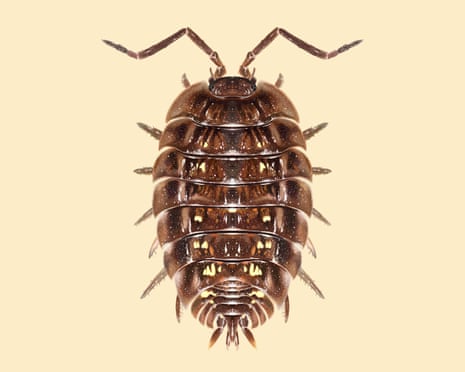
There are actually more than 5,000 species of woodlouse but the one we know in Britain best is Oniscus asellus, which can curl up in a ball. Another common woodlouse species, the common rough woodlouse, Porcellio scaber, which is more widely found in the US and Australia, doesn’t.
Woodlice are found on all continents apart from Antarctica. They are a land-dwelling crustacean, so more closely related to crabs than insects.
We know they’ve been around since the very first animals but they will probably be around far into the future too, because they are very resistant to toxins and pollutants. No matter how much we trash the planet, there will probably be a “chucky pig” cleaning up our mess in a million years time.
Patrick is live
Patrick is now answering your questions about invertebrates and anything else about the natural world.
Welcome to the Conversation
What do the tardigrade and the earthworm have in common? They are, of course, the two previous winners of the Guardian’s Invertebrate of the Year poll. An annual contest that pits some of the the natural world’s finest species against each other in celebration – and to remind ourselves why beetles, slugs, worms and moths and others play a critical role in the planet’s infrastructure.
Contenders to take the tardigrade’s crown this year include the common woodlouse and the immortal jellyfish. We’ll be revealing the rest of the shortlist over the next few days.
As the Guardian’s natural history writer, Patrick is one of the UK’s foremost nature writers and has written books about badgers, moths and his lifelong love of the outdoor world. His recent reporting has looked at rewilding projects, the homing habits of swifts and people pretending to be otters.
He kicked off this year’s IOTY countdown with a paean to the humble woodlouse, which he called an evolutionary trendsetter and shared some of its delightful nicknames: “Chucky pig. Slater. Monkey pea. Roly-poly. Boat-builder. Butchy boy. Cheeselog. Hobbling Andrew. Wood pig.”
Patrick will be here at 4pm BST (11am EDT) to answer readers’ questions about this great project. You can also ask him about badgers, or anything else about the natural world.
Ask a question: log in or sign up here.




















 English (US) ·
  French (CA) ·
  French (FR) ·