

 1 month ago
161
1 month ago
161
PROTECT YOURSELF with Orgo-Life® QUANTUM TECHNOLOGY
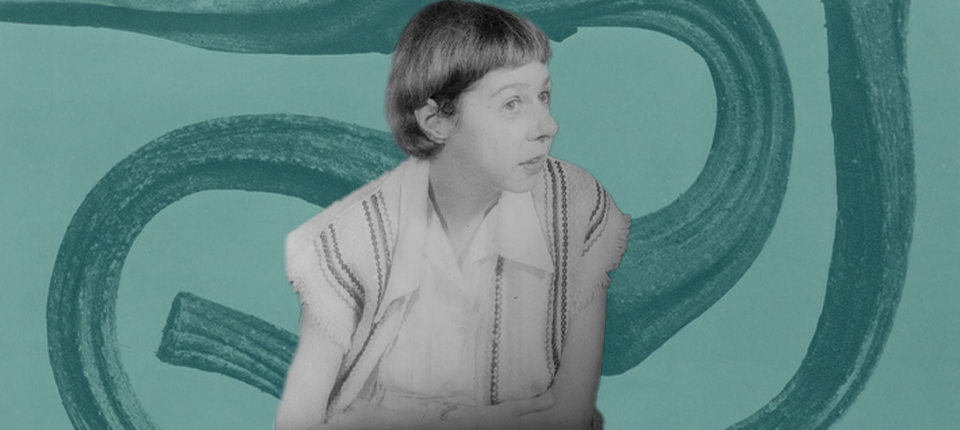
Orgo-Life the new way to the future Advertising by AdpathwayJan Morris rose to fame in 1953 as a reporter working for the Times when she carried the news of the first ascent of Mount Everest back to base camp, England, and the world on the eve of Elizabeth II’s coronation. It was arguably the British Empire’s last triumph. Over the course of the next seven decades, Morris—at that time publishing as James—traveled widely through the empire’s dwindling dominion, writing sumptuously about colonial decline and the rise of a new postwar global order. After changing her sex in 1972 at Georges Burou’s famous Casablanca clinic, she published the best-selling memoir Conundrum (1974), a finely tuned and deeply felt account of the perils and strange delights of self-creation. When the scandal of her transformation had settled, Morris resumed her literary career, writing on Venice, Hong Kong, Trieste, the political rise of Abraham Lincoln, the history of Japanese battleships, and other geopolitical engrossments, until her death in 2020. Her life and work brought her into contact with many significant plot arcs of the twentieth century—not just the rearrangement of the world order but also the birth of LGBT civic consciousness. Despite this serendipitous proximity, she presents, in death, as a weak candidate for entry to any known saintly canon. Blithely humanistic, avowedly bourgeois, and often romantic to a point of equivocation, she’s suitable neither as a pride-month “trancestor” nor as a great literary firebrand. A new biography, Jan Morris: A Life—authorized by her children, who manage her estate—tries to figure out what to do with these loose ends. Its author, Sara Wheeler, is also a travel writer. She called me on Zoom with a shaky connection from “the ancient Atlantic Forest in central Paraguay,” where she was on assignment. We talked about Morris’s splintered legacy and the challenges of summing up a life.
INTERVIEWER
I know Morris mostly through the trans archive. I suspect this is true of most Americans, if they are aware of her at all. How does this compare with her legacy in the UK? Do people still read her?
SARA WHEELER
It’s no exaggeration to say that Morris became the most famous journalist in the world overnight when she brought back the story of the conquest of Mount Everest. After that, she went on to write fifty-eight books. She was always on television, laughing, tossing her cumulus of white hair, and all the rest of it. Today, few remember this, but “Morris of Everest” is still in the British public consciousness. When I meet people in the UK who are readers, they normally say, Oh gosh, yes, I remember Venice (1960) and I remember Pax Britannica (1968) and, hang on a minute—wasn’t it she who wrote Conundrum?
INTERVIEWER
How did you come to her as a biographical subject?
WHEELER
As a nonfiction writer specializing in travel, I’d always read and admired her. For a magazine profile I wrote of her in 2000, I went up to Wales, where she was living, and spent a day with her and her partner, Elizabeth. This was in the in-between years, after Elizabeth was her wife but before civil partnerships were allowed. [Interviewer’s note: Before same-sex marriage was legalized in Britain, Morris divorced Elizabeth to change her legal sex. In 2008, the pair renewed their vows as civil partners.] After Morris died in 2020, news got out that her estate was looking for an authorized biographer, and when I started looking into it—thinking, Shall I put my hat in the ring?—I just knew. She was at the Eichmann trial in Jerusalem. She spent a year in the United States, from 1953 to 1954, when McCarthy was blaring through every speakeasy. She interviewed Che Guevara. And then right in the middle of all this, we have her transition—she was the twentieth century!
INTERVIEWER
Sort of a Forrest Gumpian figure.
WHEELER
All the glitter, and the darkness, and the glamour! What she liked most of all was going to the Four Seasons Hotel in Manhattan, where the chef would come out to kiss her! And she was one of the greatest descriptive writers who ever lived.
INTERVIEWER
Fifty-eight books is a massive undertaking for a biographer. How did you approach the reading? Was it hard to track everything down?
WHEELER
Before I started even thinking about writing or going to the archives, I made my way through her books, taking copious notes. That probably took six months. I was doing it full time. Some of the fifty-eight were anthologies of pieces published in magazines and journals. For example, there’s one anthology, Destinations (1980), which is just the pieces she published in Rolling Stone magazine. Some of them were hard to source. There were three, in the end, that I had to get out of a private lending library. I stickered them all with the date of publication, and they snaked around my office. Then I went through them chronologically from the first, Coast to Coast (1962), which is her story of being in America, to the last, Allegorizings (2021), which was a posthumous book. Jan was determined to curate her image after her death, and she did.
INTERVIEWER
Most well-known trans people of the twentieth century were famous for being trans. Morris’s transition feels almost incidental to her fame as a writer. During your research, did you notice a split in her archive? Were you starting your day at, say, Bishopsgate [the largest LGBT archive in the UK], and then running across town to the British Library? I get the sense that her paper trail might be scattered across disparate worlds.
WHEELER
“Scattered across disparate worlds” is a very good way of putting it, and I had to go a lot farther afield than you’ve indicated. Jan’s trans journey was one of a number of other journeys, but all these are threaded together, as all our inner journeys are threaded together in all of us. You can’t separate one from the other, so I tried to show them all moving together through a very long life.
INTERVIEWER
Travel writing, as a genre, changed a lot during her career. She started writing in a time of declining empire, when fantasies about faraway places—colonial life and colonial subjects—were integral to British identity. Her early readers weren’t likely to have traveled much at all, but by her last book, it was the age of Ryanair, and the world order had shifted. I am curious if you have thoughts on the evolving mandates of the genre.
WHEELER
Morris had a similar feeling—that anyone can go anywhere now. In the eighties, she said, “Goodness, you can buy a ticket to Kathmandu from Cedar Falls, Iowa.” But really, travel writers have been saying that since the Odyssey. It’s true we’re not pioneers who aren’t sure what’s on the end of the map anymore. We’ve got Google Maps to tell us what’s everywhere, but the fact is, we’re still confronting the other—different situations, different people, different worldviews. I feel that it’s more valid than ever to listen to what the other is saying, although God knows, nobody seems to be.
INTERVIEWER
Was this political for her?
WHEELER
Morris wasn’t really an apologist for empire, but she made no bones about the fact that she loved its style. She loved the glitter of horses on parade, and the trill of a bugle, and all the rest of it. She began her career saying, This is the side of it I like, and it is incredibly interesting, and there’s lots of really interesting characters here, and I’m going to tell you about that, and then I’m going to describe all these places, and so on.
But when she started working on her Pax Britannica trilogy, and started transitioning, it became more personal. She discovered her Welsh roots and became more interested in nationalism. She said, Well, hang on a minute—this is exactly what [happened to] all those Indigenous peoples all around the world that the English went round duffing up!
For a while, she was a card-carrying Welsh nationalist, very keen on the idea of Wales seceding from the UK. She really banged that drum—wrote a lot of newspaper pieces about the terrible English tourists racing all over Wales and destroying everything. In the nineties and two thousands, she spent a lot of time in the Balkans—Bosnia and Herzegovina in particular—and that was when she looked around and said, I see what they’re doing to one another, and I wonder if that could be happening in Wales.
After that, she went off the boil with nationalism. She saw the perils and began to go beyond it.
INTERVIEWER
Toward what?
WHEELER
A more mystical quest for human unity. In the end, she realized she was looking for what we’re all looking for—an escape from the horrible reality of the human condition. She had a long time to think about it, and to a certain extent, she did make peace with all that at the end of her long life.
INTERVIEWER
Your book starts with an author’s note, explaining that Morris wrote about her pre-transition life using “he/him” pronouns and that you have done the same “out of respect.” This convention was common into the nineties, but today it’s considered deeply unfashionable and even disrespectful. I can’t say I’m a fan of your choice, but I am curious how you came to make it.
WHEELER
I put an author’s note at the front of my book because I wanted all readers to be prepared for what I’d done, which, I was aware, as you say, was not quite the standard. One of the most significant periods of Morris’s childhood was her time as a choirboy at Christ Church Cathedral School. I wanted to make the book readable, and it seemed to me, just from a purely practical point of view, that it was going to be difficult to say “she and the other choir boys,” and so on. She was in the army. She was an intelligence officer with a very posh regiment. I thought that changing her pronouns from that time would jar the reader. As you’ve said, some people will find this choice upsetting, but I appeal for the same respect that I tried to give everybody [in the book]. I tried to really show that Morris felt she’d become the person she should always have been.
Jamie Lauren Keiles’s The Third Person, a journalistic account of the rise of nonbinary identity in America, is forthcoming from Farrar, Straus and Giroux in 2027.


















 English (US) ·
  French (CA) ·
  French (FR) ·