

 1 month ago
50
1 month ago
50
PROTECT YOURSELF with Orgo-Life® QUANTUM TECHNOLOGY
Orgo-Life the new way to the future Advertising by AdpathwayFor decades, sci-fi movies sold us the narrative that the end of civilization would come at the hands of self-aware robots rebelling against their creators. However, in 2026, reality is proving something entirely different: the true challenge of Artificial Intelligence (AI) isn’t a war against machines, but rather the silent, profound impact it is having on the very fabric of our society.
As AI tools become increasingly accessible and powerful, an inevitable question arises: Are we prepared to manage the economic and political consequences of this technology, or are we heading toward a structural collapse?
Unlike the industrial revolutions of the past—which automated physical labor but opened up new frontiers for intellectual work—AI is directly targeting cognitive, analytical, and creative tasks. From coding and graphic design to copyediting and legal administration, the employment landscape is shifting at an unprecedented pace.
The risk is not merely mass unemployment, but economic polarization. If the financial rewards of automation are concentrated exclusively within a handful of tech mega-corporations, the inequality gap could become unsustainable for the global middle class. The need for educational reforms and new economic models, such as Universal Basic Income, has shifted from a utopian debate to an urgent, front-line priority.
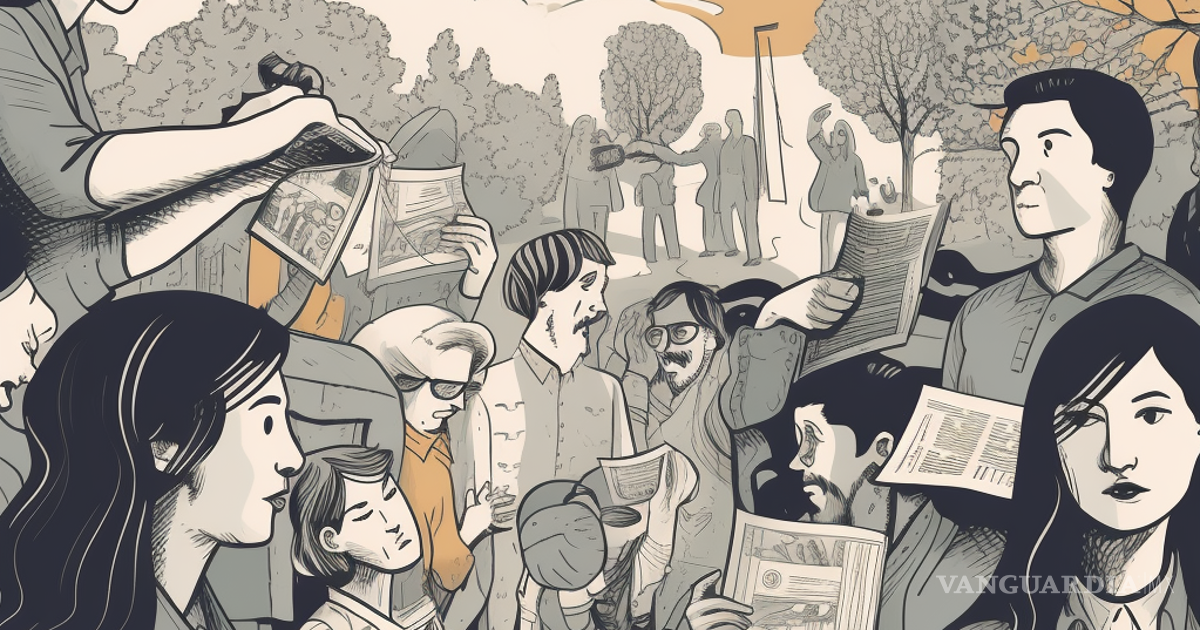
The Crisis of Truth in the Digital Age
Beyond economics, the most immediate impact of AI is being felt in the realm of information. The proliferation of hyper-realistic audio and video deepfakes has ushered in what experts call “the crisis of truth.”
When any document, statement, or image can be fabricated in a matter of minutes to manipulate political outcomes or commit fraud, public trust in institutions and media erodes completely. If a society loses its ability to agree on what is real and what is fake, the foundational pillars of democracy begin to fracture.
Systemic Dependence: Delegating critical infrastructure (such as power grids, healthcare logistics, or financial markets) to autonomous systems leaves us incredibly vulnerable to unforeseen software glitches or coordinated cyberattacks.
Mental Health and Isolation: The rise of highly personalized virtual assistants and AI companions threatens to replace genuine human interactions, potentially accelerating a global loneliness epidemic.
The Regulatory Void: Governments are moving at a legislative snail’s pace compared to the lightning speed of tech innovation, creating dangerous legal gray areas.
Core Reflection: Artificial Intelligence has no free will, nor is it actively seeking to destroy our world; it is simply an amplified mirror of our own collective decisions. The future depends on whether we deploy it as a tool for inclusive development or as an ethical-free mechanism for pure optimization.
AI possesses the potential to solve some of humanity’s most complex challenges, from personalized medicine to optimizing resources against climate change. However, the price of that progress is absolute responsibility. Technology must advance hand-in-hand with strict regulation and a deeply human-centric approach.
What do you think? Will AI destroy more opportunities than it creates, or will we be able to adapt in time? Let us know your thoughts in the comments below and share this article on your social media!

- Advertisement -






















 English (US) ·
  French (CA) ·
  French (FR) ·