

 1 month ago
31
1 month ago
31
PROTECT YOURSELF with Orgo-Life® QUANTUM TECHNOLOGY
Orgo-Life the new way to the future Advertising by AdpathwayOn February 28, the global trade system absorbed one of its most severe single-day shocks in modern history. Transit volumes through the Strait of Hormuz, the narrow chokepoint through which roughly 20 percent of global oil passes, plunged by 86 percent as hostilities between the United States, Israel, and Iran escalated. Combined with the ongoing closure of the Red Sea to commercial shipping, the world faced what analysts had long theorized but never fully modeled: the simultaneous disruption of two of its most critical maritime corridors.
The world’s largest container carriers, Maersk, MSC, and CMA CGM, suspended operations across both routes, exposing the fragility of a system built on concentration and efficiency.
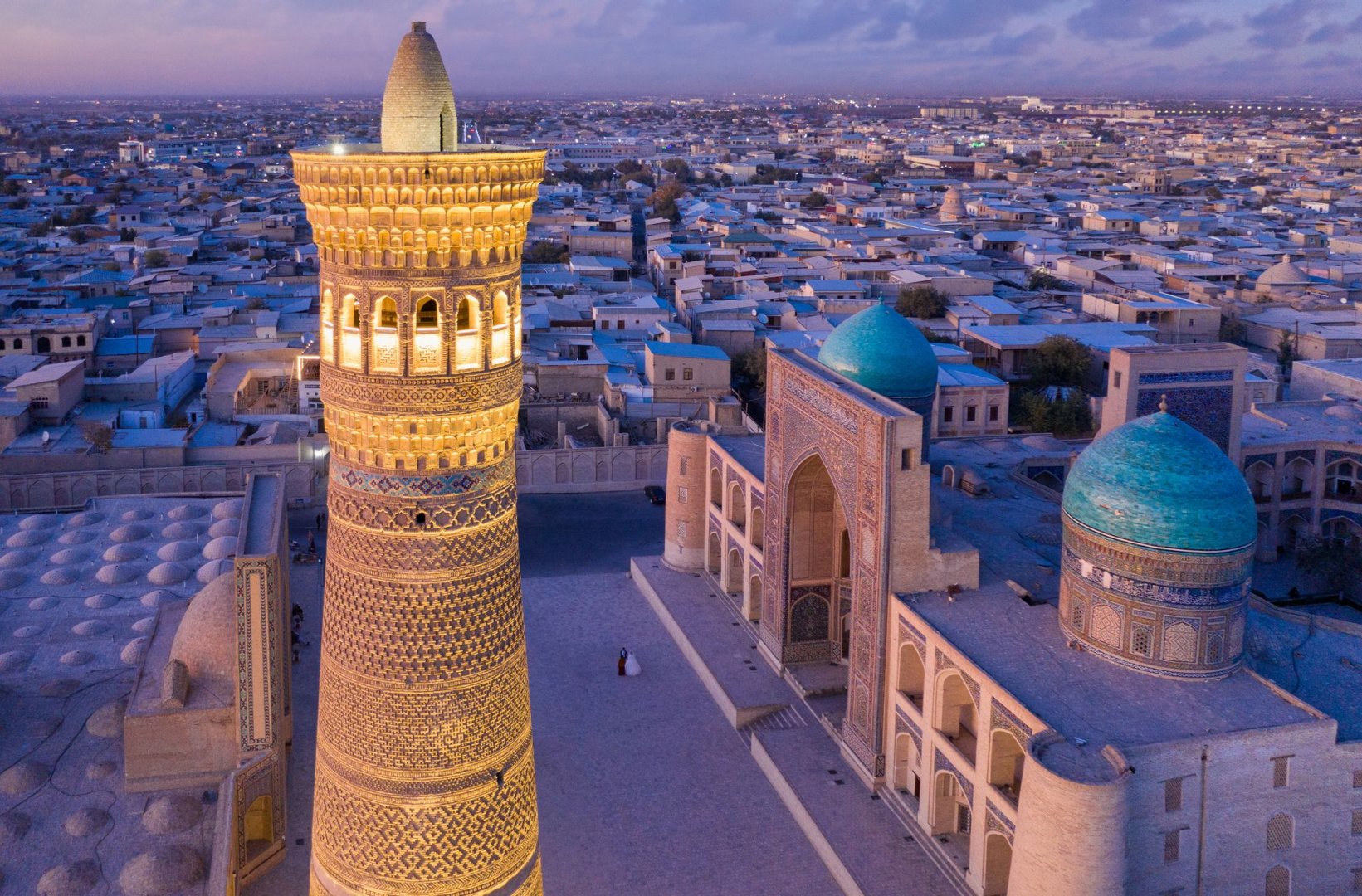
It is within this environment that the Middle Corridor, linking China to Europe via Central Asia, the Caspian Sea, the Caucasus, and Türkiye, is moving from a strategic alternative to an increasingly necessary component of Eurasian connectivity.
The current moment is not the corridor’s first test under pressure. When Russia came under sweeping international sanctions after its invasion of Ukraine in 2022, China began redirecting volumes away from the traditional Northern Route – China-Mongolia-Russia-Europe – toward the Trans-Caspian pathway. According to the OECD, cargo traffic along the Middle Corridor increased by 2.5 times in 2022 alone, reaching 1.5 million tons, driven mainly by geopolitical necessity. By 2024, cargo volumes had grown by a further 62 percent year-on-year, reaching 4.5 million tons, a threefold increase in just two years. Today, more than 60 percent of container traffic along the route consists of Chinese goods bound for Europe.
The current disruption is broader and deeper. Since the outbreak of hostilities involving Iran, the corridor has shifted from a strategic option to an operational priority. The earliest signal of that shift appeared not on land, but in the air. A single day of regional airspace disruption forced the rerouting or grounding of 1,800 commercial flights across Eurasian corridors, while air freight rates between South Asia and Europe surged by 70 percent in the weeks that followed. The narrow air corridor over the Caucasus which is already carrying traffic diverted from Russian airspace since 2022, has effectively become a central transit artery linking Europe and Asia.
What is unfolding in the skies is perhaps an early signal of deeper structural shifts in how goods will move across Eurasia.
The disruption of traditional maritime routes carries a measurable price. Rerouting traffic via the Cape of Good Hope adds between 10 and 14 days to voyages, and carriers have introduced war-risk surcharges ranging from $1,500 to $3,500 per container. The International Energy Agency’s authorization of a 400 million-barrel release from strategic reserves underscored just how far conditions had shifted beyond normal parameters.
Against this backdrop, the Middle Corridor’s advantages are becoming clearer. A route that bypasses the Strait of Hormuz, avoids the Red Sea, and carries no sanctions-related routing exposure offers something valuable: geographic insulation. That is precisely the kind of resilience that supply chain planners are now beginning to prioritize. With the first container train of 2026 completing the Xi’an-Baku segment in just 11 days, the corridor is competitive.
Without coordination, however, expansion simply creates congestion on a larger scale. The important issue is is whether the corridor’s physical expansion will be matched by the institutional architecture needed to govern it effectively.
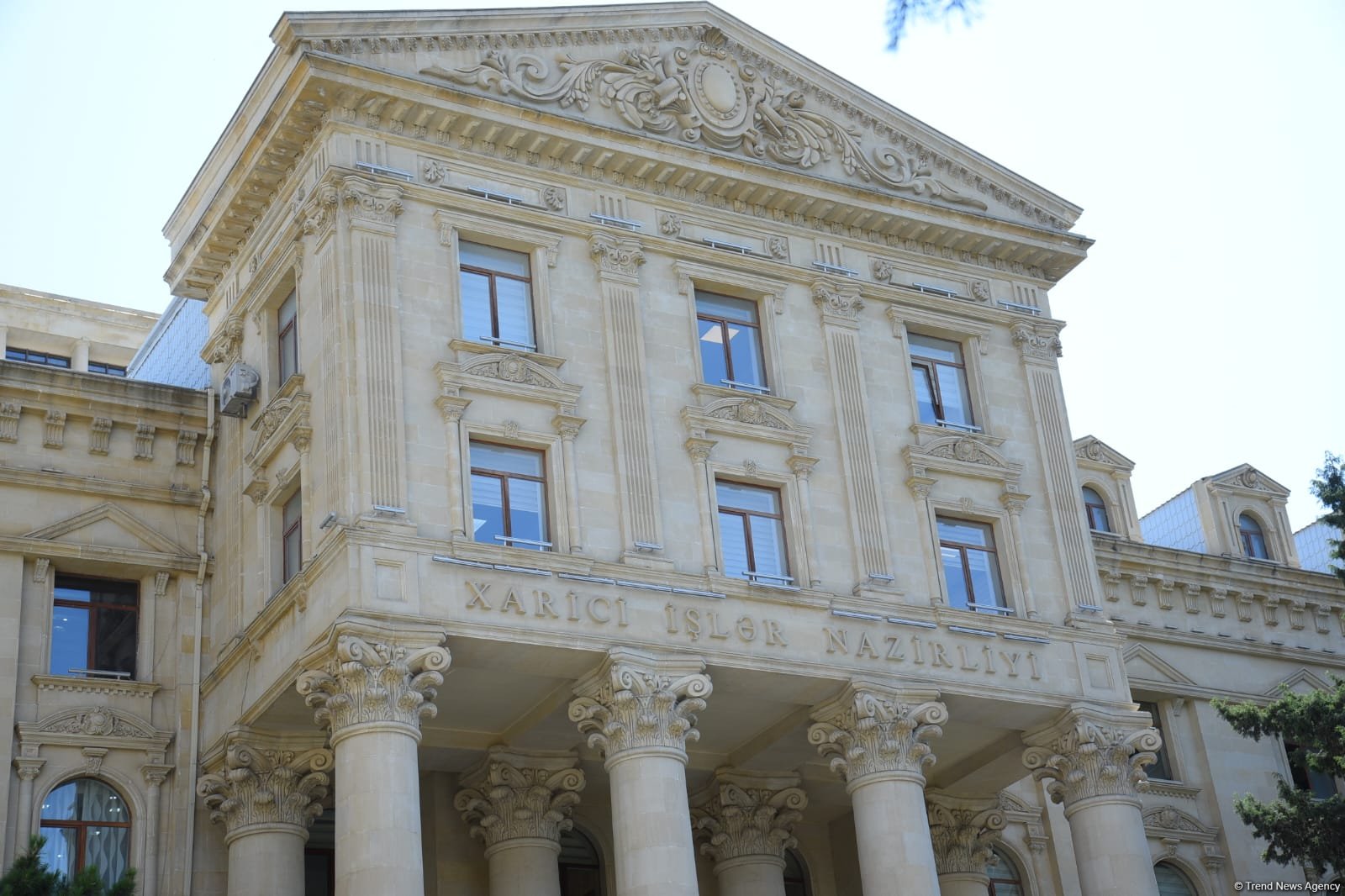
At the Second Meeting of Heads of Government of the Organization of Turkic States, held in Baku on April 1-2, OTS Secretary-General Kubanychbek Omuraliev projected a further 10 percent increase in corridor volumes in 2026, building on the nearly 11 percent growth recorded in 2025, when transit volumes reached approximately 5 million tons. Kazakhstan has set a target of 5.2 million tons of transit cargo for the year. These figures reflect growing alignment between infrastructure planning and shifting trade realities. BCG projects that the corridor will grow three to four times over the current decade, while the World Bank projects freight volumes to reach 11 million tons annually by 2030.
This infrastructure push is already underway, with the expansion of the Baku-Tbilisi-Kars railway to handle up to 5 million tons per year, growing Caspian port capacity, and the development of Georgia’s Anaklia port to ease Black Sea bottlenecks. The Horadiz-Aghband railway (15 million tons capacity) is also set for completion this year, and there is ongoing coordination under the Trans-Caspian International Transport Route to better align cross-border and multimodal operations.
The corridor’s key transit states have also developed holding structures and coordination platforms that sit at the intersection of rail, maritime, and port logistics.
In Kazakhstan, national logistics operators and state-backed transport holdings are scaling up capacity along the Trans-Caspian segment, aligning rail throughput with growing Chinese export volumes and coordinating intermodal handoffs at Aktau and Kuryk. In Georgia, efforts around the Anaklia Deep Sea Port project and the Poti Free Industrial Zone reflect a deliberate push to position the country as a value-adding node within a broader logistics architecture.
In Azerbaijan, the Azerbaijan Transport and Communications Holding is emerging as a cross-modal coordination platform, integrating the country’s rail, Caspian maritime, and port infrastructure into a more unified operational framework capable of engaging partners across the full length of the route. Beyond infrastructure integration, AZCON is positioning itself as a strategic interface between state assets and international partners, enabling both connectivity and the governance, coordination, and execution capacity required to turn the Middle Corridor into a reliable system. What these actors share is recognition that the corridor’s next constraint is organizational as well as physical.
There is a paradox at the heart of the Middle Corridor’s rise that is rarely stated plainly. Each major surge in corridor volumes has been driven by disruption: the sanctions on Russia, the instability in the Red Sea, and the war in Iran. In each instance, the corridor absorbed the pressure and demonstrated its operational viability. Yet a route that proves its value mainly in times of crisis is yet to become a core trade artery. It remains, structurally, an alternative which could recede as stability returns in these other regions.
If maritime routes normalize, if sanctions regimes evolve, or if competing corridors regain predictability, the commercial incentives now driving traffic along the Middle Corridor may shift accordingly. Infrastructure alone does not secure long-term flows once the conditions that drive their initial diversion begin to ease.
This is why the governance question is central. With freight volumes projected to reach 11 million tons annually by 2030, the corridor’s long-term relevance will depend on whether it can move beyond a disruption-driven model and become institutionally embedded. That requires more than infrastructure such as harmonized transit rules, predictable tariff structures, and operational frameworks that give shippers, operators, and investors’ confidence regardless of geopolitical conditions.
The countries and companies that have established this foundation now, rather than in response to the next disruption, will determine whether the Middle Corridor consolidates its role as a permanent component of Eurasian connectivity or continues to function primarily as its most reliable alternative.









 English (US) ·
  French (CA) ·
  French (FR) ·