

.jpg) 1 month ago
45
1 month ago
45
PROTECT YOURSELF with Orgo-Life® QUANTUM TECHNOLOGY
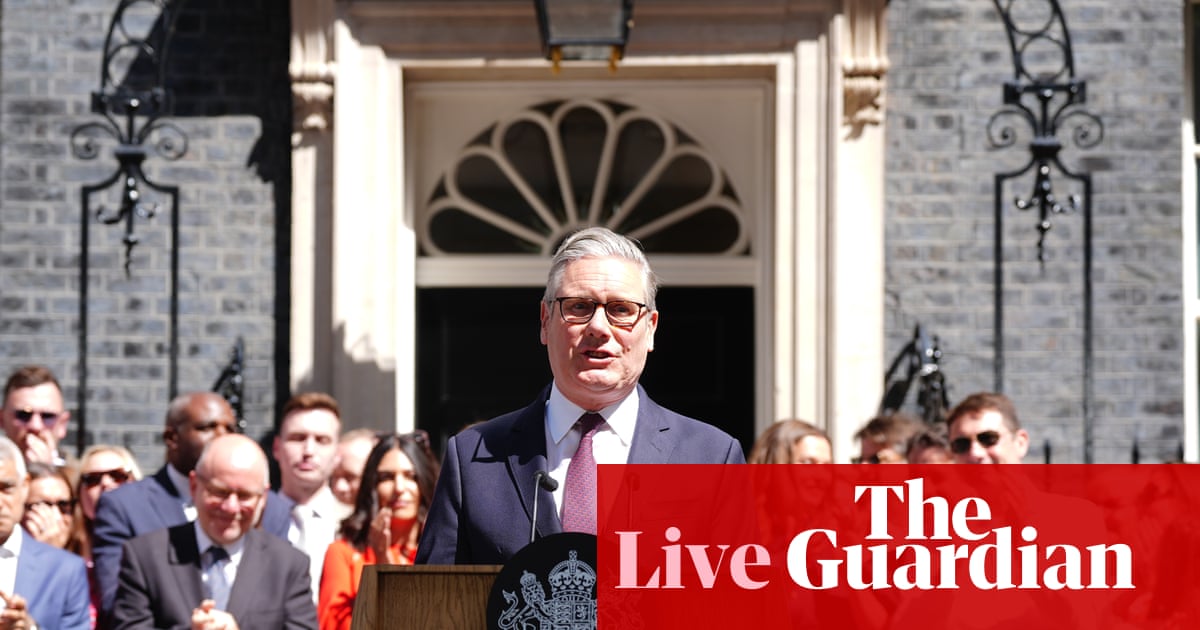
Orgo-Life the new way to the future Advertising by Adpathway A protester holds a sign that reads "Let Cuba Live" as U.S. Secretary of State Marco Rubio (L) arrives to testify during a Senate Foreign Relations Committee hearing in the Dirksen Senate Office Building on June 02, 2026 in Washington, DC. In his first public hearing since the start of the war in Iran, Rubio is testifying on the State Department’s FY2027 budget request. (Photo by Anna Moneymaker/Getty Images)
Dr. Isaac Newton
News Americas, NEW YORK, NY, Weds. June 3, 2026: In a world where powerful states can decide that another nation’s government may be removed, small nations do not survive by force or wealth. They survive by defending a single principle before it is ever tested: that no state has the right to rewrite another by power.
First, small states survive because rules exist that restrain power. A Caribbean nation cannot outspend, outfight, or outpressure global powers. Its survival depends on a shared agreement that borders and governments are not to be rewritten by force. When that agreement holds, small states have space to exist with dignity. When it weakens, small states do not gain new tools; they lose their only protection.
Second, every exception becomes a precedent. If intervention is accepted in one case because it appears justified, then the same reasoning becomes available in the next case. The Caribbean cannot treat Cuba or Venezuela as isolated situations because the real issue is not the country involved, but the permission being created. Once permission exists, it can be reused by stronger actors in different places, under different labels.
Third, geography does not adjust itself to political change. Governments rise and fall. Leaders change. Policies are rewritten. But Cuba remains in the Caribbean basin. Venezuela remains on its edge. Jamaica, Barbados, Guyana, and Trinidad and Tobago remain in the same geographic position regardless of global shifts. A foreign policy built on temporary political conditions rather than permanent geography places small states in a position of constant instability.
Fourth, trust is one of the few forms of power available to small states. Large nations rely on military reach and economic force. Small nations rely on credibility being consistent, predictable, and reliable. The Caribbean has built influence in global affairs not through coercion but through the ability to be trusted across different political environments. When that consistency breaks, influence does not change shape; it declines.
Fifth, memory shapes future credibility. Cuba provided medical training when the region lacked doctors. Venezuela provided energy support when several economies faced severe pressure. No nation is required to offer permanent loyalty. But every nation is judged by how it treats those who stood with it when conditions were difficult. If those experiences are dismissed whenever pressure rises, then future partners will assume that all commitments are temporary.
Sixth, history shows that intervention is rarely introduced in direct terms. It is usually framed through language such as stability, security, democracy, or necessity. The justification changes, but the underlying structure remains similar. Once the international system accepts that sovereignty can be suspended when a powerful state deems it necessary, weaker states inherit a world where rules bend toward capability rather than equality.
Seventh, independence requires the ability to think and act under pressure without surrendering principle. The Caribbean can disagree with Cuba or Venezuela on specific policies while still defending their right to exist without external removal. It can cooperate with the United States while rejecting any principle that would become dangerous if applied universally. Sovereignty is not agreement with the powerful. It is the capacity to maintain principle when power moves in another direction.
Is Cuba or Venezuela right in every decision? No country is. Sovereignty is a universal right, not a conditional privilege granted by the powerful. If sovereignty becomes conditional, it will not remain secure anywhere. For the Caribbean, this is essential to its thriving.
It is an issue that shapes its future before that future arrives.













 English (US) ·
  French (CA) ·
  French (FR) ·