

 1 month ago
19
1 month ago
19
PROTECT YOURSELF with Orgo-Life® QUANTUM TECHNOLOGY
Orgo-Life the new way to the future Advertising by AdpathwayUS trading partners have rejected Washington’s rationale for new duties covering virtually all American imports
Washington’s decision to impose sweeping new tariffs over alleged failures to combat forced labor has triggered protests and bewilderment among some of its largest trading partners.
The duties, which took effect on Friday, target goods from 60 economies that account for more than 99% of US imports. The EU, Australia, Brazil, Norway, Japan and China have all challenged the justification behind them.
EU foreign policy chief Kaja Kallas rejected Washington’s accusations as unfounded and claimed the bloc offered stronger protections for workers than the US. “We have paid vacations, we have very good labor conditions for our employees, so it’s not really grounded,” she said.
Kallas also claimed that European companies valued “predictability” and stressed that Brussels had honored its trade commitments to Washington. Her remarks come as the EU struggles with high energy prices and weakening industrial competitiveness after abandoning cheap Russian gas.
Australia called the tariffs “unjustified,” while Brazil accused Washington of exploiting a human-rights issue to impose new trade restrictions. Norway said there was “no basis” for the measures, Japan defended its labor and trade standards, and China rejected the allegations along with unilateral tariffs.
The new duties range from 10% to 12.5% and replace a temporary 10% global tariff that expired on Friday. Countries that have adopted or pledged to enforce bans on forced-labor imports generally face the lower rate, while the others have been assigned 12.5%.
Oil, gas, fertilizer, certain food products, aircraft, critical minerals and goods already covered by separate US tariffs are exempt.
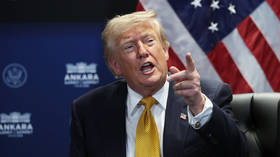
Defending the move, US Trade Representative Jamieson Greer said Washington had enforced a ban on forced-labor imports for nearly a century and argued that its trading partners should do the same. He said the tariffs aim to address “both a human rights abuse and distortive trade practice” and improve conditions for workers.
The Trump administration adopted the new measures after the US Supreme Court struck down the president’s earlier global tariffs imposed under emergency powers. Washington has now turned to a different trade law, arguing that weak enforcement abroad gives foreign producers an unfair advantage over American workers.
Critics have argued that the forced-labor rationale is primarily a way to rebuild Trump’s global tariff system on a firmer legal basis.
The immediate economic impact is expected to be limited because the duties largely replace the expired 10% rate. However, Washington is also pursuing a separate investigation into alleged industrial overcapacity involving 16 major trading partners, including the EU and China, which could lead to further tariffs.













 English (US) ·
  French (CA) ·
  French (FR) ·