

 4 hours ago
9
4 hours ago
9
PROTECT YOURSELF with Orgo-Life® QUANTUM TECHNOLOGY
Orgo-Life the new way to the future Advertising by AdpathwayDeep in the misty fjords of New Zealand’s South Island, a team of researchers is trying to catch one of the world’s most elusive penguins: the forest-dwelling tawaki, or Fiordland crested penguin.For weeks, researchers stand sentry each day over a burrow on Eleanor Island, hoping to corner the female bird so they can retrieve data from its tagging device.
But this penguin has developed a clever exit strategy – digging multiple tunnels to elude its captors.
-
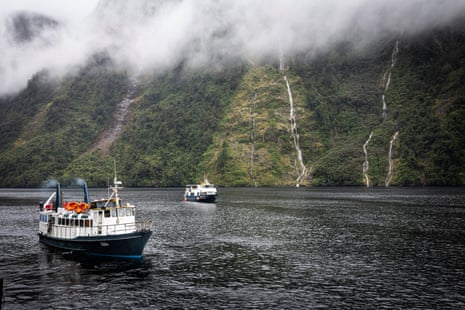
The Tutoko I prepares for a research trip during its annual Fiordland crested penguin nest survey around Doubtful Sound
“It took us about four days to recapture that bird,” says Dr Thomas Mattern, a research fellow at the University of Otago and chair of the Tawaki Project, a scientific initiative established to study the population.
“We plugged all the holes around the nest so that it could not escape, until we finally could recover that device,” he adds.
In a first for the species, Tawaki Project researchers are conducting long-term population counts, unlocking secrets about the bird’s breeding and foraging habits, and what threats they might face.
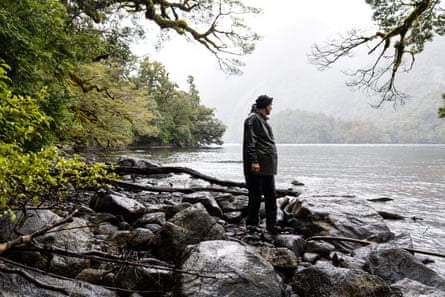
The project is New Zealand’s most comprehensive mapping of tawaki nests. Over September, it mapped 93 nests across two islands in Fiordland, and has now mapped 1,200 nests across nine fjords in the past 12 years. Its mapping shows the tawaki population is roughly three times bigger than earlier surveys suggest, says Mattern, pictured below at Precipice Cove.
-
Dr Thomas Mattern searches for tawaki near Precipice Cove during a research trip with the Tawaki Project
The Māori name for crested penguins, tawaki, is a catch-all for several species around New Zealand and the sub-Antarctic region, but the focus of this annual voyage is on the declining species that inhabits remote Fiordland, New Zealand’s largest national park, which is Unesco heritage listed.
Until German-born Mattern and his wife, Ursula Ellenberg, founded the volunteer research project in 2014, almost nothing was known about Fiordland’s tawaki, which stands half a metre tall, and features prominent yellow eyebrows.
“Tawaki are a ghost,” Mattern says of the penguin’s enigmatic behaviour.
But “they are the most amazing penguin species … They do not fit any penguin mould. What we know about penguins, you throw it all out of the window.”
-
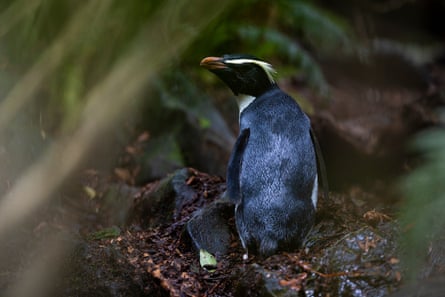
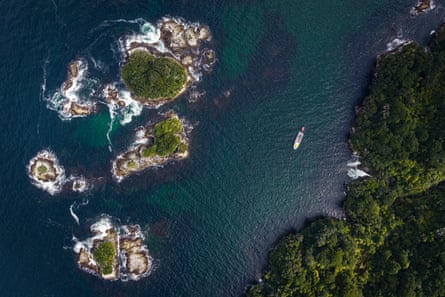
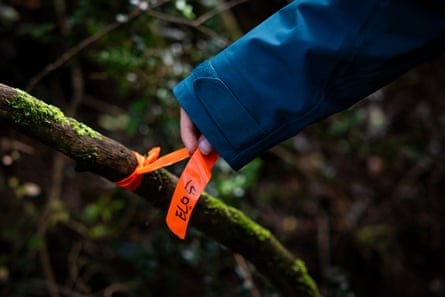
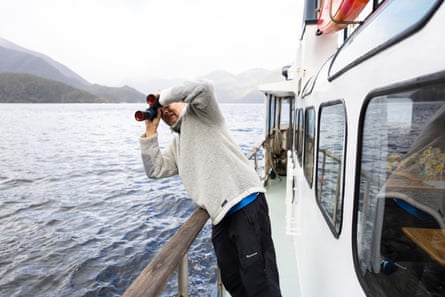
Clockwise from top left: A tawaki taking shelter. A research vessel at anchor near the Shelter Islands. Dr Thomas Mattern looks for penguins. A nest tag on Eleanor Island
Unlike most penguins, the Fiordland tawaki do not breed in colonies, preferring instead to build single burrows deep in dense rainforest, sometimes at high elevations. While some other species can nest in forests, tawaki are unique because they nest exclusively in forests, Mattern says, describing them as “proper jungle penguins”.
Its hunting habits are also unusual. Some groups fish entirely within the fjords, while others hunt in the ocean.
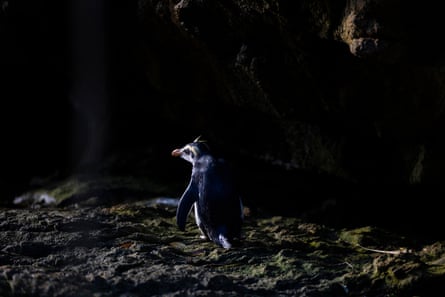
-
The tawaki’s habits have baffled scientists
“When you think you have them nailed down, you go to a different fjord, and they show behaviour that just does not conform to any of the ideas you have developed so far,” Mattern says.
‘Absolutely zero sense’
Tawaki have also become infamous among scientists for their baffling journey to feed before they go through their annual “catastrophic moult” – the scientific term for when animals shed and replace all their feathers in one go.
All penguins moult after breeding season and before they do, they eat vast quantities of food to put on weight. Despite an abundance of food around the fjords in December (when breeding season ends), tawaki undertake a 5,000 to 7,000km return trip to the sub-Antarctic region to feed.
“These emaciated tawaki, that have just said goodbye to their chicks, hop in the water and travel halfway to Antarctica, which makes absolutely zero sense because there should be more than enough food in the water just outside their breeding area,” Mattern says.
“They are running a marathon, while trying to gain weight.”
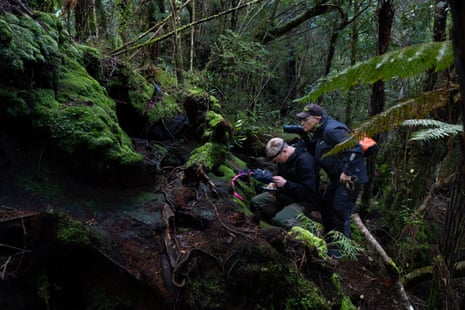
-
Researchers Owen Dabkowski and Mandy Abernethy explore a nest on Eleanor Island
Mattern believes tawaki are likely acting on ancient instinct, heading to grounds where all other crested penguin species feed.
The Tawaki Project is funded by public donations and international grants, and supported by local volunteers, such as
Richard Abernathy, the owner of tourism company Fiordland Expeditions, who donates his boat and time to the expedition for several weeks a year.
“Since 2018, we’ve been chasing penguins all over Fiordland,” says Abernathy whose ability to find nests in surprising places has earned him the nickname “sniffer dog”.
Together, their efforts have “shed light on the most understudied species” in New Zealand, Mattern says.
In 2020, the International Union for Conservation of Nature’s Red List moved tawaki up in status from “vulnerable” to “near-threatened” because the researchers were able to develop a better picture of their populations, estimated to be in the region of 12,00 to 15,000 mature birds.
-
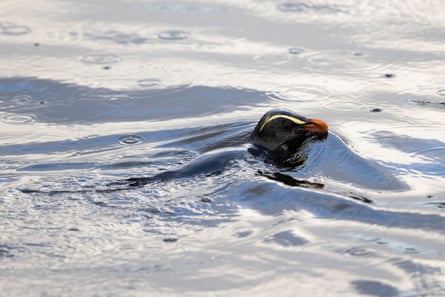
A tawaki swims in Charles Sound in Fiordland
But risks remain, including from commercial fishing practices.
“[We’re] looking at survival rates … to determine whether the population is stable,” says Mattern.
“If they’re going down, then we need to kick into gear to improve the situation for them.”






















 English (US) ·
  French (CA) ·
  French (FR) ·