

 3 months ago
61
3 months ago
61
PROTECT YOURSELF with Orgo-Life® QUANTUM TECHNOLOGY
Orgo-Life the new way to the future Advertising by AdpathwayThe US and Israel launched an attack Saturday on Iran, with the first apparent strike happening near the offices of Supreme Leader Ayatollah Ali Khamenei.
Iranian media reported strikes nationwide, and smoke could be seen rising from the capital.
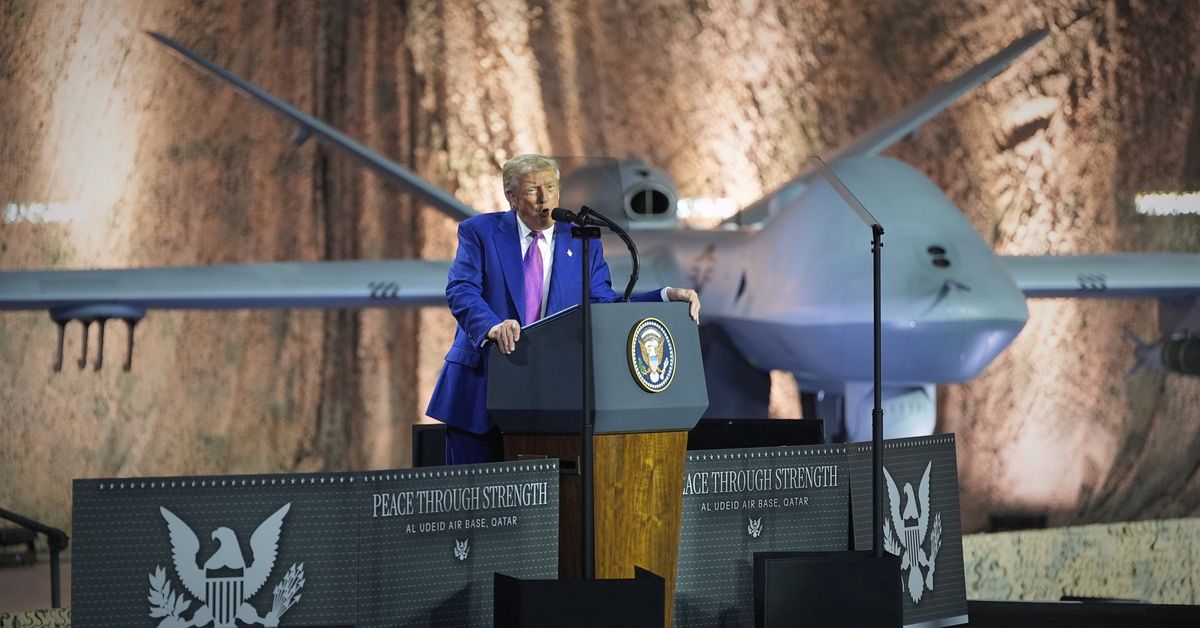
US President Donald Trump said in a video posted on social media that the US had begun "major combat operations in Iran".
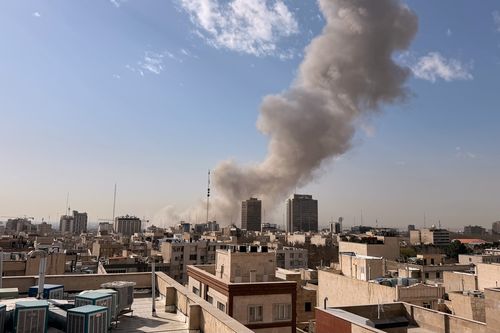 Smoke rises on the skyline after an explosion in Tehran. (AP)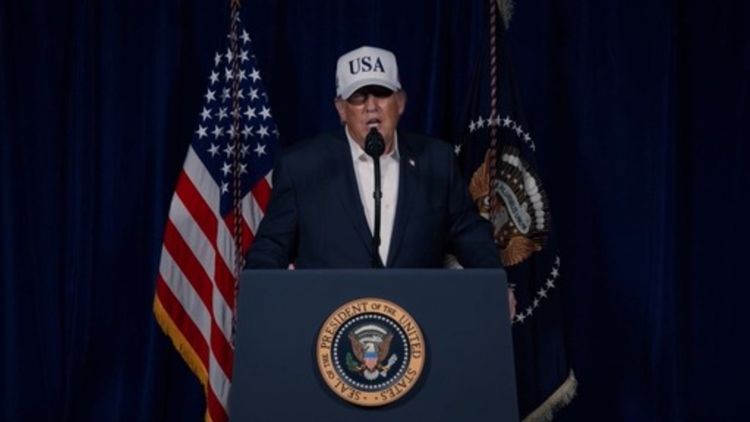
He claimed Iran has continued to develop its nuclear program and plans to develop missiles to reach US and appealed to the Iranian people to "take over your government — it will be yours to take."
Trump acknowledged that there could be American casualties following Iran strikes, saying "that often happens in war."
Israeli Prime Minister Benjamin Netanyahu said the joint attack was to "remove an existential threat posed" by Iran.
"Our joint operation will create the conditions for the brave Iranian people to take their fate into their own hands," Netanyahu said.
Iran's paramilitary Revolutionary Guard says it responded by launching a "first wave" of drones and missiles targeting Israel.
Strike hit near Supreme Leader's office
It wasn't immediately clear whether the 86-year-old Khamenei was in his offices at the time of the strike.
He hasn't been seen publicly in days as tensions with the United States have grown.
The attack comes as the United States has assembled a vast fleet of fighter jets and warships in the region to try to pressure Iran into a deal over its nuclear program.
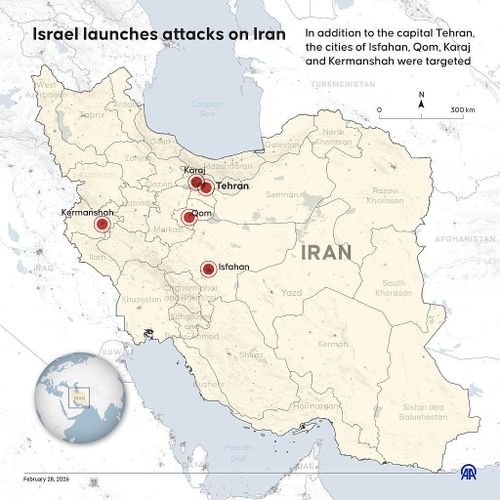 Iran map as US and Israel launch strikes (Credit Getty / Anadolu)
Iran has said it hasn't enriched since June, but it has blocked international inspectors from visiting the sites America bombed during a 12-day war then.
Satellite photos analysed by The Associated Press have shown new activity at two of those sites, suggesting Iran is trying to assess and potentially recover material there.
Iran currently has a self-imposed limit on its ballistic missile program, limiting their range to 2,000 kilometres. That puts all the Mideast and some of eastern Europe in their range.
There is no public evidence of Iran seeking to have intercontinental ballistic missiles, though Washington has criticised its space program as potentially allowing it to one day.
Iran has vowed to respond if attacked, including saying American military personnel and bases spread across the region would be targets. Hours after the strikes on Iran, explosions rocked northern Israel as the country worked to intercept incoming Iranian missiles.
The blasts echoed just after the Israeli military said it would be using its air defence systems to bring down the Iranian fire. There was no immediate word on any damage or casualties from the ongoing attack.
Sirens also sounded in Jordan.
Several hospitals in Israel launched their emergency protocols, including moving patients and surgeries to underground facilities.
Trump tells Iranian officials to lay down arms or 'face death'
Trump called the attacks on Iran "a noble mission," saying they were necessary because of Iran's pursuit of nuclear weapons and missile systems that could reach the US.
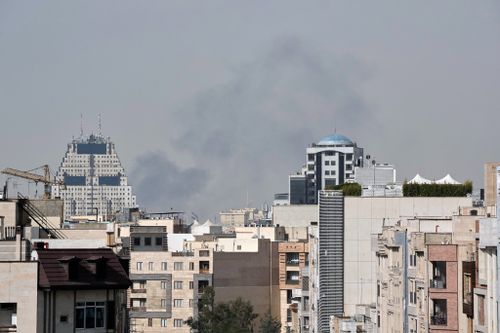 Smoke rises on the skyline after an explosion in Tehran, Iran, Saturday, Feb. 28, 2026 (AP Photo/Vahid Salemi)
He called on Iranian officials to "lay down your arms" or "you will face certain death," and encouraged the Iranian people to "take over your government — it will be yours to take."
Despite claims that last year's US strike against Iran's nuclear facilities destroyed the country's nuclear program, Trump said that Iran "attempted to rebuild their nuclear program and to continue developing the long-range missiles that can now threaten our very good friends and allies in Europe, our troops stationed overseas, and could soon reach the American homeland".
Trump said that Saturday's strikes would be part of "a massive and ongoing operation" that will aim to "destroy their missiles and raze their missile industry to the ground" as well as "annihilate their navy," and "ensure that the region's terrorist proxies can no longer destabilise the region or the world and attack our forces."
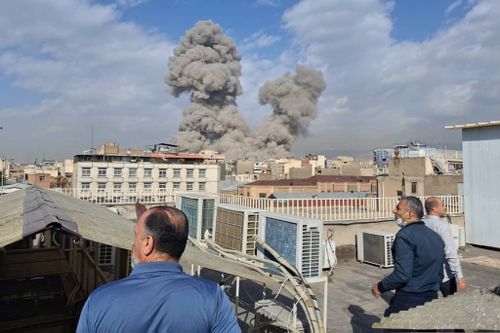 People watch as smoke rises on the skyline after an explosion in Tehran, Iran, Saturday, Feb. 28, 2026. (AP Photo)
Removing 'threats', Israel says
Roads to Khamenei's compound in downtown Tehran had been shut down by authorities as other blasts rang out across the capital. Neighbouring Iraq closed its airspace, according to the Ministry of Transport.
Targets in the Israeli campaign included Iran's military, symbols of government and intelligence targets, according to an official briefed on the operation, who spoke on condition of anonymity to discuss non-public information on the attack.
Israeli Defence Minister Israel Katz described the attack as being done "to remove threats." He did not immediately elaborate.
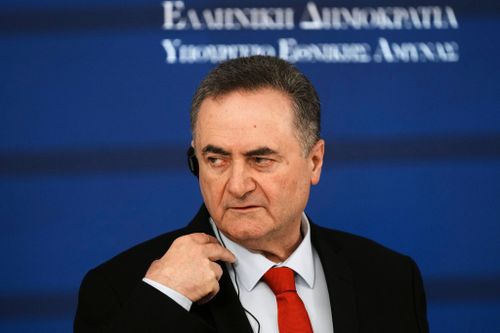 Israeli Defence Minister Israel Katz described the attack as being done "to remove threats." He did not immediately elaborate. (AP Photo/Thanassis Stavrakis)
Trump wanted a deal to constrain Iran's nuclear program, and he sees an opportunity while the country is struggling at home with growing dissent following nationwide protests.
Iran had hoped to avert a war, but maintains it has the right to enrich uranium and does not want to discuss other issues, like its long-range missile program or support for armed groups like Hamas and Hezbollah.
In Tehran, witnesses heard the first blast by Khamenei's office. Iranian state television later reported on the explosion, without offering a cause.
More explosions struck Iran's capital after Israel said it was attacking the country. Authorities have offered no casualty information from the strikes.
Meanwhile, Iran shut down its airspace and mobile phone services were cut.
The warning to pilots came out as explosions rang out across Tehran.
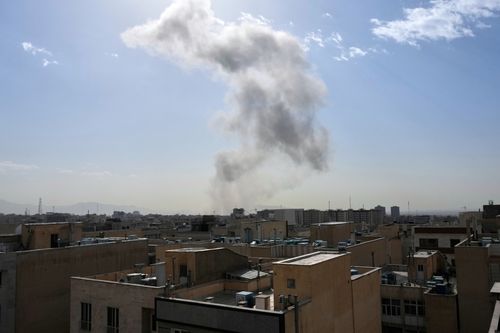 Israel said they conducted a pre-emptive strike against Iran. (AP)
Houthi vow to target Red Sea
The Iranian-backed Houthis in Yemen, meanwhile, vowed to resume missile and drone attacks on Red Sea shipping routes and on Israel in support of Iran, according to two senior Houthi officials.
They spoke on condition of anonymity because there was no official announcement from the Houthi leadership.
One of the officials said the rebels' first attack could come as soon as "tonight".
The rebels have ceased their attacks on shipping route as part of a deal with the Trump administration that also halted US strikes against the Houthis.
They also stopped their attacks against Israel after an October ceasefire that halted major fighting in Gaza.
Australia quick to react, issues urgent warnings
Anthony Albanese issued a statement of support to the US in their strikes, labelling the Iranian regime "a destabilising force".
"We support the United States acting to prevent Iran from obtaining a nuclear weapon and to prevent Iran continuing to threaten international peace and security," the prime minister said.
"Iran directed at least two attacks on Australian soil in 2024. These appalling acts targeting Australia's Jewish community were intended to create fear, divide our society and challenge our sovereignty."
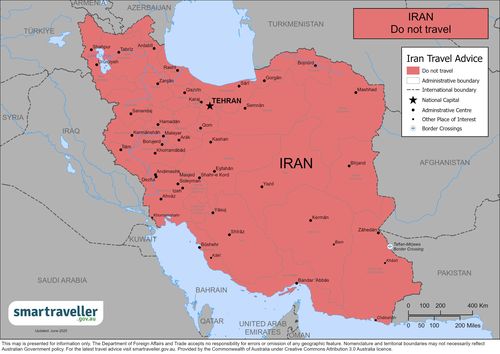 Australian Government travel advice for Iran (DFAT)
Albanese pointed out, in addition to sanctioning 200-Iranian linked individuals, Australia "took the unprecedented steps of expelling Iran's Ambassador".
Any Australians who are in Iran have been urged to leave the country, as the government issued a swift statement after news of the attacks broke on Saturday evening.
"There is a risk of reprisal attacks and further escalation across the region," it said in an updated travel advisory.
"Closure of airspace around transit hubs may impact flights globally, causing delays and cancellations."
It also warned the Australian Embassy in Tehran had suspended its operations, meaning the ability for it to offer support for stranded Australians is "extremely limited".
The Department of Foreign Affairs and Trade (DFAT) also urged those in Israel and Lebanon to consider their future plans, advising "the security situation could deteriorate rapidly throughout Israel with little or no notice".
"The Australian Government has directed the departure of all dependants of Australian officials posted to Israel in response to the deteriorating security situation in the Middle East," they said.
- Reported with Associated Press and CNN.
NEVER MISS A STORY: Get your breaking news and exclusive stories first by following us across all platforms.


















 English (US) ·
  French (CA) ·
  French (FR) ·