

.jpg) 1 month ago
103
1 month ago
103
PROTECT YOURSELF with Orgo-Life® QUANTUM TECHNOLOGY
Orgo-Life the new way to the future Advertising by AdpathwayWASHINGTON — American warplanes redoubled their airstrikes across Iran over the weekend, escalating beyond recent tit-for-tat strikes following ballistic missile and drone attacks that killed at least two US Army soldiers in Jordan on Friday.
For the tenth consecutive night, US fighter jets launched strikes in Iran on Monday, after an earlier round of strikes hit what US Central Command (CENTCOM) described as Iranian military command centers, air defenses and coastal surveillance facilities, along with drone and missile depots and launch sites.
The blitzes over the weekend and on Monday were designed to disrupt Iran’s ability to continue attacks on shipping in the Strait of Hormuz, CENTCOM said, and to “swiftly punish Islamic Revolutionary Guard Corps forces who launched attacks against American service members in Jordan” on the night of July 17.
At least three ballistic missiles targeted the Muwaffaq Salti Air Base (MSAB) in Jordan within just 24 hours on Friday. The base has grown into a major operations hub for US military aircraft flying sorties to support Washington's strikes in Iran throughout the five-month war.
The barrages marked the first time Iran is known to have successfully hit MSAB with ballistic missiles during the conflict, suggesting the IRGC has once again widened the geographic scope of its projectile attacks in an apparent attempt to deny the US military the safe use of airstrips further afield across the region.
US deploys more fighters
The attacks came just days after the US reimposed its naval blockade of Iran’s ports last week, jettisoning a prior ceasefire agreement, although both sides continue to engage in diplomatic messaging over potential talks to end the war. Over the weekend, US Air Force refueling tankers, as well as F-16 and F-35 fighter aircraft, departed bases in the UK and Germany headed towards the region, signaling Washington’s willingness to escalate further.
The Trump administration has proposed to Iran’s leaders a ten-day ceasefire to get negotiations back on track, Reuters on Monday cited an anonymous senior Iranian official as saying. "Every time Iran kills an American soldier, they will pay for that killing many times over!" Trump posted on Truth Social on Monday, adding that the "directive" had been handed to top Pentagon officials.
Iran’s IRGC also claimed it had targeted US troops at the Tower-22 forward outpost on Jordan’s northern desert border with Syria, as well as the Al-Tanf Garrison in neighboring Syria. US military officials have not confirmed any strikes hit those sites. US special operations forces dismantled their facilities at Al-Tanf and withdrew from the base in February.
The US has relied on early-warning detection systems based in northeastern Jordan as well as space-based missile launch detection to thwart Iran's ballistic missiles during the war. Six US Army soldiers were killed in March in an Iranian drone strike on a facility in Kuwait.
CENTCOM identified two US Army soldiers killed in the bombardment of Muwaffaq Salti Air Base in north-central Jordan on July 17 as 1st Lt. Tyler Feehan, 25, of Hawaii and Pvt. Isabella Gonzales, 19, of Carrollton, Texas. The Iranian missile strikes hit what appeared to be a barracks, according to open source satellite imagery.
Remains of a third person were found by US military personnel at the site following the attack, but the identity had not yet been confirmed as of Saturday, US CENTCOM said. Four military personnel were evacuated to Jordanian hospitals following the attack and had been discharged by late Sunday, the command said, adding that an unspecified number of others were evaluated for “minor injuries [and] have returned to duty.”
It was not clear how the two missiles penetrated US Patriot and THAAD ballistic missile defenses in the area. The attack is under investigation, CENTCOM said.
More than 100 US military personnel have been injured in the region since mutual strikes resumed on July 7, Pentagon spokesperson Sean Parnell said Monday.
“The vast majority of injuries experienced were minor concussions,” Parnell said in a statement on X, claiming 96% of them had returned to duty.
Iran’s missiles endure
Iran’s massive ballistic missile and drone arsenal has forced American commanders to concentrate their air power assets in Israel and Jordan from early in the war, as well as refusals by some Gulf countries to allow their airspace to be used for the campaign.
But five months into the US- and Israeli-launched war, Iran’s ability to marshal what remains of its ballistic missiles and fire with precision at US bases several hundred miles from its borders threatens to further complicate American commanders' options to amass airpower in the region.
The top US commander overseeing the campaign, Navy Adm. Brad Cooper, told Senate lawmakers in May that Iran “no longer threaten[s] regional partners, or the United States, in ways that they were able to do before” the combined US-Israeli air campaign kicked off on Feb. 28.
Separately, another member of the US military was killed and at least one other wounded in Iraq on Saturday during what CENTCOM called “a controlled detonation” of unexploded ordnance from a downed Iranian attack drone.
US airstrikes over the weekend also hit two water tanks in Sirik, on Iran’s coast east of the Strait of Hormuz, the water and sanitation authority for Iran’s Hormozgan region announced. That claim followed news reports that Iran had targeted a major water desalination facility in Kuwait on Friday.
The small Gulf country hosts US forces at two major bases, Camp Arifjan and the Ali Al Salem Air Base, both of which the IRGC said Monday it had targeted in response to US strikes over the weekend. Kuwait’s population of 5.1 million people relies on desalination for roughly 90% of its water supply.
Yemen’s Houthi rebels last week claimed ballistic missile attacks into Saudi Arabia for the first sustained attack since the Iran-armed faction signed a ceasefire with Riyadh in 2022. On Monday, the Houthis declared they would launch a “naval blockade” of Saudi Arabia, threatening to open a new front in the wider war between Iran and its US-aligned neighbors.
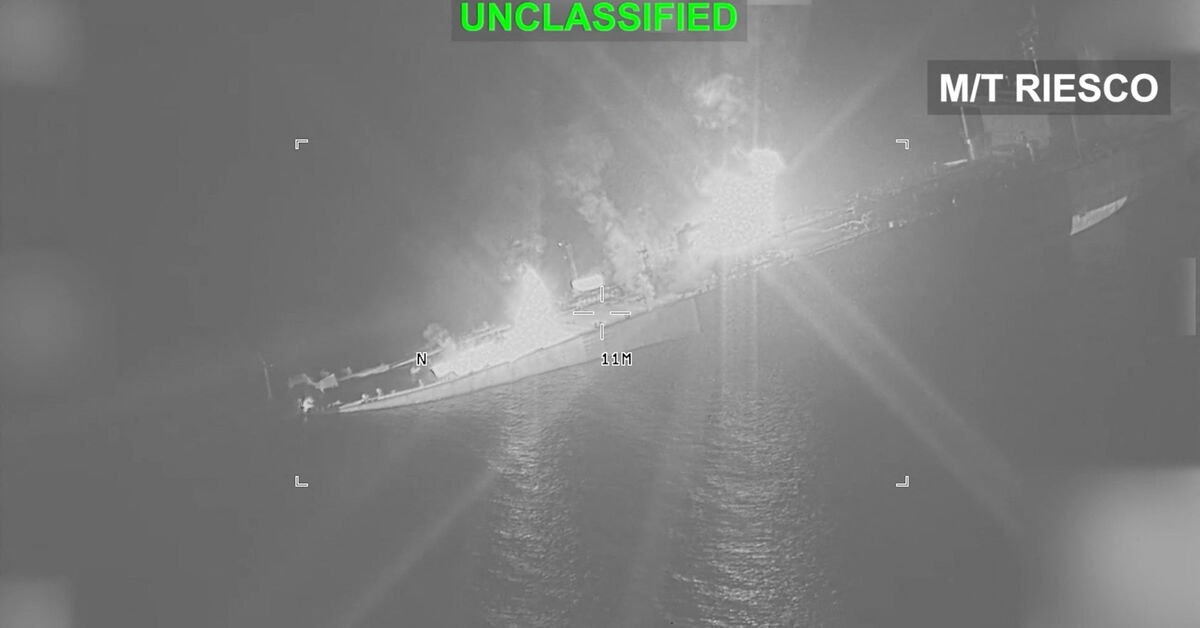
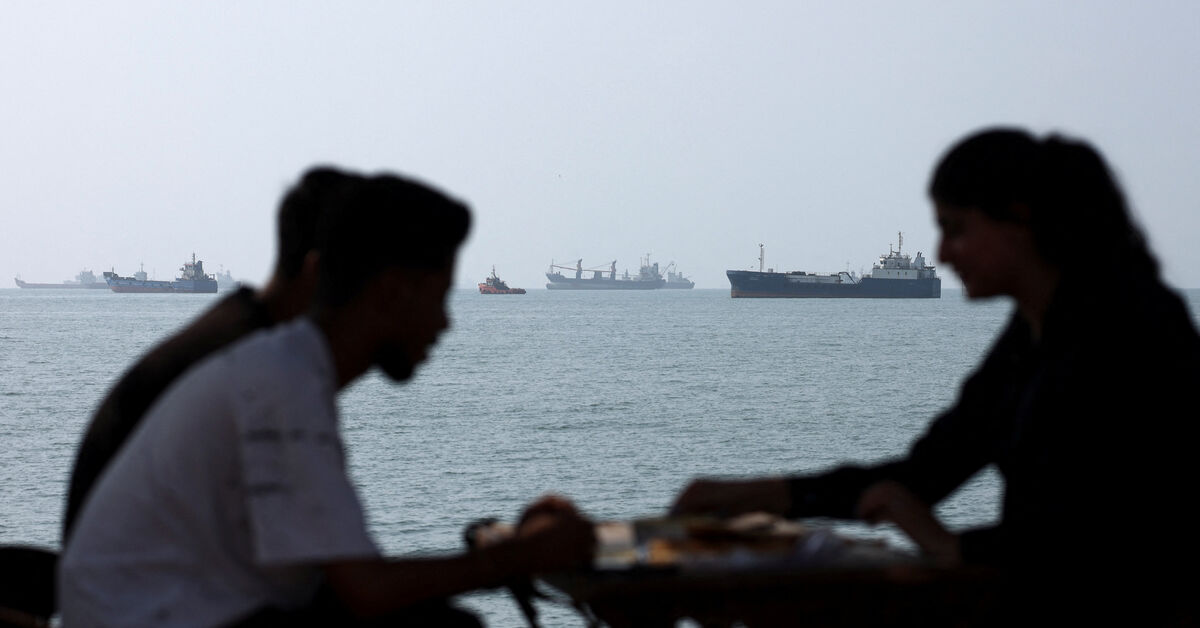
The UK Maritime Trade Organization reported that two commercial vessels had been struck on Sunday with unknown projectiles. One of the vessels was struck 17 nautical miles east of Dibba, United Arab Emirates, while the other was hit 8 nautical miles northwest of Kumzar, Oman. A fire triggered by the attack on the latter vessel remained active after the crew abandoned ship, the UKMTO said. There were no reports of casualties in either incident.














 English (US) ·
  French (CA) ·
  French (FR) ·