

.jpg) 2 months ago
49
2 months ago
49
PROTECT YOURSELF with Orgo-Life® QUANTUM TECHNOLOGY
Orgo-Life the new way to the future Advertising by AdpathwayI’ve always been a Viktor Hovland fan. He seems like a good guy and he’s never afraid to dig in and try to get his golf swing as close to perfect as it can be … for him. After missing the cut by one shot at the U.S. Open, he spent nearly four hours on the range the next day, working through an issue in his takeaway.
I can’t help but watch Hovland’s swing and cringe a little.
Not because it doesn’t work—it clearly does. I cringe because I know there are amateurs watching it who might try to copy it.
Here’s my take on his move and the parts of it that stand out to me most.
The wrist
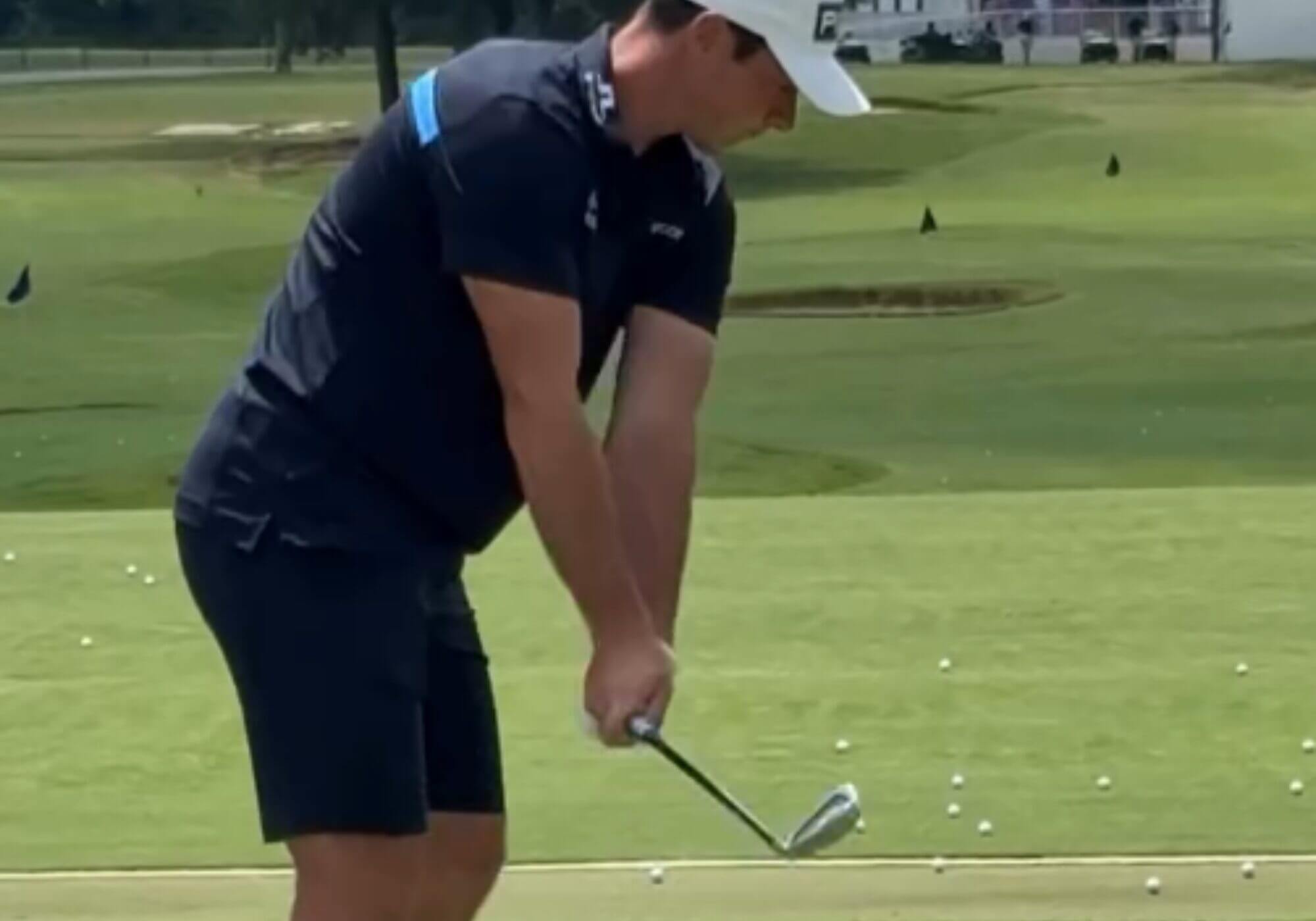
The whole conversation starts with his lead wrist. Hovland has been open about the fact that when his left wrist flexes and bows too early in the takeaway, his clubface closes. His words were something like: once that happens, he spends the rest of the swing trying to get out of it.
This is the opposite problem of most amateurs. The overwhelming majority of golfers I’ve worked with over the years struggle with too much wrist extension, a cupped position that opens the clubface and leaves them fighting a slice. Hovland’s issue runs the other direction entirely.
If you pause his swing at the top, his lead wrist is noticeably more bowed than what you’d see from an average player. It’s closer to a strong, closed position. He’s not all the way into a Dustin Johnson level of bow but he’s well past what most instructors would call neutral.
Most amateurs don’t need to worry about closing the face too much in the takeaway. They need the opposite lesson.
The plane
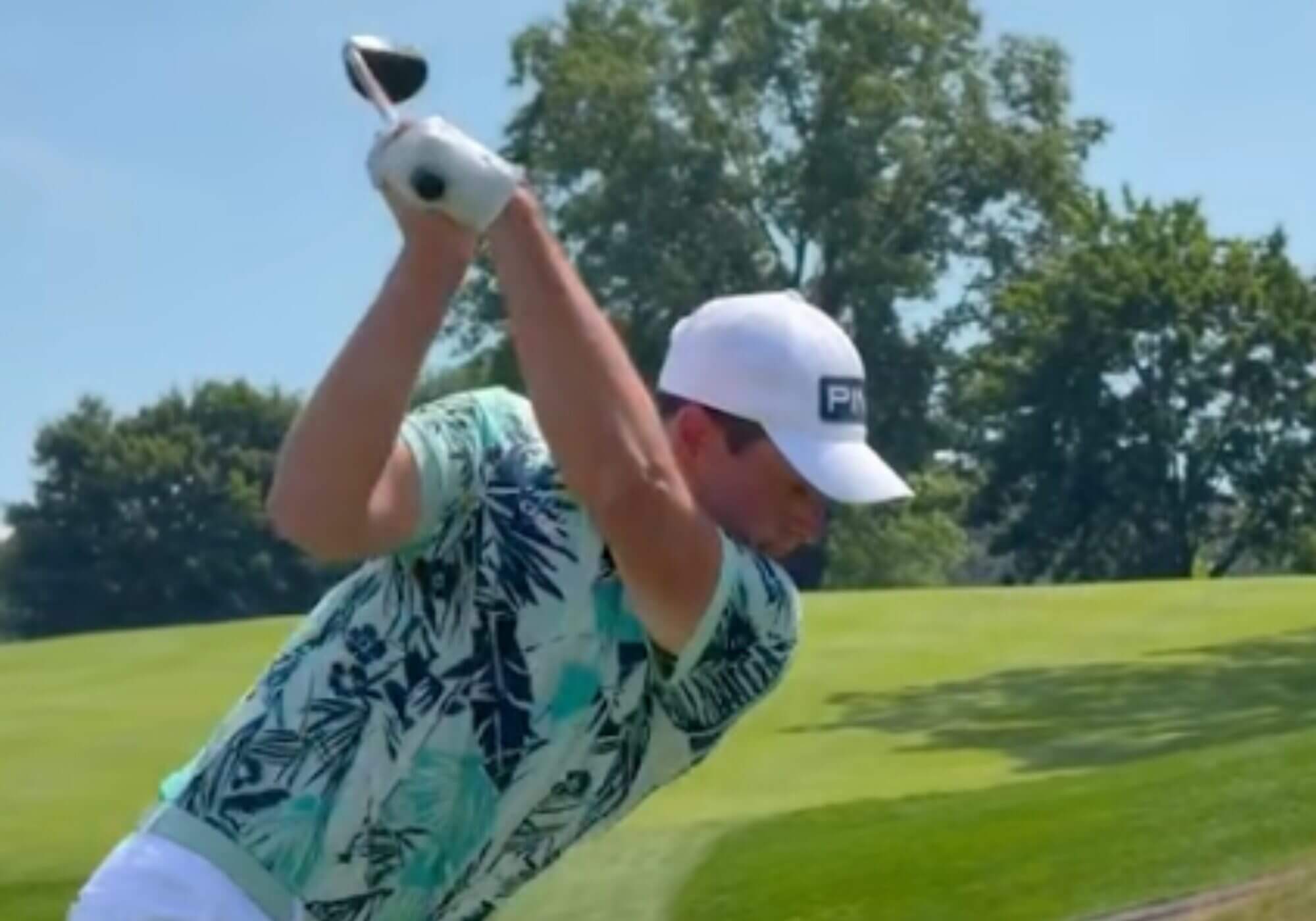
The second piece is how far under plane he gets on the backswing. His hands work very deep, well under a neutral swing plane. It’s similar to how Sam Snead used to work the club around his body.
On its own, that’s not unusual. Plenty of good players get deep with their hands. What stands out with Hovland is the combination. Add that deep hand position to the bowed wrist at the top and then add the speed and force of his hip rotation and you’ve got a swing that stays condensed and pivots hard through the ball. He doesn’t unwind gradually. He turns fast and everything downstream of that turn has to catch up in a hurry.
I once saw a swing analysis of his that I still haven’t been able to unsee. The breakdown paused Hovland’s swing about halfway down, right in transition. It pointed out that in that position he looks like he’s set up to take a box jump.
Loaded, coiled, ready to explode off the ground.
If you think about what it takes to use the ground effectively for power and consistency, that position is about as good as it gets. It’s a genuinely useful image and it’s a big part of why his swing works as well as it does.
If your hips can’t fire like his, move on
This is really the heart of it. I think Hovland’s swing is built around one specific asset: explosive hip and lower body speed, delivered from a condensed, coiled position.
Every other piece – the deep hands, the closed face, the passive release through impact – only make sense in the context of that speed.
If you don’t have that kind of rotational speed, and most of us don’t, this isn’t really a model to copy.
It’s more like watching a swing that requires a physical gift as a starting point. The same way you wouldn’t try to copy a sprinter’s stride length without a sprinter’s hips. The lesson here isn’t “don’t bow your wrist” or “don’t get deep with your hands.” It’s that those pieces only hold together because of the speed underneath them and, for most amateurs, that speed just isn’t part of the equation.
Why it looks a little over the top
Watch enough Hovland swings and you’ll notice the transition looks a little over the top, more vertical and steep coming down. It kind of is, relative to a textbook path. What saves it is timing. His hips are so far ahead of his hands and the club by the time everything arrives at impact that the path just works.
Most amateurs who swing over the top don’t have that rescue built in. Without the hip speed to shallow the club back out, an over-the-top move tends to produce the shot most weekend golfers already know too well: a pull or a slice, depending on what the face is doing. Hovland’s version looks similar in isolation and produces a different result because of what’s happening underneath it.
What can you copy
None of this means there’s nothing to take from watching Viktor Hovland swing. There are a couple of pieces worth stealing.
The ground use is the big one. That coiled, “box jump” position halfway down is a genuinely good model for using the ground to generate power and stay consistent and it’s something amateurs at almost any speed can work toward. You don’t need Hovland’s hip speed to benefit from loading into the ground better and using it to start the downswing, rather than starting everything with your arms and hands.
The other piece is the clubface at the top. Most amateurs get to the top with the face wide open relative to their swing plane which leaves a lot of work to do coming down just to get square at impact. Hovland’s issue is a face that closes too much. Yours is probably a face that’s too open.
Either way, the lesson underneath both problems is the same. The less work your hands have to do to square the clubface at impact, the more consistent you’re going to be.
Final thoughts
Hovland does things his own way and it works for him. That’s part of what makes him fun to watch. But this is one of those situations where watching professionals and trying to learn from them can get you into some trouble. Hopefully, this breakdown helps you understand his swing a little better and maybe even helps you appreciate it more without sending you down the wrong path with your own game.
If you’re going to try to replicate Hovland’s move anyway, I wish you the best of luck. And I hope you’re built just like him.






 English (US) ·
  French (CA) ·
  French (FR) ·