

 19 hours ago
2
19 hours ago
2
PROTECT YOURSELF with Orgo-Life® QUANTUM TECHNOLOGY
Orgo-Life the new way to the future Advertising by AdpathwayPhotos: María de los Ángeles Graterol, Angélica Lugo and Nadeska Noriega
In the first hours after the double earthquake of June 24, families began posting on social media, walls and lightpoles photos of missing children and teenagers. At the same time, rumors spread like wildfire, claiming that large numbers of unaccompanied children had been rescued from the disaster zones, or that they had been seen in hospital emergency rooms and then vanished. Some people even started to say they had been kidnapped by traffickers and sexual predators.
On June 26, word got around that hundreds of children were alone in Parque del Oeste, in Caracas, which was turned into a refugee camp. “More than 400, 500 children, without mom, without dad, without anyone!” exclaimed an influencer with 218,000 followers, her voice trembling with emotion, in a reel that, as of July 16, had been viewed by 118,000 people and received 13,700 comments. Another influencer posted the same distressing message and then deleted it, likely because the information turned out to be false.
The hoax caught the attention of civil society organizations and journalists who traveled to the site to verify its veracity, as well as family members who, unaware that it was untrue, went there hoping to find their missing children.
Carmen Flores was searching for her eight-year-old grandson, Jeremías, when a voice message in a WhatsApp group claimed that the boy was alive and safe in Parque del Oeste. The boy lived in the OPP 25 housing complex in Tanaguarena, one of the most impacted by the quakes. But Jeremías wasn’t in the park. Shortly after, that same day, Carmen learned he was at the home of acquaintances.
As has been confirmed, there were never 400 or 500 children alone in Parque del Oeste, or in other places mentioned in the surge of rumors.
Michelly Henríquez wasn’t so lucky. She was looking for three nephews outside Parque del Oeste on June 26. Their mother was in a hospital. Their father was looking for them in La Guaira. The family had asked for them in every shelter they knew about. They knew the children were rescued on June 24 from one of the collapsed buildings in La Guaira. “They came out with a group that was there, but now the children are missing. They are three siblings: a 15-year-old girl, and two boys, ages 13 and 9. I looked for them at the Miguel Pérez Carreño Hospital, but access is restricted.”
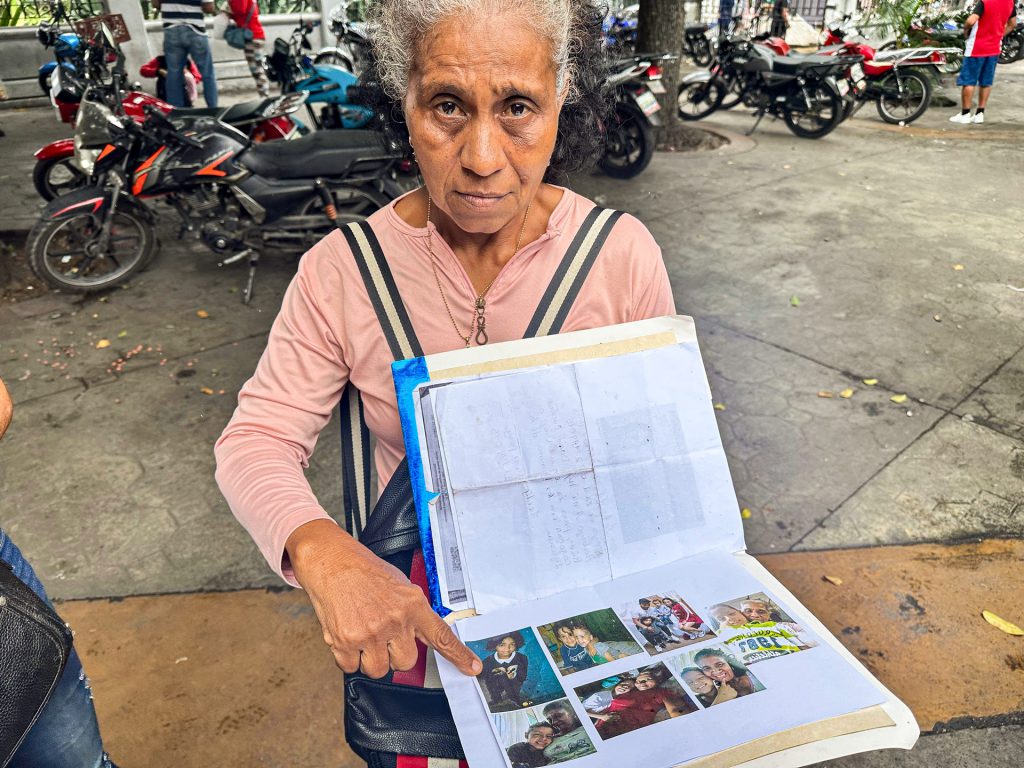 Carmen Flores was able to find his grandson, Jeremías.
Misinformation and alarm
The questions are numerous and overwhelming.
How many of the children and teenagers being searched for by their families have been rescued?
How many died trapped in the rubble?
Are there children in hospitals, shelters, or foster homes without their families knowing?
As has been confirmed, there were never 400 or 500 children alone in Parque del Oeste, or in other places mentioned in the surge of rumors.
On June 26, Erika Spillmann, president of the NGO that runs the home Hogar Bambi, appeared in a short video thanking everyone for the donations and making a plea: “We ask people to remain calm and stop spreading misinformation… We are working with the authorities, child protection agencies, and hospitals, and we will do everything possible to care for all the children who need it.” The following day, Hogar Bambi added that they did not know the source of that rumor saying they had those 200 children. In fact, they were focused on distributing aid in the temporary shelters.
On June 29, Spillmann told journalist Goizeder Azúa that very few children in hospitals and shelters are orphaned: “There was a huge wave on social media saying they are going missing (…) These children were left homeless, but they do have families.”
CECODAP, one of the organizations specializing in children and adolescents, also said there was no proof that a massive number of children and adolescents were abandoned or separated from their families in hospitals or shelters.
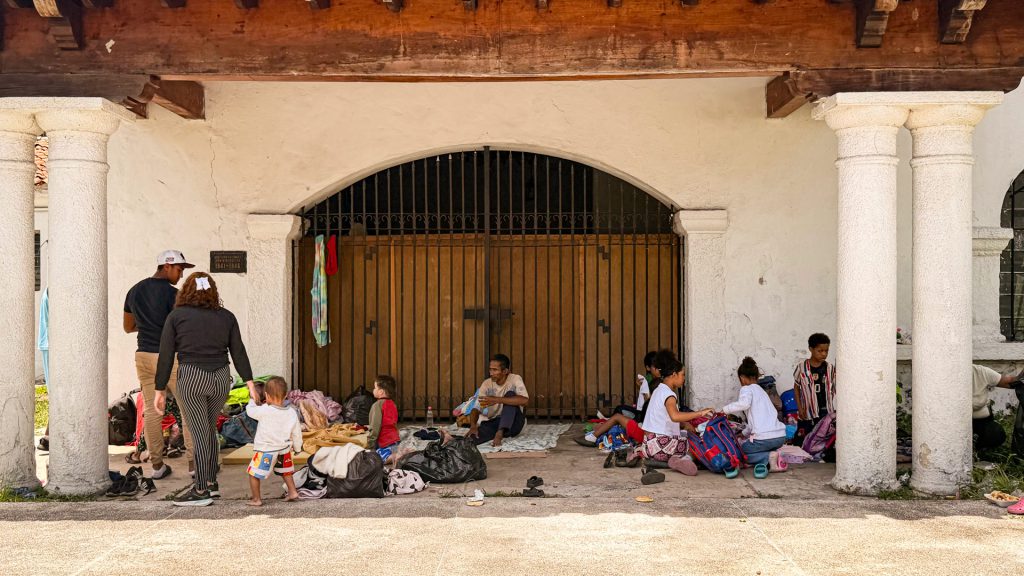
Just a few clues
If there are worried, anxious parents and relatives searching, are there children or adolescents currently under the protection of the State while being sought, or in private care centers after being referred by an official protection council?
We followed some leads to try to find answers.
In FUNDANA—an institution that, like Hogar Bambi, has dedicated itself for decades to sheltering children and adolescents—, its founder and director, Francis Krygier de Cohen, contrary to the belief they were admitting lost children, said three weeks after the earthquakes that they received only two children whose parents, according to the authorities, were unfit to care for them. She emphasized that they were currently working with the Child Protection Council, which would assign each NGO a specific shelter to help.
The government does not provide disaggregated data, so it is difficult to know how many children and adolescents have died, been rescued, were injured, or are currently receiving treatment.
Another shelter, Casa Hogar Nuestra Señora del Carmen, run by the Carmelite sisters in Caracas, began preparing shortly after the earthquakes. On June 27 the nuns received a formal call from officials of the local child protection council requesting that they take in approximately 25 children. Later, they were told there would be 65. The shelter’s capacity is 15 children, but they provided beds and mattresses for more. They responded to the request. However, on July 6 their director, Sister Ana María Montilla, told El Pitazo that they were caring for only 8 children from La Guaira. By July 16, when we visited, there were 20, of whom 16 were with their mothers or fathers, and only 4 were alone, while the child protection council located their families. All are receiving support and psychosocial medical care from volunteers from the Andrés Bello Catholic University and the Central University of Venezuela.
In Hogar Bambi’s most recent statement, dated July 6, they suggest that they have also received children. We were unable to confirm if they had ten days later. Meanwhile, at the Osman Catholic shelter (Social Work for Mothers and Children), which is temporarily operating at the Santa Luisa de Prado de María School in Caracas, a young nun informed us on July 14 that they haven’t received any children or teenagers, despite having the capacity to house 60. They haven’t received a response from the government. Faced with this silence, the congregation will travel to La Guaira to directly assist those in need.
A shelter with no children
The only official information regarding minors affected by the earthquakes has been a flyer from the Social Vice Presidency—headed by the Minister of Education, Héctor Rodríguez—published on June 27 on Telegram, stating that the government activated two specialized shelters for “children without family support,” although the flyer only mentions one: in the Armando Reverón housing development, in La Guaira. “We have the personnel and competent institutions to ensure that people claiming missing children can prove they are indeed their parents or relatives,” the text adds.
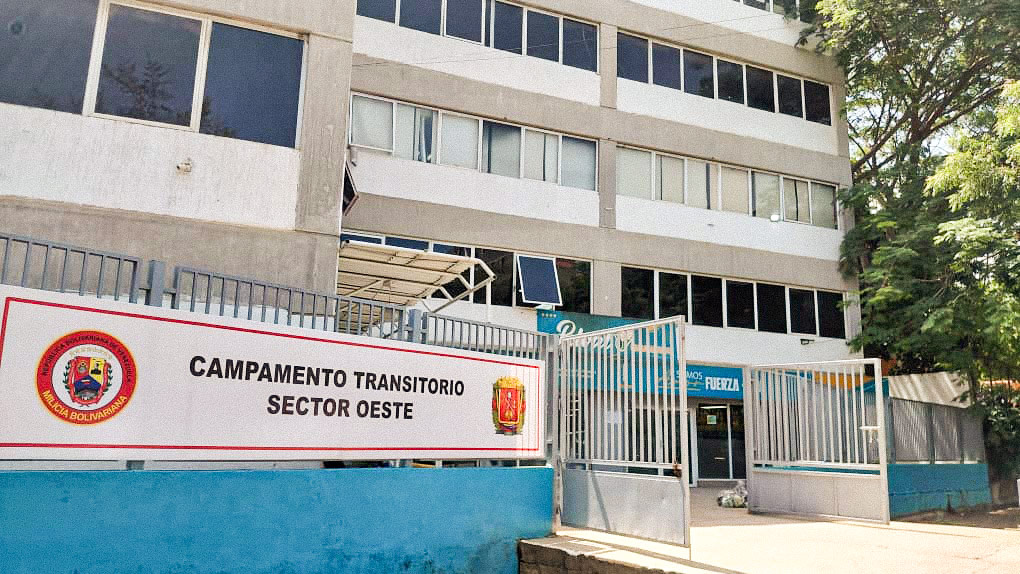
On July 2, we went there. Child protection counselors were not authorized to speak to the press but they confirmed that, to that date, no children had arrived. Mattresses and foam mats were stored in one of the building’s rooms. We returned on July 15. There was a temporary camp and makeshift offices of IDENNA (National Council for the Rights of Children and Adolescents) after their main headquarters were damaged. They had only provided shelter to two teenagers, whose families had already been located and were in the process of being reunited. A social worker also told us that they were aware of four cases of unaccompanied children taken to an IDENNA care center in Caracas.
The government does not provide disaggregated data, so it is difficult to know how many children and adolescents have died, been rescued, were injured, or are currently receiving treatment.
“When it comes to children, and even babies, time is of the essence,” warns a worker at one of the shelters visited for this report. “It’s understood that relocation can’t be done without a plan because the State needs to know where they are. But for more than eight days, for example, where were these children, who was caring for them, in what spaces were they kept, how did their families know where to place them? Among all the (shelter) institutions, there are just over 20 children. According to the limited information we have, the children were in IDENNA facilities during all this time.”
The registry of 106 temporary camps as of July 15 yields not a single piece of information about children separated from their families. If they remain in care centers, only IDENNA knows.
On June 28, IDENNA denied that minors were being handed over to strangers, emphasizing that they are receiving rigorous care and are provided with food and medical support. Two days later, the institute denied it was making phone calls to offer care or assign children, or to solicit donations. “These calls constitute an attempt at fraud and manipulation, so we urge the public to first ignore these requests and offers, and to report the phone numbers from which this crime is being attempted to the appropriate authorities.”
The institute’s official website contains no information whatsoever about its actions in this situation, except for a pop-up window on its website providing a phone number (58-424-8930561). When we contacted it via WhatsApp, the response was an automated text message with a 17-field questionnaire. In addition to the child’s and their guardian’s full name, they request information such as approximate height and weight, distinguishing features (scars, moles), time and place of disappearance, and whether the child wears glasses or braces.
Instead of answering the questionnaire, we asked to speak with an official and were told: “Through this channel, using the information provided, we can review the data on missing children and adolescents, those in hospitals, or those who have died, based on the information we have in this situation room. However, no information is released unless it is a direct or extended contact regarding the child or adolescent.”
This suggests IDENNA possesses a database of children and adolescents affected by the earthquakes. Mariella Adrián, UNICEF’s education officer, told us this United Nations agency is supporting counselors in registering and verifying the data of children who have arrived at the temporary camps. This information is then sent to a single registration system managed by IDENNA. “There are different levels of intervention in the camps that are part of the support provided by UNICEF. We must guarantee sanitary conditions, access to drinking water, nutritional requirements, education, and of course, the protection area, which is rigorously implemented within the camps,” she explained.
The protection area in any emergency like the one Venezuela is experiencing involves, among other things, activating protocols to identify missing, unaccompanied, or separated children in hospitals and shelters. An official from the Libertador municipality’s child protection council refused to explain the procedure to locate those left without family support.
Government statistics tally lives lost, injuries, and rescues, but omit the victims’ ages. The registry of 106 temporary camps as of July 15 yields not a single piece of information about children separated from their families. If they remain in care centers, only IDENNA knows. The only visible place, officially declared as a shelter for children and adolescents without family support, is a makeshift office in La Guaira where only four teenagers have arrived.
How many unaccompanied children there truly are, and where they are being held, remain unknown.
This report included field research by Joshua De Freitas, Nadeska Noriega, and Angélica Lugo. It is part of the series “Children of the Earthquake,” produced by La Vida de Nos, in partnership with Monitor de Víctimas and Tal Cual.







 English (US) ·
  French (CA) ·
  French (FR) ·