

 2 months ago
87
2 months ago
87
PROTECT YOURSELF with Orgo-Life® QUANTUM TECHNOLOGY
Orgo-Life the new way to the future Advertising by AdpathwayArgentina · Economy
Key Facts
- Credit decline Real private-sector peso lending fell 1.0% month-on-month in July 2026, per First Capital Group using BCRA data.
- Annual slide Total peso loans to the private sector dropped 1.3% in real terms year-on-year.
- Personal pain Personal loans fell 5.4% in real terms year-on-year — a tenth straight monthly decline.
- Card crunch Credit-card lending dropped 3.7% real month-on-month and 9.8% year-on-year.
- Rate pressure The private-bank benchmark rate, TAMAR, was seen near 22.4% a year in August 2026.
- Policy stance The BCRA left monetary policy unchanged, prioritising disinflation over growth.
Inflation is cooling, yet lending keeps falling in real terms — a squeeze analysts have nicknamed the “absorption trap.”
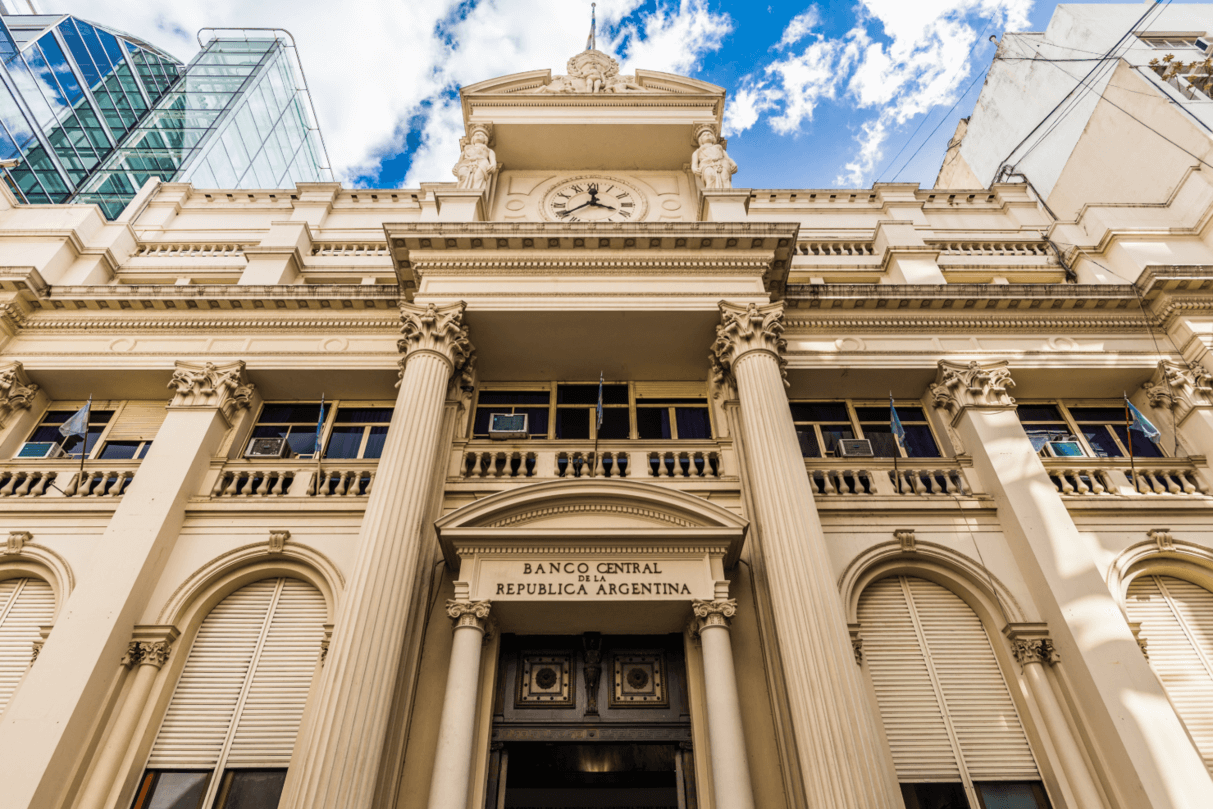
Here is a puzzle at the heart of Argentina’s economy right now: inflation is cooling, yet Argentina private credit keeps shrinking. July’s figures confirm it — bank lending to the private sector fell again in real, inflation-adjusted terms. The central bank is winning its fight on prices, but businesses and households are getting less credit, not more.
One-stop reference
Company Intelligence
Every listed company in Latin America — financials, ownership and structure for 1,450+ companies across 26 exchanges, in one place.
Why Argentina private credit keeps shrinking
The July numbers are not a blip. First Capital Group, using BCRA data, reported on August 6 that total peso loans to the private sector fell 1.0% in real terms from June, and 1.3% from a year earlier. Analysts have a name for the mechanism behind it: the “absorption trap,” a phrase popularised by the economist Christian Buteler. To hold down inflation and steady the peso, the authorities drain pesos from the system — through central-bank operations and, increasingly, the Treasury’s high-yield debt sales. That leaves banks with less to lend.
High rates do the rest. The private-bank benchmark rate, TAMAR, was seen near 22.4% a year in August — about 1.84% a month. At those levels borrowing is dear, fewer firms and families take loans, and rising delinquency, or mora, makes banks more cautious still. It becomes a loop: high rates, more defaults, tighter lending, and credit that stays flat on the floor.
What the July numbers show
The pain is broad. Personal loans fell 0.7% in real terms month-on-month and 5.4% year-on-year — a real decline now stretching ten months. Credit-card lending dropped 3.7% on the month and 9.8% on the year. Commercial loans, the working capital that small and medium firms live on, slipped 0.3%. Only mortgages managed to grow in real terms.
The BCRA’s own second-quarter 2026 Monetary Policy Report, presented on August 6, kept the policy stance unchanged. The message is plain: disinflation comes first, and the credit recovery will have to wait. The figures are not forecasts — they are what actually happened in July, drawn from the central bank’s own data.
How the absorption trap works
Think of the central bank as a sponge. To keep inflation down and the peso stable, it soaks up spare pesos from the banks, and the Treasury adds to the drain by rolling over debt at high rates. Every peso parked in those instruments is a peso not lent to a factory, a shop or a family. Banks take the deal because it is safe and pays well, but their spare cash for new lending shrinks in the process.
That is the trap. Tight money is needed to beat inflation, yet the same tight money starves the credit market. Ease too soon and inflation could flare again; stay tight and lending stays frozen. There is no comfortable exit, which is why the debate in Buenos Aires is less about whether the policy is working on prices — it is — and more about how long the real economy can wait.
Why it matters beyond Argentina
Credit is the fuel for a recovery, and Argentina cannot rebound without it. Small firms rely on working-capital lines to stock shelves and make payroll; households lean on instalments and cards to buy durable goods. When lending shrinks in real terms, consumption stays flat — the Buenos Aires Herald recently flagged a “red alert” as spending failed to pick up. Household loan defaults climbed to a record 12.7% in June, a measure of how stretched Argentine borrowers have become, and a warning sign for banks weighing whether to lend more.
President Javier Milei and Economy Minister Luis Caputo have made a deliberate trade-off, betting that lower inflation now is worth softer activity today. For the rest of the region, Argentina is a live test of whether that bet pays off — and a reminder that beating inflation and reviving credit do not always arrive at the same time.
Frequently Asked Questions
What is the “absorption trap” in Argentina?
It is a term used by analysts for a squeeze in which the central bank and the Treasury absorb pesos to control inflation and steady the currency, leaving banks with less liquidity to lend to the private sector.
Why is inflation falling while private credit shrinks?
Bringing inflation down requires tight money and high interest rates. Those same conditions make borrowing expensive and reduce the real value of new lending, so credit contracts even as prices cool.
What did the BCRA decide in its latest report?
In its second-quarter 2026 Monetary Policy Report, published on August 6, the BCRA kept its policy stance unchanged, signalling that disinflation remains its priority.
Sources: First Capital Group; Banco Central de la República Argentina (BCRA); Infobae; La Nación; Ámbito; Buenos Aires Herald.
















 English (US) ·
  French (CA) ·
  French (FR) ·