

.jpg) 2 months ago
22
2 months ago
22
PROTECT YOURSELF with Orgo-Life® QUANTUM TECHNOLOGY
Orgo-Life the new way to the future Advertising by AdpathwayDraw-biased fairway woods usually come with a pretty specific reputation. They’re built for golfers who need help turning the ball over, fighting a slice or getting the face squared up a little easier.
Because of that, they aren’t normally the models I expect to see sitting near the very top of a MyGolfSpy Most Wanted test.
The Callaway Quantum Max D changed that.
In the 2026 Most Wanted Fairway Wood test, the Quantum Max D finished second overall with an 8.9 score. More importantly, it was the best fairway wood for accuracy, earning a 9.5 accuracy score.
For a draw-biased model, that’s worth taking a closer look at.
Callaway Quantum Max D Fairway Wood
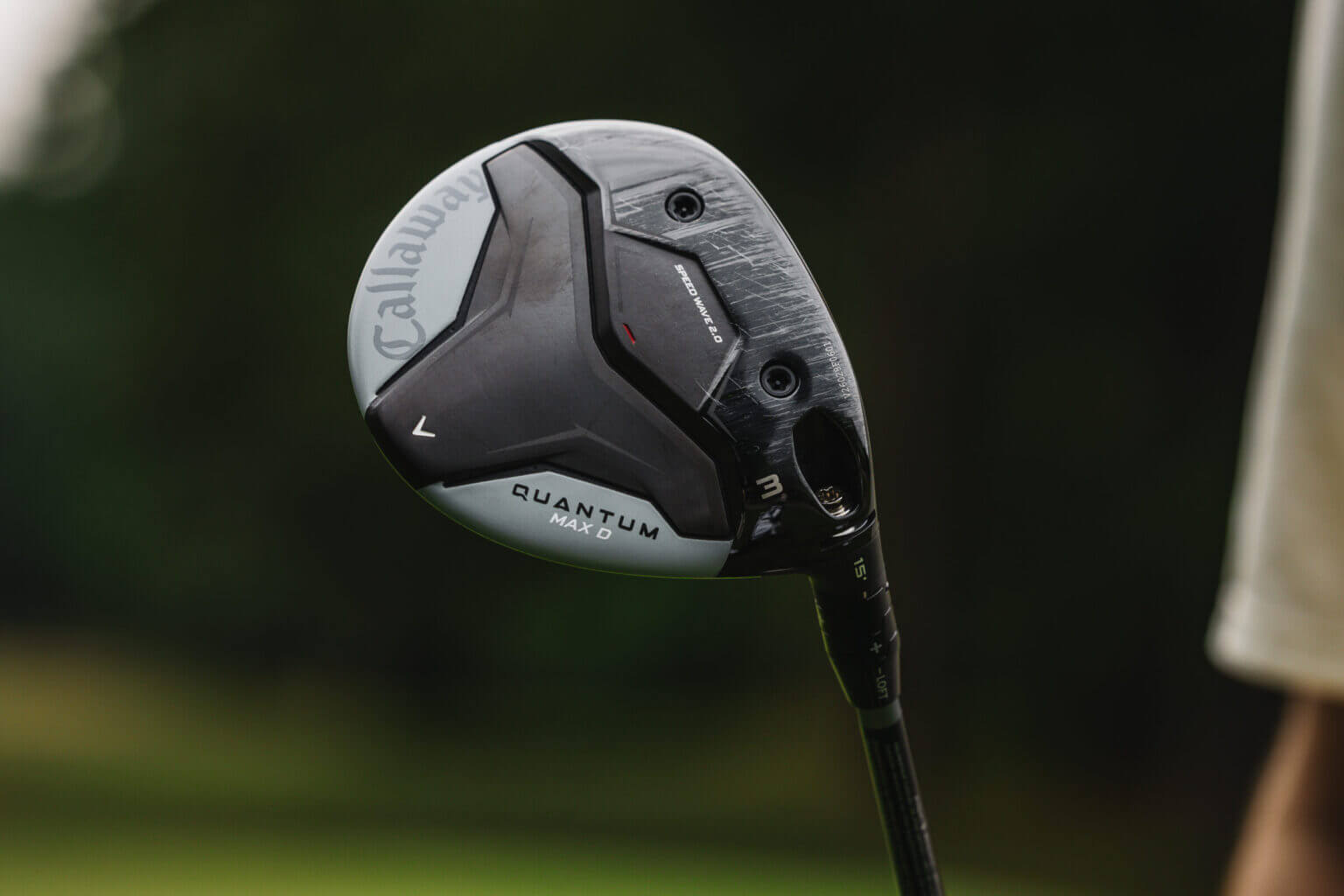
 The Bottom Line
 The Bottom Line
 The Callaway Quantum Max D proves a draw-biased fairway wood can offer much more than slice correction. With elite accuracy, high launch and a second-place overall finish, it’s a model more golfers should be willing to test.
The draw bias didn’t make it a hook machine
I think this is probably the biggest reason some golfers will automatically pass over the Quantum Max D.
See the “D” on the end of the name and you may assume this club is designed to go left.
Callaway does position the Max D as the draw-biased option in the Quantum lineup and MyGolfSpy testers noticed a slight draw tendency. However, the test results showed a much straighter ball flight than you might expect from a club carrying the draw-bias label.
The raw data makes that even more interesting.
The Quantum Max D produced a 57.97-percent straight-shot rate, a 91.67-percent playable rate and a 76.45-percent fairway percentage. That fairway percentage was the best of the 20 fairway woods in the test.
In other words, the draw bias didn’t turn this into some one-dimensional anti-slice club. It helped produce one of the strongest accuracy performances in the entire test.
You are giving up some distance
There is a tradeoff.
The Quantum Max D averaged 203.15 yards of carry and 214.34 yards total. That put it 11th in total distance, well behind the TaylorMade Qi4D Tour at 221.89.
Its distance score of 8.5 was respectable but this isn’t the fairway wood I would choose if squeezing out every possible yard was the priority.
The Quantum Max D launched at 14.25 degrees, peaked at 30.26 yards and came down at 40.96 degrees. Those were the highest launch, highest peak height and steepest descent numbers in the dataset.
For golfers who struggle to launch a fairway wood from the turf, those launch numbers may be considerably more useful than another five or six yards of rollout.
Who should play Callaway Quantum Max D?
I wouldn’t put every golfer into a draw-biased fairway wood just because this one tested well.
If your typical fairway wood miss is to the right, you struggle to square the face or you have trouble getting enough height from the turf, the Max D makes a lot of sense.
It could also be worth testing if you simply want a fairway wood that prioritizes keeping the ball in play over maximum distance. A 76.45-percent fairway rate and 91.67-percent playable rate are hard numbers to ignore.
There is one type of golfer who should be a little more cautious. MyGolfSpy found the Quantum Max D to be one of the higher-spinning options in the test. If you already produce plenty of spin with your fairway woods, this may not be the ideal fit.

![WTA 250 Osaka SF: K. Siniaková def. [8] K. Boulter 6-1, 6-4](https://external-preview.redd.it/MzBicTF6bmpzZHhoMcvJRKneGYQIKYimFVyIDbYR2AdQP8khDBjeO8WUAV_K.png?width=640&crop=smart&auto=webp&s=c2ea3a82240d6e09e8e639751c718bb0c60ce0c7)
![NZ vs IND [WATCH]: Prince Yadav cleans up Finn Allen with a superb delivery in 2nd T20I](https://crickettimes.com/wp-content/uploads/2026/10/Prince-Yadav-cleans-up-Finn-Allen-with-a-beauty-on-T20I-debut-in-NZ-vs-IND-2nd-T20I.webp)

![NZ vs IND [WATCH]: Bhuvneshwar Kumar dismisses Daryl Mitchell with clever knuckle ball in 2nd T20I](https://crickettimes.com/wp-content/uploads/2026/10/Bhuvneshwar-Kumar-dismisses-Daryl-Mitchell-with-clever-knuckle-ball-in-2nd-T20I.webp)













 English (US) ·
  French (CA) ·
  French (FR) ·