

 13 hours ago
9
13 hours ago
9
PROTECT YOURSELF with Orgo-Life® QUANTUM TECHNOLOGY
Orgo-Life the new way to the future Advertising by AdpathwayKey Facts
- Argentina’s S&P Merval fell 0.45% to 3,086,784.5 points, a sixth consecutive decline that takes the index back to where it traded on 5 June
- Country risk closed at 451 points, a rise of 3% in twenty-four hours and the highest reading since June
- Argentine shares in New York fell by as much as 5.6%, led by Bioceres, Corporación América and Loma Negra
- The market decoupled from a strong global session, with Wall Street near record levels after a weak United States jobs report that Argentina did not share in
- Domestic data did the damage, with industrial output down 2.2% in the first half and construction down 4.1% in June, its fourth monthly fall
Today’s Focus
Friday was a good day for almost every market except Argentina’s. A weak United States jobs report sent Wall Street back toward record levels and, in theory, handed emerging markets exactly the conditions they like.
Buenos Aires did not join in. The S&P Merval fell 0.45% to 3,086,784.5 points, a sixth straight decline, while the premium investors demand to hold Argentine debt rose to its highest since June.
The reason was local. Industrial output, construction and inflation figures all pointed the wrong way in the same week, and they outweighed the relief coming from abroad.
What matters today. When a market cannot rally on the best global backdrop it has had in weeks, the problem is at home rather than in the world.
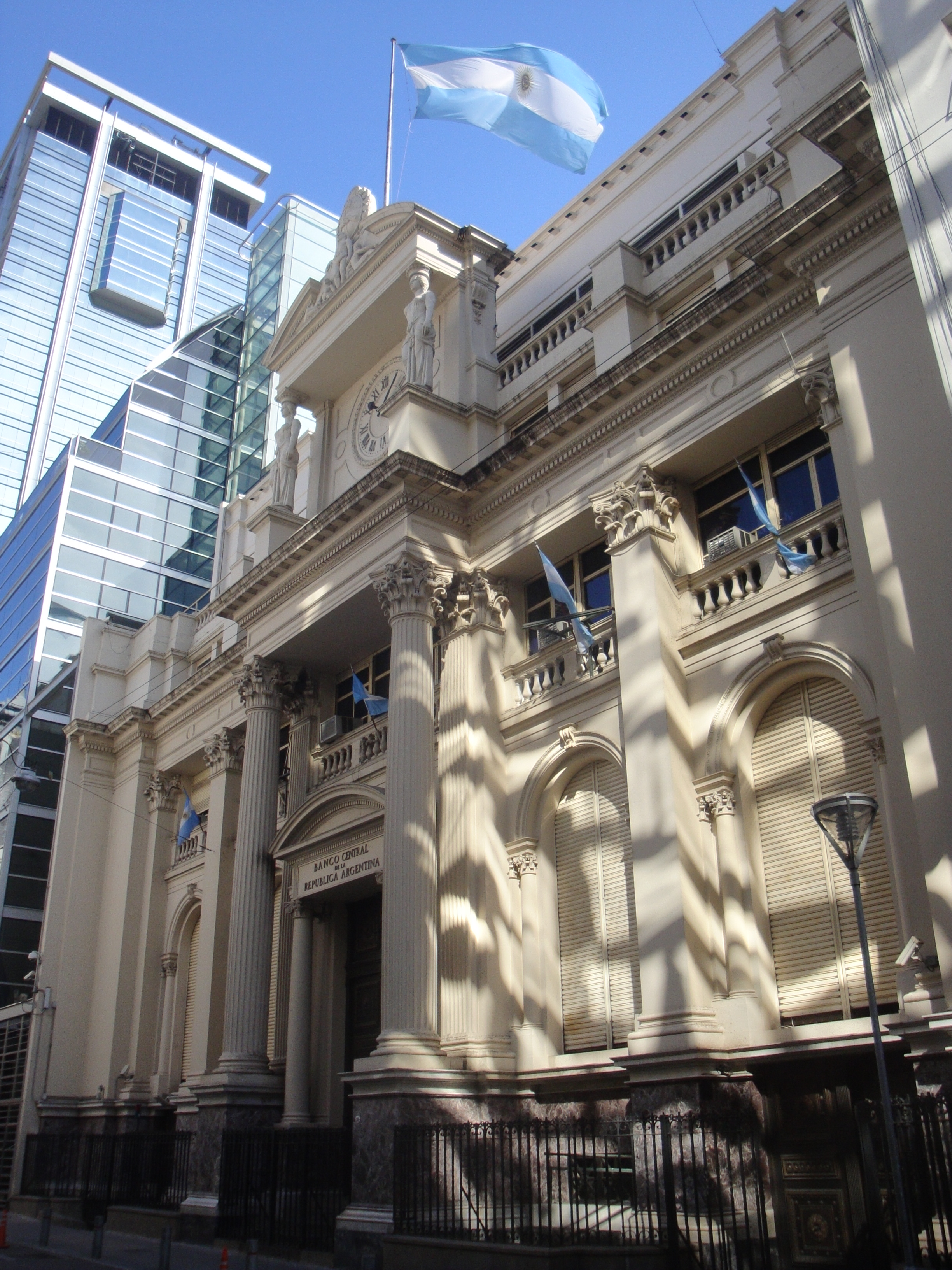
One-stop reference
Company Intelligence
Every listed company in Latin America — financials, ownership and structure for 1,450+ companies across 26 exchanges, in one place.
01 The session in one read
The Merval closed Friday at 3,086,784.5 points, down 0.45% from the previous session’s 3,100,731.8. It was the sixth consecutive fall in peso terms and left the index back at the level it last held on 5 June.
The day had a wide swing inside it. The index reached 3,149,198.9 at the top and 3,055,274.6 at the bottom before settling nearer the lower end, which is a spread of about 3% between the extremes.
Measured in dollars the picture is worse. The index has moved away from the 2,000-point barrier that had acted as a floor since 22 May, and August is now running at a loss approaching 6%.
The contrast with the rest of the world was the day’s defining feature. New York finished close to record highs after the American employment report, while Argentine bonds, shares and the risk premium all moved the other way.
Assessment — A decoupling that says more than the number MEDIUM
The mechanics of Friday should have favoured Argentina: a weaker dollar and lower American rate expectations ease global financial conditions, make dollar assets less attractive and push investors toward higher-yielding markets, while cheaper external funding tends to compress sovereign spreads. None of that reached Buenos Aires, and country risk rose instead of falling. That gap between what the global backdrop offered and what Argentine assets delivered is the signal worth watching, because it suggests investors are pricing domestic activity and the money market rather than the international cycle.
02 The day’s numbers
| S&P Merval | 3,086,784.5 | −0.45% | Sixth consecutive fall; back to 5 June levels |
| Session range | 3,055,275 — 3,149,199 | — | Roughly 3% between the extremes |
| Country risk | 451 | +3% | Highest since June; a rise is bad news |
| Wholesale peso | 1,498.50 | −1 peso | Barely moved; official rate unchanged at 1,520 |
| Buenos Aires city inflation, July | 2.9% | accelerating | Weighed on peso bonds |
| Industrial output, first half | — | −2.2% | Construction fell 4.1% in June |
The distance from the peak is the number that frames the month. From the intraday record of 3,395,937 points set on 22 July to Friday’s close, the index has given up 309,152 points, or 9.10%, by The Rio Times’ calculation.
The currency, by contrast, did almost nothing. The wholesale rate that the market watches ended near 1,498.50 pesos per dollar, and the official rate at Banco Nación was unchanged at 1,470 to buy and 1,520 to sell.
Live Market IntelligenceArgentina — Live Market BoardInside: market breadth, the sector heatmap, currencies & rates, the Latin America scoreboard and the full instrument board.
Rio Times · Live Market Intelligence
Argentina — Live Market Board
BYMA · Buenos Aires
Aug 8, 2026 · 06:48
S&P MERVAL · benchmark
3,086,785 -0.45%
L 3,055,275day rangeH 3,149,199
+31.41% over 12 months
Market breadth · 14 names
57% advancing
8 ▲ advancing6 declining ▼
Currencies, rates & key inputs
Sector heatmap · average move today
Utilities
+0.91%
PAMPA, CEPU
Telecom
+0.86%
TELECOM ARG
Technology
+0.32%
GLOBANT
Consumer Disc.
-0.10%
MIRGOR, MERCADOLIBRE
Financials
-0.11%
GGAL, COME, BYMA
Materials
-1.52%
ALUAR, LOMA NEGRA
Latin America scoreboard
IndexLastTodayStrength
IbovespaBrazil 172,513.42 -1.73%
S&P/BMV IPCMexico 66,938.64 +0.82%
S&P IPSAChile 11,256.28 -0.17%
S&P MERVALArgentina 3,086,785 -0.45%
MSCI COLCAPColombia 2,350.44 +0.00%
BVL S&P PerúPeru 59,143.04 +0.74%
Full instrument board
| MERVAL | 3,086,785 | -0.45% | +31.41% | 3,100,732 | 3,149,199 | 3,055,275 | — |
| USD/ARS | 1,499 | -0.08% | +12.54% | 1,500 | 1,500 | 1,490 | — |
| YPF | 7,775 | -0.77% | +63.51% | 7,835 | 8,000 | 7,725 | 1,229,688 |
| GGAL | 7,315 | -0.81% | +6.94% | 7,375 | 7,540 | 7,215 | 1,973,327 |
| PAMPA | 5,205 | +0.39% | +25.88% | 5,185 | 5,300 | 5,150 | 1,091,458 |
| TXAR | 723.00 | +6.40% | +16.15% | 679.50 | 723.00 | 671.00 | 3,531,590 |
| ALUAR | 934.50 | -0.16% | +28.54% | 936.00 | 950.00 | 926.00 | 263,672 |
| TGS | 9,135 | -0.76% | +17.57% | 9,205 | 9,340 | 9,045 | 160,861 |
| CEPU | 2,208 | +1.42% | +28.37% | 2,177 | 2,220 | 2,171 | 717,327 |
| MIRGOR | 1,630 | +0.31% | -93.33% | 1,625 | 1,640 | 1,595 | 19,276 |
| COME | 41.31 | +0.32% | -32.20% | 41.18 | 41.60 | 41.13 | 4,863,654 |
| LOMA NEGRA | 3,283 | -2.88% | -0.76% | 3,380 | 3,485 | 3,215 | 723,088 |
| BYMA | 290.00 | +0.17% | +41.78% | 289.50 | 293.75 | 281.25 | 2,769,775 |
| TELECOM ARG | 4,380 | +0.86% | +67.82% | 4,343 | 4,470 | 4,325 | 136,523 |
| GLOBANT | 37.37 | +0.32% | -49.92% | 37.25 | 38.03 | 36.63 | 805,748 |
| MERCADOLIBRE | 1,821 | -0.51% | -22.65% | 1,830 | 1,851 | 1,800 | 488,789 |
Largest moves today
TXAR 723.00 +6.40%
LOMA NEGRA 3,283 -2.88%
CEPU 2,208 +1.42%
TELECOM ARG 4,380 +0.86%
GGAL 7,315 -0.81%
YPF 7,775 -0.77%
TGS 9,135 -0.76%
MERCADOLIBRE 1,821 -0.51%
The session read
The S&P MERVAL eased 0.45%, with breadth positive — 8 of 14 names higher. Mining led, while Materials lagged.
03 Why it moved — a good global day that Argentina did not join
The starting point was American. Employers in the United States shed jobs in July rather than adding them, which cooled the labour market more than expected and shifted the outlook for Federal Reserve policy.
That reading usually helps countries like Argentina. A softer dollar and lower American rates loosen global financial conditions, reduce the appeal of holding dollars and push money toward riskier markets, while cheaper external funding tends to narrow the spread on government debt.
It did not happen. Argentine sovereign bonds in dollars fell, the shares traded in New York fell, and the risk premium widened rather than compressing.
The explanation came from three domestic figures released around the same time. The statistics agency reported that industrial production contracted 2.2% in the first half of 2026, and that construction fell 4.1% in June, its fourth consecutive monthly decline.
Inflation in the city of Buenos Aires then accelerated to 2.9% in July. Combined with tight conditions in the local money market, that pushed peso-denominated sovereign bonds broadly lower.
The central bank added a further note of firmness. It ruled out lowering the reserves banks must hold, said it would not intervene over rising loan arrears, and indicated it is counting on a recovery in credit to resolve the problem instead.
04 The day’s movers
| Bioceres (BIOX) | — | −4.4% | Led the falls among New York-listed Argentine shares |
| Corporación América (CAAP) | — | −4.0% | Airport operator; second-worst performer |
| Loma Negra (LOMA) | — | −3.2% | Cement maker; exposed to the construction slump |
| Argentine shares in New York | — | up to −5.6% | Broad decline across the group |
| Sovereign dollar bonds | — | — | Closed lower as the risk premium widened |
The selling in New York was broader than the Buenos Aires index suggests, with the worst-hit Argentine shares down as much as 5.6%. Bioceres, an agricultural biotechnology company, led the decline at 4.4%.
Two of the three worst performers have a direct line to the domestic data. Corporación América runs airports and Loma Negra makes cement, so both sit squarely in the activity numbers that disappointed this week.
The bond market moved in the same direction for a different reason. Analysts pointed to the money market rather than to any single company, with tight peso liquidity and the Buenos Aires inflation print pushing local-currency debt lower across the board.
05 The peso and the risk premium
The currency was the quiet part of the day. The wholesale rate closed around 1,498.50 pesos per dollar, down about 1.25 pesos, and the official rate at Banco Nación did not move at all from 1,470 to buy and 1,520 to sell.
The parallel rates drifted the other way. The financial dollar used to move money offshore rose about 0.6% to roughly 1,581 pesos, while the stock-market dollar gained around 0.4% to about 1,526.
The risk premium is where the pressure showed. At 451 points it is 3% higher than a day earlier and back to levels last seen in June, having spent recent weeks approaching the psychologically important 400 mark from above.
Forecasts still point to a gradual, controlled slide rather than a break. The central bank’s monthly survey of analysts put the average wholesale rate for August at 1,512 pesos and the December figure at 1,652.
That December projection was cut by 20.70 pesos from the previous month’s survey. If it holds, the wholesale dollar would end the year 14.1% above December 2025—far below expected inflation over the same period, which means a further real appreciation of the peso.
The central bank has also been shoring up its position. It renewed its currency swap with China this week and extended the term from three years to five, which it framed as a move for greater predictability.
06 The regional scoreboard
| IPC | Mexico | +0.82% |
| IPSA | Chile | −0.17% |
| Merval | Argentina | −0.45% |
| Ibovespa | Brazil | −1.73% |
| COLCAP | Colombia | closed |
The region split on how closely each market tracks the United States. Mexico rose 0.82% because a softer American rate outlook reads straight through to a market tied to the American cycle, and it was the only clear gainer.
Argentina and Brazil both fell, but for different reasons. Brazil lost 1.73% as global investors moved money out of emerging markets and into American technology shares, while Argentina’s decline was domestic. Chile eased 0.17% after a week that still finished 2.18% higher, and Colombia did not trade at all, with Friday being the Battle of Boyacá holiday.
07 The technical picture
The Merval has now fallen six sessions in a row and sits at 3,086,784.5, back where it traded on 5 June. That erases two months of progress and puts the index roughly 9% below its July record.
The dollar-denominated reading is the one long-term investors watch, and it has slipped away from 2,000 points, a level that held as a floor from 22 May onward. Losing that support is more meaningful than the peso number, because it strips out the effect of inflation on the index.
The rising line that has guided the index since late last year still runs beneath the current level, so the longer trend is not yet broken. But six consecutive down sessions on a day when the global backdrop was helpful is the kind of pattern that tends to need a domestic catalyst to reverse.
08 What to watch
- Country risk at 450: The premium has turned back up; whether it resumes its move toward 400 is the clearest single gauge of sentiment.
- The activity data: Industry and construction both disappointed this week, and the next monthly readings will show whether that is a trend or a pause.
- National inflation: The Buenos Aires city figure accelerated to 2.9%; the national number is the one that moves peso bonds.
- Money-market liquidity: Tight peso conditions were blamed for the bond selling, and the central bank has ruled out easing reserve requirements.
- United States and Iran: Analysts named the negotiations as the main external driver for Argentine dollar bonds, through the oil price and inflation expectations.
Background: Latin America Stock Markets 2026: Ibovespa, Merval, COLCAP, IPSA and IPC Guide.
Background: Brazil’s Financial Morning Call for Friday, August 7, 2026.
Frequently Asked Questions
What is the S&P Merval?
It is Argentina’s main stock index, tracking the most heavily traded companies on the Buenos Aires exchange. Because Argentine inflation is high, the index is quoted in millions of pesos.
Why did Argentine shares fall when Wall Street rose?
A weak United States jobs report lifted American shares and would normally help emerging markets too. Argentine assets went the other way because domestic figures dominated: weak industrial and construction data, faster inflation in Buenos Aires city and tight conditions in the local money market.
What is country risk and why does it matter?
It measures the extra return investors demand to hold Argentine government debt rather than United States debt. It closed Friday at 451 points, up 3% in a day and the highest since June, which signals renewed caution about Argentina rather than about the world.
What happened to the peso?
Very little. The wholesale rate, which is the market’s reference, ended around 1,498.50 per dollar, a fall of about 1.25 pesos, while the official bank rate was unchanged at 1,520 for sale.
What are ADRs?
They are shares in Argentine companies traded in dollars in New York. They fell by as much as 5.6% on Friday, led by Bioceres, Corporacion America and Loma Negra.
Daily series
← Previous session: August 7, 2026
This article was produced by The Rio Times’ automated newsroom system. How we use AI · Report an error
LatAm Markets: Live Signals → — real-time movers, turnover leaders and FX across Latin America.
The Rio Times · Power Map
See who really holds power in Latin America
Click to open the Power Map →

















 English (US) ·
  French (CA) ·
  French (FR) ·