

 5 hours ago
2
5 hours ago
2
PROTECT YOURSELF with Orgo-Life® QUANTUM TECHNOLOGY
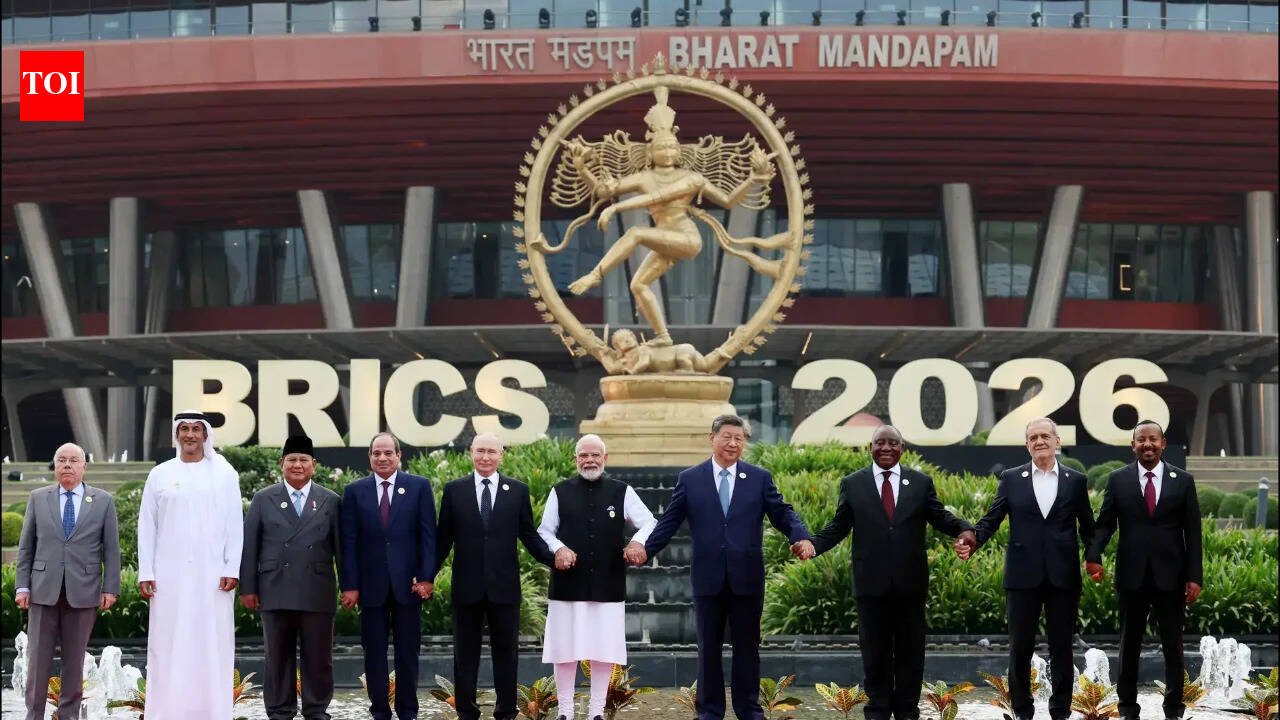
Orgo-Life the new way to the future Advertising by AdpathwayMuch of the global attention on the BRICS Summit 2026 focused on the presence of Chinese President Xi Jinping and Russian President Vladimir Putin in New Delhi. Given the photographs of the pair with the summit’s host, Indian Prime Minister Narendra Modi, observers might find it tempting to cast the gathering as the meeting of an anti-Western bloc. That view may make for catchy headlines, but it risks missing how India sees the grouping and what value it brings even to its Western partners.
For New Delhi, BRICS is not a camp or a bloc, but a forum – one of several – that it uses to secure a seat at one of the tables defining the unfolding multipolar order. The evidence is in the declaration the leaders adopted and, above all, in what it leaves out.
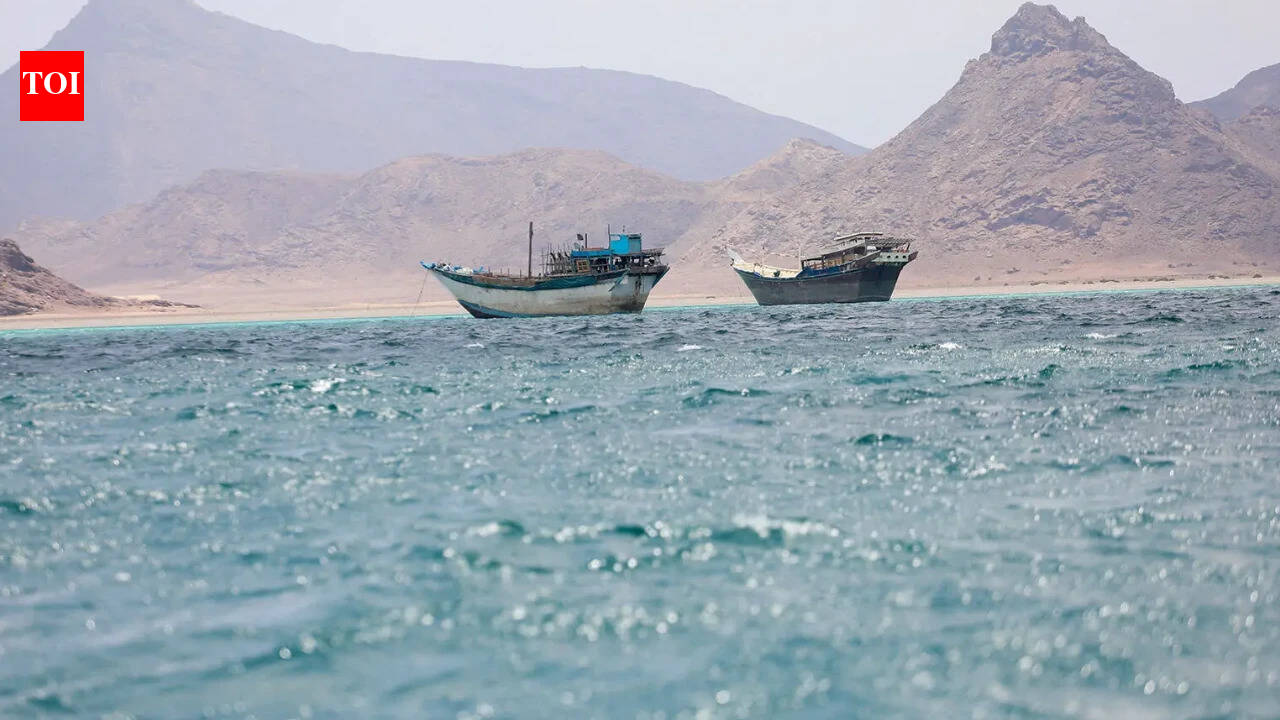
The summit convened in a three-theater world full of uncertainties, where great power contest is playing out simultaneously in Europe, the Middle East, and East Asia. In the current interregnum – between the old and the new order – countries are navigating multiple developments and their consequences at once. The war in Ukraine is in its fifth year. The Strait of Hormuz has been closed to normal ship traffic for more than six months, ever since American and Israeli strikes on Iran in February. As a consequence, the Brent crude price, which touched $126 in March, is back above $100. The two superpowers – China and the United States – are actively working to secure their edge in energy, semiconductors, computing power, and critical minerals, which will underpin artificial intelligence and the next industrial era. Supply chains, which have been global in the past, are now being rerouted to adjust for political exposure; export controls and tariffs are being put in place and weaponized; payment systems are splitting. Additionally, defense budgets are growing.
In such a world, India, a country of 1.4 billion people, cannot simply pick a camp to align with. Instead, it works with different power centers without allowing one relationship or grouping to determine all of its strategic and economic choices. That is what Indian officials mean by multi-alignment.
And what a year of multi-alignment it has been. India concluded a free trade agreement with the European Union and signed a security and defense partnership in the same week. Shortly afterwards, Delhi hosted the AI Impact Summit and struck a tariff truce with U.S. President Donald Trump without allowing it to dent the larger strategic relationship with the United States. India’s navy has escorted tankers through the Strait of Hormuz. It has a signed trade deal with the United Kingdom, officially entered into a Comprehensive Economic Partnership Agreement with Oman, and signed a landmark free trade agreement with New Zealand, among other things. Now, India also is holding the BRICS chair. Each seems to be an active hedge against a different type of failure.
None of these actions, however, is a sign of alignment. India is not looking to choose between the West and the rest. It is trying to create strategic space for itself. India may not have been looking to use the BRICS Summit to bring all members closer together, but rather to identify issues on which there is enough common ground to keep all members together and build consensus.
When reading the BRICS New Delhi Declaration, many things are mentioned, but some important issues are not named. The declaration does not mention the Strait of Hormuz. It doesn’t specifically mention Iran – except in echoing its bid for accession to the WTO – or the United States. It does not name Ukraine or the U.S. dollar. Even the largest disruption to the world’s energy supply appears only to be framed as the “continued escalation of tensions in Middle East/West Asia,” which should be met with “maximum restraint.” The grouping continues with a hope for the “smooth flow of global trade, supply chains and energy.” The tell is the phrase “recalling our respective national positions.” This is diplomatic language for saying that members could not agree and instead wrote around their differences.
India, as chair, seems to have been working around members’ quarrels and different perspectives. Countries such as Iran or Russia would presumably have pushed for stronger wording and a condemnation of U.S. action in Iran. Saudi Arabia and the UAE might have had a different opinion, having spent the summer intercepting Iranian drones. The host country, meanwhile, is engaged in ongoing negotiations with Washington and would have wanted a nuanced, neutral paragraph. The tariffs were mentioned only in one paragraph and former headline-making topics such as a BRICS currency are essentially nowhere. Further expansion of the grouping, too, seems to be off the table for now.
So it is fair to assume that India’s BRICS chairmanship was less about turning the grouping into a political front and more about finding the narrow but complicated areas of consensus that could hold a deeply diverse membership together.
Then there was Xi Jinping, who has not been to India in seven years. Ever since the 2020 border clashes, highlighted by the bloody fighting in Galwan Valley, India has seen China as an existential challenge to its national security, and the relationship took a turn for the worse. Modi’s meeting with Xi last year in Tianjin at the Shanghai Cooperation Organization (SCO) summit and the latter’s visit to New Delhi this year have led to whispers about a strategic warming between the countries, mostly in the wake of the unpredictable policies of the Trump 2.0 administration. But some 50,000 troops remain on either side of their contested border, facing each other across the Line of Actual Control. During last year’s India-Pakistan conflict, Chinese support for Pakistan was crucial. In New Delhi, this is seen as collusion and strong military support for the country’s neighbor.
India is therefore talking to China not because it has decided that the rivalry has suddenly ended, but because it has decided to treat competition as a built-in feature of the bilateral relationship. Permanent rivalry needs mechanisms – especially given China’s size, the 3,488-kilometer border with India, its strategic weight and role in the multipolar world and the economic vulnerabilities New Delhi faces. Modi told Xi in Tianjin last year that their relationship “should not be seen through a third-country lens.” This can be understood as a rebuke to Beijing, which reads India’s ties with Washington as containment. But it applies with equal force to Western capitals interpreting India’s ties with Beijing (or the BRICS) as evidence that India is joining the China-Russia bloc.
The message from New Delhi is fairly consistent: engagement is not alignment, and managing rivalry is not the same as ending it.
The Indian-European relationship, meanwhile, is strong not just because of the recently politically concluded FTA and other frameworks, but because both sides are now actively building strategic trust. Economically, India is not a replacement market but a hedge against the geopolitical fragility driving the European economic crisis and features strongly in European “China+1” discussions. Every handshake between Russian, Indian, and Chinese decisionmakers triggers a debate in European capitals over which “camp” India belongs to – the West or an anti-Western front? It triggers fears of losing newly built, robust ties with one of the most decisive actors in a changing global order.
These fears, however, are too binary and based on a limited misunderstanding of what makes India a valuable partner in the first place. For Europe, India is essentially a hedge against a fragile alliance system, an order that is breaking down and an increasingly less globalized economy. But such a hedge can only work if the respective partner is itself hedging. Imagine an India that had picked a camp: it would be a much smaller India without Russian energy, capital from the Gulf, its Global South connections, and the ability to balance Russia and China within the same grouping. The India in which Europe is investing is, by definition, the India that does all of the above – a country whose leaders take those handshakes.
The strategic trust in which both sides are heavily investing means seeing a partner as it is: being realistic about its capabilities, limitations, imperatives and trade-offs. India will not align itself with anybody, nor would this necessarily be a good thing for Europe. India wants a seat for its 1.4 billion people and a stake in the global order currently being rewritten. Europe wants India to have that seat. But it also wants a strong India to sit in rooms that Brussels cannot access itself. This is ultimately the value of India’s multi-alignment for Europe.
A stronger India with relationships across Washington, Moscow, Beijing, the Gulf, and the Global South is not against European interests but what makes India useful as a strategic partner in an increasingly fragmented world. That was the BRICS Summit 2026: a forum, not a front. For Europe, India is a partner worth having precisely because it refuses to align itself with anybody.











 English (US) ·
  French (CA) ·
  French (FR) ·