

PROTECT YOURSELF with Orgo-Life® QUANTUM TECHNOLOGY
Orgo-Life the new way to the future Advertising by Adpathway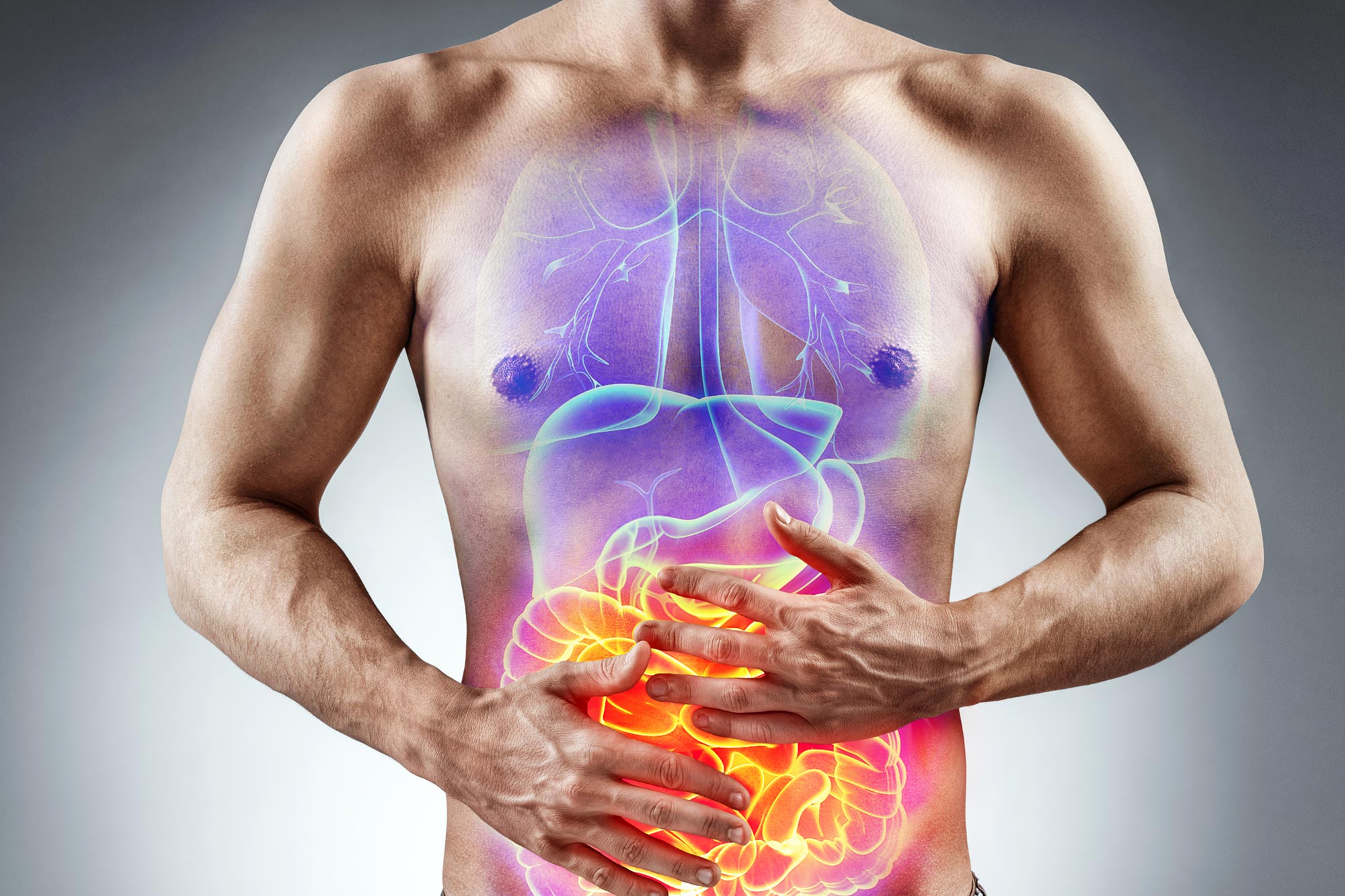 A study from Toho University reveals that ferulic acid can influence intestinal muscle contractions by affecting calcium channels. Credit: Shutterstock
A naturally occurring compound in rice bran may play an unexpected role in regulating intestinal movement.
A team of scientists led by Dr. Keisuke Obara, Dr. Kento Yoshioka, and Professor Yoshio Tanaka from the Faculty of Pharmaceutical Sciences at Toho University has discovered that ferulic acid (FA), a naturally occurring polyphenol found in high amounts in rice bran, can reduce contractions in intestinal smooth muscle. The compound appears to work by blocking voltage-dependent calcium channels, which play a key role in muscle contraction.
The discovery points to a possible dietary approach for influencing intestinal motility disorders such as irritable bowel syndrome (IBS) and inflammatory bowel disease (IBD).
Ferulic acid is already well known for its antioxidant and neuroprotective effects. It is commonly consumed through whole grain foods, especially rice bran. While earlier research has largely focused on its broad health benefits throughout the body, its role in regulating movement in the digestive tract has remained uncertain.
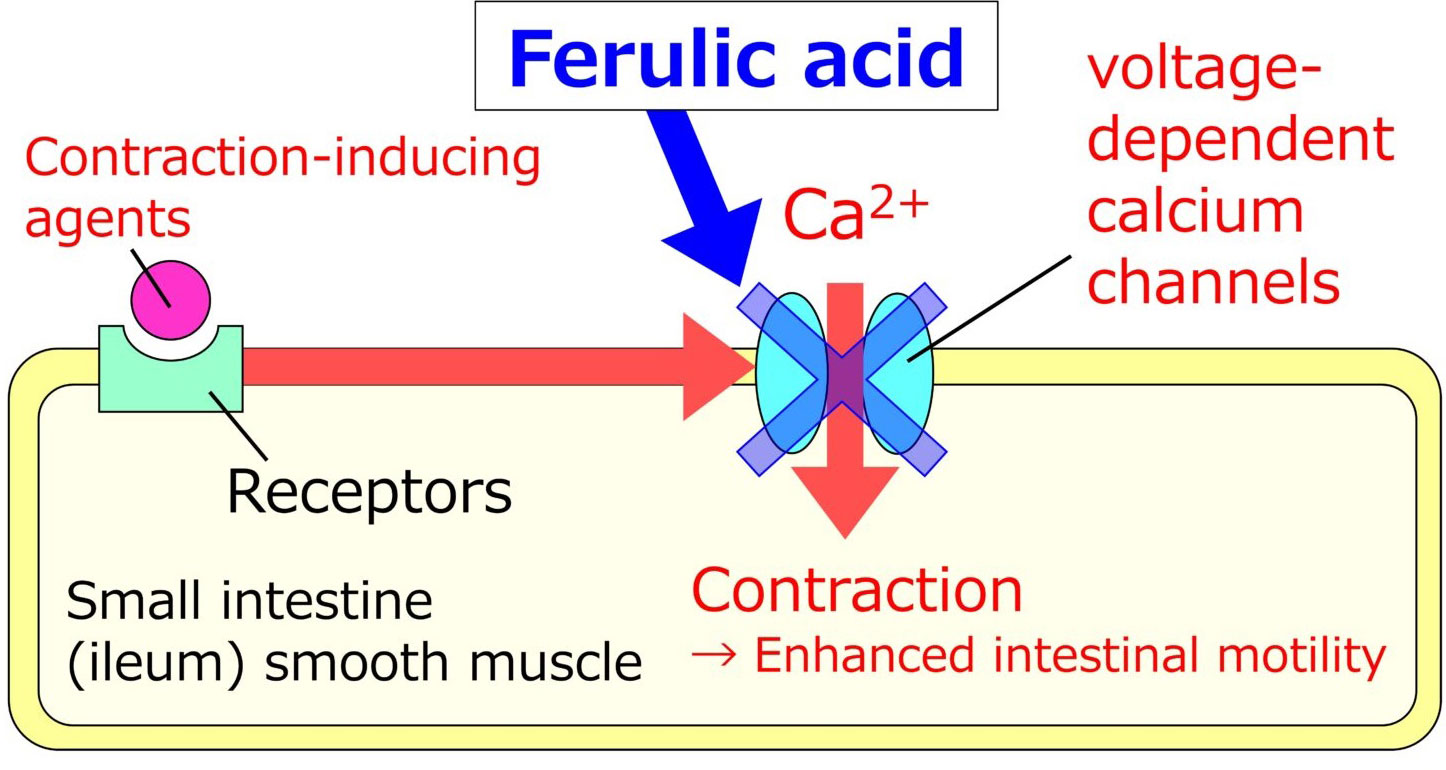 Ferulic acid suppresses ileal smooth muscle contraction by inhibiting calcium ion influx through voltage-dependent calcium channels. This action may help prevent or treat excessive intestinal motility in irritable bowel syndrome (IBS). Credit: Keisuke Obara
People living with IBS or IBD often experience abnormal intestinal activity. In some cases, the intestines contract too frequently, while in others the movements slow down. Both patterns can lead to significant digestive discomfort. The new study examined whether ferulic acid could influence these muscle contractions within the gut.
Evidence for Calcium Channel Inhibition
To investigate this question, the researchers carried out experiments using guinea pig ileal longitudinal smooth muscle (ILSM). They found that ferulic acid significantly and reversibly reduced contractions triggered by several neurotransmitters, including acetylcholine, histamine, prostaglandin F2α, and serotonin. The effect increased as the concentration of ferulic acid rose and occurred through a noncompetitive mechanism.
Additional experiments using vascular smooth muscle cell models provided further clues about how the compound works. Ferulic acid lowered the increase in intracellular calcium that normally occurs when cells are exposed to potassium chloride. This result indicates that the compound interferes with voltage dependent calcium channels, which regulate the flow of calcium into cells and help initiate muscle contraction.
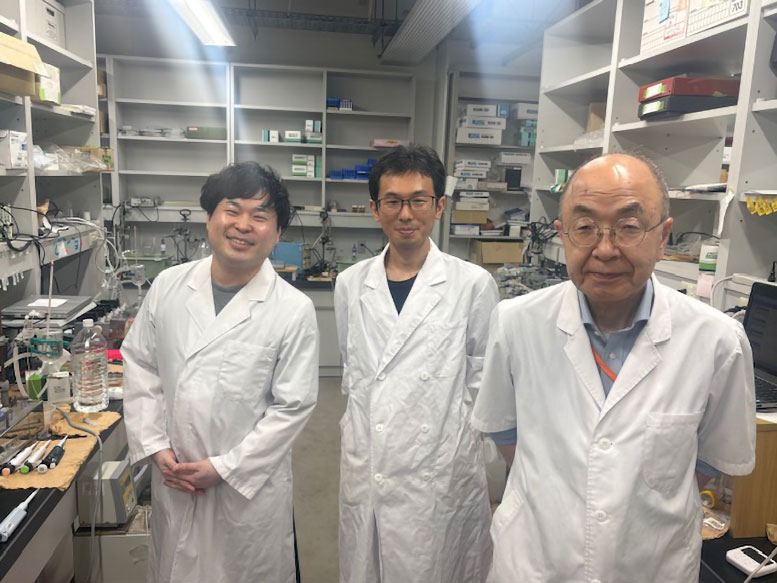 From left: Dr. Keisuke Obara, Dr. Kento Yoshioka, Dr. Yoshio Tanaka. Credit: Dr. Keisuke Obara, Dr. Kento Yoshioka, Dr. Yoshio Tanaka
Together, these findings suggest that ferulic acid can act as a natural regulator of intestinal motility. By reducing excessive smooth muscle activity, the compound could potentially help calm symptoms associated with diarrhea-predominant IBD.
However, the researchers caution that the same effect could have the opposite outcome for people with constipation-predominant IBS or for healthy individuals, since further suppression of intestinal movement could worsen symptoms.
Dietary Relevance and Future Research
The scientists also emphasized that the concentrations of ferulic acid used in laboratory experiments were higher than the levels typically detected in the bloodstream after normal dietary intake. However, levels inside the intestine may rise to higher concentrations following oral consumption, which could make local effects more relevant than blood measurements alone.
Because of this possibility, additional studies are needed to better understand how ferulic acid behaves in the digestive system. Future research will need to determine whether the compound can meaningfully influence intestinal motility in people.
The findings lay the groundwork for exploring ferulic acid as part of dietary strategies or supplements aimed at regulating gut motility. Clinical trials will ultimately be required to determine whether these experimental effects occur in humans and to establish intake levels that could produce therapeutic benefits.
Reference: “Ferulic acid suppresses guinea pig ileal longitudinal smooth muscle contractions by inhibiting voltage-dependent Ca2+ channels” by Keisuke Obara, Kento Yoshioka, Aya Shimada, Sakika Ichihara, Wakaba Kinami, Futaba Makino, Naho Takazakura, Miwa Enomoto and Yoshio Tanaka, 14 May 2025, Journal of Pharmacological Sciences.
DOI: 10.1016/j.jphs.2025.05.012
Never miss a breakthrough: Join the SciTechDaily newsletter.
Follow us on Google and Google News.
















 English (US) ·
  French (CA) ·
  French (FR) ·