

 2 months ago
26
2 months ago
26
PROTECT YOURSELF with Orgo-Life® QUANTUM TECHNOLOGY
Orgo-Life the new way to the future Advertising by AdpathwayA forestry group that was granted an interlocutory injunction halting a blockade by a family from Matachewan First Nation (MFN) so it could complete tree-harvesting work in northern Ontario will sit down in a listening circle with them later this month in a case that may see further court action.
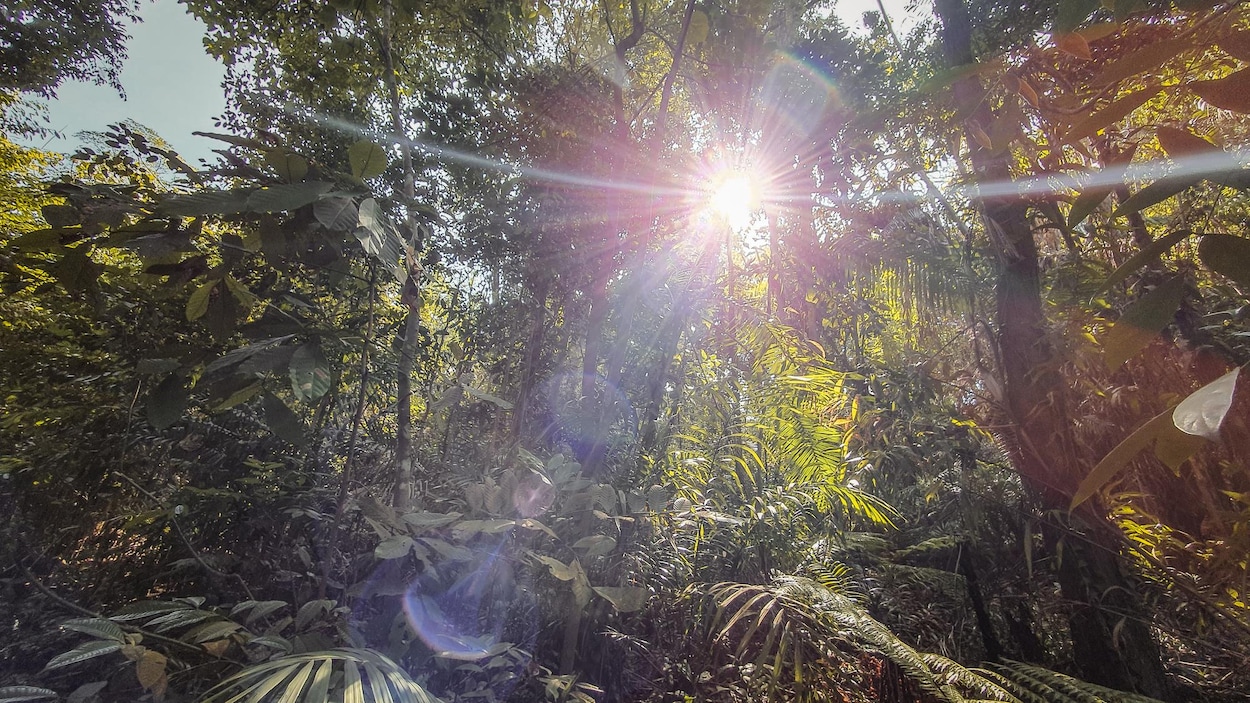
The Timiskaming Forest Alliance Inc. (TFAI) is a consortium of forestry companies and First Nations, including MFN. It has a licence from Ontario’s Ministry of Natural Resources (MNR) to harvest the area, referred to as Cairo 173, which includes about 101 hectares of land, according to TFAI's annual work schedule.
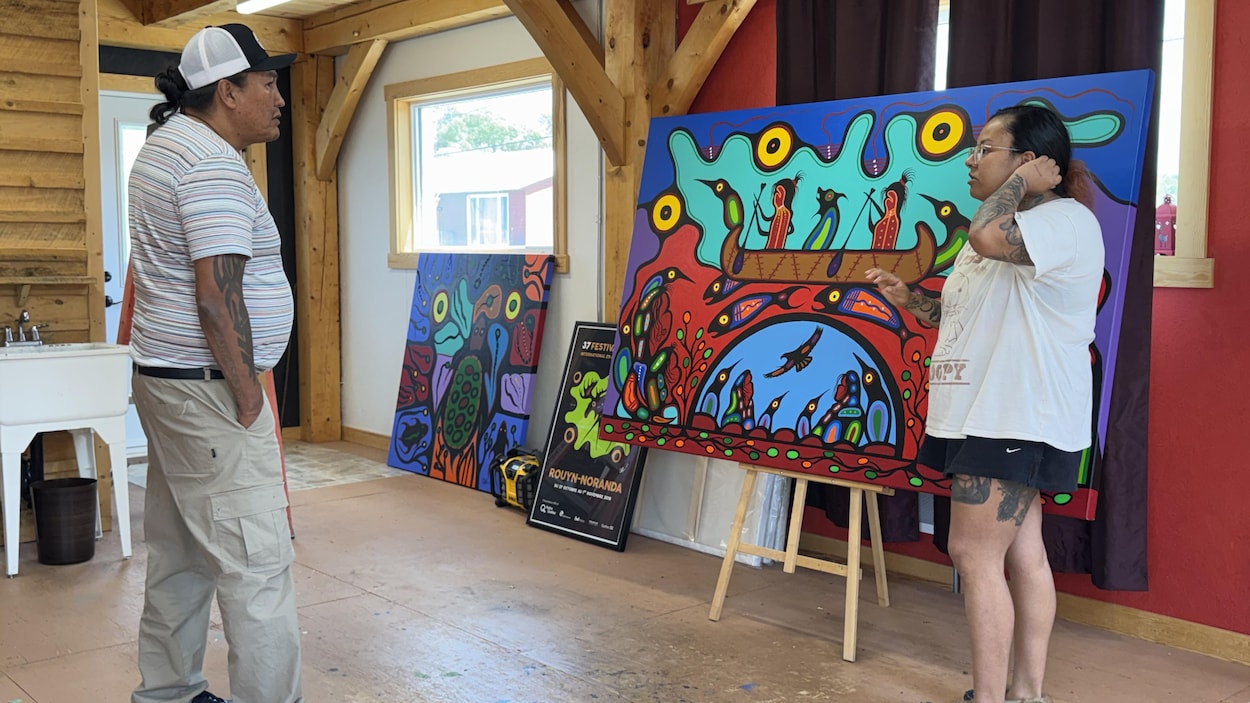
The family involved includes Dorothy Larkman, who said she decided to take action after seeing machines tearing out blueberry bushes on Cairo 173, which is about 60 kilometres west of Kirkland Lake and south of the Ojibway First Nation.

"When I saw our blueberry patch, the blueberry patch where I took my grandchildren and my children, and my mother took us … when I saw that being destroyed, I automatically kicked in and went to the community and said, ‘We need to look after this, we need to protect this — this is our land,'” Larkman told CBC News.
“We’re not against forestry per se, but we want to be able to tell [the consortium] how we believe that needs to be looked after.”
MFN Chief Alex (Sonny) Batisse told CBC New that the First Nation’s council had been through a consultation process with TFAI and approved the work before he was in office. His current term started in March 2025.
Despite that, Larkman’s family and other community members stopped the TFAI from accessing the land between July and September 2025, and again in January 2026, according to Ontario Superior Court Justice C.A. MacDonald’s reasons for her decision.
The TFAI went to court and was granted an interim and then an interlocutory injunction, which said anyone with knowledge of the decision wasn't allowed to block TFAI or anyone else from entering Cairo 173.
TFAI told CBC that after the injunction was granted, it finished clearcutting in Cairo 173 by the end of March this year. TFAI declined to give an interview but answered some questions by email.
After CBC News began making inquiries, TFAI said it had met with Larkman and her daughter on May 29.
“TFAI is also organizing a listening circle with the entire Flood family for June 25," a spokesperson wrote. "TFAI has committed to pause harvesting in Cairo until this date.”
It always is very disheartening when I see more and more destruction happening.- Dorothy LarkmanListening circles are rooted in Indigenous traditions. They’re considered safe meeting spaces that give individuals a chance to share their thoughts, views and experiences relating to an issue or concern that may affect a community, with the goal of creating understanding between participants.
Michael Swinwood, Larkman’s lawyer, said the MNR will also have representation at the listening circle. Swinwood said his and his client’s goal is to educate the consortium and the Crown about community elders’ role in Indigenous communities, and ensure that elders are more meaningfully consulted on future harvesting plans.
'Abuse of process' cited by TFAI, judge
As part of the court proceedings, TFAI asserted it had consulted with MFN, including Larkman’s brother Lorne Flood and his son, David Flood, for the approval of its 2021-31 Forest Management Plan. It said the consultation began in 2015 and lasted until 2021. TFAI also said that it continued to consult with the Floods after 2021.
"MFN does not support the blockade, and the MNR has advised that it has satisfied its duty to consult with MFN," the consortium asserted in its factum for the court that was filed in December 2025.
"The defendants disagree with any harvesting in Cairo 173. They have blockaded access to Cairo 173 as a self-help remedy. This is an abuse of process."
TFAI also said it addressed some concerns raised by MFN and the Floods during the prior consultation, which included agreeing to harvest smaller areas, staggering cuts and providing data on the impact of harvesting on marten populations.

TFAI argued that the consortium, contractors and shareholders were being “irreparably harmed" because the blockade caused it to miss a deadline set by the MNR to install a water crossing and was putting them at risk to miss the planned window to harvest the Cairo 173 area.
In her decision to grant the interlocutory injunction, MacDonald found that “to allow Ms. Larkman to raise the insufficient consultation and accommodation at this stage, in response to the motion for interlocutory injunction, essentially as a means of perpetuating the blockade, is an abuse of process.”
Possible financial consequences
The TFAI’s cost submissions include seeking that Larkman pay $115,059.99 and the Floods pay $69,042.10. Swinwood told CBC News that costs are a normal part of civil proceedings.
TFAI had stated the full costs were much higher, but it was only seeking partial costs because the defendants may not have expected to pay so much.
In late April, MacDonald ruled to defer a decision on costs until a trial. Swinwood said no trial or date has been set.

Larkman told CBC News she was aware of the financial risks when she decided to protest the clearcutting. She said this part of the Timiskaming forest has been in her family for centuries and served as an essential outdoor classroom. Lorne Flood holds their family’s trapline licence for this area.
Larkman’s parents lived off the land, she said, but over time, it has become harder to pass that skill to the next generation.
“It always is very disheartening when I see more and more destruction happening,” she said. “We’re restricted now to a very small piece of land.”
At the January hearing for the injunction, Swinwood argued against granting it as consultation was “limited to select entities,” and there was “insufficient meaningful consultation” with elders and traditional land users.
He also cited the “clear division of the community despite unilateral approval by Chief Batisse."
Previous council did 'due diligence,' chief says
Batisse told CBC News that “everybody was in agreement” about harvesting the area when he attended consultations as a member of the community, before his term as chief started. He added that the former chief had decided Cairo 173 was a “fire trap” because so many of the trees were at the end of their lives.
Batisse said there was a chaotic community meeting in July 2025 to discuss the TFAI forestry plan. Council passed a motion opposing the TFAI, but Batisse said he called the consortium to tell them to go ahead. He said council later rescinded its motion.
I would say everybody in our community was in favour except for that little group.- Alex (Sonny) Batisse, chief of Mattachewan First Nation"I am following [the previous council's decision] because they did all the due diligence on this area … and they brought it back to the community, and the Flood group was there also. The consultation was there.
“I would say everybody in our community was in favour except for that little group.”
Speaking to CBC Radio's Morning North, Swinwood called the situation “a clash between traditional people and Indian Act governance.”
"The real story here is that the chief of the First Nation took it upon himself to advise the forestry [consortium] to go ahead, and they relied on that,” the lawyer said.
Chief says community members use clear-cut land
Batisse said in the interview that he wasn’t concerned about the loss of blueberry bushes because they’re in abundance and he’s seen bushes survive in other clearcutting areas.
He said Larkman’s and her family’s situation is their “own personal issue.” He emphasized that MFN community members use clear-cut land for activities such as moose hunting.

“This past fall, there were 13 moose caught in clear cuts,” Batisse said.
“I take my grandkids out every year nighttime hunting and moose calling so that they can hear it. Me myself, I don’t shoot. I want them to listen to the different things that’s in the bush, especially moose. They hear them when they’re coming, you know, they get all excited and get scared. That’s a way of life for us.”
TFAI told CBC News that, by request of Batisse, a temporary bridge used in harvesting the Cairo 173 area will be replaced by a permanent culvert so that MFN community members can access the land that's been clear-cut.
As for Larkman, she told CBC News she doesn’t have the kind of money TFAI is seeking and having to pay the fine could force her to live off the land.
“I came into this world with nothing, I guess I can leave it with nothing too.”

Swinwood said that in the listening circle, he and Larkman want to discuss the forestry consortium’s future harvesting plans, and how elders and traditional land users will be consulted going forward.
He said it’s possible they could resolve the litigation out of court if the other parties are open to continuing discussions.
If there were ongoing meetings, he said, he would bring up the costs that TFAI is asking Larkman and her family to pay. Otherwise, he said, it would be up to a trial judge.











 English (US) ·
  French (CA) ·
  French (FR) ·