

 5 hours ago
1
5 hours ago
1
PROTECT YOURSELF with Orgo-Life® QUANTUM TECHNOLOGY
Orgo-Life the new way to the future Advertising by AdpathwayFor the 2015 freshmen cohort of the history degree programme at the University of Lagos, their classmate’s first-semester presentation was so captivating that they began calling him Toby Shang, after the 16th-century Chinese dynasty he had focused on.
His crowd engagement that day had been harnessed from his high school days as a ginger-man (energiser) in a three-man band and as a private tutor. By his final year at university, his viral catchphrases and infectious energy had resulted in a hit song, Shedibalabala. Today, he is one of the self-acclaimed “evangelists and pioneers” in the Afrobeats sub-genre some are now calling Afrohype or lamba.
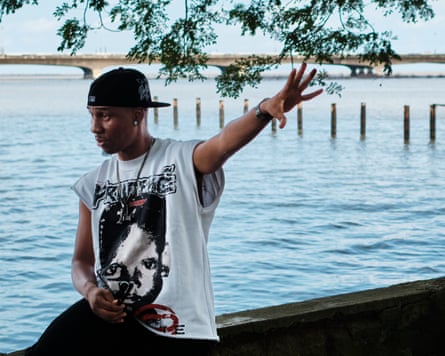
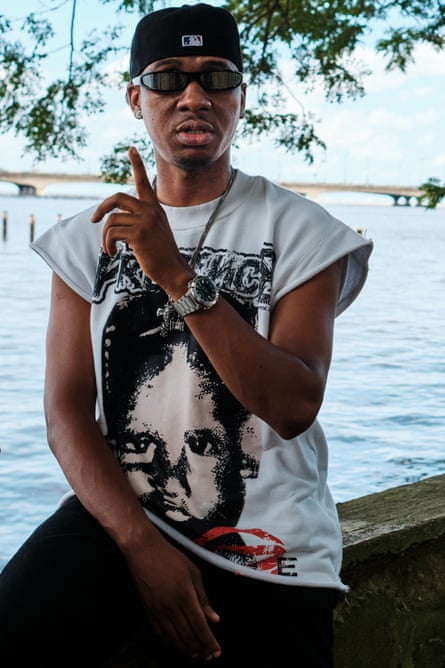
“Even my mother calls me Shang now,” the 32-year-old, born Tobi Michael Adeyeye, said in an interview near the university’s lagoon waterfront, where he once emceed gatherings.
Since then he has hosted his own rave, released two EPs and run four editions of his School of Hype – a one-day masterclass with online mentoring that has launched several rising stars.
Allow TikTok content?
This article includes content provided by TikTok. We ask for your permission before anything is loaded, as they may be using cookies and other technologies. To view this content, click 'Allow and continue'.
Hypemen neither sing nor rap entirely, but perform high-octane ad-libbed vocals “and onomatopoeic sounds” over fresh beats or popular instrumentals such as Dorime, a made-in-Nigeria version of 1996’s Ameno by the French group Era, a song that has become a continental nightclub classic. In response, nightclub patrons donate or spray money – the Nigerian custom of throwing or placing money on someone to celebrate them.
Hype is now omnipresent at wedding after-parties, raves and corporate parties. On Instagram, one teenage sensation is now known for recording 30-second hypes for birthday celebrants at the request of friends or relatives.
“Hypemen have the gift of the gab and fine mic control,” said the London-based doctor and cultural critic Dami Ajayi, who encountered one at a party in Tirana last month. “He used the spaces between lyrics for hilarious quips, many of which were frontally risque and misogynistic,” he said.
Despite being a male-dominated sub-genre, a few women have made their mark, such as the Yaoundé-based bikutsi artist Lady Ponce, known as the “100,000-volt lady” because of her energy. Other notable female figures in the scene include Deborah ‘Hype Queen Baddy’ Francis – an alumnus of Shang’s school who died in September – and the radio presenter Melody “M.I.A” Adigo, both from Lagos.
The art of hyping as it is known in west and central Africa has its roots in praise-singing and call-and-response music styles ingrained for centuries in Black populations on both sides of the Atlantic. In west Africa, this tradition took the form of oral historians known as griots. In the US, it was sustained by negro spirituals, sacred folk songs created by enslaved African Americans.
after newsletter promotion
These styles laid the foundation for the atalaku (meaning “look here, look at me” in the Kikongo language of the DR Congo) tradition that came alive in 1980s Kinshasa, followed by today’s hype scene.
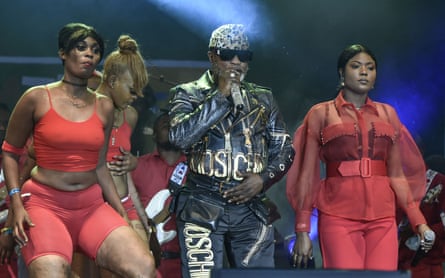
Exponents of this style include the American gospel singer Kirk Franklin as well as the Congolese rumba bandleader Koffi Olomide and the Congolese singer Awilo Longomba.
The success of Olomide and Longomba at the turn of the 21st century set off a craze in Côte d’Ivoire, where coupé-décalé music embraced the atalaku trend alongside farotement, the act of showing off by throwing cash at performers or guests at parties.
A line encouraging audiences to gallop like a horse in the Ivorian star DJ Arafat’s 2003 viral homage to a late friend – “Tout le monde galope, kirikata kirikata” – influenced later hits from Nigerian Afrobeats musicians Flavour N’abania and Skales.
Côte d’Ivoire’s national television network, RTI, ran an atalaku talent hunt for several years. Lili Djely, an Ivorian woman of Malian origin, won the 2006 edition with a mix of Ivorian nouchi and French, defeating men to take the crown. In recent years, an MC/hypeman of the year category was introduced at the Ghana DJ awards as hype flourished there too.
Allow TikTok content?
This article includes content provided by TikTok. We ask for your permission before anything is loaded, as they may be using cookies and other technologies. To view this content, click 'Allow and continue'.
Thanks to the success of Afrobeats, Afrohype is now widely recognised as a full-time career. As artists became more expensive to book after Covid-19, promoters turned to hypemen – previously criticised for simply doing voiceovers. Some are now reportedly paid as much as 5-8m naira (£2,844–4,550) for a 30-minute or one-hour performance.
Some observers, however, say hype is a nuisance, amping up noise levels at events or encouraging fraudulent lifestyles, and that many performers do not customise language and tempo to fit the event.

Nevertheless, hypemen are now a permanent fixture on the entertainment scene. For Shang, they are helping fun-seekers and club-goers get back on the dancefloor.
“People are facing a lot of challenges … they need somebody to tell them money is coming in the new week,” he said. “Also, everybody wants to press their phones or show Birkin bags in clubs. Nobody wants to dance because dancing is seen as for small kids. You need a hypeman to bring out that childlike part in every person. A 60-year-old woman can start dancing like a young girl if the hype is good enough.”

















 English (US) ·
  French (CA) ·
  French (FR) ·