

PROTECT YOURSELF with Orgo-Life® QUANTUM TECHNOLOGY
Orgo-Life the new way to the future Advertising by AdpathwayThe following is from These Long Shadows: Women’s House Museums in the American South by Monica Nelson.
Article continues after advertisement
Eudora Welty
Writer
1909-2001
Jackson, Mississippi
House Name: Eudora Welty House
Construction: Built in 1925
Architect: Wyatt C, Hedrick
Landmarked: 2002
Open To Public: 2006
Primary Function: Literary tourism
Address: 1119 Pinehurst St., Jackson, MS 39202
*
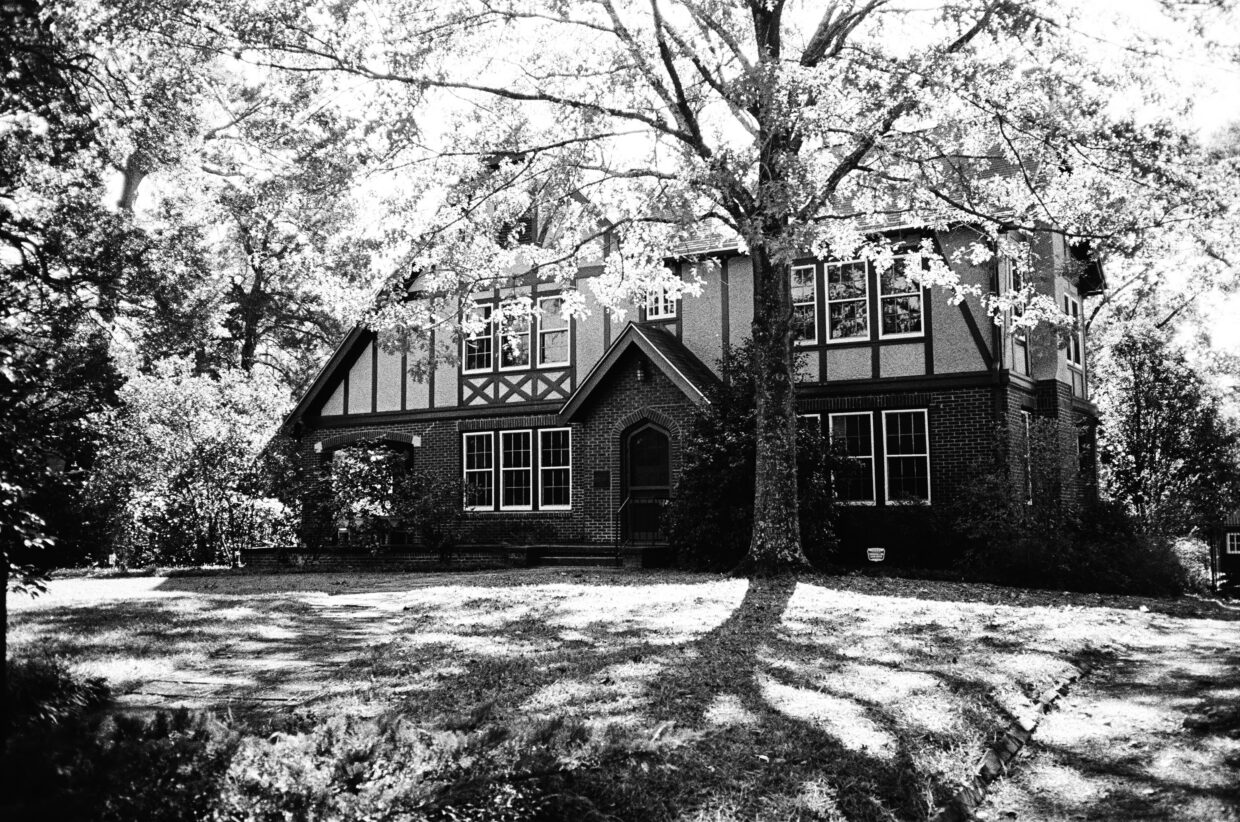
When she died, The Eudora Welty House and Garden was staged to look exactly as it was when Eudora lived there in 1986. Her books, paintings, linens, and furniture have not been moved at all, giving the space the feeling of being flash-frozen in time. Eudora was a novelist and photographer whose main subject was the American South. She was born in Jackson, Mississippi, and returned in 1931, after having trouble making money in New York City. She moved back into the home she lived in as a teenager and wrote in the bedroom upstairs. Welty won the Pulitzer Prize in 1973 for her novel The Optimist’s Daughter, and has been awarded both the Presidential Medal of Freedom and the Order of the South. She used her writing to metaphorically turn a camera on some of the injustices and racial disparity in the South, most notably in her short story “Where Is the Voice Coming From?” which was published in the New Yorker. The story took the perspective of a White male Southerner and addressed a crime similar to the murder of Medgar Evers in 1963.
Don’t Take Life Too Cereus
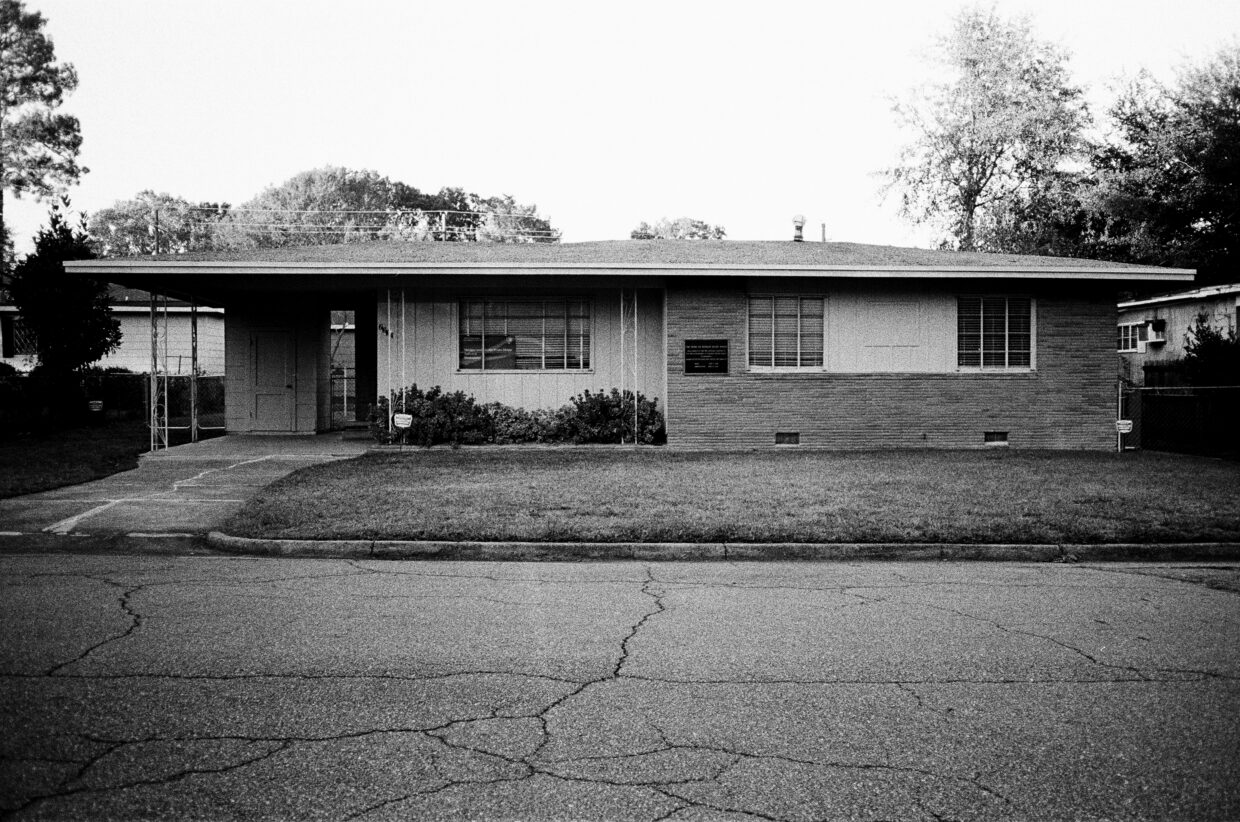
My shadow stretches across the pavement and onto the pale gray stone of the Mississippi Department of History and Archives. The sun has been absent on my five-day road trip through Mississippi. Now, ending in Jackson, it suddenly appears: a sharp spotlight breaking the cold snap of freezing temperatures that had eclipsed the state. As I enter the building to grab my bag from the locker, my day plays out in reverse: Medgar Evers’s house tinted by the red-brown 6pm light; the headline “A Site of Tragedy” on permanent display outside of the house, and accompanying photos of the crime scene—one image showing two hands pulling back a white curtain to indicate the bullet mark inside of the house from where he had been assassinated in the driveway; an extended afternoon looking through the photography of Eudora Welty, boxes of loose black-and-white snapshots, Mississippi through her eyes; a 7am drive to Jackson to see her home, preserved, covered in books: another type of snapshot, recreated of her life in 1981, 20 years before her death.
Eudora lived her whole life in Jackson, Mississippi, except for 12 years when she was in school in Wisconsin and New York City. The Tudor Revival-style house that is now open to the public in her memory was her home for all but 16 of her remaining years. The house is considered one of the most substantive writers’ homes in the country, meaning it is the most authentic representation of a working writer. Everything has been held intact from her life there, including paintings, rugs, furniture, drapes, and, particularly, her books. In One Writer’s Beginnings, Eudora wrote that integral to the function of the house was always that “any room, at any time in the day, was there to read in, or to be read to.” Her parents prized books as their most important collection. A home library was something of a privilege and a joy to them, something that allowed them to explore the world beyond Mississippi.
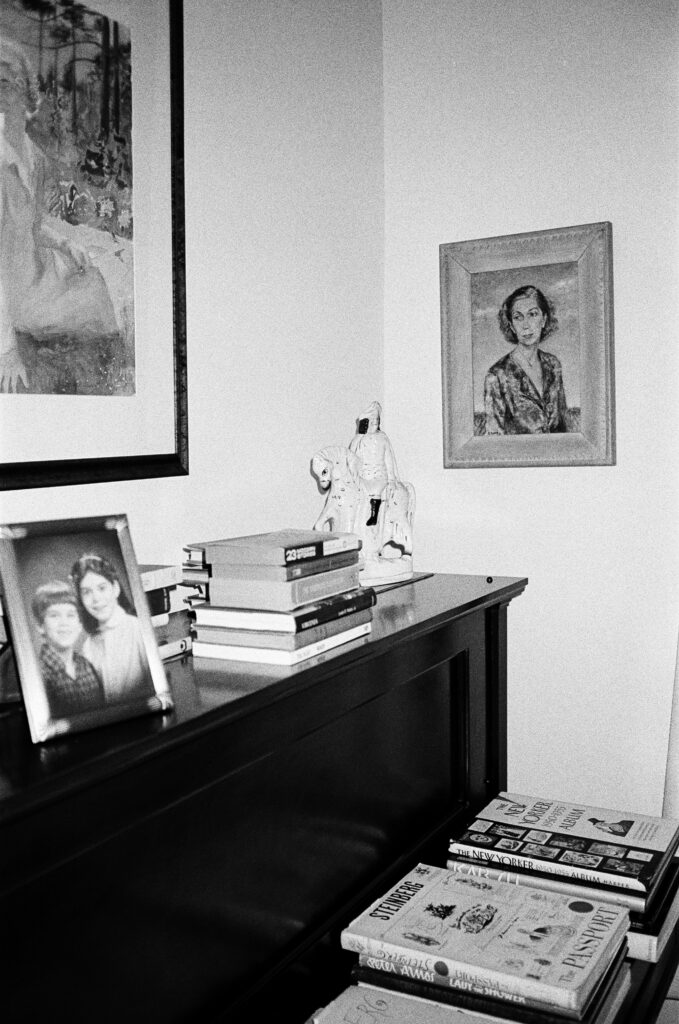
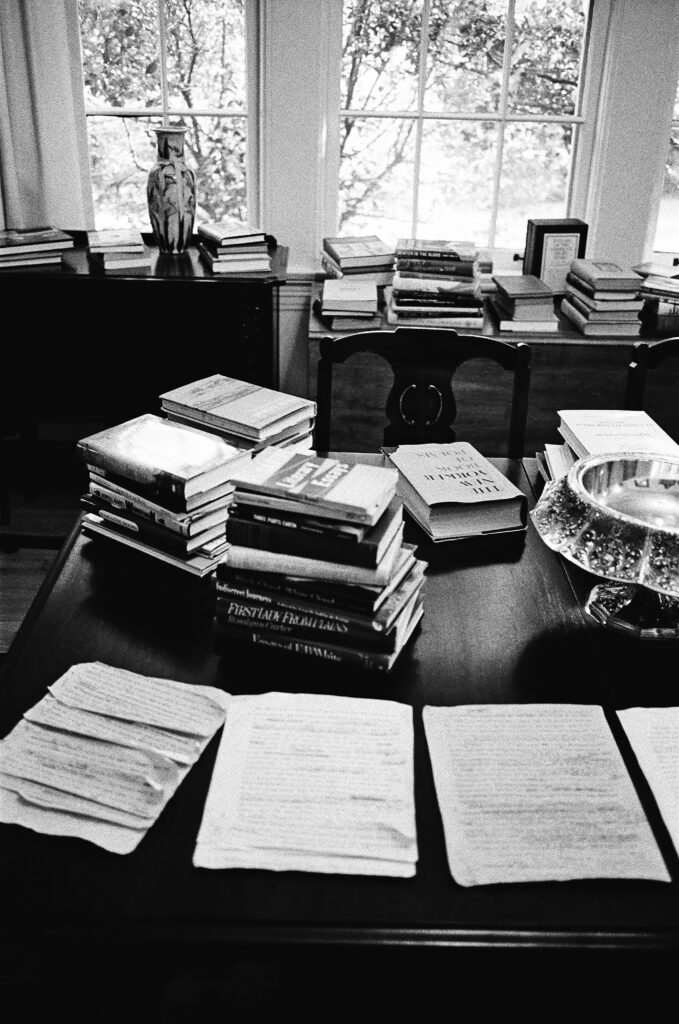
The most noticeable feature of the house today is the sheer number of books that cover almost every visible surface. Stacked on couches, scattered across beds, piled on tables, and open in the breakfast nook, as if she had just gotten up. When the home was designated to become a museum, the directors set out to recreate the memory of the home, which was always described as “covered in books.”

“Let’s take a minute to look at the camellias today,” the director of the Eudora Welty Foundation, Jessica Russell, says, as she points through a window in the dining room. Through the large picture window and past a table covered in books, the white camellias are dappled with light, some pressing into the window. On the dining table, at the top of one of the piles of books, is a biography of Yeats, and a book about Thomas Jefferson’s house, Monticello.
Her stories allow the reader to dissolve into a moment in time, into a detailed picture of Mississippi.
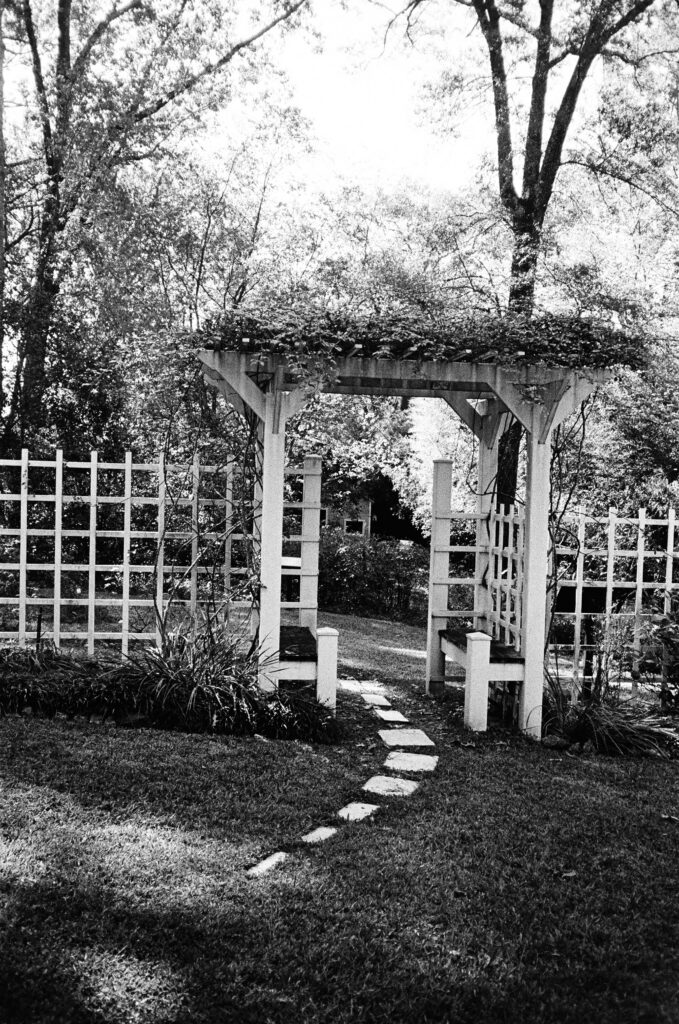
Flowers and gardening were integral to Eudora’s life in Jackson. She would sit on the side porch, as the blossoms crept in, and chat with friends. She started the Night-blooming Cereus Club, which had the motto “Don’t take it cereus. Life’s too mysterious.” The flower, which is strongly scented, blooms fast and bright, only past dusk, and lasts only a single night in high summer. Eudora once described it as looking like “a wrung chicken’s neck.” The club would meet at the flower’s blooming.
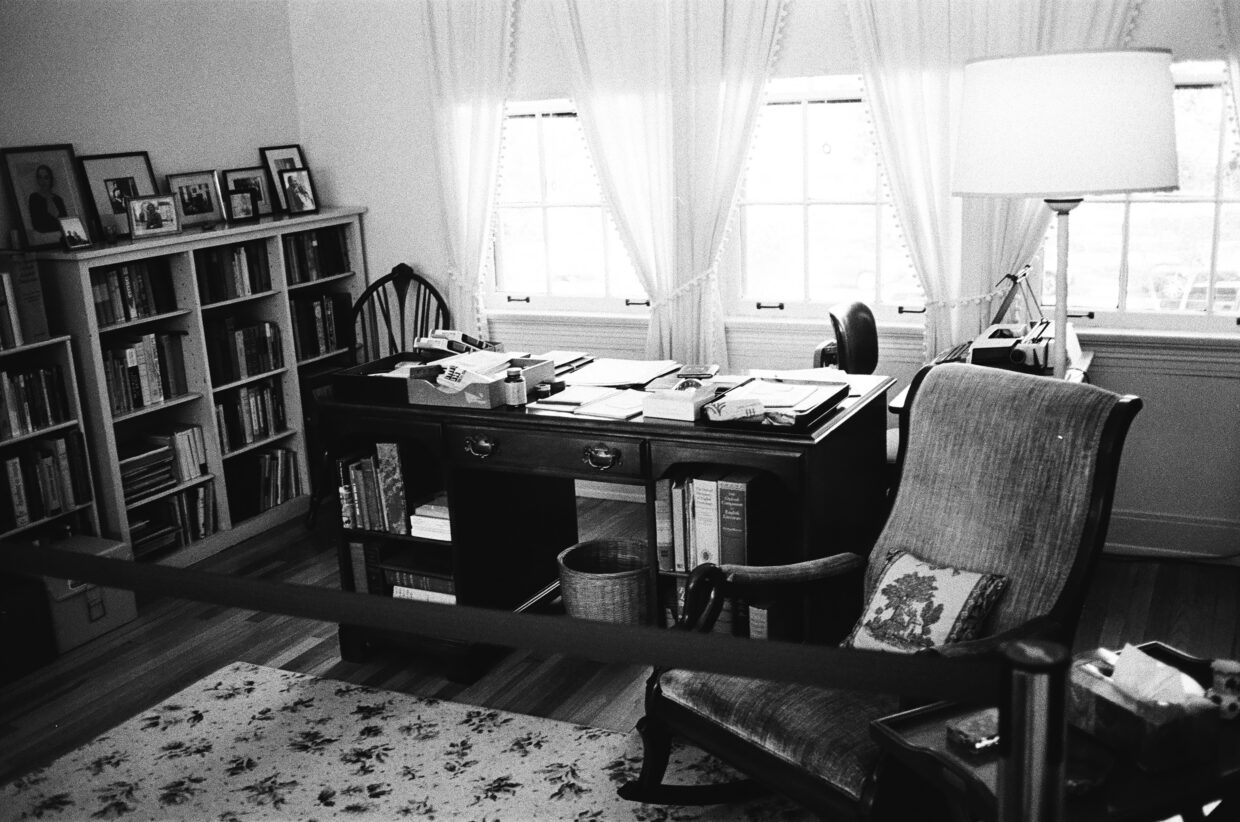
Eudora wrote upstairs at a desk in front of the three windows that looked out over the front lawn. Neighbors are said to have looked in to see if she was there, and she almost always was. The large wooden desk is framed by a bookshelf painted pastel robin’s egg blue, and an antique cabinet that stands on tall spindly legs, its doors open, revealing rows of small, narrow dividers for sorting mail or paperwork. There are several photos of Eudora spread out across her bed reading, and it is easy to imagine her taking breaks throughout the day to lie and read her work in progress, or another book, before returning to her desk.
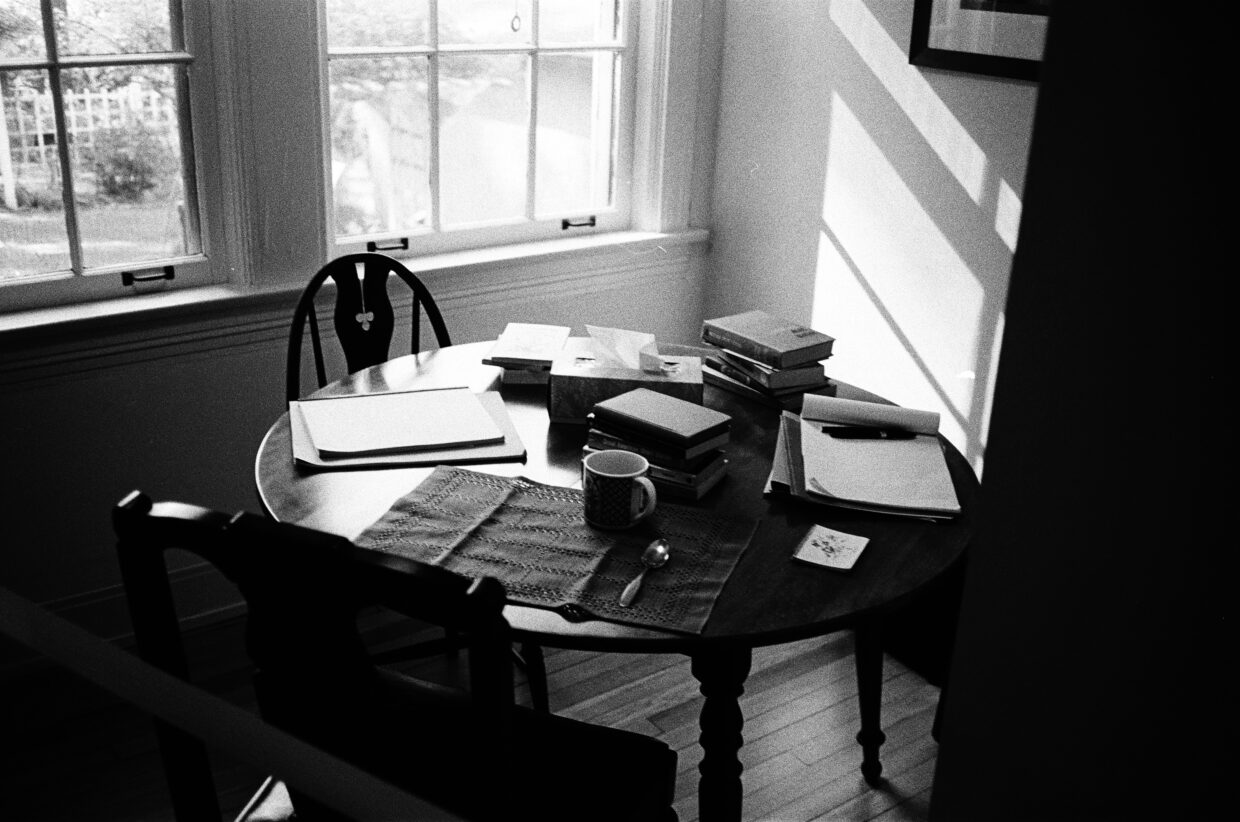
The house is designed to picture Eudora in any number of daily activities, though mostly reading. One can imagine her in the kitchen, making a simple meal or pouring a glass of whisky on the rocks. A nook off to the side of the kitchen is set for breakfast, the garden trellis is in view out of the window, and a pad of paper and a pen are placed adjacent to a woven placemat and coffee cup—two stacks of books await attention.
“She is a Southerner as Chekhov was a Russian, because place provides them with a reality—a reality as difficult, mysterious and impermanent as life,” novelist Maureen Howard wrote of the precision in which Eudora described the region she called home. Her stories allow the reader to dissolve into a moment in time, into a detailed picture of Mississippi.
Eudora wrote with voices. Her work is as dialogue-driven as a play—The Ponder Heart, her novella about a wealthy man who gives away all his fortune, buys everyone in town ice cream, and is accused of murder, was on Broadway in 1956, as Lorrie Moore pointed out in her essay on Eudora from The New York Review of Books in 2006. Moore notes lines like “Edna Earle could sit and ponder all day on how the little tail of the ‘C’ got through the ‘L’ in a Coca-Cola sign” that feel particular to Eudora’s acidic wit.
Before Eudora would publish her first story, she worked as a photographer for the Works Progress Administration. She spent the early 1930s exploring her state with her camera, documenting the effect of the Great Depression on the region. Some of these images would later inspire stories, serving as the foundation of her own perspective—an outward-facing one, where she holds a device before her own face. She said: “I see things in pictures. The only talent I have for writing is quite visual…A snapshot is a moment’s glimpse, a story is a longer look, a growing contemplation…A writer must know all, then not tell all, or tell not too much all at once.”
In her photos, you see life: a baby sitting on the deck of a houseboat on the Mississippi, a group of women and girls joyously dressed in handmade bird costumes, a woman peering into a post office (which she would use as inspiration for her story “Why I live at the P.O.”), African American girls holding flowers, a young white boy and a young Black boy playing with a toy gun, a church revival, zoo animals, cats and people on porches, and a large group of boys who have climbed onto the roof of a train car. And you see the past: recreations of the antebellum South at the first Natchez Pilgrimage; sharecroppers; empty plantations; and Eudora’s own shadow, spilling into a path that looks onto the remains of a Greek Revival mansion. In her memoir, One Writer’s Beginnings, she wrote:
I learned in the doing how ready I had to be. Life doesn’t hold still. A good snapshot stopped a moment from running away. Photography taught me that to be able to capture transience, by being ready to click the shutter at the crucial moment, was the greatest need I had. Making pictures of people in all sorts of situations, I learned that every feeling waits upon its gesture; and I had to be prepared to recognize this moment when I saw it.
Eudora didn’t see her photography as social documentary, and made the distinction clear that her photography was not intended to hold political weight. She wrote, “Poverty in Mississippi, white and black, really didn’t have too much to do with the Depression. It was ongoing. Mississippi was long since poor, long devastated. I took the pictures of our poverty because that was reality, and I was recording it.”
Central to Eudora’s life was also her relationship with other writers. In an interview, Alice Walker, author of The Color Purple, asked Eudora, “Have you regretted not having been married and not having children?” and she replied that she did regret it. “Oh, I would have been glad if it had come along,” she wrote. “Yes, I would have. Of course. It wasn’t a matter of choosing one thing in place of the other. I think the more things, the better.” Eudora and Alice were both caretakers for their families, which would interrupt their writing at different times in their lives, and their correspondence would often lament such things. Eudora lived with and cared for her mother, who had been in declining health, as well as for her brother Walter’s two daughters when he became ill with severe arthritis and died in 1959.
Poet and teacher Margaret Walker and Eudora also crossed paths during the aftermath of the assassination of civil rights activist Medgar Evers, which occurred on the same street that Margaret lived on. Evers’s home, now a historic site, details his gruesome death, which occurred in the early morning of 12 June 1963, following John F. Kennedy’s “Report to the People on Civil Rights.” Evers was carrying a stack of t-shirts that read “Jim Crow must go,” when he was struck in the back by a bullet, and found by his wife Myrlie Evers. The street address is now 2332 Margaret Walker Alexander Drive.
The friendship between Margaret and Eudora would develop over the years, and Margaret said about her:
I am also sure if you asked Miss Welty about her treatment of race she would say she does no such thing, she writes about people. And therein lies the secret of greatness. The writer is concerned with the human condition. He or she writes about people as people, not as things. Welty sees race superseded by humanity, and as such, she values the human spirit above everything else.
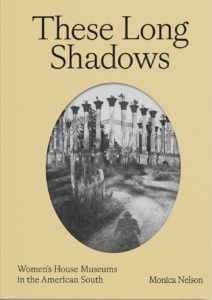
On the cover of this book are the ruins of the antebellum mansion at Windsor Plantation. Eudora’s outline is visibly backlit by a low late afternoon sun as her shadow is cast across the patchy grass of a pathway that leads to a ruin of Corinthian columns. In her shadow, you can imagine the Rolleiflex camera in her hands, and you can see her on a day’s long journey through rural Mississippi, collecting moments of life and glimpses of history that remain in her present.
The 23 columns that still stand once belonged to the largest antebellum Greek Revival mansion in the state. The original home was built by William Smith Coffee Daniell II, a landowner whose property encompassed over 21,000 acres. According to its 1992 application to the National Register of Historic Places, the home remained in the Daniell family until 17 February 1890, when a fire broke out after a house guest accidentally let lit cigarette ashes fall into debris left by carpenters making repairs to the third floor, destroying everything except a few pieces of bone china and the columns, balustrades, and iron stairs. The stairs and some sections of balustrade were taken from the site and are now installed at the chapel of nearby Alcorn College. The site is often visited by tourists and is a monument to the past, the history of slavery, and the wealth amassed by cotton planters in Mississippi.
The photograph, taken in 1942, Eudora’s shadow cast across the landscape of the Jim Crow South, marks a moment in time, one that has since been revisited many times over.
_______________________________
From These Long Shadows: Women’s House Museums in the American South by Monica Nelson. Copyright © 2026. Available from Atelier Éditions.
























 English (US) ·
 French (CA) ·
 French (FR) ·