

 5 hours ago
3
5 hours ago
3
PROTECT YOURSELF with Orgo-Life® QUANTUM TECHNOLOGY
Orgo-Life the new way to the future Advertising by AdpathwayFor James Homan, Costa Rica was never just a tourist destination or a passing experience. It was the place where he learned to navigate public buses, worked as a teacher, connected with families from all walks of life, and built a life with the woman who is now his wife.
Born in New Hampshire—a small northeastern U.S. state bordering Canada—and raised in Pennsylvania, Homan first arrived in Costa Rica in 2004 as part of a school trip. Years later, he returned to study, lived with a host family, and ultimately fell in love with the culture, landscapes, and the unique warmth of the ticos.
READ MORE
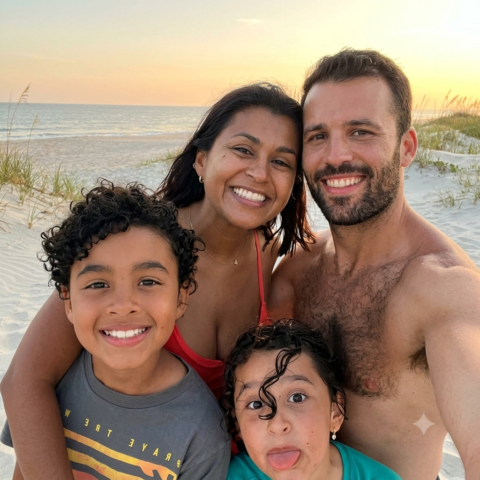
Although he currently lives with his Costa Rican wife and two children in Charlotte, North Carolina, he shares that Costa Rica still holds a special place in his story and does not rule out living in the country again one day.
When he first visited Costa Rica, he was a high school student. Thanks to his Spanish teacher, he traveled for a week alongside 80 other students to explore different regions of the country.
READ MORE
At the time, he was taking Spanish 4, and that initial visit sparked a deep interest in Costa Rican culture. Years later, during his university years, he returned to live for a semester with a family in Sabanilla, San José. He also returned in 2009 for three weeks as part of another university-related program.
READ MORE
It was precisely during these extended stays that he began to truly fall in love with Costa Rica.
“That is when I really fell in love with Costa Rica, because I experienced what it was like to live with a Costa Rican family, eat the food, and all of that,” James recalls.
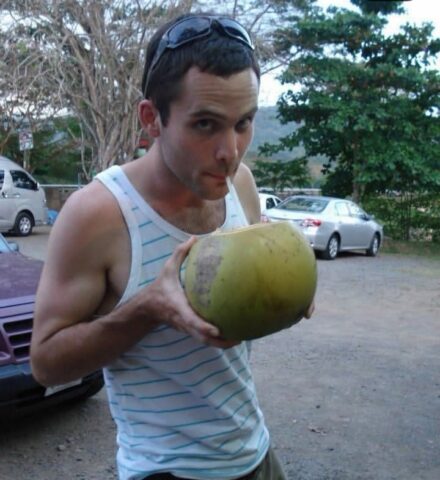
Between 2011 and 2016, he lived in Costa Rica. During those years, he married his wife, a Costa Rican woman, and they both resided in the mountainous area of Escazú, where they worked together.

He had studied to become an elementary school teacher and practiced that profession for eight years. In Costa Rica, he worked at a bilingual school in Escazú, an experience he describes as normal and close to the country’s daily life.
During his first two years, he did not own a car. He got around San José by bus and occasionally used taxis. For him, traveling that way allowed him to experience the country from a different perspective.
“By getting around Costa Rica without a car, I feel like I had a real experience,” he affirms.
Additionally, through his wife’s family, he came into contact with people from various social backgrounds. He visited lower-middle-class and lower-class family members, while also witnessing the reality of those with greater economic means due to his work in Escazú. “I saw a lot of how many ticos really live.”
During that time, James also had some American friends, especially coworkers, but most of his social life unfolded alongside Costa Ricans. That daily coexistence allowed him to get close to the country’s culture, customs, and different ways of life.
One of the things he enjoys most about Costa Rica is eating at a restaurant or at someone’s home. However, what he truly remembers with the fondest affection are his journeys through the mountains and small towns.
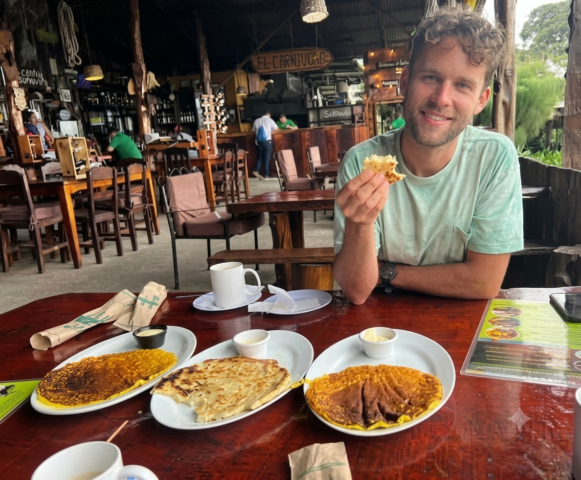
He enjoys driving through rural areas, stopping at a local café, taking in the scenery, and chatting while enjoying a good cup of coffee or homemade tortillas.
Among his favorite places, he mentions the roads near the Irazú Volcano, the Poás Volcano, and the Los Santos region, especially around Dota. For him, those road trips represent a special way to get to know the country, far away from the most crowded spots.
Although he acknowledges that tourist hotspots are popular for a reason, he prefers discovering quiet spaces with natural landscapes and small local businesses.
He still has several places left on his bucket list. He wants to return to Chirripó for a more complete experience, since on his first visit he could only spend one night at the refuge and didn’t have time to see Los Crestones.
He also wishes to visit some mountains in the southern part of the country, which he remembers as areas of rolling, open hills without many trees. Additionally, he would like to visit Rincón de la Vieja, a volcano he hasn’t yet visited directly, even though he once drove past it.
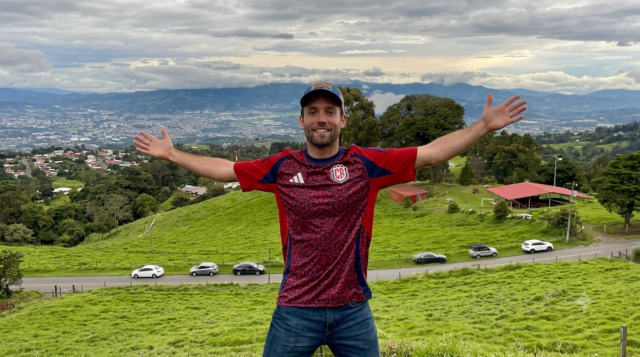
From his perspective, Costa Rica and the United States have important differences. One of them is related to the use of automobiles.
In the United States, he explains, almost everything is designed for vehicles. If a person does not live in a major city, having a car practically becomes a necessity. In Costa Rica, although transportation can be complicated, having a car is not always essential.
He also perceives differences in the pace of administrative procedures and daily activities. In Costa Rica, receiving a package, going to the bank, or handling certain errands can take longer. In the United States, those processes tend to be faster.
However, he believes that this speed also comes at a cost. American work life can be very demanding, offering few vacation days and long working hours.
“During Holy Week (Semana Santa), for example, many people don’t get time off. At Christmas, some jobs only grant December 24th and 25th off, returning to work on the 26th.”
He also points out that some companies offer very little parental leave when a baby is born.
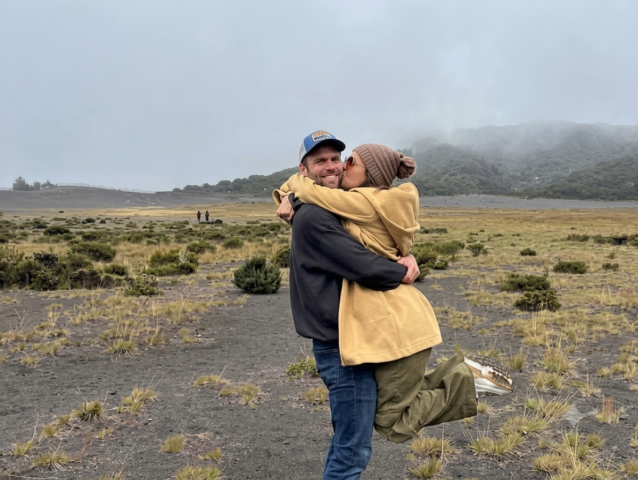
Many people come to the United States looking to earn money, but later discover that the price can be very high: less time for family and a life dictated by work.
Because of this, James considers Costa Rica to be an ideal place for those who value family time and a more relaxed lifestyle. However, he acknowledges that the experience also depends on one’s job, traffic, and individual circumstances.
“Both countries have their benefits. No place is perfect,” he maintains.
For him, the important thing is to recognize the advantages of each place and avoid idealizing the country left behind. His wife, for example, misses living in Costa Rica, but she also recognizes that the United States has positive aspects.
Although he feels he now speaks Spanish well and understands Costa Ricans with ease, he knows he still has a lot to learn. He has been studying the language since he was 15 and estimates he has been on that journey for approximately 24 years.
His experience has taught him that learning a language never truly ends. New words, expressions, and ways of saying things always pop up.
Even his wife can occasionally run into sayings she doesn’t understand, because Costa Rica has a vast wealth of popular phrases and idioms.
That is why he tries to maintain an open attitude. He listens to his own recordings, works on his pronunciation, and tries to imitate the tico accent. His goal is to keep improving without getting frustrated by everything he still doesn’t know.
He currently works in sales for a company that recycles restaurant frying oil. His job involves talking with clients and providing customer service, an activity that also allows him to stay in constant contact with different people.
The vast majority of Costa Ricans welcome him warmly and appreciate the fact that he has learned Spanish and uses local expressions.
“About 95 percent say they love it. I say ‘mae’, I say ‘brete’, I say ‘diay’, things like that,” he comments.
He acknowledges that there is always a small group of people who might not like his way of speaking. Some poke fun at his American accent, while others feel he is appropriating tico culture and that he should leave those expressions to Costa Ricans.
“But no, man. The vast majority are super Pura Vida. They’re like: ‘I love that you talk like that,'” he says.
Occasionally, when chatting with someone and using a very Costa Rican word, the other person starts to laugh. However, he clarifies that it’s not mocking, but rather a reaction of joy or amusement at hearing him speak that way.
He has also encountered comments related to gentrification in Costa Rica. As he explains, some people don’t fully understand the meaning of the term and, simply because he is American, automatically label him a gentrifier. “Even though I make videos supporting small Costa Rican businesses and things like that, there are always people who comment that I’m a gentrifier.”
Despite that, he insists that most reactions have been positive. He recognizes that there can always be a few people with a negative attitude, but considers them a minority.
Ultimately, his message for anyone looking for a different place to live or visit is an invitation to discover Costa Rica.
“If you are a person who likes a family environment, a very welcoming atmosphere, let’s say, with lots of laughter, at the same time with plenty of nature around and fresh food, Costa Rica is the perfect place, because it has all of that,” he expresses.
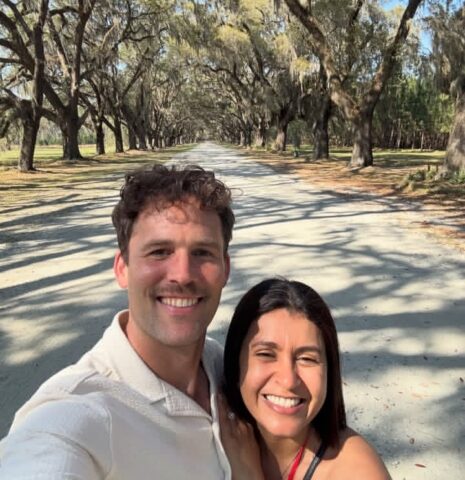
For him, the country brings together elements that are rarely found together in a single place: the warmth of its people, the sense of humor, the natural landscapes, fresh food, and a culture that left a deep mark on him.
Thus concludes his testimony about an experience that began with a school trip and ended up becoming an important part of his life. Between the Spanish language, the mountains, coffee, tico slang, and family ties, Costa Rica stopped being just a country he visited and became a place he still considers returning to one day.
You can follow the social media channels of James Homan, whose content focuses on Costa Rica: Instagram @gringopintocr, to learn more about him, his comedy, and his day-to-day life.

- Advertisement -

















 English (US) ·
  French (CA) ·
  French (FR) ·