

 1 month ago
162
1 month ago
162
PROTECT YOURSELF with Orgo-Life® QUANTUM TECHNOLOGY
Orgo-Life the new way to the future Advertising by AdpathwayBy Sean Thompson, CNN04:29
As world leaders scramble to secure the Strait of Hormuz, Iranian officials have identified their next target that could further destabilise the global economy.
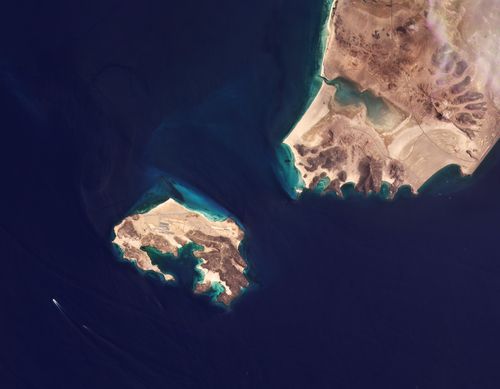
We posted earlier about a cryptic message sent by Iranian parliament speaker Mohammad Bagher Ghalibaf, who made a veiled threat against the Bab el-Mandeb Strait between Yemen on the Arabian Peninsula and the Horn of Africa.
The Bab el-Mandeb is the southern access to the Red Sea and the Suez Canal, which gives access to the Mediterranean Sea.
"What share of global oil, LNG, wheat, rice, and fertilizer shipments transits the Bab-el-Mandeb Strait?
"Which countries and companies account for the highest transit volumes through the strait?" Ghalibaf said in a post on X.
Here's why it could be a big problem.
Iran's Houthi proxy in Yemen sits on the shores of the Bab el-Mandeb and in November 2023 began attacking ships in the Red Sea to show solidarity with Palestinians in Gaza against Israel.
The attacks caused a large reduction in ship traffic through the Red Sea – by more than 50 per cent, according to some estimates – and companies saw costs and shipping times spike as vessels were rerouted around the Cape of Good Hope at the southern tip of Africa.
According to the World Economic Forum, 12 per cent of total global trade and 30 per cent of the world's container traffic transits the Suez Canal.
Around 6 per cent of the world's seaborne-traded oil transits the Bab el-Mandeb, according to the US Energy Information Agency.
The Red Sea is also a secondary outlet for Saudi Arabian oil exports to avoid the Strait of Hormuz.
The port of Yanbu on the waterway is the end of a cross-country pipeline through which Saudi Arabia can transport 7 million barrels of crude oil per day, according to Saudi Aramco.























 English (US) ·
  French (CA) ·
  French (FR) ·