

 2 months ago
85
2 months ago
85
PROTECT YOURSELF with Orgo-Life® QUANTUM TECHNOLOGY
Orgo-Life the new way to the future Advertising by AdpathwayIran is set to compete in its second FIFA World Cup 2026 match in Los Angeles this afternoon against Belgium, just days after the Iran and U.S. governments signed a deal to end the months-long war.
Some of the city's Iranian residents are conflicted about supporting Team Melli

Karina Zapata · CBC News
· Posted: Jun 21, 2026 4:00 AM EDT | Last Updated: 2 hours ago

Listen to this article
Estimated 6 minutes
The audio version of this article is generated by AI-based technology. Mispronunciations can occur. We are working with our partners to continually review and improve the results.

Iran is set to compete in its second FIFA World Cup 2026 match in Los Angeles this afternoon against Belgium, just days after the Iran and U.S. governments signed a deal to end the months-long war.
Team Melli — "national team" in the Persian language Farsi — tied its first match of the tournament against New Zealand on Monday. Hundreds protested outside SoFi Stadium in L.A. that day, underscoring just how closely the match was tied to the political turmoil back home.
"I don't think it's ever been this politically charged," said Amir Ohebsion in the days after Iran opened its World Cup 2026. He left Iran for Los Angeles as a boy shortly before the 1979 revolution.
"It's even stronger now because of the war against Iran."

This is the first time in World Cup history that a host country has been actively at war with a qualifying nation. Immediately after the first match, the players were ordered out of the U.S. and back to their training base in Mexico, despite planning to spend the night in California to recover. Their coach called the team "perhaps the most oppressed in the World Cup."
FIFA has banned the pre-revolutionary flag and related apparel from World Cup stadiums, but Ohebsion estimates hundreds of people snuck them into Monday's match anyway.
Eyes from across the globe are on the World Cup and the war, and there's lots to process for the estimated 230,000 Iranians living in and around L.A.
In the days between the two matches, many members of the Iranian diaspora gathered to reflect in the West L.A. neighbourhood of Westwood, better known as "Tehrangeles."
Generational differences in Tehrangeles
Tehrangeles is located roughly 15 kilometres from SoFi Stadium, in the west side of the city.
It's L.A.'s Iranian hub, home to dozens of Persian-owned businesses, many of which are marked with signs in both English and Farsi. Some storefronts have the lion and sun flag hung up high, which was the state flag before the Islamic Revolution and is now widely considered a symbol of resistance to the regime.


Tehrangeles, also known as Little Iran or Little Persia, is quiet. But there are certain pockets within the neighbourhood where Iranians gather over food and tea.
This week, the World Cup is at the centre of many conversations, and the community is divided over whether they're cheering for or against Team Melli.
Some see the team as an arm of the state, which has killed thousands of dissidents since the Islamic Revolution. Others are separating the sport from the politics and are proud to see their country's name on the world stage. There are also some who support the regime, showing up to SoFi with Islamic Republic flags.
Wearing a "Free Iran" T-shirt, Ohebsion helps his elderly father to a corner table on a Starbucks patio on Westwood Boulevard for their weekly hangout, this time accompanied by Ohebsion's son Cypress.
Ohebsion said he was reluctant to attend Monday's match given the political turmoil back home, but he couldn't turn down a free ticket from his uncle.
"I just looked at it as a moment in history, where it's interesting to be part of it. I had mixed feelings, but I don't regret going," said the screenplay writer best known for the movie Jimmy Vestvood: Amerikan Hero.

Ohebsion has been living in Los Angeles for 48 years. He said his family didn't intend to plant permanent roots in the U.S. — they came to temporarily escape the uprisings until the unrest calmed.
But the situation escalated. They never went back. Ohebsion no longer has family back home, but he has fond memories of Iran and still cares deeply about the country he grew up in.
That experience, he said, means he sees this World Cup differently than the 21-year-old Cypress, who was born in L.A.
Cypress watched Monday's game at a friend's house. The UCLA student said the politics behind the match has been a big topic in L.A., given the massive Iranian population.
But as soon as Team Melli stepped onto the pitch, Cypress was solely focused on the sport.
"It just felt like watching a normal game," Cypress said. "Being Persian, I felt like I wanted to root for my team."

Boycotting the games
Not all Iranians in L.A. are paying attention to the World Cup. Some people in Tehrangeles told CBC they don't care for sports so they won't be tuning into any matches, regardless of their feelings about the war and the regime.
Then there are those who refuse to watch the games in quiet protest.
Roozbeh Farahanipour, a well-known figure in the area, is one of those people. He said he fled a death sentence in Iran after helping lead the student uprising in 1999 and settled in L.A. as a political refugee. He met his wife in Tehrangeles, and they now have an eight-year-old son, Damavand, named after the famous mountain in Iran.

Farahanipour owns two restaurants in the neighbourhood — Mary & Robb's Westwood Cafe and Delphi Greek — and is the CEO of the West Los Angeles Chamber of Commerce.
"I'm not going to watch. I cannot handle seeing the flag of the Islamic Republic. I cannot tolerate the national anthem," Farahanipour said.
"I am not against the players, the athletes. I think, individually, they are good…. But when they have the jerseys of the regime and the flag on the uniform, I'm not a fan of them. End of story."
The pressure of representation
One researcher of the Iranian diaspora says the pressure is high behind this World Cup, and not only for Iran's national team, which has never made it past the group stage.
Amy Malek, an associate professor of anthropology and American studies at the College of William and Mary in Virginia, said it's also a lot of pressure for those who left Iran.
Her book, Culture Beyond Country: Strategies of Inclusion in the Global Iranian Diaspora, examines Iranian societies in L.A., Toronto and Stockholm.
"As diasporic communities, we're always kind of thinking about how we're being represented to the societies that we live in, to each other, to our loved ones in Iran," Malek said.
"On this scale, when the world is watching, what is the message that we want to send? What is the representation we want to have?
"That message is not always the same."
ABOUT THE AUTHOR
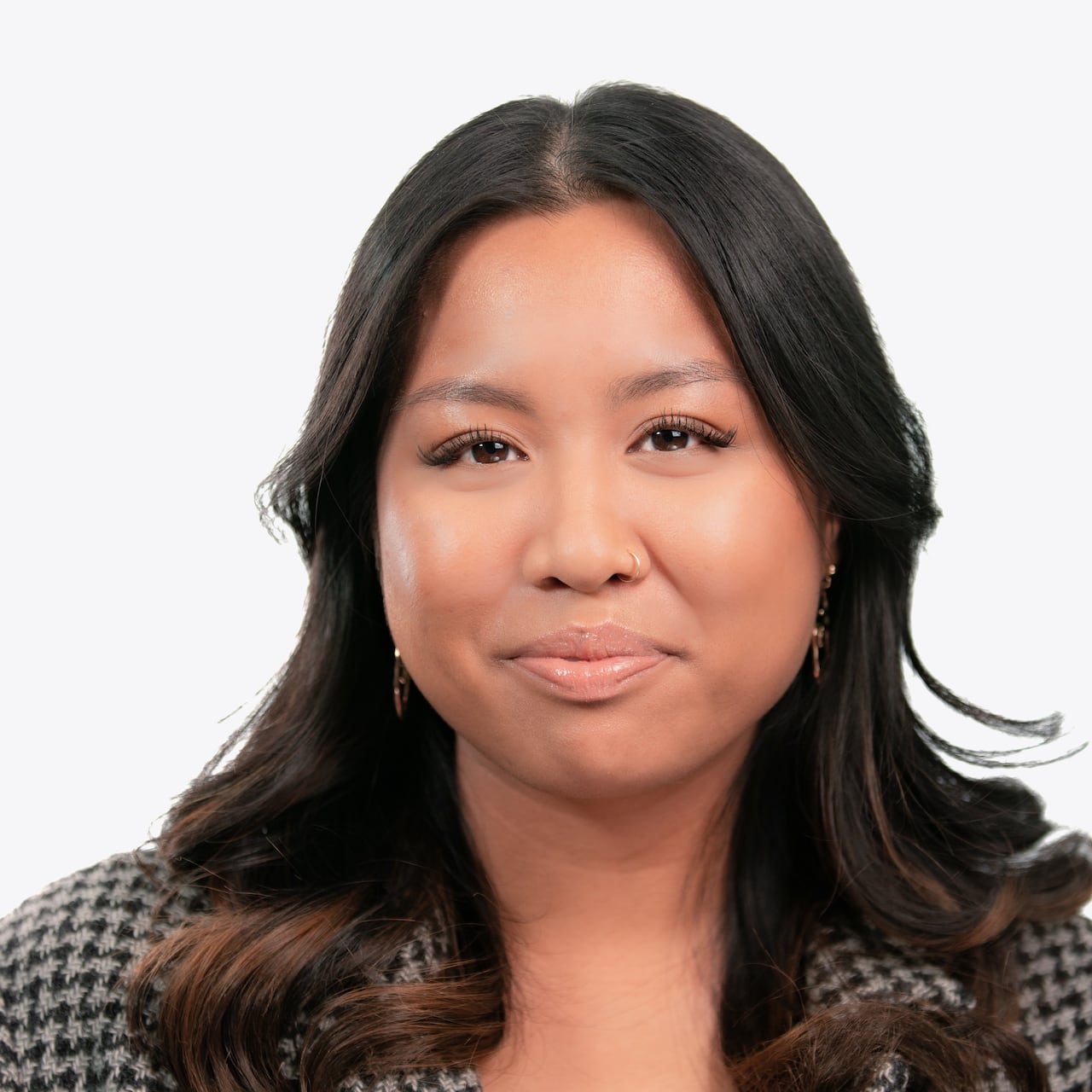
Karina Zapata is a reporter with CBC Calgary. She first joined the CBC as a Joan Donaldson Scholar, working with newsrooms in Ontario and the Northwest Territories. You can reach her at [email protected].






 English (US) ·
  French (CA) ·
  French (FR) ·