

 2 months ago
54
2 months ago
54
PROTECT YOURSELF with Orgo-Life® QUANTUM TECHNOLOGY
Orgo-Life the new way to the future Advertising by Adpathway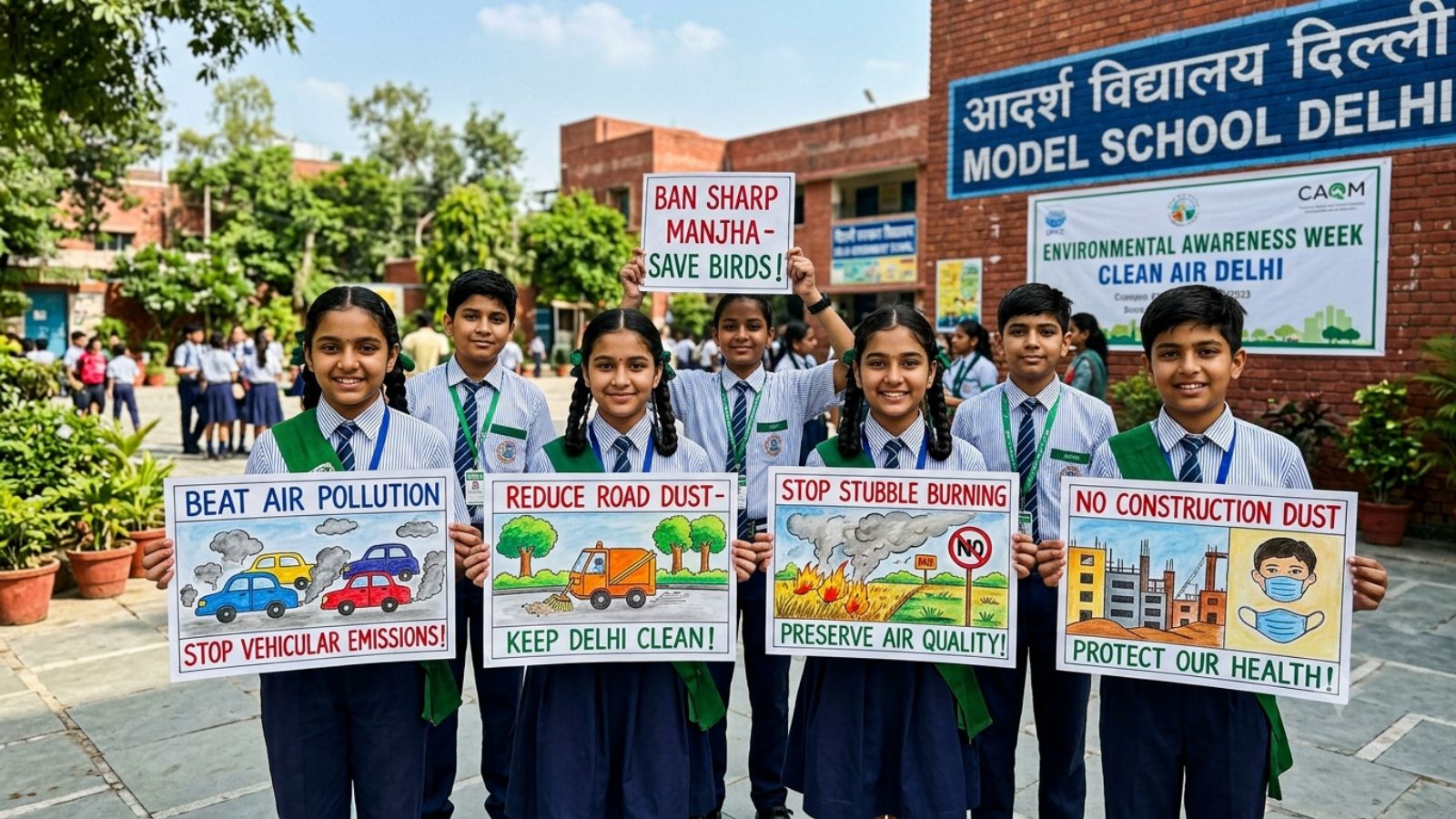 Instead of issuing only a generic warning that air quality will be “very poor,” AI-enabled forecasts can answer operational questions: Should tomorrow’s school sports meet begin at 9 AM or shift to 4 PM? (AI Image)
4 min readJul 21, 2026 03:22 PM IST First published on: Jul 21, 2026 at 03:21 PM IST
Written by Manmeet Singh and Sandeep Juneja
Delhi’s decision to introduce a permanent winter pollution management framework marks an important shift in how the city responds to its annual air quality crisis. Measures such as staggered office timings, work-from-home arrangements, construction restrictions and tighter controls on vehicular emissions show that the government is moving from emergency response to advance planning. But one critical question remains: Even if emissions are reduced, when should people go outdoors?
Every winter, Delhi experiences strong temperature inversions that trap pollutants close to the ground, producing some of the world’s highest concentrations of fine particulate matter, or PM₂.₅. Yet millions of schoolchildren, athletes, coaches, outdoor workers and event organisers continue to follow fixed morning schedules rather than atmospheric conditions. Daily Air Quality Index bulletins tell people when the air is “poor” or “severe,” but rarely answer the more practical health question: What is the safest time today to be outside?
Our analysis of winter observations from November to January, using data from the Central Pollution Control Board, points to a clear pattern.
We compared PM₂.₅ concentrations during the traditional morning window for school sports and outdoor activities, from 9 am to 12 pm, with those in the late afternoon, from 3 pm to 6 pm, when stronger atmospheric mixing typically helps disperse pollutants. The difference is striking.
At Anand Vihar, average PM₂.₅ concentrations fall from 275.3 μg/m³ in the morning to 170.4 μg/m³ in the late afternoon, a reduction of 38 per cent. In Rohini, concentrations decline by 40 per cent. R K Puram and Ashok Vihar record reductions of around one-third. Even Lodhi Road, among Delhi’s cleaner monitoring locations, sees an average reduction of nearly 29 per cent. Pollution levels between 6 AM and 9 AM, when many training sessions and fitness activities begin, are similarly high to those between 9 AM and noon.
This pattern reflects a familiar feature of Delhi’s winter atmosphere. Pollution remains trapped near the surface through the morning and often stays elevated into the early afternoon. The most consistent improvement occurs later in the day, especially between 3 pm and 6 pm.
For children playing football, hockey, cricket or athletics, this timing matters. During vigorous exercise, breathing rates can rise by up to twenty-fold, allowing fine particulate matter to penetrate deeper into the lungs. A two-hour sporting event can therefore involve far greater pollution exposure than simply standing outdoors. Shifting activity to a cleaner time of day can substantially reduce exposure without requiring new infrastructure or additional regulation.
This is where AI can make Delhi’s winter strategy more effective.
Historical observations reveal broad patterns, but pollution varies from day to day depending on wind, temperature, cloud cover, regional biomass burning and local emissions. AI models can combine weather forecasts, satellite observations, ground-level monitoring and emissions data to predict how pollution will evolve hour by hour, and increasingly several days in advance.
That can turn air quality forecasting from a general information service into a practical decision-support tool.
Instead of issuing only a generic warning that air quality will be “very poor,” AI-enabled forecasts can answer operational questions: Should tomorrow’s school sports meet begin at 9 AM or shift to 4 PM? Will pollution remain hazardous all day, requiring outdoor activity to be postponed? Which parts of the city are likely to see air quality improve earliest?
Delhi’s new winter pollution framework rightly focuses on reducing emissions. AI forecasting would complement those efforts by helping governments, schools and communities reduce exposure while pollution-control measures take effect. With high-quality data, such forecasts could support decisions on school sports, marathons, outdoor work, public events and emergency health advisories.
The evidence already supports one simple recommendation: Wherever possible, winter school sports and other outdoor physical activities should be scheduled in the late afternoon, between 3 pm and 6 pm.
India already uses predictive science to prepare for cyclones, floods and heatwaves. Air pollution should be treated no differently. Delhi has taken an important step by planning ahead to reduce emissions. The next step is to use AI-powered forecasts to help people decide when it is safest to step outside.
Singh is academic visitor and Juneja is director, Safexpress Centre for Data, Learning and Decision Sciences, Ashoka University, Delhi-NCR. Views are personal



















 English (US) ·
  French (CA) ·
  French (FR) ·