

 2 months ago
22
2 months ago
22
PROTECT YOURSELF with Orgo-Life® QUANTUM TECHNOLOGY
Orgo-Life the new way to the future Advertising by AdpathwayIsrael warned that displaced Lebanese driven from their homes by its military campaign would not be able to return until the safety of Israelis living near the border was ensured, as its troops pushed into new parts of southern Lebanon more than two weeks into its deadly offensive there.
At least 886 people killed by Israeli strikes in past 2 weeks: health ministry
Thomson Reuters
· Posted: Mar 16, 2026 6:13 AM EDT | Last Updated: 3 hours ago

Listen to this article
Estimated 4 minutes
The audio version of this article is generated by AI-based technology. Mispronunciations can occur. We are working with our partners to continually review and improve the results.

Israel warned that displaced Lebanese driven from their homes by its military campaign would not be able to return until the safety of Israelis living near the border was ensured, as its troops pushed into new parts of southern Lebanon more than two weeks into its deadly offensive there.
In a briefing, Israeli military spokesperson Lt.-Col. Nadav Shoshani told reporters that soldiers were now conducting ground operations in "new locations," describing the latest offensive as "limited and targeted."
The extended operation began days after Defence Minister Israel Katz said the military had been ordered to expand its campaign. He later warned that the country could face territorial losses and damage to its infrastructure unless Hezbollah was disarmed.
Israel's military, which has occupied five positions in southern Lebanon since a November 2024 ceasefire with Hezbollah, sent additional forces into the country after Hezbollah fired a salvo of rockets on March 2, dragging Lebanon into an expanding regional war.
Hezbollah, a Shia Muslim group, said its attack was in retaliation for the killing of Iran's supreme leader on Feb. 28, the first day of the U.S.-Israeli war against Iran. Israel has responded with an intensive bombing campaign on Lebanon.
WATCH | Lebanese Justice Minister on challenge controlling Hezbollah amid Israeli attacks: Lebanon wants diplomacy with Israel but control of Hezbollah presents challenge: Lebanese minister
Adel Nassar, Lebanon's minister of justice, said the country is suffering from a "dramatic" situation as a result of Israel's ongoing assaults.
"Lebanon is facing disproportionate reaction [from] Israel," he told CBC News, adding that Hezbollah is acting as if it's part of Iran's defence, and that is against the law.
The Israeli military has framed the ground offensive, launched after March 2, as a defensive effort to protect northern Israel from Hezbollah attacks, which it says have averaged at least 100 rockets and drones a day and have reached as far as central Israel.
At least 886 people have been killed, according to Lebanon's Health Ministry. It said the death toll includes at least 111 children and 67 women. The number of wounded has meanwhile climbed to 2,141 people, including 332 children and 362 women.
More than 800,000 have been driven from their homes, many from the south as well as from areas near the capital, Beirut.
WATCH | Strikes against health-care sites: At least 12 medics killed in Israeli airstrike on health facility: Lebanon officials
"Hundreds of thousands of Shia residents of southern Lebanon who have evacuated or are evacuating their homes in southern Lebanon and Beirut will not return to areas south of the Litani line until the safety of northern residents is ensured," Katz said in a statement on Monday.
He said the military had been instructed to destroy "terrorist infrastructure" in villages in southern Lebanon near the border with Israel, drawing a comparison to operations in cities in the Gaza Strip that were largely destroyed by Israeli forces.
Katz also suggested that Hezbollah’s leader, Naim Qassem, could face a fate similar to that of his predecessor, and to Iran's supreme leader, both of whom were killed in Israeli strikes.
Qassem said last week threats against his life were “worthless.”
Israeli troops advance west
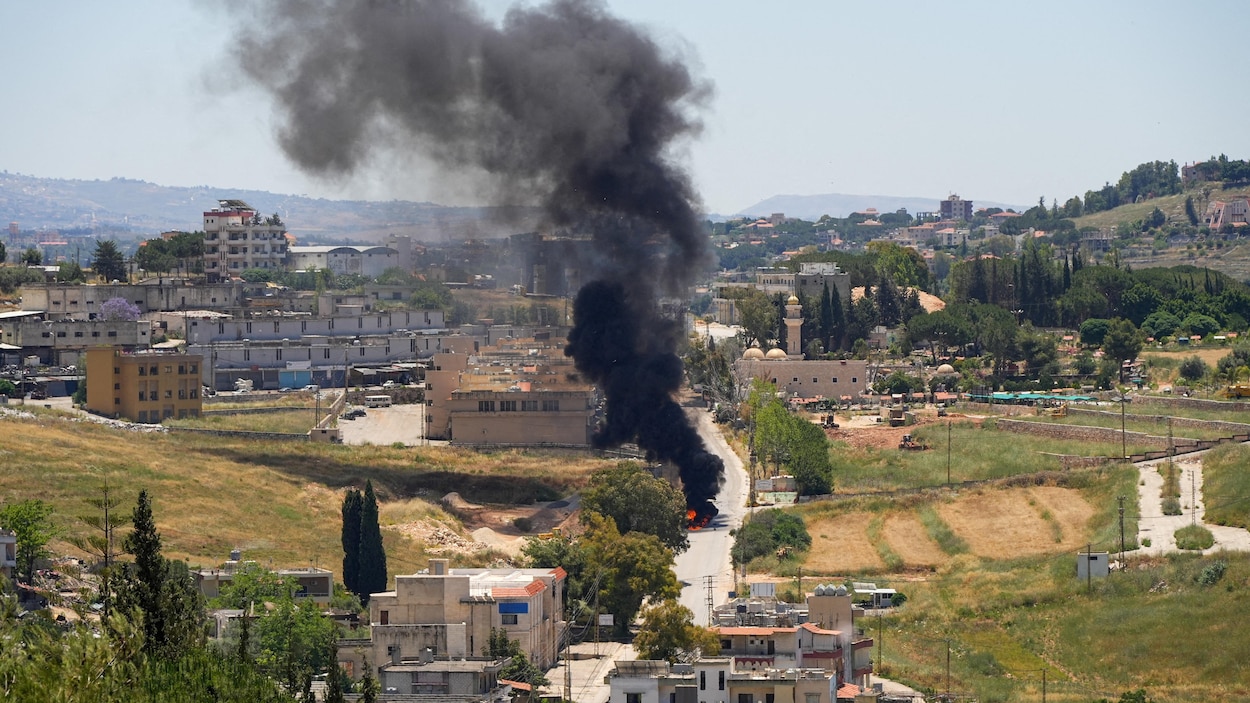
Over the weekend, Israeli troops encircled the key southern Lebanese town of Khiyam and were advancing west toward the Litani River, a move that could leave large swaths of southern Lebanon under Israeli control, Lebanese security sources told Reuters.
Israeli troops battled Hezbollah fighters in southern Lebanon throughout the day on Monday, and advanced towards Bint Jbeil, a Lebanese village and Hezbollah stronghold located about four km from the border with Israel, the sources said.
Two Israeli officials said on Sunday that Israel and Lebanon were expected to hold talks in the coming days aimed at securing a durable ceasefire, which would see Hezbollah disarmed.
WATCH | Expanded attacks in Lebanon: Israel widens war, drops leaflets warning Lebanon to disarm Hezbollah
A Lebanese source familiar with the matter said it didn't seem talks with Israel would be taking place soon, though they would happen eventually.
Israel's Ambassador to the United Nations Danny Danon told reporters that a "few players were trying to mediate and host talks," adding: "I believe the next step will be talks but first we have to degrade the capability of Hezbollah."
Under the November 2024 ceasefire, Hezbollah was to pull back from southern Lebanon as the Lebanese military took over.
Israel said Lebanon never upheld its part of the deal, continuing near-daily airstrikes against what it said were Hezbollah positions and weapons.
With files from CBC News and The Associated Press





















 English (US) ·
  French (CA) ·
  French (FR) ·