

 3 hours ago
4
3 hours ago
4
PROTECT YOURSELF with Orgo-Life® QUANTUM TECHNOLOGY
Orgo-Life the new way to the future Advertising by AdpathwayThe LatAm Brief
One email, every weekday morning. What moved in Latin American markets, politics and expat life.
Yesterday’s subject line: “68 strikes, 223 people. A UN expert says murder.”
Free. We send a confirmation link first — nothing arrives until you click it. Unsubscribe with one click in any edition. If you stop opening us for 30 days we stop sending by ourselves, as we assume the interest is no longer there. See our privacy policy. We never share your email.
Brazil · Companies
Key Facts
- What was filed — JBS S.A. asked the CVM on 21 September to cancel its registration as a Category A securities issuer.
- Who filed it — not the listed group. JBS S.A. is an indirect wholly-owned subsidiary of JBS N.V. and has no minority shareholders at all.
- Not yet done — the CVM register still lists the company as active. This is a request under analysis, not a completed cancellation.
- No tender offer — none is required, because there is no free float to buy out. Consent of every shareholder and security holder was obtained first.
- The BDRs continue — JBSS32 keeps trading on B3, backed by JBS N.V. shares under a separate registration that nobody has touched.
- The other half — holding company J&F filed on 14 September for Category B registration, which permits bond issues and not share trading.
Two filings a week apart look like a swap of one listed company for another. Read the documents and it is something much narrower.
If you saw a headline about a JBS delisting this week and wondered what happened to your shares, the short answer is nothing. The company that filed is not the company you can buy. JBS ordinary shares left the São Paulo exchange in June 2025, and what went to the regulator on Monday is the paperwork left over from that move.
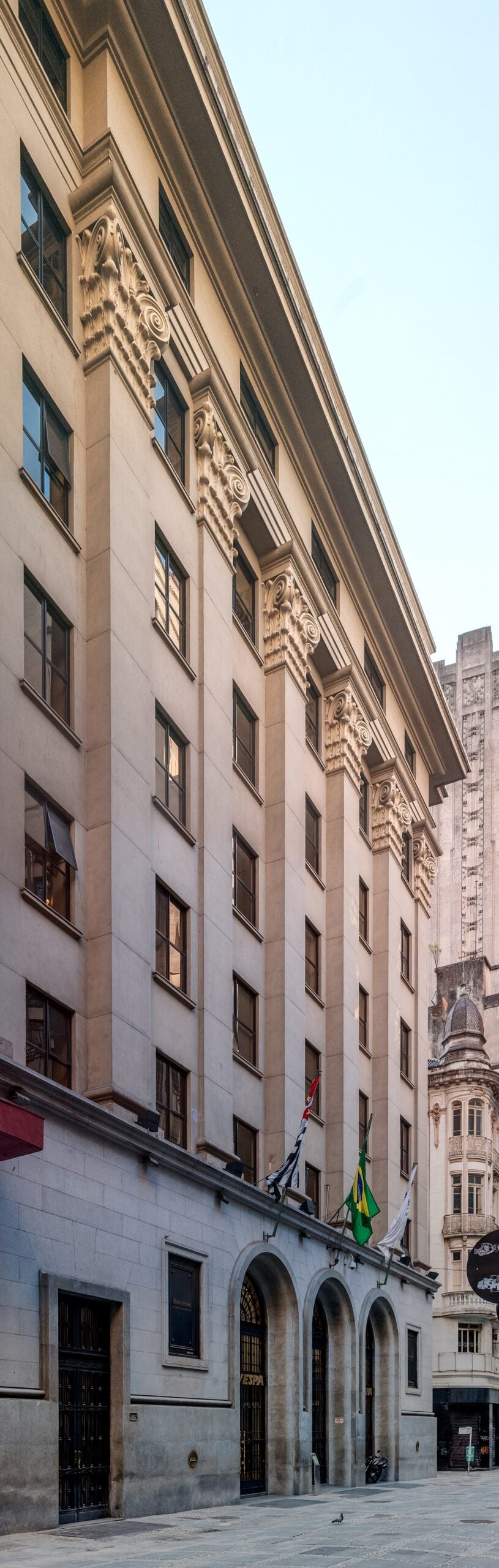
What the JBS delisting filing actually says
The document is a fato relevante dated 21 September, signed by global chief financial officer Guilherme Perboyre Cavalcanti. It asks Brazil’s securities regulator to cancel the registration of JBS S.A. as a Category A securities issuer, under the corporate law and CVM Resolution 80.
It also records that the company first obtained the consent of all of its shareholders and of every other holder of securities it has issued. That clause is the tell. A company with public shareholders cannot collect unanimous consent, and it would need a tender offer instead.
JBS S.A. today is an indirect wholly-owned subsidiary of JBS N.V., the Dutch-registered parent that trades in New York. Its registration survived the 2025 reorganisation because it still had Brazilian debentures and agribusiness receivable certificates outstanding, some maturing as late as 2044. Those holders are the “other security holders” whose consent the filing mentions, and they voted on it. Cancellation also ends JBS S.A.’s own Brazilian reporting, while that debt runs on for years.
Live Company IntelligenceJBS N.V. — the full investor dossierInside: live share price, market cap, three-year financials, valuation, ESG and peer benchmarks — plus the latest Rio Times coverage.J
◆ Live Company Intelligence
JBS N.V.
NYSE: JBSJBSConsumer DefensivePackaged Foods283,000 employees
$12.88B
Market cap
Analyst target $18.36
Wall Street view
4.0Buy/ 5
1 Buy0 Hold0 Sell
Avg. price target $18.36 · +27% vs 200-day
Valuation & profitability
Market cap$12.88B
Revenue (TTM)$91.17B
P / E ratio11.2
Profit margin1.2%
Return on equity13.4%
Price & risk
52-wk low
$11.4552-wk high
$17.27
200-day average$14.41
Revenue trend · 6y
20202025
Latest $471.14B
Ownership
Institutions28.7%
Shares outstanding776M
Top holderBNDES Participacoes SA -BNDESPAR
Institutional holders5+ funds
Dividend
Yield8.4%
Payout ratio16.5%
Fwd. annual$1.34
What JBS N.V. does. JBS N.V., together with its subsidiaries, engages in the processing of animal proteins, encompassing activities related to beef, pork, lamb, and poultry worldwide. The company is involved in the production and marketing of prepared foods and other related products, as well as operations in leather, collagen, hygiene and beauty products, metal packaging,…
Why your BDRs are unaffected
In June 2025 the group moved its primary listing to the New York Stock Exchange. Brazilian shareholders received one BDR for every two JBS S.A. ordinary shares they held, each BDR backed by one JBS N.V. Class A share. Those receipts trade on B3 under the ticker JBSS32.
They rest on a completely separate CVM registration, held by JBS N.V. under a different code, and nothing has been filed against it. B3’s own listing system still shows JBSS32 as active and quoted.
One more check worth doing yourself: the CVM’s public register of listed companies still shows JBS S.A. as active, in Category A, with no cancellation date recorded. The request went in on Monday. The regulator has not acted on it.
What J&F is doing, and what it is not
The holding company owned by Joesley and Wesley Batista filed a week earlier, on 14 September, for registration in Category B. That distinction carries the whole story. Category B lets a company issue debentures and commercial notes to the public. It does not permit share trading, and it is not a step toward one.
What it does bring is disclosure. A registered Category B issuer has to publish financial statements, quarterly figures and a reference form. J&F has raised money before in narrower formats. At the end of 2024 it sold R$1 billion (about US$196 million) of debentures to professional investors only, and in April it issued US$400 million of bonds abroad. Registration widens the domestic pool, and the price of that is having to open the books.
J&F is not a small thing. It reports net revenue of about R$490 billion (roughly US$96 billion) for 2025 and around 297,000 employees. Its holdings include Âmbar Energia, Eldorado Brasil, Flora, Lhg Mining and a majority of PicPay, which listed on Nasdaq in January at a valuation near US$2.6 billion. JBS itself is excluded from the reorganisation folding those businesses into the holding.
The numbers behind the group
JBS N.V. reported record 2025 net revenue of US$86.2 billion and net income attributable to shareholders of US$2.0 billion. At Monday’s New York close of US$12.03 the group was worth about R$65.9 billion (roughly US$12.9 billion) at the official rate. Treat third-party market-cap trackers with care here. At least one publishes a figure more than three times that size, which cannot be reconciled with the audited share count.
Who controls it
Control sits with the Batistas through a Luxembourg vehicle holding 50.2 percent of the shares but 85.68 percent of the votes, under a dual-class structure. Brazil’s development bank BNDESPar holds 18.61 percent of the shares and 5.35 percent of the votes.
Neither close could have reflected the news. Both came before the filing surfaced on Monday evening, and the B3 receipts had already been sliding for about three weeks.
Does this belong to the wider exodus from B3?
Loosely, and less than it appears. Bloomberg counted 33 companies that have delisted from B3 since 2024. Average daily turnover has fallen nearly 32 percent from its 2021 peak, to R$20.7 billion (about US$4 billion) a day in 2025. Brazilian equities trade around 8.9 times forward earnings. The causes are real: high rates, cheap valuations, a shut IPO window.
JBS is a poor illustration of it. The group did not leave because Brazilian shares were cheap. It left to get a New York listing and a valuation on US comparables, which is a different decision with a different motive.
There is a genuine inversion worth noticing, though. The operating company that spent years as a Brazilian governance case study has moved its public identity abroad. The family holding that was always private is now stepping into Brazilian disclosure in order to borrow at home. Brazilian savers get the Batista balance sheet as bondholders rather than as shareholders. Whether that is a fair trade depends on what you think a listing is for. A bondholder gets a coupon and a covenant. A shareholder gets a vote, a dividend and the upside. Brazil has been swapping the second for the first at a steady clip, and this week added one more example to the pile.
Frequently Asked Questions
Do I need to do anything if I hold JBSS32?
No. The BDRs sit under a separate registration belonging to JBS N.V., which is not part of this filing. They continue to trade on B3 exactly as before.
Why is there no tender offer for JBS shareholders?
Because there are no outside shareholders to buy out. JBS S.A. is wholly owned within the group. Brazilian company law and the CVM’s own rules waive the tender-offer requirement where no shares are in circulation.
Is J&F about to go public?
Not in the sense of listing shares. It has applied for Category B registration, which allows it to sell bonds to the public and requires it to publish accounts. Trading shares would need a different category altogether.
Is JBS leaving the Ibovespa?
It is not in the Ibovespa. It dropped out in June 2025 when its Brazilian shares stopped trading, and BDRs are not currently eligible. B3 plans to admit them from the first half of 2027, capped at 10 percent of the index.
This article was produced by The Rio Times’ automated newsroom system. How we use AI · Report an error
The Rio Times · Power Map
See who really holds power in Latin America
Click to open the Power Map →




















 English (US) ·
  French (CA) ·
  French (FR) ·