

PROTECT YOURSELF with Orgo-Life® QUANTUM TECHNOLOGY
Orgo-Life the new way to the future Advertising by Adpathway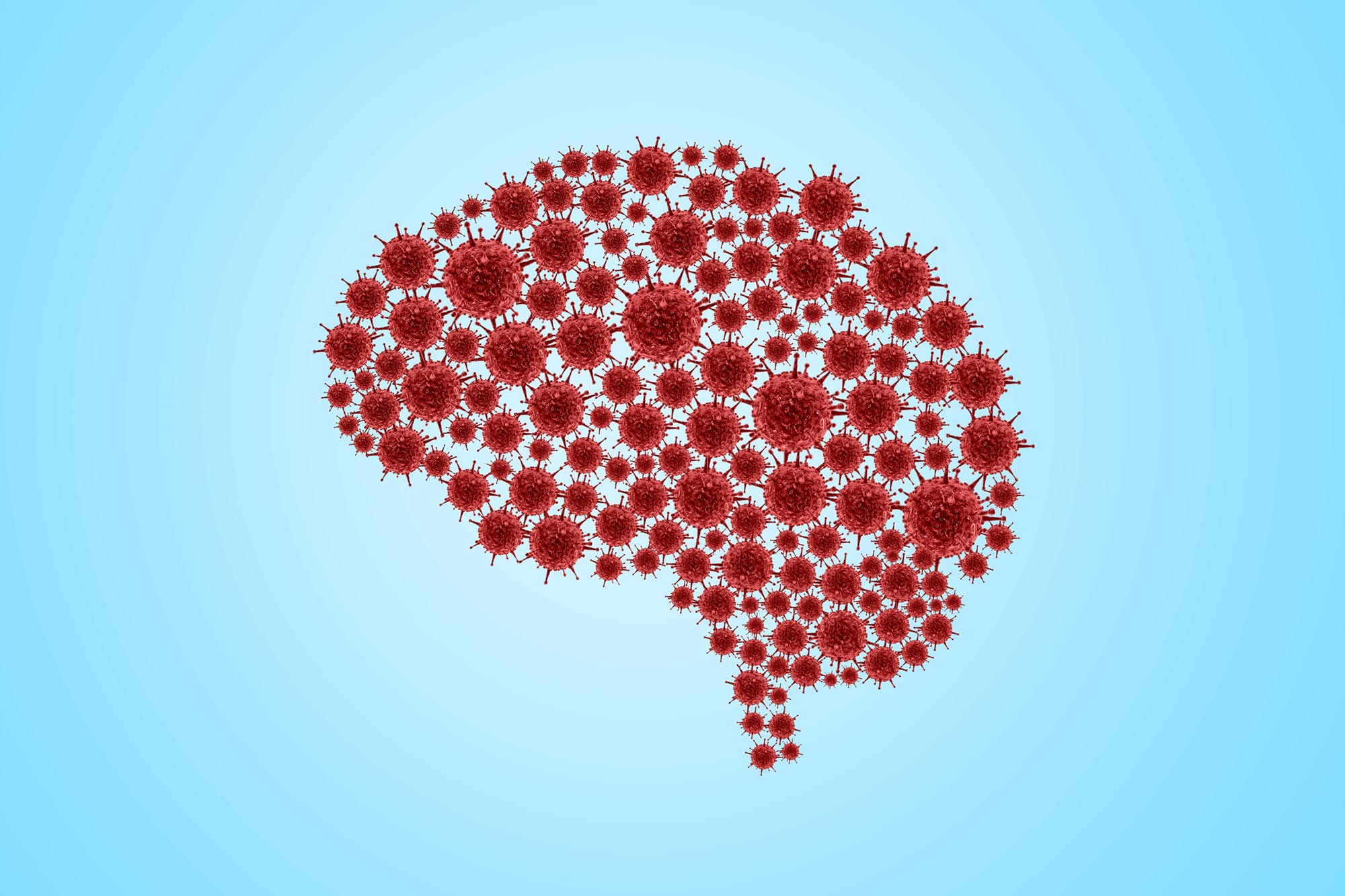 A brain imaging study has uncovered evidence that long COVID may involve measurable changes to dopamine-related neurons in regions tied to motivation, movement, and memory. The findings offer a possible biological explanation for several persistent neurological symptoms and point toward new treatment strategies. Credit: Shutterstock
New PET imaging findings suggest that some of long COVID’s most disabling symptoms may stem from disruption of the brain’s dopamine system.
For many people with long COVID, the infection ends but the exhaustion, slowed thinking, memory problems, and loss of motivation do not. Researchers have struggled to explain why these symptoms persist because the underlying changes inside the brain have remained unclear.
Brain scans from the Centre for Addiction and Mental Health (CAMH) now point to a possible part of the answer. The findings, published in eBioMedicine, provide the strongest evidence to date linking long COVID with injury to neurons that release dopamine, a chemical messenger involved in motivation, movement, and thinking. The result may help explain several disabling symptoms and guide the search for treatments.
Long COVID is estimated to affect five percent of the global population, including two million people in Canada. It includes symptoms such as fatigue, brain fog, memory difficulties, and low mood that continue for at least three months after the initial COVID-19 infection. Despite the scale of the problem, no evidence-based treatments are currently available, in part because researchers still do not fully understand the brain changes involved.
Brain scans point to dopamine injury
To look for those changes directly, researchers used positron emission tomography (PET), a scanning method that tracks specific biological activity inside the living brain. They measured a well-established marker of dopamine neuron integrity in people with long COVID and compared the results with scans from healthy participants.
The scans focused on the striatum, a group of brain regions that helps regulate motivation, movement, memory, and other forms of thinking. People with long COVID had significantly lower levels of the dopamine imaging marker throughout all major parts of the striatum, a pattern interpreted as reduced density of dopamine nerve endings.
Different regions were also connected with different symptoms. Lower marker levels in the ventral striatum were associated with a greater loss of motivation. Reductions in the dorsal putamen were associated with slower movement, while lower levels in the caudate putamen were linked to memory difficulties.
“Our findings provide compelling evidence that long COVID involves the loss of dopamine-releasing neurons,” says Dr. Jeffrey Meyer, Senior Scientist at the Brain Health Imaging Centre, Canada Research Chair, and senior author of the study. “This kind of injury is well known to produce symptoms like lack of motivation and motor slowing, and may contribute to memory difficulties in other neurological conditions. Our results suggest a similar process is occurring in long COVID.”
Inflammation may help explain the damage
The dopamine findings also gave researchers a way to connect the new scans with an earlier clue. Previous work by Dr. Meyer and his colleagues found increased inflammation in the brains of people with long COVID, especially in regions containing large numbers of dopamine-releasing neurons.
That raised the possibility that inflammation was not simply present in the same locations but was related to damage within the dopamine system. The latest scans found reduced dopamine neuron markers in those regions, and the extent of the reductions was associated with patients’ symptoms.
“We know that inflammation can injure dopamine neurons. While our earlier research showed high levels of inflammation in those regions, this study provides direct evidence that the dopamine neuron marker is reduced in the same regions—and that this loss correlates with patients’ symptoms,” explains Dr. Meyer.
Dopamine treatments move toward testing
Much of the research on long COVID has concentrated on inflammation and immune system changes. Few clinical trials have directly examined whether supporting dopamine-releasing neurons could improve brain-related symptoms.
The new results suggest that long COVID may partly involve disruption of the brain’s dopamine system. That possibility gives researchers a more specific target and raises the question of whether existing medications that increase dopamine activity could be repurposed.
“These results indicate that long COVID is, at least in part, a disorder of the brain’s dopamine system,” adds Dr. Meyer. “This suggests that repurposing medications that augment the function of dopamine-releasing neurons, including dopamine precursors and inhibitors of dopamine metabolism, could be a promising approach.”
For people who have spent years seeking an explanation for symptoms that changed their daily lives, the findings also provide biological evidence that those experiences are real.
“For five years I have been seeking answers on what happened to me after I contracted COVID in 2021,” says Susan Deuville, lived experience research advisor to Dr. Meyer. “It was a crushing loss of the life I had and the person I was before. The research of Dr. Meyer brings hope. It also validates what long COVID sufferers have always known—long COVID is real and the effects are devastating.”
Researchers plan to move from observation to testing by launching a clinical trial focused on dopamine function. In collaboration with University Health Network (UHN), they intend to examine whether targeting this system can help improve memory, motivation, and fatigue in people with long COVID as part of the hospital’s partnership connecting mental and physical health care.
Reference: “Loss of vesicular monoamine transporter 2 in striatum of long COVID and relationship to neuropsychiatric symptoms” by Yuhan Karida Liu, Devina Persaud, Erica L. Vieira, Joeffre Braga, Pablo Rusjan, Laura Miler, Jennifer S. Rabin, Tina McCluskey, Isabelle Boileau, Thomas Chao, Michael Bagby, Lucas Narciso, Lauren Rose Gray, Neil Vasdev, Kimberly Desmond, Stefan Kloiber, Jerry Warsh, Muhammad Ishrat Husain, Kelly Smart, Wei Wang and Jeffrey H. Meyer, 10 July 2026, eBioMedicine.
DOI: 10.1016/j.ebiom.2026.106339
This work was supported by the Canadian Institutes of Health Research. JHM, IB, MIH and NV are supported by the Canada Research Chairs Program.
Never miss a breakthrough: Join the SciTechDaily newsletter.
Follow us on Google and Google News.



















 English (US) ·
  French (CA) ·
  French (FR) ·