

 1 month ago
18
1 month ago
18
PROTECT YOURSELF with Orgo-Life® QUANTUM TECHNOLOGY
Orgo-Life the new way to the future Advertising by Adpathway
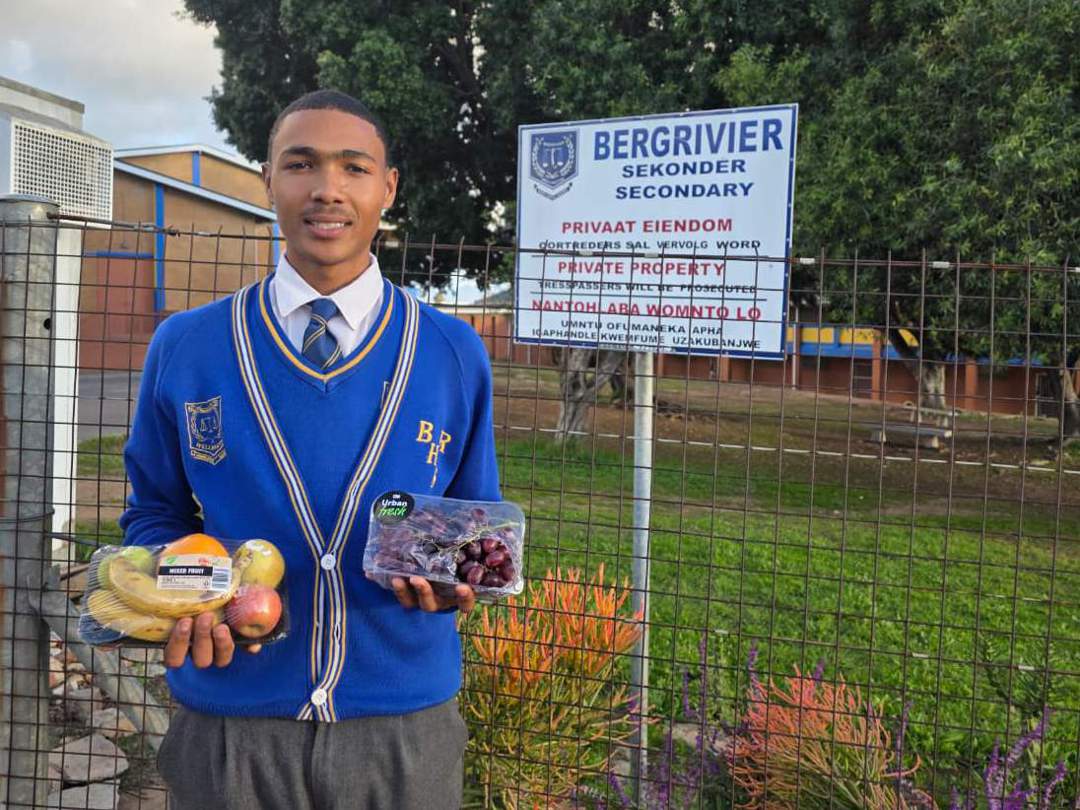
More than 9.4 million South Africans go hungry at times.
- For more financial news, visit News24 Business.
Six years after disruptions caused by Covid-19, inadequate access to sufficient healthy food remains 4.2 percentage points higher than before the pandemic, affecting about one in five (22%) South African households.
Despite an uptick in economic growth in 2025, there has been virtually no improvement in eliminating hunger compared to the previous year, according to the General Household Survey (GHS) for 2025 issued by Statistics SA on Tuesday.
The annual survey measures a broad range of quality-of-life metrics, including sources of household income, access to water, energy and the internet, and education levels.
The survey shows that hunger, measured as a percentage of citizens, decreased from 29.3% in 2002 to 11.1% in 2019. Since the Covid-19 pandemic, however, it gradually increased to 14.7% in 2024 and remained unchanged in 2025.
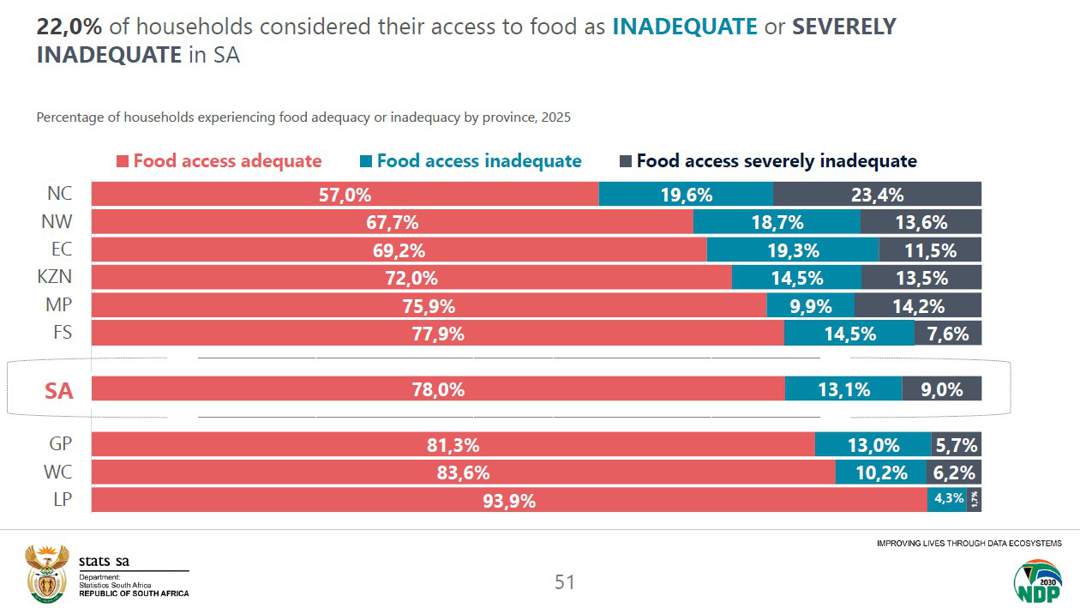
About 22% of South African households have to compromise on their diet, either eating too little or not a healthy variety.
Although the percentage of South Africans going hungry has remained unchanged year-on-year, the absolute number has increased in line with population growth, with about 131 000 more people affected this year. More than 9.4 million people go hungry at times.
However, when people are asked to what extent they have to make compromises on what they buy or where, including reducing the variety of foods they consume, the percentage is much higher, at 24.7% – just below the 29.3% measured in 2010.
The questions gauging people’s access to food were first asked in 2010. Households that consider their access to food either inadequate or severely inadequate remained unchanged at 22% compared to 2024, but are 4.2 percentage points higher than in 2019, before the pandemic.
Food access problems were most common in the Northern Cape (43%), North West (32.3%) and the Eastern Cape (30.8%). Limpopo had the lowest percentage of households with inadequate or severely inadequate access to food, at 6.1%.
The survey found that South Africa has more than 64 million people living in more than 20 million households. Less than a third (26.6%) of households consist of a single person; 38.9% were classified as nuclear households, defined as couples or one or more parents living with children. A further 32.5% of households were classified broadly as extended households, comprising a nuclear core together with additional related family members, such as parents or siblings.
Excluding single households, the majority of households (38.5%) were classified as double-generational households, consisting primarily of parents and their children. A further 13.8% were classified as single-generation households, typically comprising partners or siblings living together. Approximately 14% of households were identified as three-generation households, while 3.9% were classified as skip-generation households, in which grandparents reside with their grandchildren.
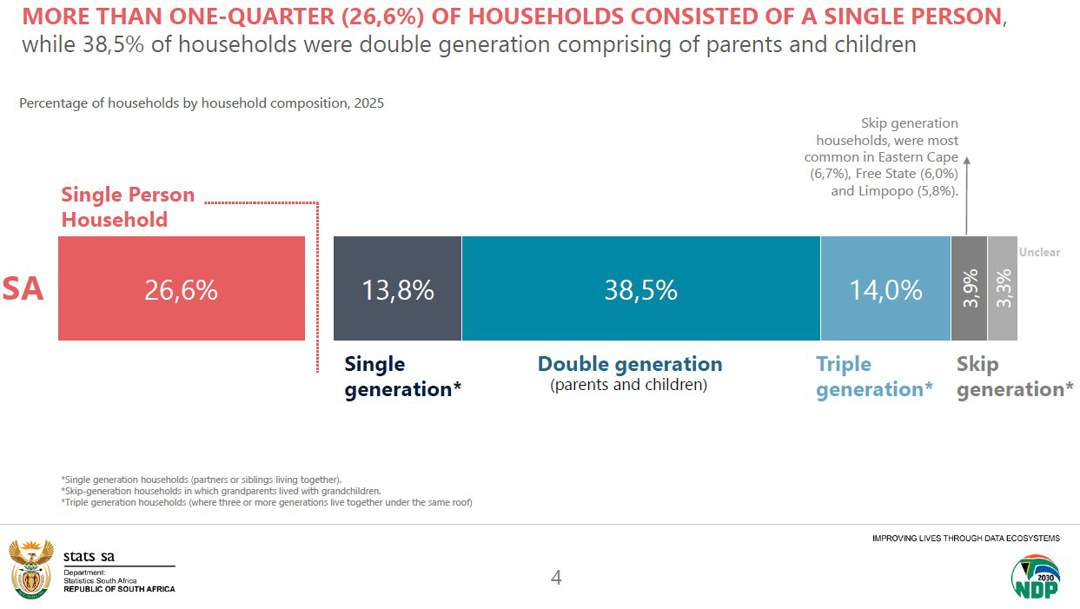
Households with couples or siblings remain the most common.
In large part thanks to the special relief of distress grant, instituted in 2020 as a Covid support measure and extended indefinitely, about 39.5% of South Africans now receive social grants. It provides an income for 50.6% of households, with almost one in four households (23.4%) regarding grants as their main source of income.
Salaries and wages remained the primary source of income for 54.3% of households, though this varied widely across provinces.
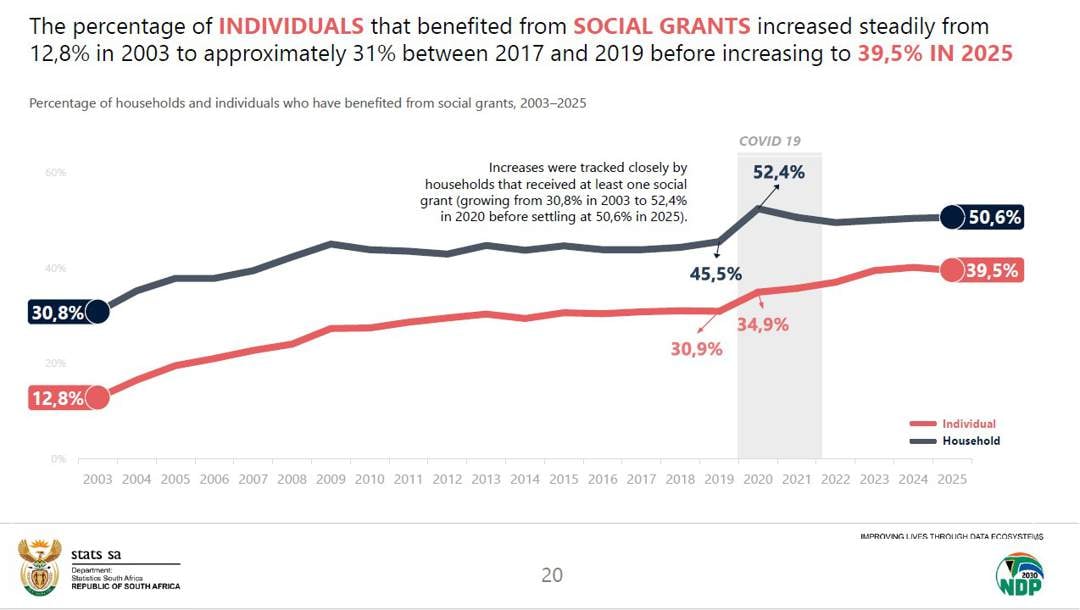
The social relief of distress grant instituted in the Covid-19 pandemic massively increased the number of South Africans receiving social grants.
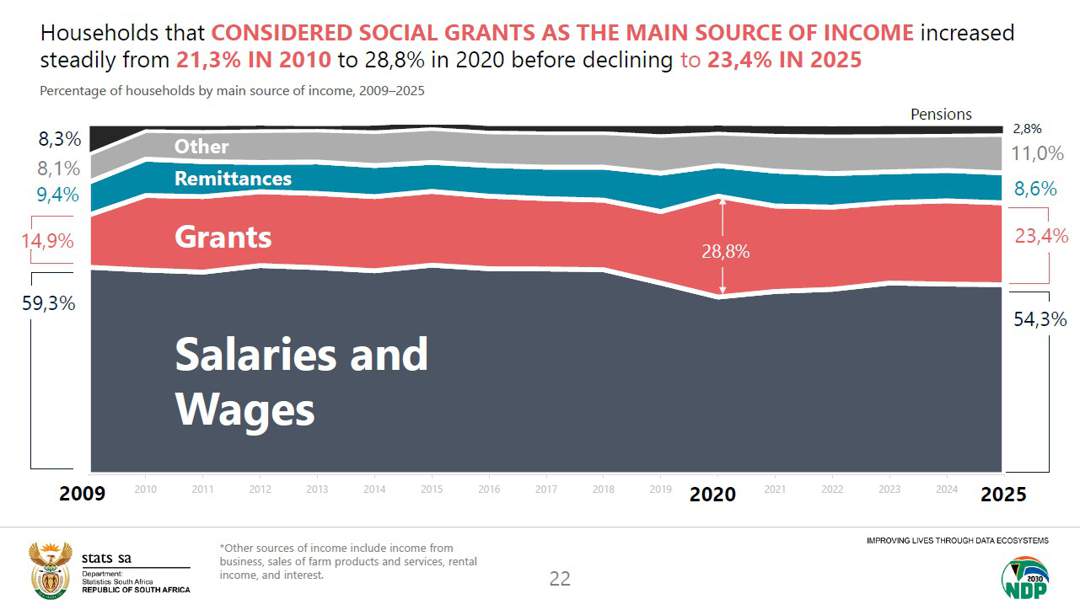
While salaries are the primary source of income for most households, grants have become more important.





















 English (US) ·
  French (CA) ·
  French (FR) ·