

 2 months ago
18
2 months ago
18
PROTECT YOURSELF with Orgo-Life® QUANTUM TECHNOLOGY
Orgo-Life the new way to the future Advertising by Adpathway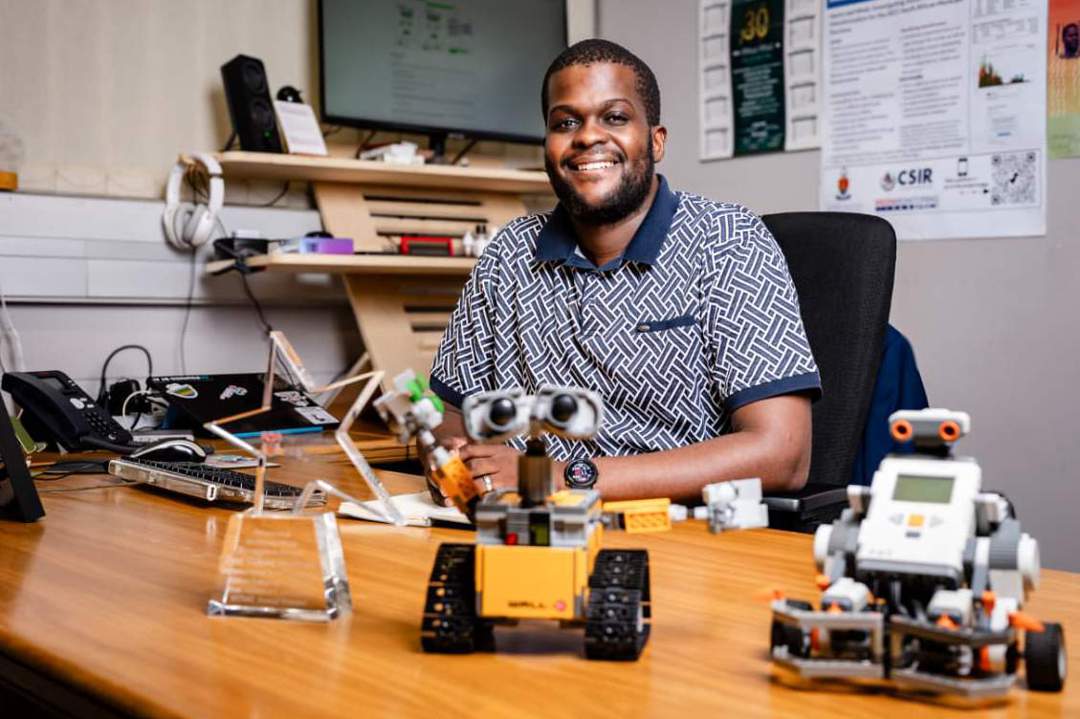
The director of the African Institute for Data Science and AI at the University of Pretoria, Professor Vukosi Marivate.
Supplied/University of Pretoria
- Professor Vukosi Marivate from the University of Pretoria has been appointed to the UN's first global scientific panel on AI, focusing on guiding governments on AI's opportunities and risks.
- The panel aims to amplify diverse perspectives, including African viewpoints, while addressing the socio-technical challenges of AI, such as language representation and ethical concerns.
- Marivate emphasises the need for careful regulation, transparency, and accountability to maximise AI's benefits while minimising risks like bias, misinformation, and labour exploitation.
A University of Pretoria data scientist has been appointed to a new UN panel tasked with helping governments understand the opportunities and risks posed by artificial intelligence (AI).
Professor Vukosi Marivate, the director of the African Institute for Data Science and AI at the University of Pretoria, is one of 40 experts on the UN's Independent International Scientific Panel on Artificial Intelligence.
He was selected from more than 2 600 applicants across 140 countries.
The panel is the first global scientific body dedicated entirely to AI. It will provide evidence-based scientific assessments on the technology's impacts as governments and international institutions grapple with how to regulate rapidly advancing AI systems.
The panel will contribute to global early warning systems and provide scientific guidance to help policymakers navigate the social, economic and political consequences of AI.
Marivate said the appointment was an opportunity to ensure that African perspectives were included in global conversations about the future of AI.
"Personally, I see it as part of a mission to ensure that Africans have agency during these AI revolutions," he told News24.
"There have been many technological revolutions before, and it is important that Africans are able to choose the directions we want to go in."
He added that the role recognised the work of researchers across the continent.
"For me, it feels like a vindication of the work that I and many collaborators across the continent have been doing. I take this responsibility very seriously, and I hope not only to contribute but also to learn from the other panellists I will be working with over the next three years."
Marivate's research focuses on building AI systems that work effectively in African contexts, particularly technologies that can process African languages.
READ | What exactly is AI, and how does it work?
He said developing AI systems that supported local languages involved more than simply building technical tools.
"When we try to represent African languages in AI systems, you quickly realise that the challenge is not just technical. There is a reason why voice assistants like Siri or Google Assistant do not speak languages like Siswati,"
Marivate added that historical, cultural and political factors have influenced how languages were represented in digital systems.
"South Africa has 12 official languages, but the question is how many of them have been properly digitised and how much research capacity exists to support that work," he said.
"If you treat the problem as purely technical, you will quickly stop because you will say there is not enough data. But if you see it as a socio-technical issue, you start asking how people value their languages, how they invest in digitisation and how these systems will actually be used."
Marivate said the initiative sought to bring together diverse worldviews to guide international decision-making.
"Decisions about artificial intelligence have often been driven from only one or a few worldviews.
"The reason for having this panel is to bring in more voices and perspectives about what AI will mean for the world."
He added that the advice to UN Secretary General António Guterres and member states would focus on amplifying the benefits of AI while reducing its risks.
"Technologies are amplifiers. They can amplify both the good and the bad, so we have to think carefully about how to minimise the harm."
AI has rapidly expanded across sectors, from healthcare to education, but Marivate cautioned that the technology should not be seen as a quick fix for complex problems.
READ | How to invest in the AI boom, according to experts
"There are opportunities to use AI to address what we often call 'wicked problems' on the African continent, such as challenges in health, poverty and education," he said.
"But AI is not a silver bullet. It requires experimentation, research and careful implementation."
Marivate warned that unrealistic expectations could allow harmful outcomes, including bias and misinformation, to spread unchecked.
"One of the risks is that people assume AI will solve problems automatically. That mindset can allow bias and other negative effects to be perpetuated."
He highlighted concerns about the broader systems that supported AI, including labour conditions in parts of the global technology supply chain.
"We also need to think about the entire supply chain of AI, from the minerals used in the computers that power these systems to the labour involved in moderating harmful content," Marivate said.
"Some of that labour is happening on the African continent, often in places without strong labour protections. That is something we should not accept."
He added that stronger governance frameworks and public understanding would be necessary to manage the risks associated with emerging AI technologies.
"Generative AI technologies can be incredibly useful, and as a computer scientist I use them almost every day in my work, but they can also be misused by those who want to sow division or spread misinformation."
Marivate said regulation, transparency and accountability would be essential as governments around the world attempted to shape the future of AI.
If you have a story to tell that shows SA innovation on the global stage, email [email protected].
Newsletter
Weekly
Wake Up To Good News
Good News editor Paul Herman delivers a morning round-up of stories that remind you why you fell in love with South Africa.














 English (US) ·
  French (CA) ·
  French (FR) ·