

 2 months ago
28
2 months ago
28
PROTECT YOURSELF with Orgo-Life® QUANTUM TECHNOLOGY
Orgo-Life the new way to the future Advertising by AdpathwayThe United Nations General Assembly this week adopted a landmark resolution declaring the transatlantic slave trade “the gravest crime against humanity”.
It also calls on UN member nations to engage in talks “on reparatory justice, including a full and formal apology, measures of restitution, compensation, rehabilitation, satisfaction, guarantees of non-repetition and changes to laws, programs and services to address racism and systemic discrimination”.
While not legally binding, the resolution is widely seen as a significant political milestone.
“It is a very important decision… it recognises the fact that the transatlantic slave trade was a grave injustice to humanity,” said Isa Sanusi, Amnesty International’s executive director in Nigeria.
“This recognition alone, even though symbolic, will go a long way in opening the way for addressing that injustice,” Sanusi told DW.
READ | UN classes slave trade as ‘gravest crime against humanity’
For many Africans and members of the diaspora, the vote signals a shift from symbolic recognition toward a more substantive global conversation about accountability.
From historical memory to global policy
Along Ghana’s coastline, the push for reparations is often linked to historical sites where the legacy of the trade remains visible.
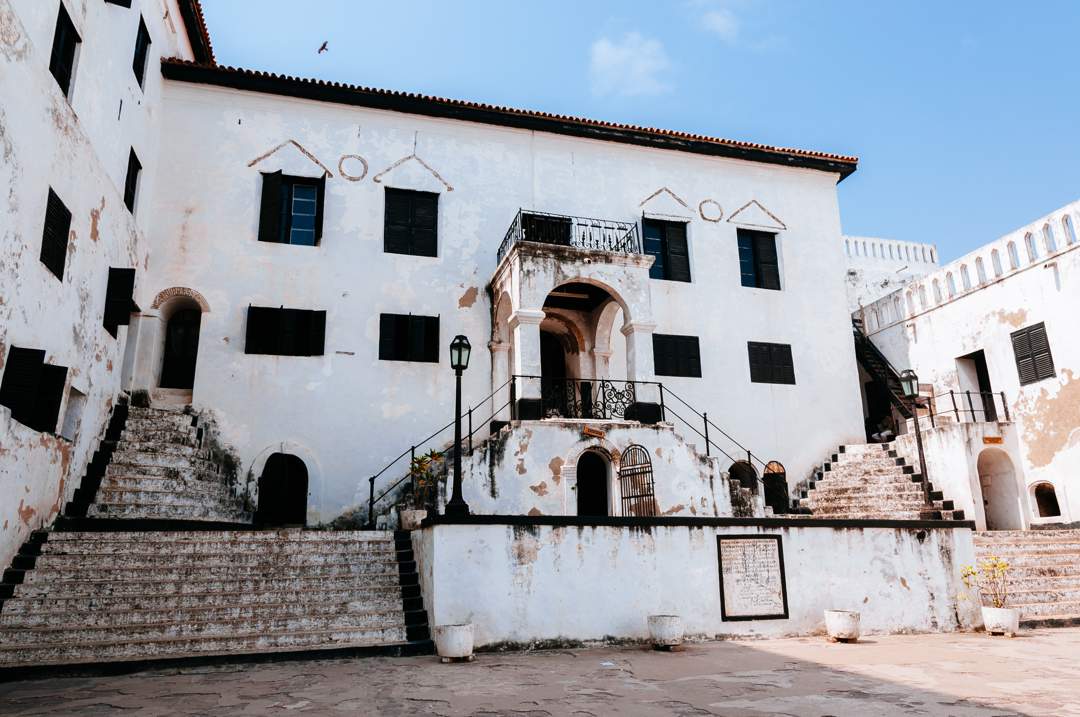
Elmina castle in Ghana stands as a reminder of the transatlantic slave trade.
Raquel Maria Carbonell Pagola/LightRocket via Getty Images
Elmina Castle, built in 1482, stands as one of the most prominent reminders of the transatlantic slave trade.
Behind its walls, enslaved Africans were held in cramped dungeons before being forced onto ships bound for the Americas.
Today, visitors pass through those same spaces, confronting a past that many visitors describe as deeply personal.
“I can only imagine what they went through … this is worse than any story can ever tell you,” said Charles Preston Britton, an ancestral seeker visiting the site.
“There is no compensation you can do, but it is a start.”
The sense of taking a first step is mirrored on the global stage, where calls for accountability are gaining new momentum.
“An apology is a sign of recognition that yes, we did it, and we acknowledge that it happened,” said cultural heritage curator Michael Kunke.
“It’s a first step towards the other things … talk of reparations and all of that.”
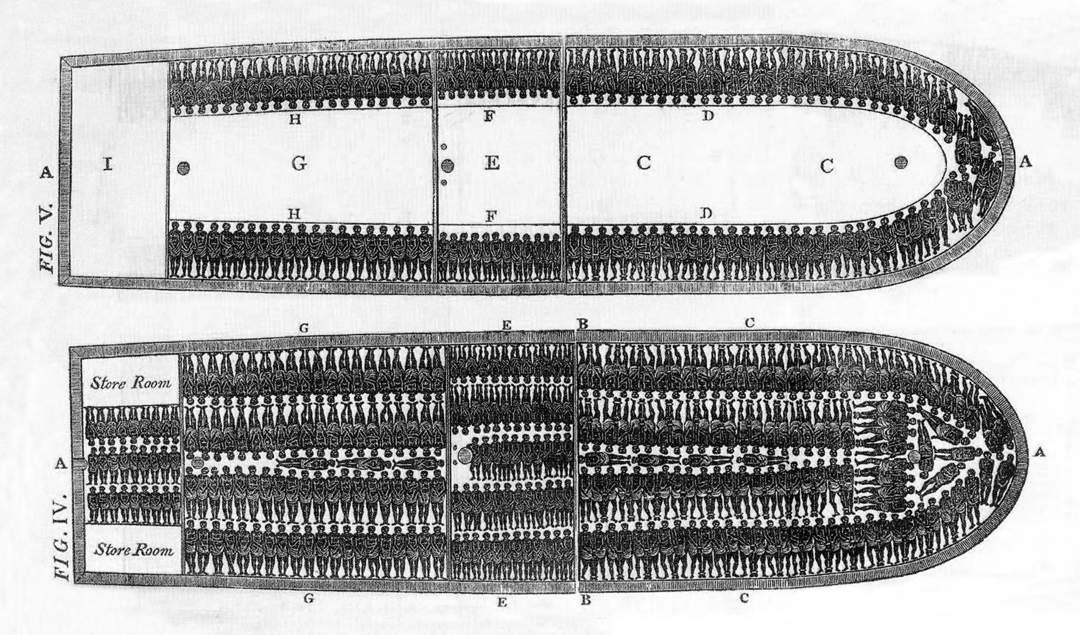
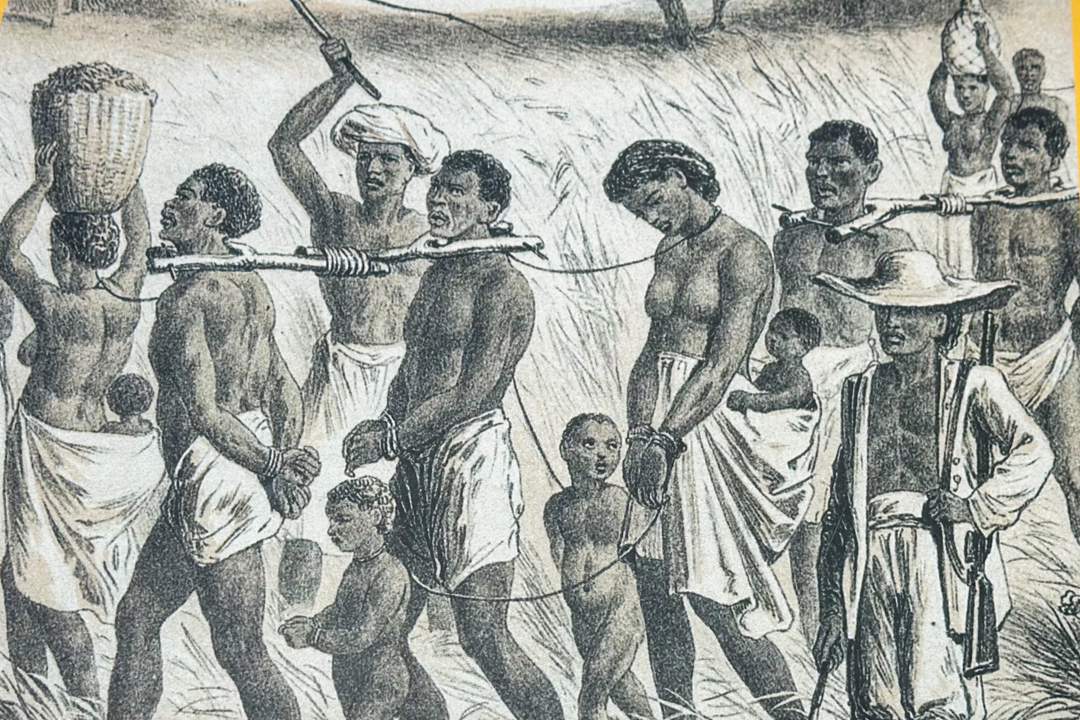
The vast majority of those enslaved that were transported to the New World, many on the triangular trade route and its Middle Passage, were West Africans from the central and western parts of the continent sold by western Africans to western European slave traders, or by direct European capture to the Americas.
History/Universal Images Group via Getty Images
Michael Ndimancho, a political analyst at the University of Douala in Cameroon, agrees, describing acknowledgement as the foundation of any meaningful process.
“Apology is very, very important … everything starts with saying I’m sorry,” he said.
“When there is this regret, now we look for a way forward.”
Sanusi also links historical injustice directly to present-day inequalities.
“The injustices we are facing across the world are connected to the injustices in the past,” he said.
“These things have a long-lasting impact … they do not just happen in a vacuum.”
What form should reparations take?
While the call for reparations is gaining momentum, there is no consensus on what they should look like.
Ndimancho argues that focusing solely on financial compensation risks oversimplifying a complex historical injustice.
“Who are we compensating?” he asked.
“If you want to estimate it in terms of money, how much would they pay, and what are the parameters?”

This building is from the colonial era on the island of Gorée, Senegal.
Sebastian Kahnert/picture alliance via Getty Images
Instead, he suggests a more structural approach that addresses long-term development challenges across the continent.
“African countries should ask for the cancellation of their debt … assistance in terms of education, development, cultural and social development.”
Amnesty’s Sanusi also emphasised that reparations are an essential component of justice, “whether it takes the form of financial reward or other remedies, what matters is that injustice is recognised and addressed”.
A contested history
The debate over reparations is further complicated by questions about African involvement in the slave trade.
Ndimancho acknowledges that some African leaders participated in the trade, but stresses the broader context in which this occurred.
“It was a period whereby Africans only had to get involved … through coercion, through force,” he said.
“They came with intimidation.”
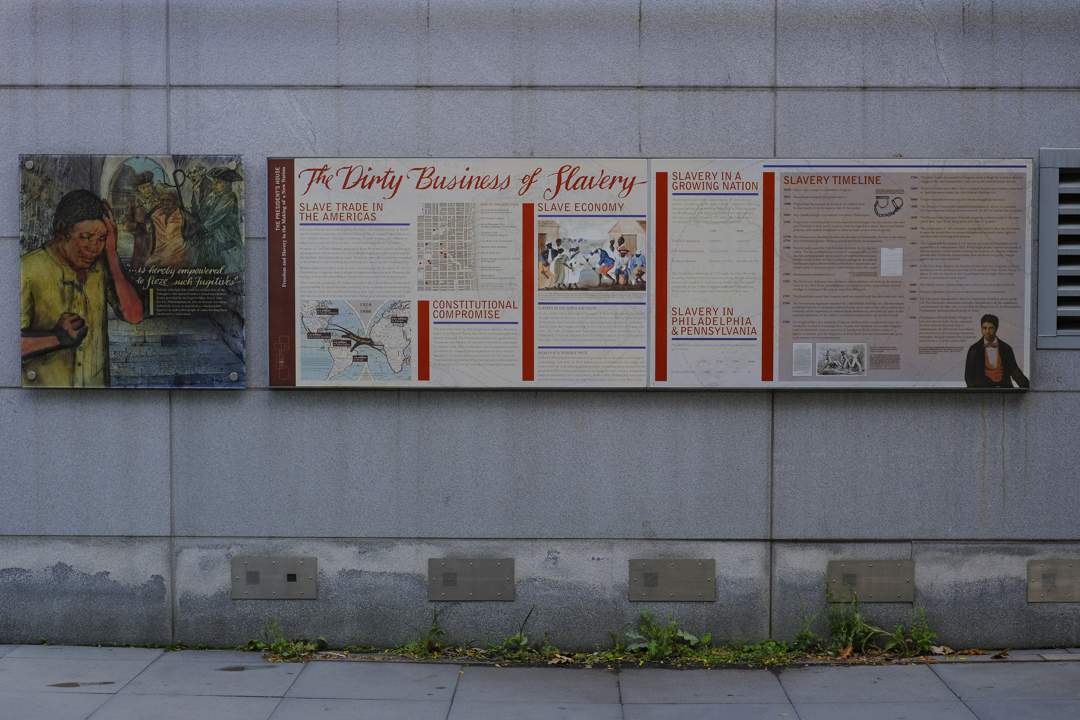
Signage about slavery is displayed on an outdoor exhibit at Independence National Historical Park in Philadelphia, Pennsylvania.
Michael Yanow/NurPhoto via Getty Images
He suggests that the focus should remain on the systemic nature of the transatlantic slave trade, which historians widely attribute to the economic interests of European imperial powers.
“The victims of the transatlantic slave trade are in their millions and are scattered all over the world,” he told DW.
“Many were disconnected from their roots … and families are still traumatised.”
The cost of slavery
Historians estimate that at least 12.5 million Africans were forcibly taken during the transatlantic slave trade, with millions more dying during capture and transport.
The long-term impact, analysts say, extends far beyond those numbers.
For Ndimancho, the removal of millions of people represented a profound loss of labour and development potential.
“We are talking here about 13 million Africans … this is quite some labour force that was taken out of Africa,” he said.
This view shows Goree Island, a UNESCO World Heritage Site off the coast of Dakar that witnessed the deportation of millions of Africans during the Atlantic slave trade between the 15th and 19th centuries, serving as a symbol of one of humanity's darkest periods, in Dakar, Senegal.
Cem Ozdel/Anadolu via Getty Images
Ndimancho describes this as a “development historic cost” - a factor he believes continues to shape the continent’s economic trajectory, which he says has contributed to structural inequalities that persist today.
Sanusi argues that these consequences remain visible across societies.
“Many people are still facing exclusion, racism and discrimination … this is not just history - it is something we are still living with.”
For some members of the diaspora, the consequences are equally significant.
“We have been double-robbed, double-lied to,” said Dr Lilieth Johnson Whittaker, an ancestral seeker.
“And it’s time to pay up.”
For many, the UN resolution marks, not closure, but the beginning of a long-delayed conversation about justice.




















 English (US) ·
  French (CA) ·
  French (FR) ·