

 2 months ago
67
2 months ago
67
PROTECT YOURSELF with Orgo-Life® QUANTUM TECHNOLOGY
Orgo-Life the new way to the future Advertising by AdpathwayWhen the federal government introduced supplemental health copayments for asylum seekers and refugee claimants earlier this spring, it also quietly brought in a 10-hour yearly cap on mental health sessions for them, CBC News has learned. Mental health practitioners have been lobbying for a reversal since, with limited success.
New limit was quietly introduced, surprising therapists and clients alike

Raffy Boudjikanian · CBC News
· Posted: Jun 22, 2026 4:00 AM EDT | Last Updated: 2 hours ago

Listen to this article
Estimated 6 minutes
The audio version of this article is generated by AI-based technology. Mispronunciations can occur. We are working with our partners to continually review and improve the results.

When the federal government introduced supplemental health copayments for asylum seekers and refugee claimants earlier this spring, it also quietly brought in a 10-hour yearly cap on mental health sessions for them, CBC News has learned.
Mental health practitioners have been lobbying for a reversal since, with limited success.
No cap previously existed, meaning both groups have lost a system of potentially unlimited mental health sessions, virtually overnight.
The federal government in early May introduced a 30 per cent copayment scheme for supplemental health benefits, such as dental care, optometry and therapy for refugee claimants and asylum seekers under its Interim Federal Health Program (IFHP). It did not make changes to basic health care.
Medavie Blue Cross — Ottawa's chosen administrator of health-care services for both groups — informed practitioners of the 10-hour cap's introduction on April 27, in an email viewed by CBC News.
"My initial reaction was disappointment and confusion," said Viveka Ichikawa, a Toronto-based social worker and therapist who specializes in dealing with refugees.

"One of the most devastating impacts of this change is the lack of transparent communication from the government directly," she said. "So far, all the communication has been done over emails from Blue Cross. However, it has been not efficient and not consistent, which is creating significant confusion."
Pushback and a round of conversations between some doctors and Immigration, Refugees and Citizenship Canada (IRCC) led to a partial change — a second email from Medavie Blue Cross on May 1 informed practitioners they may apply for exemptions for clients who have already been enrolled in covered counselling sessions and who have reached the 10-hour cap. But, it added, "all beneficiaries will be subject to the 10-session limit," as of Jan. 1, 2027.
10 hours not enough
Two former asylum seekers who spoke to CBC News say a 10-hour annual cap would not have sufficed to heal from their traumas, and a 30 per cent copayment obligation would have been financially prohibitive.
Andrew Gibson, who now works as a co-ordinator at the Toronto People with AIDS Foundation, says he received about 100 hours of care over about 16 months after arriving from the Bahamas.
"Being able to go to a mental health specialist, a therapist, and just sit for an hour and express myself and vocalize my trauma and receive help, expanded for over a year — it was something I never had before," he said.
"I can honestly say that after 10 weeks, I was not ready."
Canada's new asylum law leaves 2SLGBTQ+ claimants fearing deportation
Federal Court challenge says Canada failing to protect refugees turned back to U.S.
Amir Sedaghati-pour, who moved to Canada from Iran as a refugee, with a stop in England, says imposing this cap would place pressure on immigrants who are already "struggling though the navigation of the system and getting settled down in the country."
Sedaghati-pour says he didn't have access to the types of benefits he gained in Canada while he was living in England, and is extremely grateful for what was available when he arrived.
Sedaghati-pour says he got a weekly, hour-long session for over two years.
Both men say their extensive mental health work allowed them to progress in their personal life goals.
Sedaghati-pour just received his permanent residency and is now hoping to pursue higher education in plant science.
Gibson attributes his successful Immigration Refugee Board hearing to his sessions.

"I was able to be more charismatic, more human, more inviting to people," he said.
Their therapist, Toronto-based Victor Huynh, says access to mental health care is a lifeline for refugees.
"Sometimes, 10 sessions is just the rapport-building to help someone feel comfortable to engage in care," he said, adding that his first meeting with Sedaghati-pour was "like 45 minutes of silence."
They were "just getting nowhere, and he couldn't even tell me why he was here, if he wanted to continue to engage."
There are long-term public safety concerns, too, he says, as untreated illnesses in refugee populations can lead to hospitals getting jammed up.
"And then the everyday person also can't go to the hospital, and so all our resources suddenly become so drained."
He suggests that if the government is looking to cut costs, it should at least consider a more generous cap of around 30 hours a year.
Both Huynh and Ichikawa also warn the copayment obligations will also shut refugees out of seeking care.

Public cost unclear
Neither IRCC or the Parliamentary Budget Officer were able to narrow down how much of the IFHP is dedicated to paying for counselling services.
In statements responding to questions from CBC News, the IRCC said it regularly reviews benefit grids for the IFHP, helping to keep it "fair for Canadians and beneficiaries and support long-term sustainability."
The IRCC said it "consulted extensively" on the issues with "a broad range of stakeholders, including provincial and territorial governments, refugee and asylum-serving organizations, sponsorship groups, health sector partners, legal associations and international organizations."
However, it did not name any groups and did not specifically state whether the initial round of consultations included any talk about a cap on therapy.
Days before deportation, Ottawa pauses removal of refugee's son, husband
Bill C-12 is now law. Some worry it rolls back refugee rights
The IRCC estimated all measures implemented in relation to the IFHP cuts would save approximately $200 million per year, but said a specific breakdown for counselling is not available.
The Parliamentary Budget Officer recently found the cost of the IFHP grew from $211 million to $896 million between 2020-21 and 2024-25, projecting it could rise to $1.5 billion by 2029-30.
However the PBO report did not break down figures for counselling, either.
Initially, the IRCC also declined to provide a list of top countries of origin for asylum seekers who seek therapy sessions, and number of hours billed, stating that data was not available "due to privacy considerations and confidentiality."
However, in a second statement, it said it doesn't track the countries of origin.
In an answer to an order paper question, submitted through Parliament in writing by NDP MP Heather McPherson in May, the department said it expects to save $16.7 million on counselling copayments in 2026-27. That answer also breaks down claims by province and territory for each month, between April 2024 and May 2026.
ABOUT THE AUTHOR
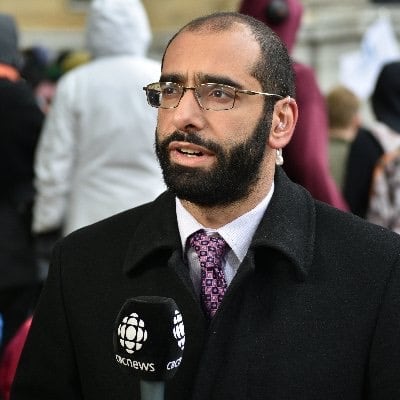
Raffy Boudjikanian is a senior reporter with the CBC's Parliamentary Bureau in Ottawa. He has also worked in Edmonton, Calgary and Montreal for the public broadcaster.















 English (US) ·
  French (CA) ·
  French (FR) ·