

 1 month ago
59
1 month ago
59
PROTECT YOURSELF with Orgo-Life® QUANTUM TECHNOLOGY
Orgo-Life the new way to the future Advertising by AdpathwayIn 2026, most brands seem to struggle to produce a worthwhile entry-level bike. But despite industry headwinds and rising costs, the Primos Mono launched last year as an $800 complete. A steel ATB with name-brand components for well under $1,000? Surely, there must be a catch. After an extensive test period, Nic decides whether this budget-friendly ATB is worth the fuss…
One of the questions you get most while working in the bike industry is, “What bike should I buy?” Invariably, you try to convince the person that spending more is almost always better, that your dollars are distributed across a complete bike in a million ways, and that the $100 Walmart bike probably isn’t going to cut it.

As much as I try not to come across like a bike snob to my non-cycling friends, they can barely hide their look of disappointment as I pull up a $1,500 or $2,000 option. So, when Primos released the Mono, I was elated. Somehow, in 2025, they managed to create a complete bike with decent parts that retails for just $800. The question is, does it actually serve as a viable option for newer cyclists and those on a budget, or is the price too good to be true?
Raised in the Jungle
If you’ve spent any time on YouTube or Instagram in the past few years, you’ll have likely seen one of Primos’ bikes. Intent on getting the word out, Carlos and Pascual have adopted a shotgun approach to marketing. After about the fifth mispronunciation of the word “primos” in a YouTube review—which means “cousins” in Spanish—I took mental note of their bikes, eventually meeting the pair in Philly in early 2025. Through my own Latin roots, I gained a better sense of how the company started.

About a decade ago, Carlos, a former triathlete and engineer, and Pascual, a bike brand owner in Chile, met through mutual bike friends in South America and immediately hit it off. Despite the name, they are not, in fact, cousins. But years into their friendship, their desire to move stateside coincided with their shared pipe dream of starting a bike company. Soon, Pascual attended a bike design and fabrication course in Spain, Carlos secured some funding, and boom, Primos was born.
The state of their operations is similar to many small bike industry startups. Primos is just the two of them. The “funding” is simply a combination of savings and personal debt taken on to cover all the orders they’ve pushed out over the last three years. As I caught up with Carlos and Pascual during my extended stay in Portland after MADE last year, we talked about the cheapest way to ship a bike, since they were doing so out of their house through the same BikeFlights portal you or I might use. Though they’ve recently upgraded to a warehouse, their status as industry newbies remains.

Regardless of their newness to the space, both the Dame (their gravel bike) and the Mono have been positively received. Be it their alluring prices or the fact that they both seem suited to do almost anything, the ATB-ish Mono was too enticing an opportunity to pass up when Carlos offered it to me for review after its release.
Mono Specs and Geometry
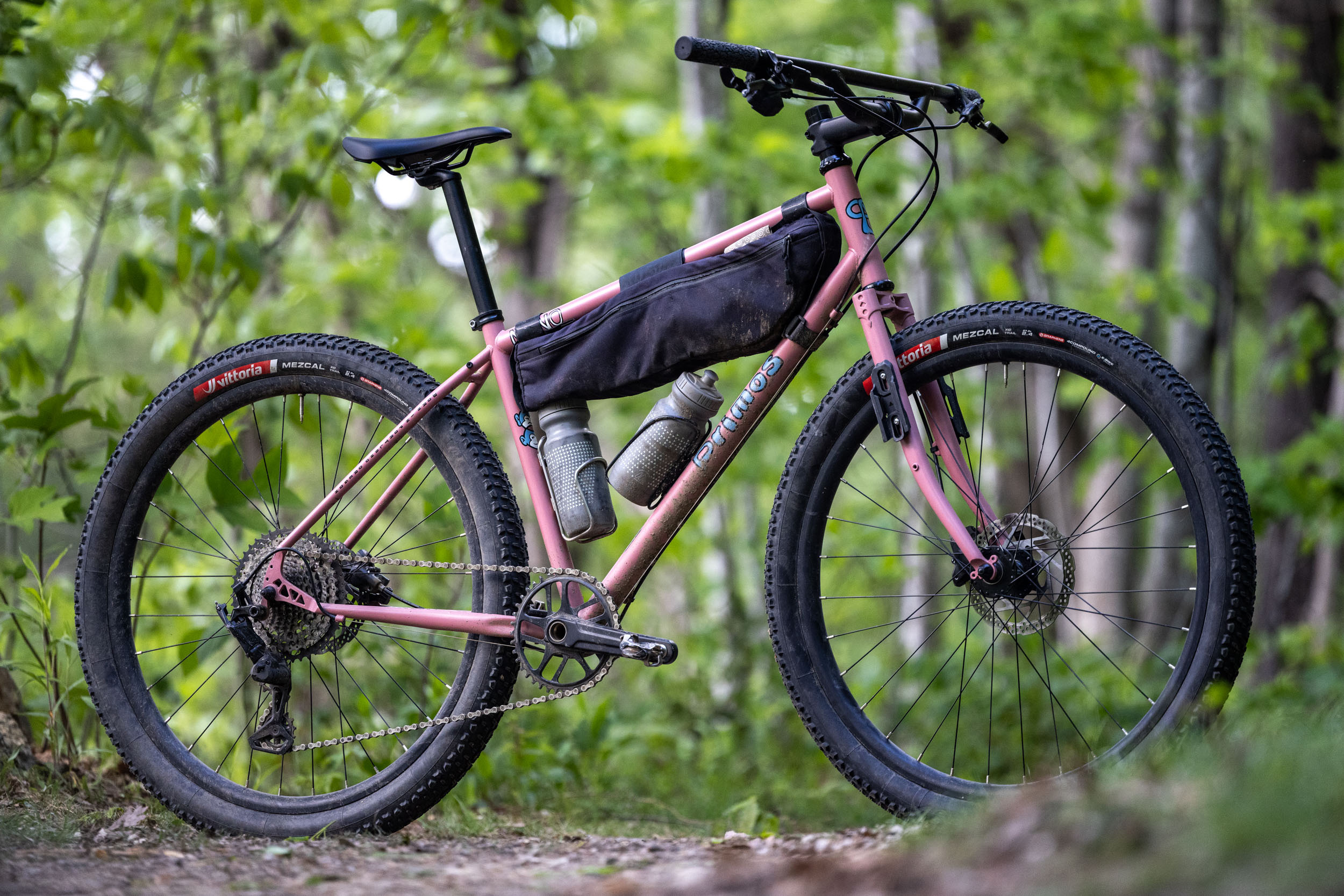
With a relaxed position, a medium-to-short wheelbase, and a higher trail number, the Mono is an easy rider. It doesn’t put you in an aggressive position, and its stock 650B wheels make it feel stable and capable on mixed terrain. The Mono features a full chromoly steel construction with a decent number of mounts on the frame and the fork. I’ll get into some of the eccentricities of the mounts later, but they’re largely fit for purpose. There are three-pack mounts on the fork, three bottle positions on the main triangle, and spots for racks, fenders, and a kickstand.

Primos Mono ATB Geometry
| Effective TT Length | 584 | 617 |
| Reach | 391 | 421 |
| Wheelbase | 1072 | 1072 |
| CS Length | 445 | 445 |
| Effective ST Angle | 72 | 72 |
| ST Length | 453 | 499 |
| HT Angle | 70 | 71 |
| HT Length | 163 | 167 |
| Rake | 45 | 45 |
| BB Drop | 65 | 65 |
| Stack | 584 | 603 |
| Rider Height | 5’5″-5’9″ | 5’10”-6’3″ |
Available only in medium and large, the Mono’s sizing is more general than you might find on boutique offerings. At 5’9” with longer limbs, I had to max out the stock seatpost to get a proper position on the bike. Even then, it felt quite upright and relatively inefficient compared to the bikes I typically ride. For those with limited flexibility, standover will be a non-issue, as the wheel size, top tube, and saddle position make it easy to swing a leg over. On stupidly steep terrain, I had no issue stopping, getting off, and remounting where necessary because the top tube is so low. Given my experience, I’d say the medium would fit anyone from 5’5” to my height, and I could’ve sized up.
Build Kit and Adjustments
Build kits are usually where most entry-level bikes falter, and the Primos Mono has some hits and misses. The Advent X shifter and derailleur, paired with an 11-48T SunRace cassette, are among the build’s best parts. As with all my past experiences with microSHIFT, the shifting was crisp and responsive. The stock Prowheel cranks and 40T chainring, though, bring it back a bit. I didn’t have an issue with this setup, but almost every non-cyclist friend who borrowed it found the gearing too high. That might just be down to personal preference, and Asheville is a steep place to ride a bike, but something closer to 38 or 36T would be nice.
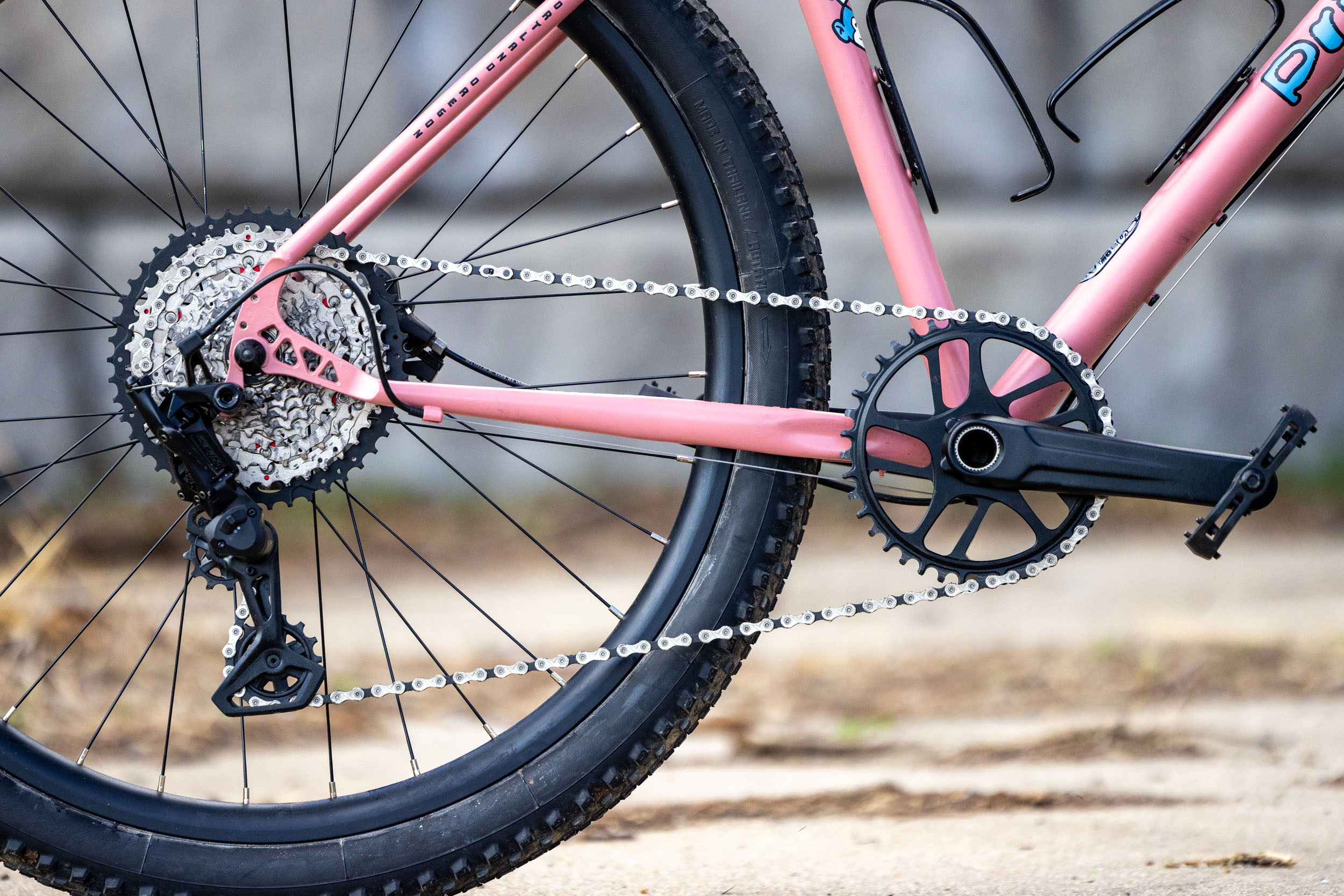
The Shimano MT-200 hydraulic brakes are another hit. Affordable, functional, and powerful, they haven’t faltered in the slightest over the eight months I’ve had the bike. Logan mentioned recently that some lower-end Shimano brakes he’s dealt with can be leaky, but I haven’t found that to be the case. The bike has been left outside in hot, humid, and sometimes freezing conditions. The brakes just keep working, no matter what.
- Frame: Primos Double-Butted 4130 Chromoly
- Fork: Primos 4130
- Crankset: Prowheel CR099A
- Derailleur: Microshift Advent X
- Shifter: Microshift Advent X
- Cassette: Microshift Advent X 11-48t 10-speed
- Bottom Bracket: 68mm threaded
- Wheelset: Novatec hubs with double butted spokes, brass nipples, and alloy rims
- Tires: Continental Cross King 27.5″ x 2.2″
- Headset: XR-W35
- Handlebar: UUR 6061 alloy
- Stem: UUR 6061 alloy
- Saddle: Selle Royal A086
- Seatpost: UUR 6061 alloy
- Seat Clamp: CNC alloy, anodized finish
- Brake Levers: Shimano MT-200
- Brake Calipers: Shimano MT-200
- Rotors: 6-bolt 160
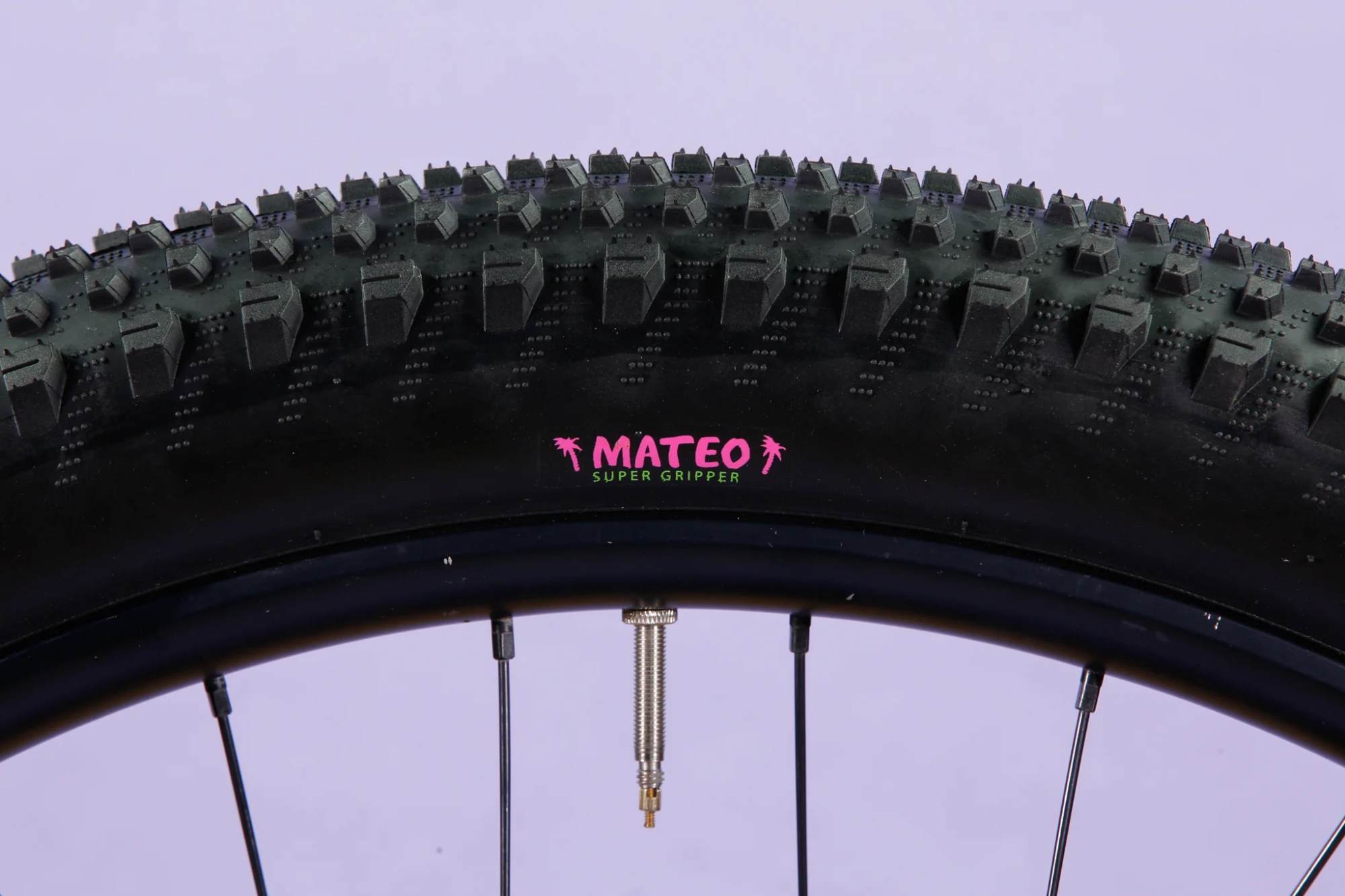
The stock tires, though likely to change due to availability, were another highlight. The Continental Cross Kings are among my favorite tires ever made, and I borrowed them for the Fairlight Secan and Midnight Special reviews. I put loads of miles on them, eventually blowing a hole the size of my finger on a rocky descent. For the remainder of the test period, I used the 2.4” Vittoria Mezcals. While slower, it has been more plush and grippier on singletrack.
As for misses, the biggest issue I found with the Mono’s build is the decision to use quick-release, vertical dropouts instead of standard thru-axles. It limits the bike’s upgradability, as there are very few dirt-capable, quick-release, disc options on the market, and it is more difficult for beginners to deal with. Quick-release skewers are okay for rim-brake bikes, but small misalignments when re-mounting the wheel can range from annoying to consequential.
For beginners who might not have wheel placement down or don’t understand the careful balance of tightening a skewer just right, it’s a huge miss. As an aside, I can appreciate that calling QR skewers more difficult to deal with might be a matter of opinion that spans different generations of cyclists. But given the trade-offs, I don’t see how this makes sense in 2025. You can’t misalign a thru-axle, and there are loads of used thru-axle wheelsets available for cheap on the resale market. This doesn’t affect the price, either, as I asked Carlos and Pascual about this decision when I first received the Mono. Spec’ing thru-axles, as they do on the Dame, would have kept the Mono at its incredible $800 price point and potentially given the bike more versatility as the 27.5 x 2.5” max tire clearance likely allows for at least a decently sized 700c wheel.
The stock wheels are somewhere between a hit and a miss. They have sealed-cartridge bearings instead of loose ball bearings, feature a wider 27mm internal rim width, and don’t skimp on nipple or spoke quality. I’ve ridden worse wheels on entry-level bikes, and it’s nice that Primos took the time to spec something slightly better than the awful options that usually come on bikes at this price point. That said, they haven’t held up to my rough riding and are seriously out of true. This has happened to most, if not all, of the alloy wheelsets I’ve used since moving to North Carolina, but they have taken a beating and show it. There are no dents yet, but it’s only a matter of time.

The other annoyance is the stock handlebars. They’re very narrow and demand an awkward, uncomfortable position. Once I started putting serious miles on the bike, I couldn’t stand them. They are some of the worst bars I have ever used. Swapping them out with the Redshift Top Shelf handlebars has been a revelation. It has made the Mono more comfortable, exciting, and capable on rough terrain.
The other small parts, such as the unbranded bottom bracket, headset, and grips, haven’t presented any issues and are in solid working order. The bike also comes with pedals, but they’re as cheap as they come. I expect anyone would choose a different set immediately. All in all, save for the dropouts, a few minor changes could take the build kit from good to great.
Ride
The Mono presents an interesting perspective on experience. Other bikes I’ve reviewed, like the Ritchey P-29er, Fairlight Secan, and even Bassi Belmont, are things unto themselves. They are boutique production bikes that create a self-evident experience. For example, I will often look at my Ritchey P-29er and say, “I want to go ride that here or there.” Part of the desire is the terrain, but part of it is the bike itself. Between the tubing, geometry, and parts, the bike is a large part of the overall experience.

The Mono, on the other hand, is a means to an end. People aren’t going to buy this bike with dreams about how its tubing or geometry will engage with their environment. It’s an option for beginners with features that make it versatile enough to last. With all that said, the frame’s ride quality is mixed. Per Primos, the tubing used on the Mono and Dame is the same. To try to split the difference between comfort and cost, the tubes on the main triangle are double-butted 4130 chromoly steel, while the seat tube and chainstays are made of straight-gauge tubing. As one might imagine, this delivers a varied riding experience.
On the one hand, the frame is solid. It doesn’t sing or yield a satisfying planing feeling. It mutes bumps and jumps all the same, and has stood up well to a lot of abuse. A completely appropriate choice for the intended market. The fork, however, is less refined. Solid and burly enough for trails, it has very little give and doesn’t flex at all. Irrespective of how much time I spent trying to soften the blow with lower PSI, the fork’s harsh ride made my typical trails a less enjoyable experience. Perhaps it’s something I notice more, given I’ve ridden some very flexy and supple steel forks recently, but it made me hesitant to take things at speed because of early experiences that left me feeling like I was getting punched.
The geometry does the Mono some favors, though, as I felt comfortable taking on some incredibly steep trails once I got used to the fork and made the appropriate tire and handlebar alterations. The laid-back position provides a feeling of control and places most of the rider’s weight toward the rear. The 70-degree head tube angle, combined with 45mm of rake, yields a higher trail number and, in my experience, a lot of confidence on technical terrain. In conjunction with the 445mm chainstays, 27.5 x 2.4” tires, and 72-degree seat tube angle, the Mono was a joy to ride on cutty singletrack. The handling was responsive and easy to correct in tight spots, and though I enjoy the feeling of riding steep pirate trails on drop-bar gravel bikes that put me in a very forward-leaning position, the Mono was a welcome respite from the knife-edge feeling those bikes create.
An okay climber, the Mono feels like a stuck pig on smooth vertical ascents. It’s 30+ pound base weight doesn’t help, and the front end doesn’t inspire the snappy-ness you might find on something like the Ritchey Ascent. The weight of the fork also makes it track loosely when putting in the power uphill. But it’s not the worst experience I’ve had on a bike in this mold. Again, the relaxed, upright position feels off for someone like me, who prefers a slammed stem even on the smallest headtube, but it’s not something I can categorize as “bad.” Just not my style.
Bikepacking with the Mono
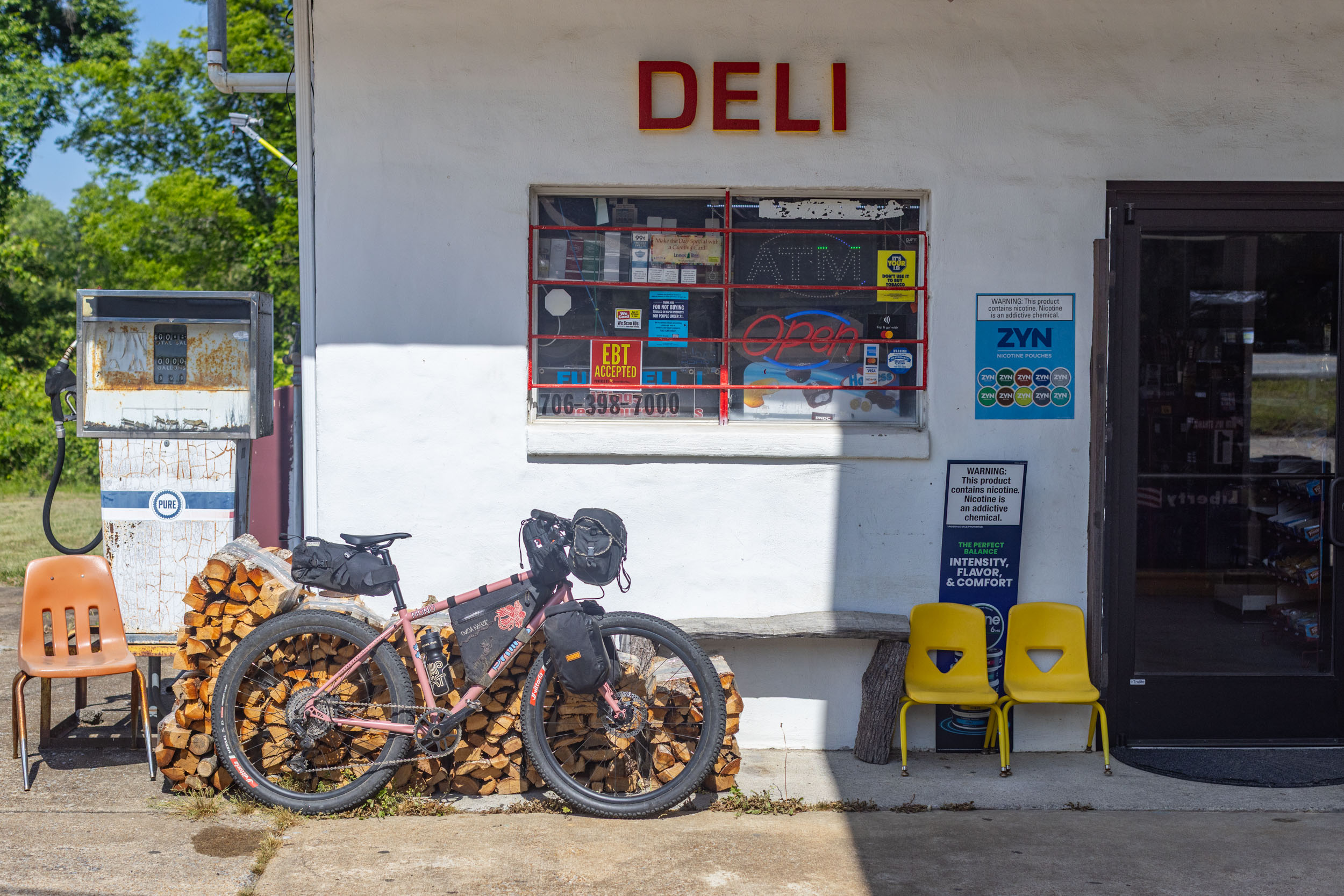
Like most ATBs, the Mono’s ride benefits from being loaded down. Already a slow bike, having some gear strapped on felt like it didn’t affect its pace and smoothed out some of the harsher elements of the fork and tubeset. Given its higher trail, I thought it would be more susceptible to muted, less-responsive handling under heavy front-loading. But it felt just fine with more weight there and helped keep the bike stable when headed downhill at speed.
The area where its budget construction really showed was in the placement of the mounts. The three-pack mounts on the fork blades aren’t aligned, rendering a three-bolt cage unusable. The bottle mounts on the medium are too high to fit a decently sized frame bag and still allow access to small bottles. The rear dropouts are also recessed inward, making my use of the Velo Orange There and Back rack all but impossible, at least without spacers, as the fixed struts collide with the seat stays. This is undoubtedly the biggest failure of the Mono, as it could be a great bikepacking bike if these issues were resolved. As it stands, you have to amend your bag usage and type to fix what shouldn’t really be problems in the first place.

With a bunch of bikepacking bags—that is, ones that mount directly onto the frame, handlebars, or seatpost—the Mono is a solid bikepacking rig. But the lack of alignment and considerations with the mounting points is amateurish and should be rectified. It’s not even something you could overcome through an axle-mounted rack system, as the decision to use quick-release dropouts also limits attachment options there as well.

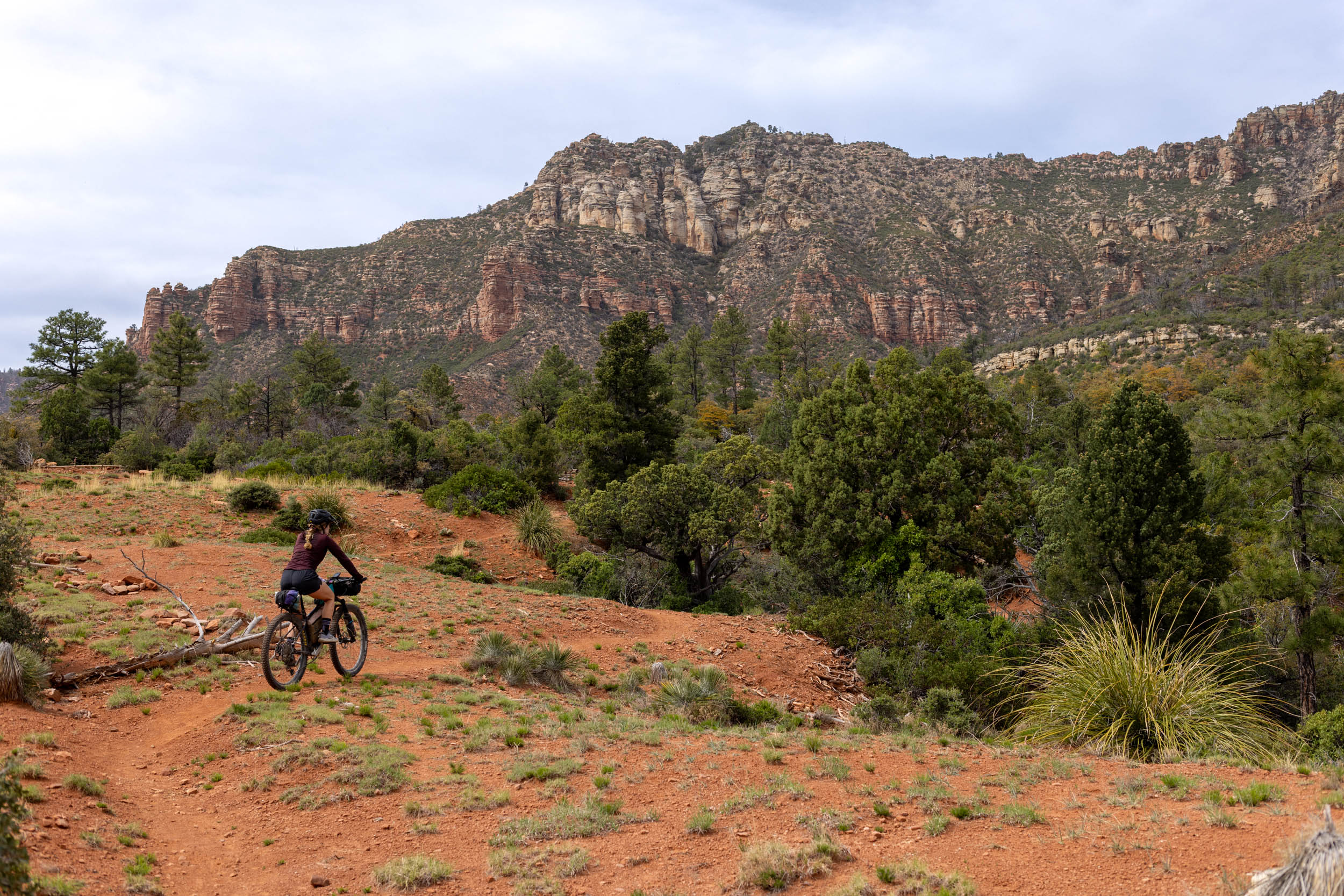
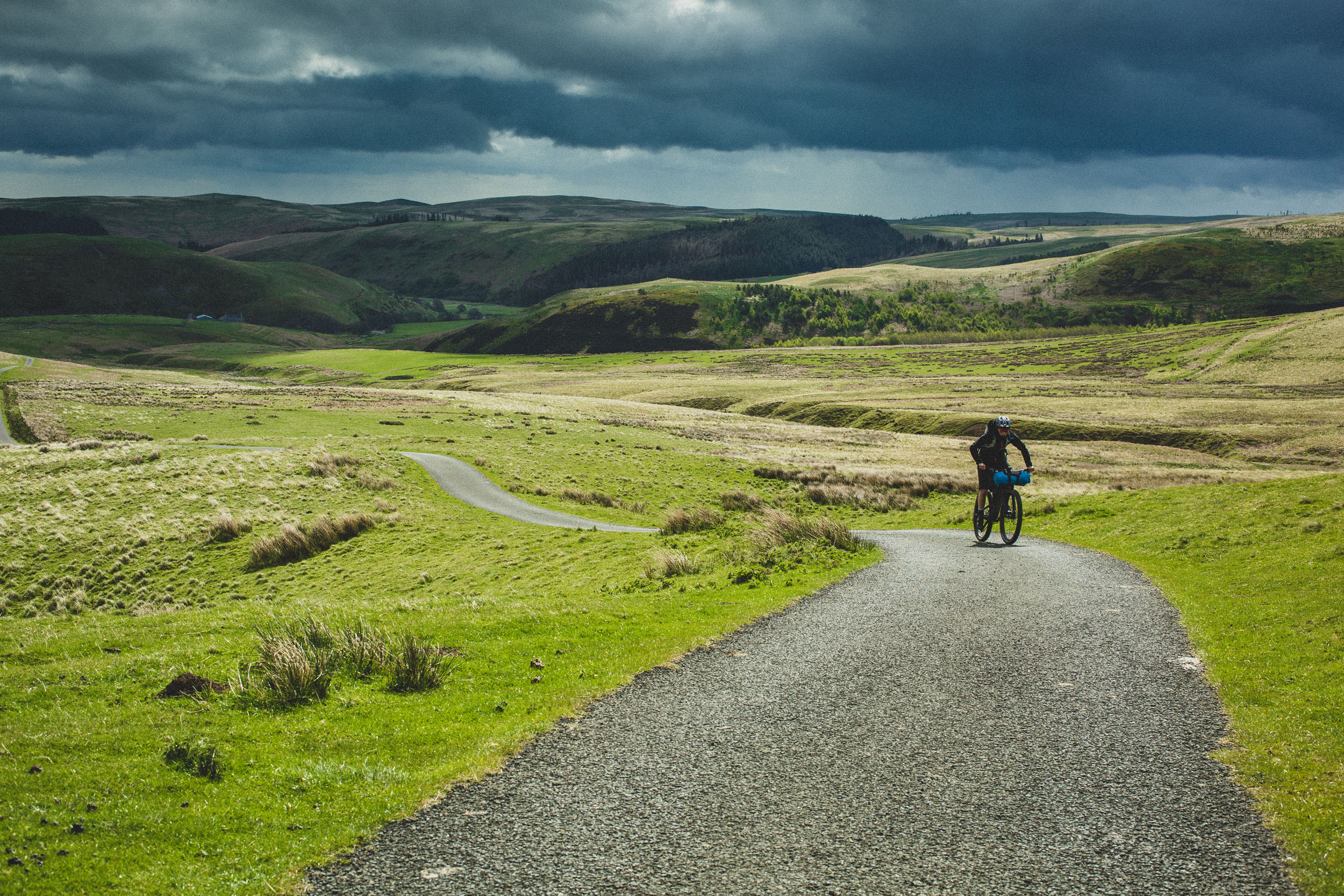
In all, the bike’s relatively unremarkable ride quality when unloaded felt much more fun and interesting while bikepacking. It carries extra weight well and held up nicely on the technical terrain I ventured onto with a full load. The bike’s short, low center of gravity made it fun and seemingly inconsequential to flick and dash around rocks with, while the bags mellowed the harshness built into the fork. If not for the mount issues, this would be a great bikepacking bike.
Dame Mas
Although I can’t call it a review, I pedaled Primos’ other model, the Dame, a lot while I was in Portland. I tend toward that style of bike, and it would be my preference if given the choice. With ample tire clearance, more balanced geometry, and more refinement in its construction, it seems the better of their two offerings. If some changes were made to the Mono, I would easily be able to recommend it to anyone. But, as it stands, I think the Dame is a much safer bet for just $150 more. Experienced riders can buy one and immediately replace the wheels with something they might have lying around, and it’s a more functional, fast, and fun ride on roads and bike paths. The Mono is plenty of fun when off-road, and it might be better for a casual crowd that wants an upright position. But, for me, the Dame is a better all-around bike.

- Model Tested: Primos Mono, Medium
- Actual Weight: 31.6 pounds (14.33 kilograms)
- Place of Manufacture: China
- Price: $800
- Manufacturer’s Details: Primos Cycles
Pros
- Affordable
- Geometry that suits almost anyone
- Massive tire clearance
- Solid steel frame
- microSHIFT build kit is nice
Cons
- Misaligned mounts and poor placement are quite bad
- Very harsh fork
- Quick release for a dirt-oriented bike in 2026 is a miss
- Stock gearing is high
Wrap Up
Returning to the initial concept, I think the Primos Mono delivers good value at the $800 price point. There was always going to be a catch with a bike well under $1,000 dollars, and the issues presented here aren’t insignificant—especially in the context of bikepacking. That said, if you’re willing to look past some mount misalignment issues, limited wheelset upgrades, and a harsh fork, you can do a lot worse for $800. The geometry is fun and exciting on trails, almost anyone could fit on a medium, and its steel construction will ostensibly last ages. If Primos fixes the issues I’ve outlined here in a new iteration of the Mono and still keeps the price below $1,000, it would easily be the best budget bikepacking bike on the market. But, as it stands, it’s a solid budget option with one or two big compromises.
Further Reading
Make sure to dig into these related articles for more info...
Please keep the conversation civil, constructive, and inclusive, or your comment will be removed.
















 English (US) ·
  French (CA) ·
  French (FR) ·