

PROTECT YOURSELF with Orgo-Life® QUANTUM TECHNOLOGY
Orgo-Life the new way to the future Advertising by Adpathway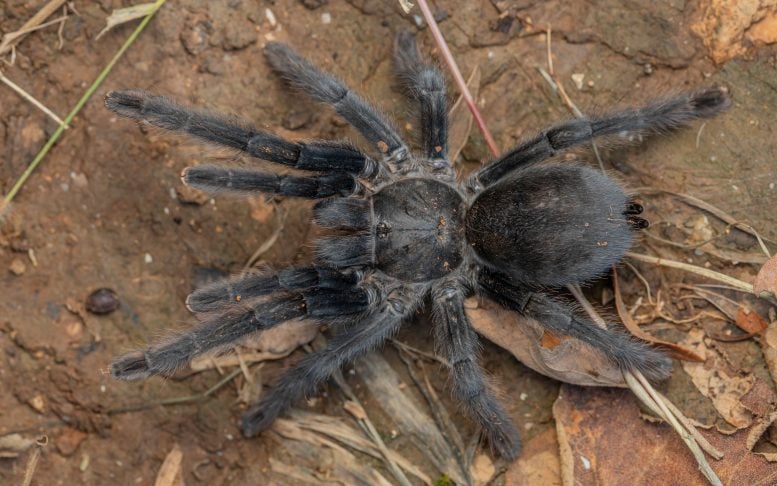 Satyrex ferox, female, from Oman. Credit: Přemysl Fabiánek
Four tarantulas discovered in Arabia and Africa form a new genus, Satyrex, distinguished by males with unusually long palps and burrowing lifestyles.
Researchers recently identified four previously unknown tarantula species from the Arabian Peninsula and the Horn of Africa. Their unusual characteristics quickly set them apart from other known tarantulas.
“Based on both morphological and molecular data, they are so distinct from their closest relatives that we had to establish an entirely new genus to classify them, and we named it Satyrex,” explains Dr. Alireza Zamani of the University of Turku, who led the study that discovered them.
The name of the genus combines Satyr, the part-man, part-beast figure from Greek mythology known for exaggerated genitalia, with the Latin word rēx, meaning “king.”
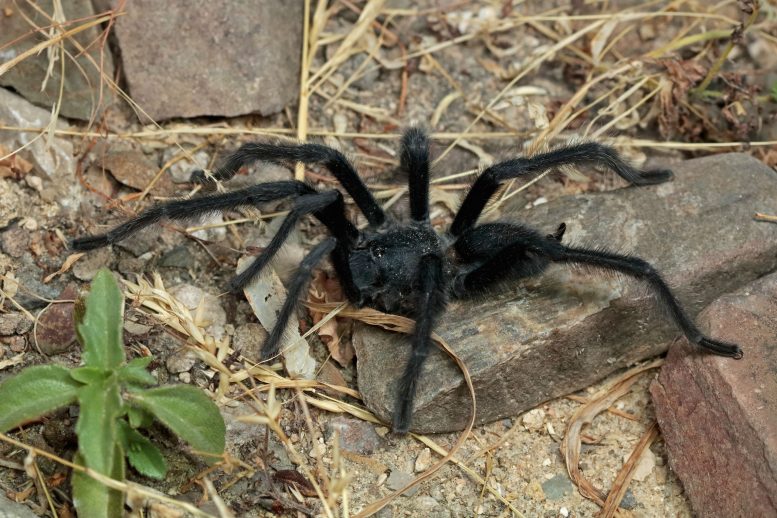 Satyrex ferox, male, from Oman. Credit: Bobby Bok
Record-Breaking Palps in Male Satyrex Tarantulas
Why choose the names “king” and Satyr? According to Dr. Zamani, the answer lies in the spiders’ unusual anatomy. “The males of these spiders have the longest palps among all known tarantulas,” he says. Palps are specialized appendages male spiders use to transfer sperm during mating.
In Satyrex ferox, the largest species in the genus with a legspan of about 14 cm, the male palp can grow to roughly 5 cm long. That length is nearly four times the size of the spider’s front body segment and almost matches the length of its longest legs.
Satyrex ferox. Credit: Mark Stockmann
The species name ferox translates to “fierce,” a description that reflects its behavior. “This species is highly defensive. At the slightest disturbance, it raises its front legs in a threat posture and produces a loud hissing sound by rubbing specialized hairs on the basal segments of the front legs against each other,” Dr. Zamani explains.
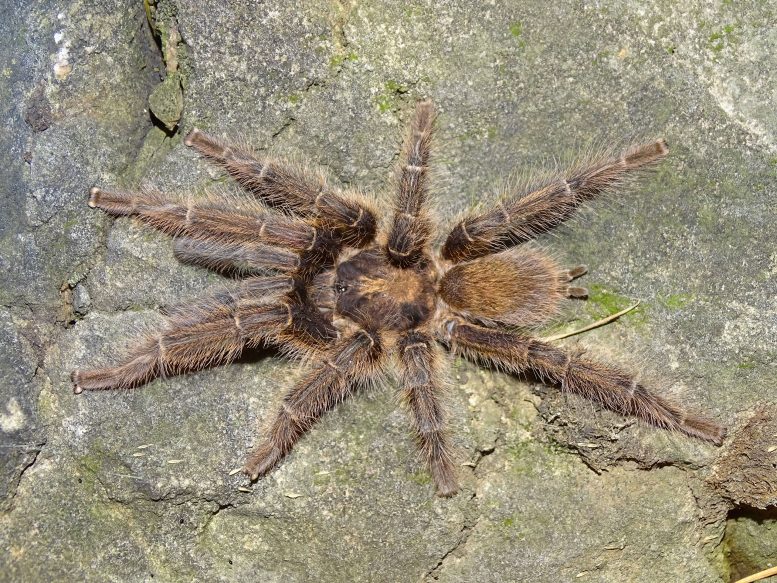 Satyrex speciosus, male, from Somaliland. Credit: Pavel Just
Researchers think the extreme length of the male palps may have a practical advantage. “We have tentatively suggested that the long palps might allow the male to keep a safer distance during mating and help him avoid being attacked and devoured by the highly aggressive female.”
From Regional Names to Reclassification: Expanding the Satyrex Genus
The remaining species were named to reflect either their origin or appearance. S. arabicus and S. somalicus were named after the regions where they were found, while S. speciosus takes its name from its striking coloration.
The genus also includes an older species, S. longimanus, which was first described from Yemen in 1903 and had previously been placed in another genus.
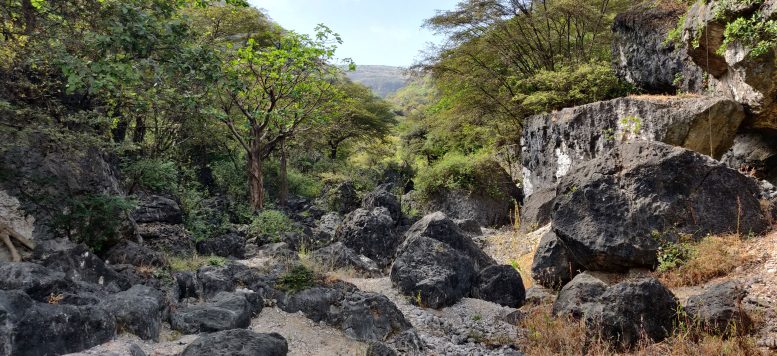 Satyrex ferox’s habitat. Credit: Mark Stockmann
“Satyrex longimanus, despite also having an elongated palp, was formerly classified in the genus Monocentropus, where the male palp is only about 1.6 times the length of the carapace and well within the typical range of 1.5 to 2 times seen in tarantulas. The much longer palps of S. longimanus and the four newly described species were among the primary characters that led us to establish a new genus for these spiders, rather than place them in Monocentropus. So yes, at least in tarantula taxonomy, it seems that size really does matter,” Dr. Zamani says in conclusion.
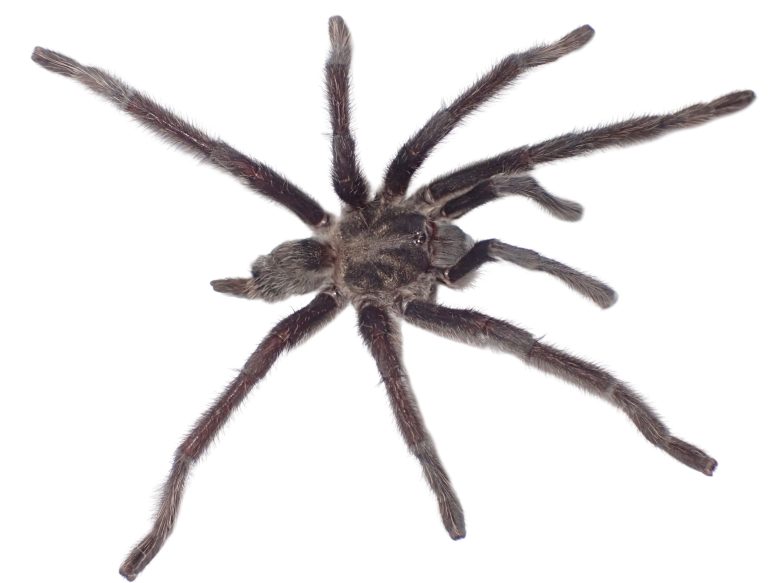 Satyrex arabicus, male, from Saurdi Arabia. Credit: Ibrahim Mohssin Fageeh
All species in the genus share a similar lifestyle. They are fossorial, meaning they spend most of their lives underground in burrows located at the base of shrubs or between rocks.
Reference: “Size matters: a new genus of tarantula with the longest male palps, and an integrative revision of Monocentropus Pocock, 1897 (Araneae, Theraphosidae, Eumenophorinae)” by Alireza Zamani, Volker von Wirth, Přemysl Fabiánek, Jonas Höfling, Pavel Just, Jan Korba, Alice Petzold, Mark Stockmann, Hassan Sh Abdirahman Elmi, Miguel Vences and Vera Opatova, 22 July 2025, ZooKeys.
DOI: 10.3897/zookeys.1247.162886
Never miss a breakthrough: Join the SciTechDaily newsletter.
Follow us on Google and Google News.






















 English (US) ·
  French (CA) ·
  French (FR) ·