

.png) 2 hours ago
7
2 hours ago
7
PROTECT YOURSELF with Orgo-Life® QUANTUM TECHNOLOGY
Orgo-Life the new way to the future Advertising by Adpathway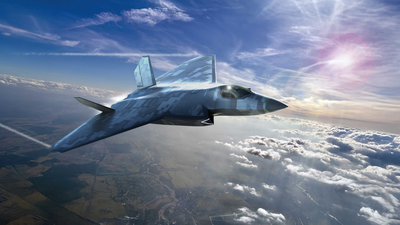
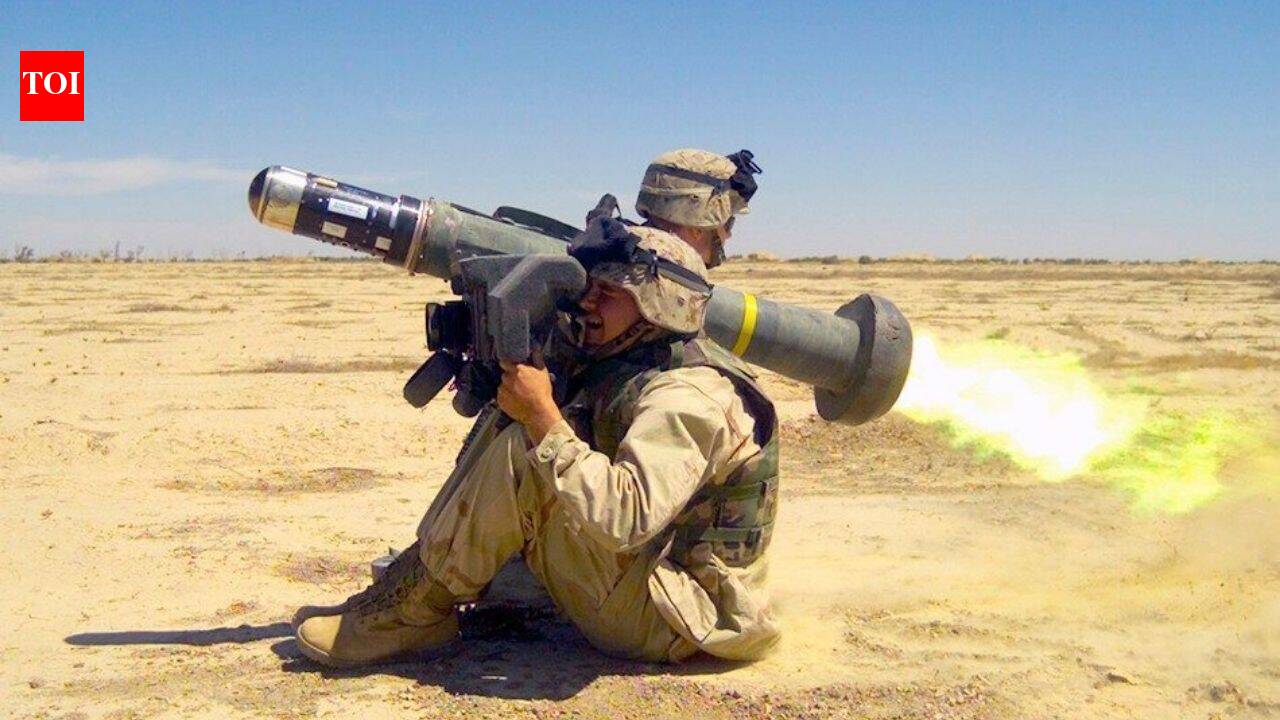
The GCAP is a joint sixth-generation aircraft project initiated by Italy, Japan and UK, with Canada also joining the project. (image credit: GCAP)
India’s entry as a ‘dialogue partner’ in the UK‑Japan‑Italy sixth‑generation fighter programme marks a significant step in New Delhi’s exploration of future air combat technologies.
The programme, popularly known as Tempest, recently secured $6.1 billion to advance its full‑scale design phase, with induction slated for 2034.Dialogue partner status does not make India a buyer or developer, but it allows access to discussions on the jet’s progress, technology and capabilities. For Indian decision‑makers, this is a window into the conceptual framework of a sixth‑generation platform, offering insights that could shape long‑term choices for the Indian Air Force.The defence ministry has confirmed that India is simultaneously engaging with both of the world’s leading sixth‑generation fighter projects. These are the Global Combat Air Programme (GCAP) of UK‑Japan‑Italy and the Future Combat Air System (FCAS), which is now a largely French project after Germany left the programme. Defence secretary RK Singh has publicly stated that both options are being weighed carefully, given the enormous financial and technological demands of building such a platform independently.
The FCAS, now led by France after Germany’s exit, is emerging as another potential pathway. Spain remains a partner, and the aircraft is expected to take flight around 2028‑29, coinciding with the planned first flight of India's own fifth-generation Advanced Medium Combat Aircraft (AMCA). This parallel development highlights India’s determination to leapfrog into next‑generation airpower.The Franco‑German split over aircraft carrier operability and nuclear delivery capabilities has created space for India to align more closely with France.
Unlike Germany, India possesses both capabilities, making its operational vision compatible with French doctrine. Earlier this month, the defence ministry informed the Parliamentary Standing Committee on Defence that it has 'initiated efforts in a concerted manner to co-join the 6th Generation Fighter Aircraft Development Programme Future Combat Air System (FCAS) spearheaded by the French Government.
'Sixth‑generation fighters are expected to be a transformative leap, which will offer certain capabilities beyond current designs.
The aircraft of this new generation are expected to feature all‑aspect stealth shaping, digital‑first engineering, variable‑cycle engines, advanced radars powered by gallium nitride transistors, and directed‑energy weapons. Integrated artificial intelligence, cyber warfare tools, and manned‑unmanned teaming with loyal wingman drones will define their operational edge.
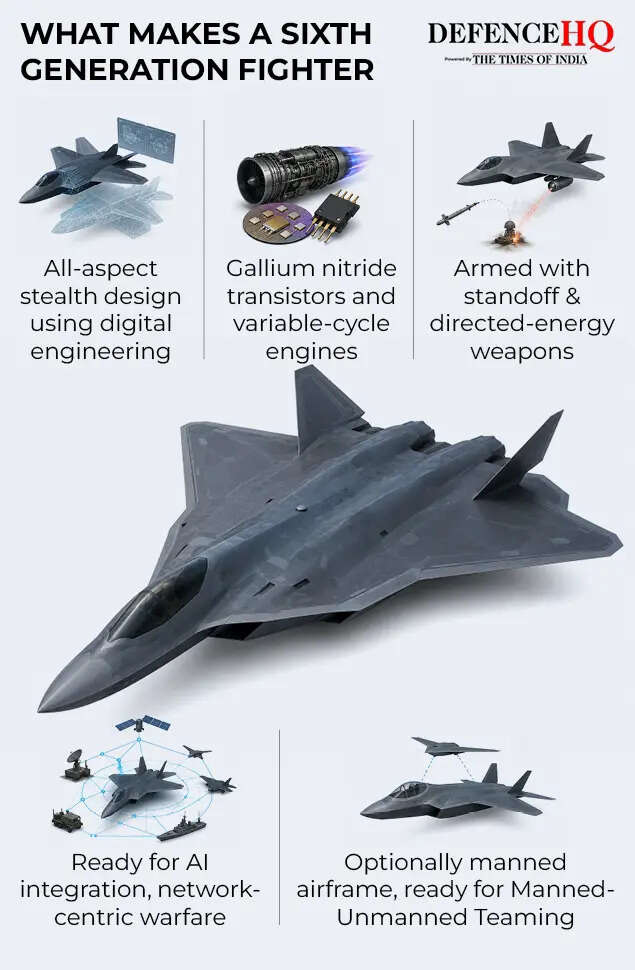
What makes a sixth generation fighter
Globally, the race is intensifying: the United States is advancing its F‑47 under the Next Generation Air Dominance project alongside the Navy’s F/A‑XX, while China is testing prototypes designated J‑36 and J‑50. Against this backdrop, India’s engagement with both GCAP and FCAS is not just about technology access but about positioning itself as a serious player in shaping the future of aerial combat.




!['Toxic' BO Day 3 [LIVE]: Yash and Kiara Advani film crosses Rs 145 crore India net](https://static.toiimg.com/thumb/msid-133587029,width-1280,height-720,resizemode-6,overlay-toi_sw,pt-32,y_pad-600/photo.jpg)














 English (US) ·
  French (CA) ·
  French (FR) ·