

 16 hours ago
10
16 hours ago
10
PROTECT YOURSELF with Orgo-Life® QUANTUM TECHNOLOGY
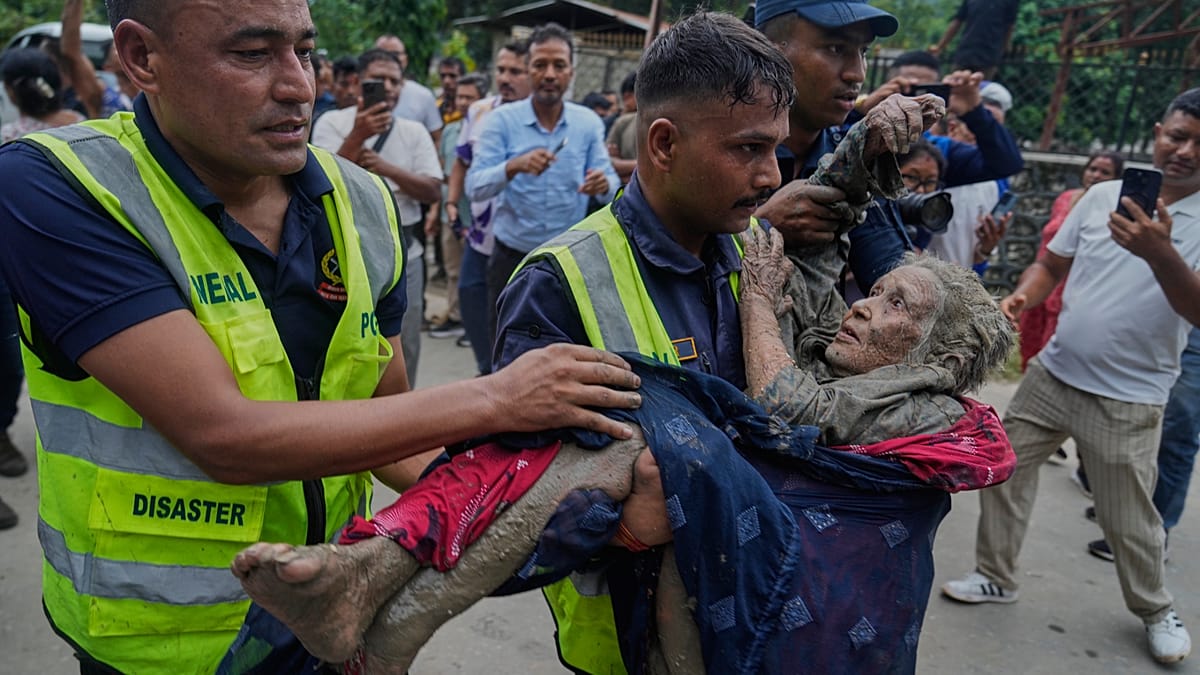
Orgo-Life the new way to the future Advertising by AdpathwayThe catastrophic flash flood that struck the Tibet-Nepal border on August 26 should not be treated simply as another Himalayan natural disaster. It is better understood as a warning from a rapidly destabilizing cryosphere, one that transcends political borders. The disaster exposed the growing collision between climate change, geological fragility, infrastructure expansion, and weak transboundary environmental governance.
What happened along the Nepal-Tibet frontier reinforces an argument that climate researchers have increasingly made: the Himalayan-Tibetan ecosystem must be approached not merely as an environmental space but as a critical arena of transboundary climate and cryosphere security.
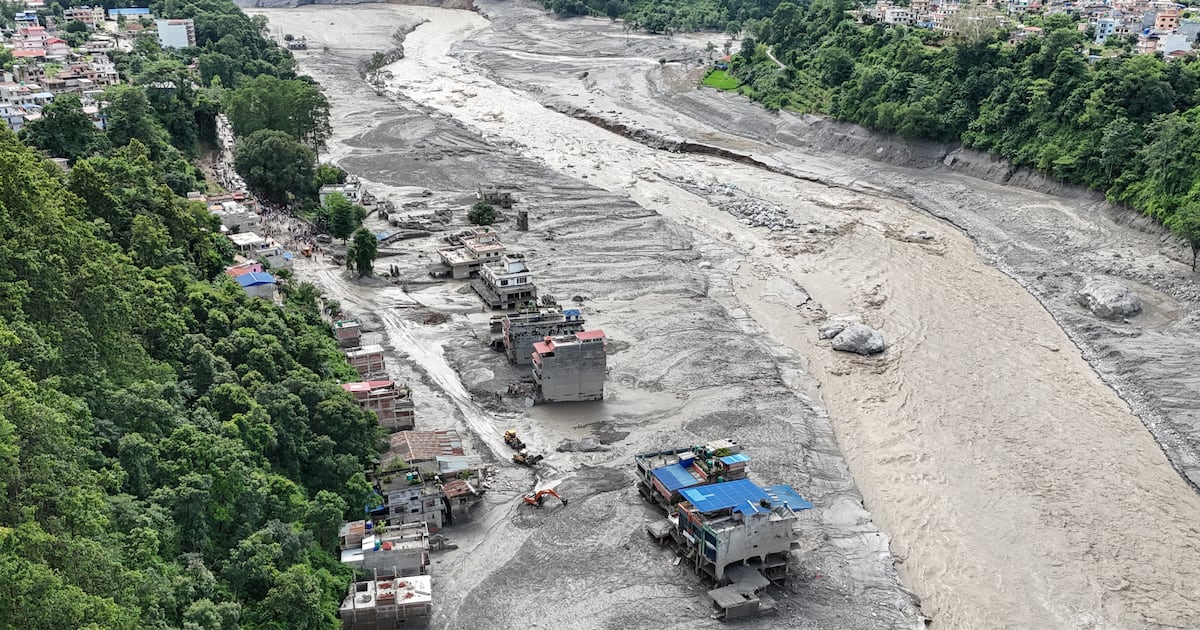
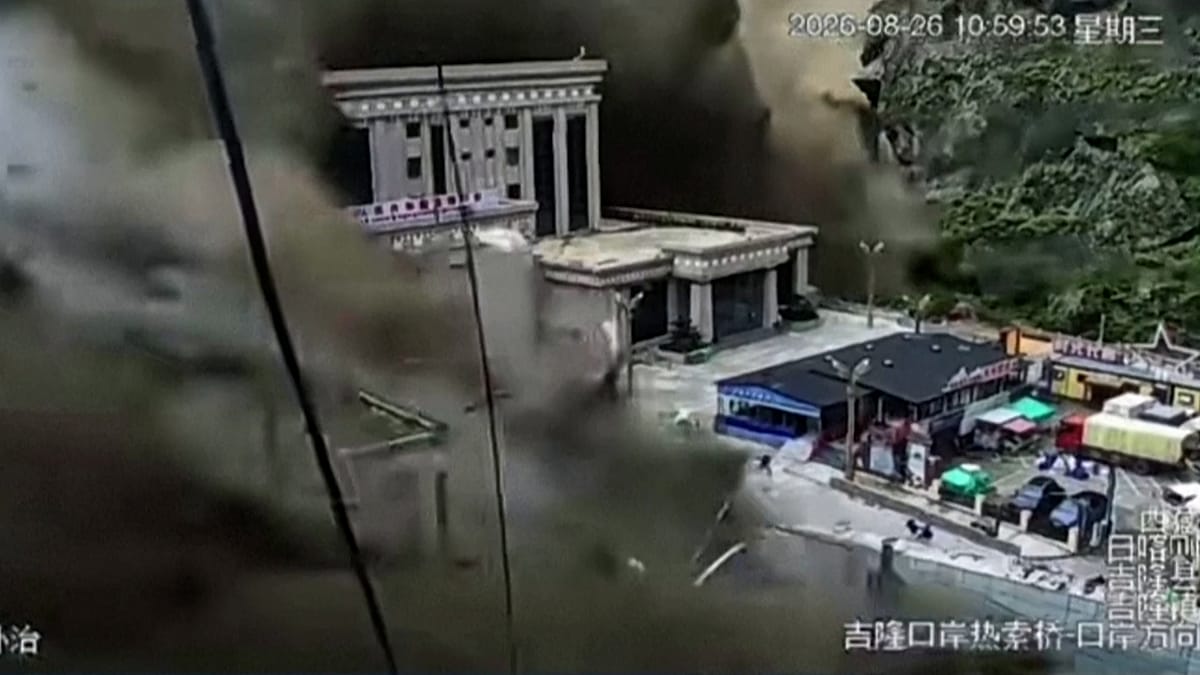
Initial reports suggested that an earthquake had triggered the disaster. Subsequent analysis by the U.S. Geological Survey indicated something different: the seismic signal was generated by the collapse itself, rather than a preceding tectonic earthquake. A large section of a high-altitude glacier – located at roughly 5,200 meters in elevation – broke away and plunged approximately 1,200 meters toward the valley floor. The resulting ice-rock avalanche entrained enormous quantities of debris and appears to have temporarily obstructed the Lhende Khola River before releasing a devastating surge downstream.
The tragedy was not simply a conventional flood produced by excessive rainfall. Nor does the evidence currently justify describing it as an earthquake-triggered disaster. It was a cascading high-mountain event in which ice, rock, gravity, water, and steep topography combined. The narrow Himalayan valleys then acted as conduits for an exceptionally fast-moving mixture of water, sediment, and boulders.
The disaster therefore raises two questions that should extend well beyond its immediate aftermath. How safe is the accelerating infrastructure expansion across Tibet when the geological and cryospheric foundations of the plateau are becoming increasingly unstable? And when environmental disturbances originating in Tibet can rapidly become disasters in Nepal and other downstream states, should Tibet’s climate crisis continue to be treated primarily as China’s domestic environmental concern?
A Cryosphere Under Stress
The science points toward a much larger problem. The Hindu Kush Himalayan cryosphere is changing at an extraordinary pace. Glaciers are retreating, snow patterns are changing, and permafrost is degrading. The mountain slopes are becoming increasingly vulnerable to complex interactions among temperature, precipitation, meltwater, seismic activity, and gravity. These changes can generate avalanches, debris flows, landslides, glacial lake outburst floods, and other cascading and interrelated hazards.
The Tibet-Nepal tragedy therefore needs to be understood not as an isolated incident but as part of an emerging pattern of compound Himalayan hazards. The same broad border region has witnessed repeated episodes in which events originating at high altitude have rapidly translated into downstream emergencies. In July 2025, for example, a devastating flood in Nepal’s Bhotekoshi River was traced by satellite analysis to the drainage of a supraglacial lake in Tibet. That disaster destroyed the Friendship Bridge connecting Nepal and China and caused casualties and substantial infrastructure damage.
There is an important geopolitical lesson here: the physical geography of a degrading cryosphere transcends political borders.
This is precisely why Tibet matters. The Tibetan Plateau is the hydrological heart of Asia and the source region for major river systems on which enormous downstream populations depend. What happens to its glaciers, permafrost, lakes, slopes and rivers inevitably carries consequences beyond China’s administrative boundaries. A glacial collapse, landslide or sudden water release in an upstream area can become a disaster in another country within hours.
Our Stockholm Paper “Whither Tibet in the Climate Crisis Agenda?” sought to draw attention to precisely this structural vulnerability. The study argued that Tibet is undergoing one of the world’s most consequential yet insufficiently scrutinized ecological transformations. We called for greater international attention to the interaction among climate change, infrastructure, resource extraction, water governance, and regional security.
Our paper deliberately rejected a narrow understanding of Tibet’s climate crisis as merely an issue of pollution or glacier retreat. Instead, infrastructure expansion, extractive activities, and governance choices can interact with accelerating cryospheric transformation to create risks extending far beyond Tibet itself. The latest tragedy makes that warning considerably harder to ignore.
Infrastructure Meets Instability
Infrastructure is particularly important in this discussion, although scientific caution is essential. No conclusive evidence currently shows that a particular Chinese infrastructure project directly caused the August 26 glacier collapse. Making such a claim would go beyond the available data. Researchers are still examining the precise combination of temperature changes, snowmelt, glacier dynamics, permafrost degradation, slope instability, and geological factors involved. But even while we await concrete data on this one disaster, the broader infrastructure problem is plain to see.
The Tibetan Plateau and surrounding Himalayas constitute an exceptionally difficult environment for large-scale construction. Steep topography, active tectonics, retreating glaciers, thawing permafrost and unstable slopes increasingly overlap with roads, railways, hydropower facilities, border infrastructure, settlements, mining activities, and other strategic projects. Infrastructure is consequently being built on landscapes whose physical behavior is becoming more difficult to predict.
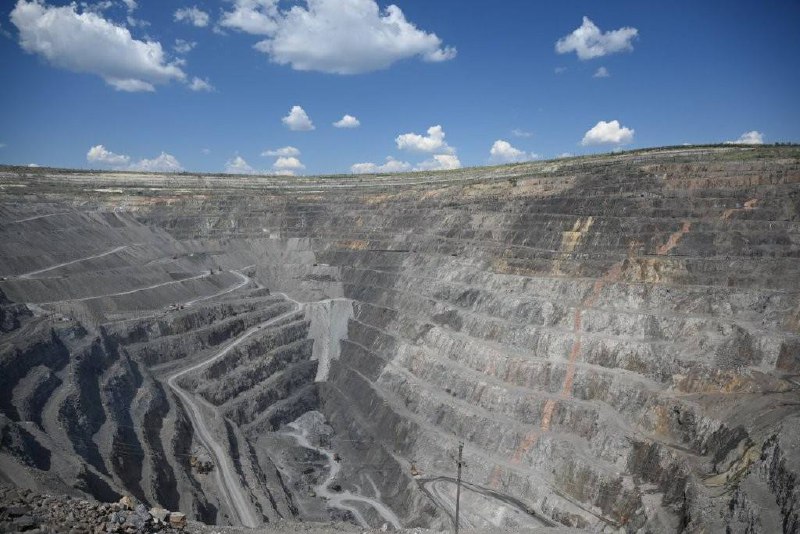
This produces a dangerous paradox. Infrastructure itself is increasingly vulnerable to climate and geological hazards, even while badly located or inadequately assessed construction can magnify exposure to those hazards. Road cutting and excavation can destabilize slopes. Tunnelling, blasting and mining can disturb already fragile geological environments. Hydropower installations and dams concentrate workers, equipment, and economic assets in narrow river corridors precisely where debris flows and flash floods can travel with extraordinary force.
The concern therefore should not be framed simplistically as development versus environmental protection. The more urgent question is whether development models designed for comparatively stable physical environments remain appropriate for a high-altitude landscape undergoing rapid climatic transformation.
Scientists are not demanding an indiscriminate halt to every infrastructure project in Tibet, but more care is needed. Major construction in exceptionally fragile cryospheric zones should be subjected to far more rigorous precautionary scrutiny, including independent hazard mapping, cumulative environmental-impact assessments, permafrost and glacier monitoring, downstream risk analysis, and transparent disaster modelling. Where the risks cannot reasonably be mitigated, restrictions or outright bans on new constructions should become legitimate policy options.
China’s expanding infrastructure footprint across Tibet makes this particularly consequential. The issue is not simply what this infrastructure – and the intersecting disaster risks – may do to Tibet. Increasingly, it is also what a changing Tibet means for countries and peoples living downstream.
Nepal Cannot Remain Downstream Diplomatically
For Nepal, this creates an uncomfortable strategic reality. Kathmandu cannot afford to view infrastructure and environmental decision-making north of its border exclusively through the prism of China-Nepal economic cooperation. Nepal is geographically downstream from climatic and hydrological processes over which it exercises little control. Its vulnerability therefore produces a legitimate diplomatic interest in developments occurring on the Tibetan side of the frontier.
Timely information sharing on the upstream environment should not be regarded as diplomatic generosity from China. For Nepal, it can literally save lives. Kathmandu consequently has strong grounds to demand more institutionalized transboundary consultation, real-time hydrological information, glacier and glacial lake monitoring, advance notification of significant upstream projects, joint disaster risk assessments, and emergency communication mechanisms with Beijing.
Such demands should not automatically be interpreted as anti-China. This is elementary risk management for a downstream Himalayan state.
Nepal should likewise be cautious about allowing infrastructure diplomacy to overshadow environmental security. Chinese roads, connectivity projects, border facilities, energy investments, and other infrastructure can provide economic opportunities. But their value cannot be measured solely through investment volumes, construction kilometers, or trade projections; the risks must also be carefully weighed.
This principle extends beyond Nepal. Bhutan, India and other downstream Himalayan states have legitimate interests in greater transparency concerning upstream environmental changes. The concept of territorial control cannot mean that a state possesses exclusive political control over territory while neighboring countries are expected to absorb the environmental consequences without adequate consultation. That is precisely where transboundary cryosphere security becomes a useful diplomatic concept.
Put Tibet on the Climate Agenda
The issue consequently belongs on a much larger international agenda. The United Nations Framework Convention on Climate Change (UNFCCC) and wider international climate architecture should give far greater attention to the Himalayas and cryosphere security. Existing discussions acknowledge glacier retreat, snow cover changes, permafrost degradation, and adaptation challenges. Yet the Tibet-Nepal tragedy demonstrates why the agenda must move from general recognition toward sustained monitoring, risk assessment, and transboundary adaptation mechanisms. Tibet should not remain an environmental blind spot within global climate diplomacy simply because discussion of the plateau is politically sensitive.
Climate systems do not observe sovereignty in the manner diplomatic institutions do. A flood originating in Tibet can become an emergency in Nepal and potentially affect communities much farther downstream. This is where a new diplomatic conversation is required. The objective should not be to internationalize Tibet politically under the guise of climate change. It should instead be to internationalize responsibility for understanding and managing transboundary climate risks in the Himalayan region.
China, Nepal, India, Bhutan and other Himalayan stakeholders need stronger arrangements for cryosphere data sharing, joint scientific observation, satellite based early warning, infrastructure risk assessments, and disaster preparedness. Institutions such as Nepal’s International Center for Integrated Mountain Development (ICIMOD) can provide scientific platforms where such cooperation is framed around environmental security and human safety rather than geopolitical confrontation.
But international institutions also have responsibilities. The UNFCCC process should encourage systematic discussion of the Tibetan Plateau and Himalayan cryosphere within adaptation, loss-and-damage, and mountain ecosystem frameworks. Greater international scientific access, transparent environmental data, and systematic assessment of major infrastructure projects in environmentally sensitive transboundary regions should become part of that conversation.
The August 26 tragedy should mark a turning point. The international community needs to stop treating Tibet’s environmental transformation as a distant ecological issue. The plateau is becoming one of Asia’s central climate security theaters, where warming, glaciers, permafrost, seismicity, infrastructure and geopolitics increasingly intersect. The catastrophic flood this week proves that beyond question. Tibet must therefore move from the margins toward the center of international climate security discussions.
What is required now is neither alarmism nor an unscientific attribution of every Himalayan disaster to Chinese infrastructure or climate change. What is required is precaution, transparency, and diplomatic accountability. A guiding principle should emerge from this tragedy: no major infrastructure expansion in exceptionally fragile Himalayan cryospheric zones without credible scientific assessment of its potential transboundary consequences. Nepal and other downstream states have every reason to advocate such a principle.
When glaciers, rivers and geological hazards cross frontiers, environmental vulnerability becomes shared security. The Tibet-Nepal flood is a human tragedy. But if its warning is ignored, the next Himalayan disaster may expose not simply a failure of climate adaptation, but a failure of diplomacy itself.




















 English (US) ·
  French (CA) ·
  French (FR) ·