

 1 month ago
27
1 month ago
27
PROTECT YOURSELF with Orgo-Life® QUANTUM TECHNOLOGY
Orgo-Life the new way to the future Advertising by AdpathwayAs India prepares to host the BRICS summit in September 2026, its inability to convene the long-anticipated leaders’ meeting of the Quadrilateral Security Dialogue, originally scheduled for 2025, is raising questions that polite diplomacy has so far avoided: Is the Quad quietly maturing into a lower-visibility instrument of cooperation, or is it being politically neglected amid shifting U.S. priorities and widening divergences among its members?
As regards India, it is important to appreciate how its simultaneous activism in BRICS and relative quietude in the Quad can be seen less as a contradiction than as a purposeful strategy. BRICS offers India visibility, leadership, and a platform for engaging the Global South. The Quad offers functional cooperation in the Indo-Pacific, particularly in areas related to security and technology. India has stakes in both these groupings and by calibrating engagement across both, India seeks to preserve its strategic autonomy while maximizing its diplomatic reach.
For a grouping that until recently thrived on high-profile summitry, the Quad’s present silence is striking to say the least. Between 2021 and 2023, leaders of United States, India, Japan and Australia met with unusual frequency, projecting an image of cohesion, shared values and purposes in the Indo-Pacific.
The first-ever leaders’ online summit in March 2021 – followed by in-person meetings in Washington (September 2021), Tokyo (May 2022), and Hiroshima (May 2023) – transformed the Quad into a visible symbol of strategic alignment. This raised questions of whether the Quad was redefining regional geopolitics, as Beijing accused it of trying to become an Asian NATO. Even its September 2024 meeting, though relatively subdued, sustained expectations by adopting the Wilmington Declaration showcasing how their summitry had become institutionalized.
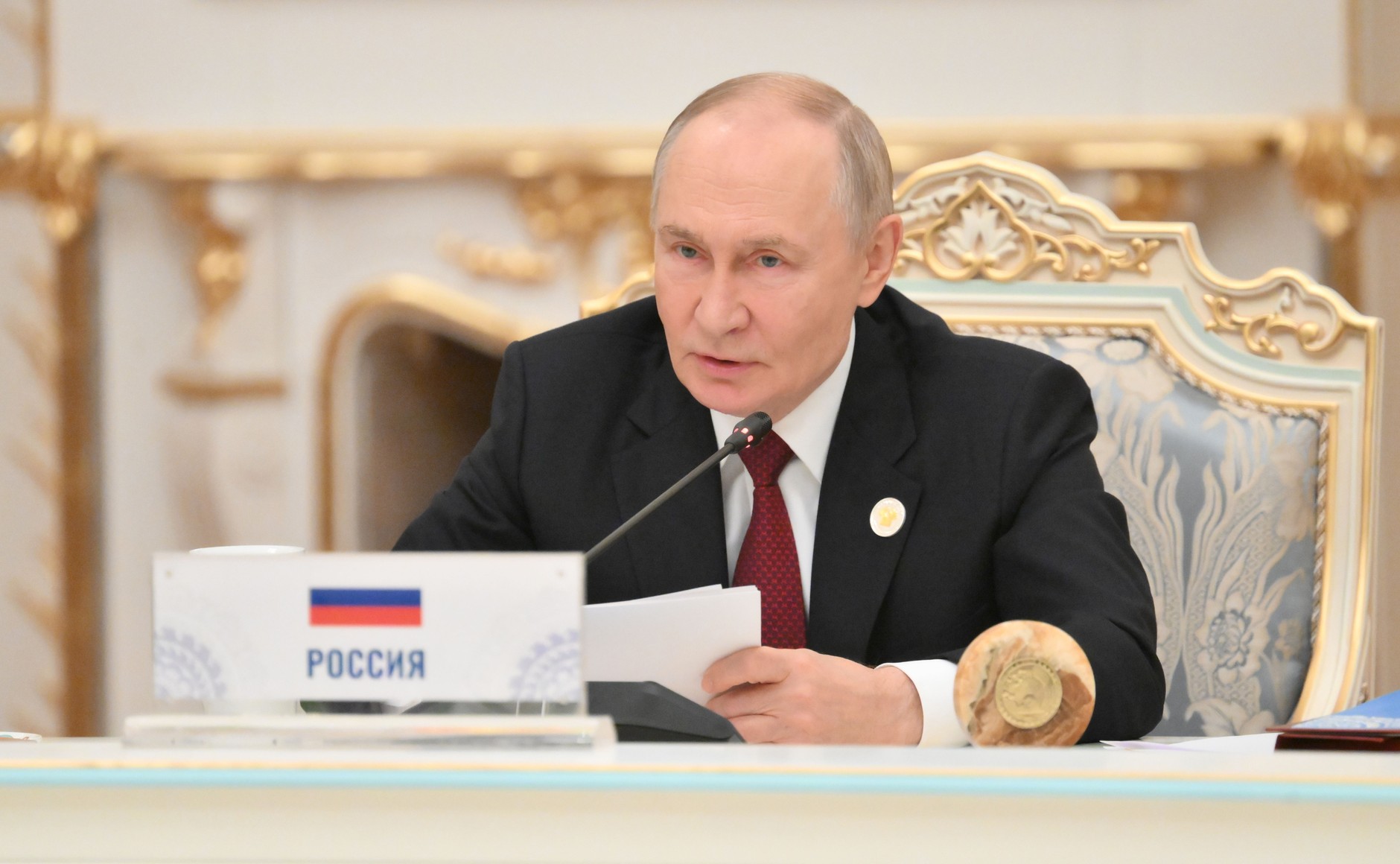
That strategic signalling has since been disrupted. The absence of a leaders’ summit since 2024, coupled with declining anti-China rhetoric, has instead fueled a narrative of its silent drift. This becomes even more glaring as BRICS – expanded, energized, and politically assertive – appears ascendant, especially with India announcing its hosting of the 2026 summit. The current contrast between the two regional groupings is telling. The participation of Russia and Iran at a BRICS 2026 summit will also rub the Quad the wrong way.
But this apparent binary risks mistaking optics for substance. It would be simplistic to denounce the quietness of the Quad as a sign of its demise. Instead this can also be seen as marking its transformation, albeit with some persistent faultlines.
The return of Donald Trump has altered the political context for Quad minilateralism. Trump’s approach to foreign policy, which is generally transactional and skeptical of multi-national frameworks, sits uneasily with the sustained coordination that the Quad requires. His administration’s attention has also been distracted by multiple crises, including renewed tensions involving Iran and assertive posturing in the Western Hemisphere.
The Indo-Pacific remains important, but it has been noticeably downgraded and no longer commands a singular focus the way it did during Trump’s first term in office. This shift has had direct consequences. The Quad, lacking a formal secretariat or binding institutional structure, depends heavily on leadership-level branding. When that engagement weakens, summitry falters. The delayed 2025 leaders’ summit in India, therefore, exposes a political underinvestment, especially from Trump, who in 2017 had catapulted the Quad into the limelight by giving it a strong China-centric profile.
Now, Trump’s intensifying frictions with allies – whether over trade, burden-sharing, strategic autonomy, or the Strait of Hormuz – have complicated even simple matters like scheduling a summit. For a grouping premised on trust and convergence, such neglect matters deeply.
The Quad’s current lull reflects the fact that its members are no longer moving in sync. Japan is undergoing a historic defense transformation, committing to increase military spending to 2 percent of GDP and acquire counterstrike capabilities. Australia is deeply invested in implementing AUKUS, with its focus on advanced military technologies and nuclear-powered submarines. India, which seeks to present itself as bridge builder, is struggling to manage an unstable periphery – especially its disputed border with China – while projecting leadership in the Global South through platforms like BRICS.
These differing priorities, however, may not have frayed the logic of Quad minilateralism or even diluted its synchronization, but the earlier high-octane intense summitry makes it look diminished. Has that earlier sense of urgency disappeared? Has it further intensified but instead been refracted through different national priorities or absorbed by incremental institutionalizing?
It is important to appreciate that beneath the surface of reduced visibility, the Quad has become far more operationally effective. The Indo-Pacific Partnership for Maritime Domain Awareness, launched in 2022, continues to expand its reach, integrating satellite data to monitor illicit maritime activity across Southeast Asia and the Pacific. The Malabar naval exercises, the last of which was held near Guam in November, remains a cornerstone of interoperability among their four navies. Cooperation on critical technologies, from semiconductors to Open RAN, has moved forward. The 2025 Quad Critical Minerals Initiative underscores their growing coordination on supply chain resilience in sectors central to both economic and national security.
This shift suggests the Quad’s drift toward embedded minilateralism: a form of cooperation that is less about public posturing and more about integrating capabilities into everyday governance practices. Instead of dramatic announcements, the Quad now operates through various working groups, technical frameworks, and bureaucratic linkages. Its influence is less visible but far more deeply embedded.
Nevertheless, the Quad today stands at a potential inflection point. Its reduced visibility can be read two ways. On the one hand, it reveals piecemeal maturation – a shift from episodic diplomacy to continuous coordination. On the other, it points to political drift, particularly in the absence of sustained commitment from the Trump administration. This dual-track approach also highlights the asymmetry between the Quad and BRICS. While BRICS thrives on summitry and political theater, the Quad is increasingly defined by its low-profile operational work. The risk is that, in the absence of visible leadership, the Quad’s contributions may become undervalued – even for its own members.
The Quad is unlikely to collapse, but it may gradually lose its strategic salience. Its challenge now is to strike a balance between visible summits and more embedded cooperation. Without periodic summitry and clear political signalling, even robust functional cooperation may fail to translate into broader influence. Yet without its quieter, embedded work, the Quad risks becoming all rhetoric and little substance.













 English (US) ·
  French (CA) ·
  French (FR) ·