

 12 hours ago
12
12 hours ago
12
PROTECT YOURSELF with Orgo-Life® QUANTUM TECHNOLOGY
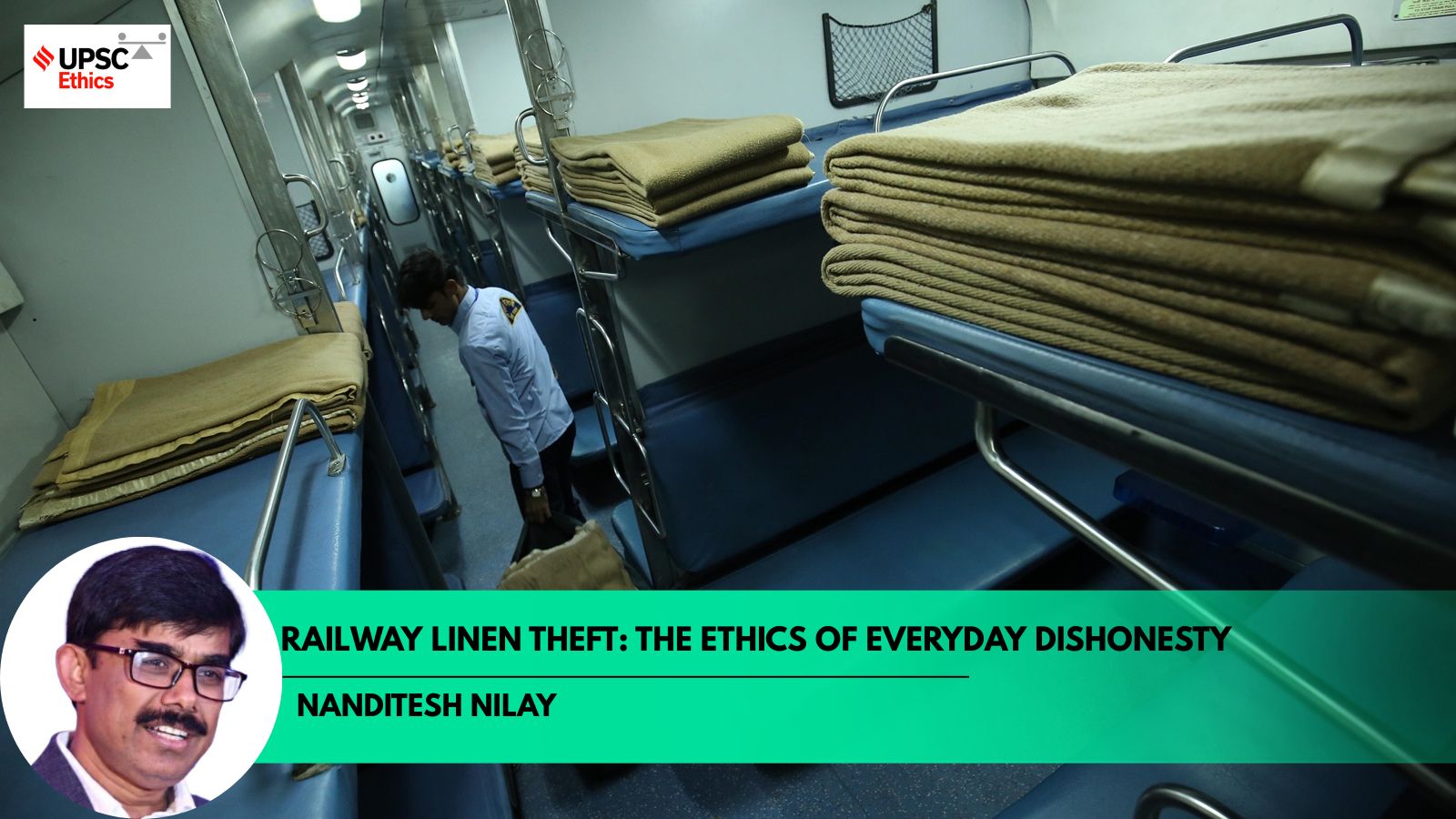
Orgo-Life the new way to the future Advertising by Adpathway(UPSC Ethics Simplified is a special series under UPSC Essentials by The Indian Express that examines ethical concepts relevant to the Civil Services Examination. Today, our ethicist explores how some thefts reflect big ethical failures, drawing lessons from The Indian Express Exclusive on the theft of 1.27 crore railway linen over four years.)
If educated or affluent people go around stealing towels, bedsheets, or blankets from trains, how should we define such behaviour? Would we call it greed or a lack of self-awareness? Would we label it a mental imbalance or simply an impulse to hoard everything?
After all, unethical acts do not stem solely from greed. They also arise from a mindset in which a person believes they have a right to everything around them. Such individuals make sure to stash away a towel, bedsheet, or blanket before disembarking. If caught, they do not hesitate to grin sheepishly. They begin to view public property as their own, and this distorted mindset gives them a false sense of achievement.
Case in Point
Hotels across the world report guests taking away towels, bathrobes, slippers, cutlery, and even decorative items. Indian Railways, too, has frequently reported the theft of towels, bedsheets, blankets, and other onboard amenities. Many of those involved are neither poor nor deprived. These incidents remind us that unethical behaviour is not always born out of necessity. Sometimes, it is simply a failure of character, where personal entitlement overrides respect for public or shared property.
In an article titled Why do well-off people shoplift?, published by BBC News Magazine, psychologist Dr Will Cupchik, who has researched atypical theft among affluent individuals, described such behaviour as that of an “atypical theft offender.” In his words, “The last thing these wealthy people need is to steal.”
Abraham Maslow, the pioneering American psychologist, sought to explain through his Hierarchy of Needs that human motivation largely depends on the fulfilment of five levels of needs: physiological needs, safety, belonging, esteem, and self-actualisation. But where do such acts fit into this framework? Are they driven by need, by greed, or by something deeper, such as a distorted moral compass? The habit of hoarding fuels greed, and towels, bedsheets, and blankets are repeatedly stashed away without any sense of shame.
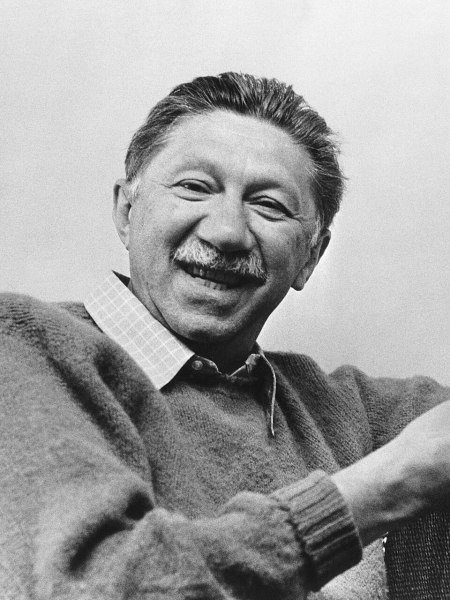 Abraham Harold Maslow was an American psychologist who created Maslow’s hierarchy of needs, a theory of psychological health predicated on fulfilling innate human needs in priority, culminating in self-actualization. (wikimedia commons)
Ethical dilemma or Ethical blindness?
The next question we must ask is whether such people experience ethical dilemmas. The answer is, perhaps, no. An ethical dilemma presupposes the existence of ethical consciousness. When an individual sees nothing wrong in taking what does not belong to them, there is little or no moral conflict to resolve. Such unethical acts often begin with seemingly insignificant choices that gradually become habits. When someone decides to steal public property, the absence of ethical reflection itself becomes evident. Ethical decisions can be made only when an ethical dilemma is recognised.
Story continues below this ad
An ethical dilemma arises when there is a conflict between two or more equally compelling values, and the moral agent must choose one over the other. Choosing one course of action inevitably involves compromising another value that the individual holds. Broadly, ethical theories are classified into three traditions: virtue ethics, which emphasises character; teleological ethics, which judges actions by their consequences; and deontological ethics, which focuses on duties and responsibilities.
Virtue, integrity, and the moral agent
In cases such as these, the first casualty is virtue itself. Once virtues are compromised, the individual also loses sight of both the goodness of intention and the goodness of outcomes. Low self-awareness combined with high self-interest leads to such shameful behaviour. Without adequate self-awareness, an individual thinks only of personal gain, with little regard for either the means employed or the consequences produced.
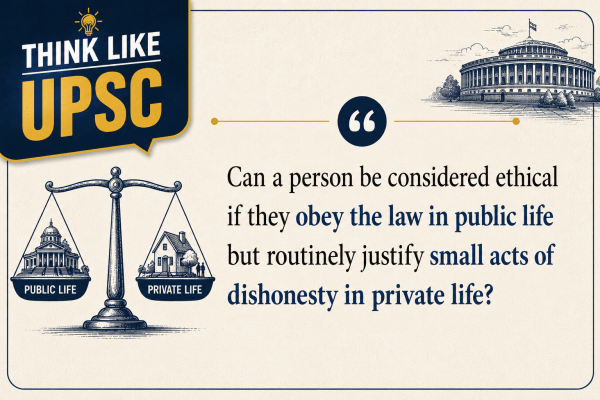
Such behaviour also raises important questions about integrity, probity, public trust, and civil responsibility.
1. Integrity is reflected in the consistency between one’s values and actions. It does not matter whether one is caught red-handed.
Story continues below this ad
2. Probity here refers to honesty and uprightness in dealing with public resources.
3. Public trust is eroded when shared or public property is treated as one’s personal property.
4. Civic responsibility is measured not merely by obedience to the law but also by everyday conduct that respects common resources and the rights of others.
Aristotle placed great emphasis on the cultivation of good habits. According to him, we become just by performing just acts and virtuous by practising virtue. If our habits are flawed, the very foundation of an ethical mindset is weakened. Right habits nurture virtuous character, enabling us to uphold higher values. Ethics, therefore, acts as an investigative lens, helping us distinguish between right and wrong, and between good and bad.
So, what’s the message
Story continues below this ad
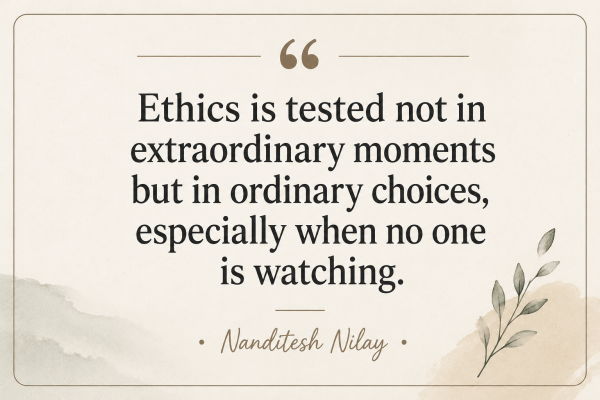
Respecting public property is a reflection of character. It is important to remember that a society that ignores small ethical failures eventually pays the price through declining public trust. This, in turn, weakens moral standards and erodes integrity.
Ethical Reflection
Stealthily
You stole
the water
and
that oxygen too,
polluted the air
and
that medicine as well.
Will you steal
the sunlight too?
The trees, the green hue,
and the light?
Then what will be left
for us?
Birth?
You are powerful,
go ahead, steal
the darkness
and
death too.
(The writer is the author of ‘Being Good’, ‘Aaiye, Insaan Banaen’, ‘Kyon’ and ‘Ethikos: Stories Searching Happiness’. He teaches courses on and offers training in ethics, values and behaviour. He has been the expert/consultant to UPSC, SAARC countries, Civil services Academy, National Centre for Good Governance, Central Bureau of Investigation (CBI), Competition Commission of India (CCI), National Judicial Academy, etc. He has PhD in two disciplines and has been a Doctoral Fellow in Gandhian Studies from ICSSR. His second PhD is from IIT Delhi on Ethical Decision Making among Indian Bureaucrats. He writes for the UPSC Ethics Simplified (concepts and caselets) fortnightly.)
Subscribe to our UPSC newsletter and stay updated with the news cues from the past week.
Story continues below this ad
Stay updated with the latest UPSC articles by joining our Telegram channel – Indian Express UPSC Hub, and follow us on UPSC section of The Indian Express on Instagram and X.
For your queries and suggestions write at manas.srivastava@indianexpress.com
PREVIOUS ARTICLES ON UPSC ETHICS SIMPLIFIED:
How to decode ethical quotes in Mains exam: An example
Can ethics stop the next fire tragedy?
How can India’s civil services and governance rebuild Gen Z’s trust?
Story continues below this ad
CBSE row as a case study on accountability when technology fails
NEET Paper Leak: What is ethical governance in public examinations?
Dear UPSC aspirants, how do you know what’s ethical in everyday life
Are humans failing ethically in the AI age?
How fake success claims by aspirants reveal a deeper moral crisis














 English (US) ·
  French (CA) ·
  French (FR) ·