

 2 months ago
29
2 months ago
29
PROTECT YOURSELF with Orgo-Life® QUANTUM TECHNOLOGY
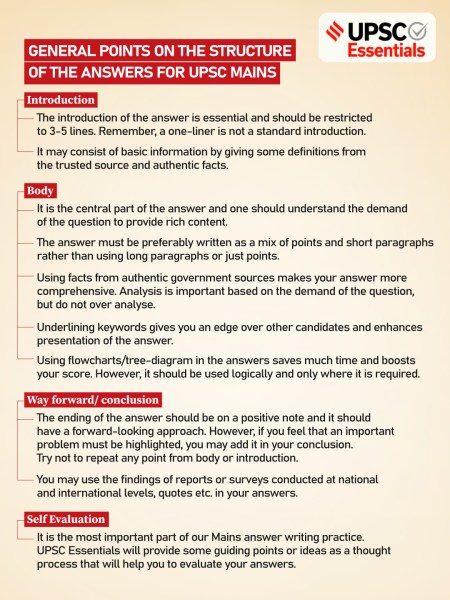
Orgo-Life the new way to the future Advertising by AdpathwayUPSC Essentials brings to you its initiative for the practice of Mains answer writing. It covers essential topics of static and dynamic parts of the UPSC Civil Services syllabus covered under various GS papers. This answer-writing practice is designed to help you as a value addition to your UPSC CSE Mains. Attempt today’s answer writing on questions related to topics of GS-3 to check your progress.
🚨 Click Here to read the UPSC Essentials magazine for July 2026. Share your views and suggestions in the comment box or at manas.srivastava@indianexpress.com🚨
Cyberattacks on critical infrastructure pose significant national security risks despite the presence of isolated operational networks. Discuss the vulnerabilities in the context of the Kudankulam Nuclear Power Plant cyber incidents. Suggest measures to strengthen cyber resilience against advanced persistent threats (APTs).
QUESTION 2
The emergence of private space companies marks a paradigm shift in India’s space programme. Discuss the significance of the Vikram-1 mission in strengthening India’s commercial space ecosystem.
QUESTION 1: Cyberattacks on critical infrastructure pose significant national security risks despite the presence of isolated operational networks. Discuss the vulnerabilities in the context of the Kudankulam Nuclear Power Plant cyber incidents. Suggest measures to strengthen cyber resilience against advanced persistent threats (APTs).
Relevance: The question is relevant to GS 3 under Cyber Security, Internal Security, and Critical Information Infrastructure Protection. With increasing digitisation of strategic sectors such as nuclear energy, cyber resilience has become a key aspect of national security. The topic links technological vulnerabilities with governance, institutional preparedness, and emerging security threats.
Note: This is not a model UPSC answer. It only provides you with a thought process which you may incorporate into the answers.
Introduction:
Story continues below this ad
— Critical information infrastructure (CII), which includes nuclear power plants, electrical grids, banking systems, and telecommunications networks, is the foundation of national security and economic stability.
— A data leak has revealed details about India’s flagship nuclear project, the Kudankulam Nuclear Power Plant (KKNP), located in Tamil Nadu’s Tirunelveli District. Earlier in 2019, the Kudankulam Nuclear Power Plant (KKNPP) cyber incident and the identification of 2025 malware on an employee’s internet-connected system demonstrated that even institutions with air-gapped Operational Technology (OT) networks are vulnerable to sophisticated cyber assaults. These instances show the increasing threat presented by Advanced Persistent Threats (APTs) to vital infrastructure.
Body:
You may incorporate some of the following points in your answer:
What are the measures to strengthen cyber resilience?
— Adopt a zero-trust security architecture. Instead of depending simply on network isolation, verify each user, device, and application on a continuous basis.
Story continues below this ad
— Implementing strong network segmentation, one-way data transfer techniques whenever possible, and rigorous access controls between administrative and operational systems.
— AI-enabled Security Operations Centres (SOCs), continuous monitoring, endpoint detection and response (EDR), and threat intelligence are all being implemented to detect APTs early on.
— Improving collaboration between CERT-In, the National Critical Information Infrastructure Protection Centre (NCIIPC), NPCIL, and other sectoral authorities for incident response and information exchange.
— Regular cyber security training, phishing simulations, and background checks for workers and contractors.
Conclusion:
Story continues below this ad
— The Kudankulam cyber incidents show that cyber security is no longer only an IT issue, but rather a critical national security priority. As India’s critical infrastructure becomes more digital, resilience must shift from reliance on air-gapped networks to a complete approach that includes modern technology, competent individuals, institutional coordination, and continual risk assessment to combat new APTs.
(Source: Not the first data breach at Kudankulam: Recalling 2019 cyberattack that targeted thorium info, Explained: CERT-In’s new cybersecurity norms, and why it is likely to issue a clarification about them, Explained: What is ‘critical information infrastructure’, who protects it?, http://www.pib.gov.in)
Points to Ponder
What are Advanced Persistent Threats (APTs), and how do they differ from conventional cyberattacks?
Related Previous Year Questions
What are the different elements of cyber security? Keeping in view the challenges in cyber security, examine the extent to which India has successfully developed a comprehensive National Cyber Security Strategy. (2022)
Story continues below this ad
Keeping in view of India’s internal security, analyse the impact of cross-border cyber-attacks. Also, discuss defensive measures against these sophisticated attacks. (2021)
QUESTION 2: The emergence of private space companies marks a paradigm shift in India’s space programme. Discuss the significance of the Vikram-1 mission in strengthening India’s commercial space ecosystem.
Relevance: The question is relevant to GS 3 under Science & Technology, Indigenisation of Technology, Innovation, and Economic Development. The rise of private launch providers reflects India’s shift towards a commercially driven space sector, aligning with national objectives of technological self-reliance, startup-led innovation, and expansion of the space economy.
Note: This is not a model UPSC answer. It only provides you with a thought process which you may incorporate into the answers.
Introduction:
Story continues below this ad
— The Indian Space Research Organisation (ISRO) has traditionally led India’s space effort, with the private sector mostly supplying components.
— The successful launch of Vikram-1, India’s first commercially developed orbital launch vehicle by Skyroot Aerospace, signifies a significant move toward a public-private partnership model, indicating the maturing of India’s commercial space economy.
Body:
You may incorporate some of the following points in your answer:
Significance of the Vikram-1 mission
— Vikram-1 is the first privately manufactured Indian rocket to successfully launch satellites into Low Earth Orbit (LEO). It makes India the third country, after the United States and China, to show private orbital launch capabilities.
Story continues below this ad
— It highlights the success of the 2020 space sector reforms, which allowed private engagement. It also enhances the implementation of the Indian Space Policy 2023, which calls for ISRO, IN-SPACe, and NSIL to work together to promote commercial operations.
— It would strengthen India’s commercial launch ecosystem by offering domestic and foreign customers another launch option for small satellites. It would also allow for increased launch frequency, decreasing reliance on ISRO’s constrained launch schedule.
— LEO has become the favoured orbit for communication, Earth observation, and remote sensing satellites due to its lower latency. Vikram-1 improves India’s ability to compete in the rapidly increasing LEO market, where early launch capability provides strategic and financial benefits.
— It shows off indigenous skills in launch vehicle design, propulsion, guidance, and lightweight materials. It also promotes startup-led innovation, private investment, and technological growth in India’s space ecosystem.
— During an emergency, a strong private launch ecosystem gives the ability to quickly launch or replace satellites for communication, navigation, and intelligence demands. It would help to reduce strategic reliance on a single launch provider while increasing national resilience.
Conclusion:
— The Vikram-1 mission represents more than just a successful rocket launch; it marks the beginning of India’s private space age.
— It supports India’s aspiration to become a significant player in the global space economy by validating policy reforms, boosting commercial launch capability, and stimulating innovation, as well as complementing ISRO’s scientific and strategic missions.
(Source: The race for low Earth orbit: What the launch of Vikram-1 means for India, India’s first private rocket Vikram-1 succeeds in maiden orbital launch, Hyderabad’s Skyroot start-up: Vikram-1 India’s first private orbital rocket mission; defining moment, says PM Modi, http://www.pib.gov.in)
Points to Ponder
How can private space startups contribute to technological innovation, employment, and economic growth?
Related Previous Year Questions
What is the main task of India’s third moon mission which could not be achieved in its earlier mission? List the countries that have achieved this task. Introduce the subsystems in the spacecraft launched and explain the role of the Virtual Launch Control Centre’ at the Vikram Sarabhai Space Centre which contributed to the successful launch from Sriharikota. (2023)
Previous Mains Answer Practice
UPSC Essentials: Mains answer practice — GS 3 (Week 162)
UPSC Essentials: Mains answer practice — GS 3 (Week 163)
UPSC Essentials: Mains answer practice — GS 2 (Week 162)
UPSC Essentials: Mains answer practice — GS 2 (Week 163)
UPSC Essentials: Mains answer practice — GS 1 (Week 163)
UPSC Essentials: Mains answer practice — GS 1 (Week 162)
Subscribe to our UPSC newsletter and stay updated with the news cues from the past week.
Stay updated with the latest UPSC articles by joining our Telegram channel – IndianExpress UPSC Hub, and follow us on Instagram and X.




















 English (US) ·
  French (CA) ·
  French (FR) ·