

 2 months ago
25
2 months ago
25
PROTECT YOURSELF with Orgo-Life® QUANTUM TECHNOLOGY
Orgo-Life the new way to the future Advertising by AdpathwayWhen Katherine Harrison’s husband passed away, she became the wealthiest woman in Wethersfield, Connecticut. Rather than wallow in her new status as a young widow she decided to run the farm she’d inherited on her own. She took up ranching and a slew of other hobbies including brewing ale, spinning yarn and beekeeping. She traded honey and beeswax for candles. She was by all accounts, headstrong, outspoken and clever.
In many corners of the internet, Harrison’s interests are having a moment. Craft brewers have been spruiking classic ales for years, urban beekeeping is surging in popularity, and people are looking to textile-based crafts as ways to practise mindfulness.
But Harrison was a single woman and mother of three daughters who, in a notable contrast to today’s tradwives, felt she did not need a man. Her independence, wealth – and the fact that she practised astrology – make her hobbies seem less like those of a good wife and more like those of a good witch.
Unfortunately, Harrison lived in the 17th century when fear and paranoia dominated the New England colonies. It was a time when a woman’s refusal to conform to puritanical, patriarchal norms made her vulnerable to accusations of witchcraft. In 1668, more than two decades before the Salem witch trials kicked off 200km north, Harrison was arrested and put on trial for witchcraft.
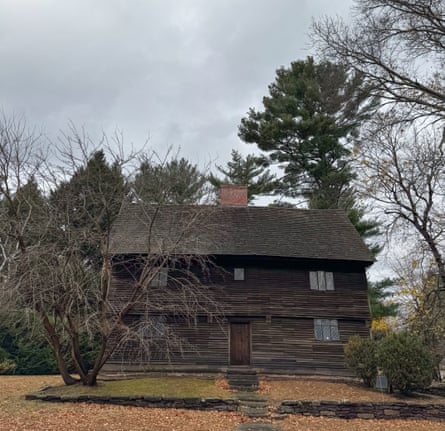
In 2024 I visited Harrison’s land in Wethersfield, one of the first stops I made on a research trip for my book Good Witch. Over three years, I spoke to dozens of experts, travelled from Connecticut to Massachusetts and then across the seas to Scotland, England, Denmark and the far north of Norway. Each place was touched by the European witch trials that spanned the 15th to 18th centuries, where 80% of the approximately 80,000 to 100,000 people tried were women.
While there were many causative factors in the witch-hunts – patriarchy, economic hardship, and religious and political tensions, to name a few – a woman’s financial independence and power made her vulnerable. Sometimes this independence was realised through inheritance, sometimes her proficiency at work.
Harrison’s initial charges were dismissed, but she was summoned before the court again the following year. The indictment alleged she had “familiarity with Satan … and by his help acted things beyond the ordinary course of nature”. The wide-ranging accusations included divination and healing; people said they’d seen her likeness appearing in their beds at night.
It was alleged she had asked for the devil’s help to make her work more profitable and to hinder the work of her neighbours. More than one witness mentioned being suspicious of her skills as a spinner, several men accused her of bewitching them to impede their trades as weavers and one tailor claimed she bewitched him to incorrectly sew sleeves on a jacket seven times in a row.
During the trial, it was clear her neighbours’ accusations of witchcraft lacked evidence and were mostly based on petty grievances, jealousy and superstition. Although she was convicted the magistrate spared her life, citing weak evidence, and banished her from Wethersfield instead.
Harrison’s case is emblematic of a pattern in the witch-hunts of colonial New England. In an analysis of the trials, the US historian Carol F Karlsen found that, although it was rare for women to inherit property, when they did, they were more susceptible to witchcraft allegations. Women from families without male heirs (Harrison had three daughters) made up 64% of the females prosecuted, 76% of those who were found guilty, and 89% of those who were executed.
The pattern reflects how “these women were aberrations in a society with an inheritance system designed to keep property in the hands of men,” writes Karlsen, in her 1987 book The Devil in the Shape of a Woman.
That Harrison’s business endeavours are prevalent in her trial notes speaks to another pattern. “Like midwives, healers and female religious leaders, women who turned their traditional skills to profit placed themselves in competition with men – and in positions of vulnerability to witchcraft accusations,” writes Karlsen.

Women’s work was a factor in witchcraft allegations in Europe too. A Cambridge University study by Dr Philippa Carter found that women’s employment options in the 16th and 17th centuries – healthcare, food preparation, dairy production and livestock management – all came with a higher risk of witchcraft accusations.
Rather than relying on legal records, which painted a one-sided picture, Carter used the casebooks of a medical practitioner and astrologer, Richard Napier, who recorded at least 1,714 incidents of suspected bewitchment from 1597 to 1634. Work in dairying and medicine were naturally prone to spoilage and disease. These ordinary outcomes were viewed as corruption induced by bad magic: “corrupt blood made wounds rankle and corrupt milk made ill-scented cheese,” she writes.
A woman’s daily tasks would often see her crisscrossing between homes, bakehouses and marketplaces, and these frequent interactions with neighbours also increased the chances of becoming embroiled in conflicts and labelled a witch.
Across Europe, women’s work in medicine would be maligned as witchcraft by institutions – like the church and academia – too. Wise women once enjoyed prominence and reverence in their communities for treating ailments with herbal remedies and prayers, delivering babies, performing minor surgeries and setting bones. But in 1325, Pope John XXII wrote a letter to Bishop Stephen of Paris, warning him that women who were practising medicine without formal education were in fact practising witchcraft and asking him to forbid them from doing so.
In the centuries that followed, regulations concerning who could legitimately study and practise medicine were tightened further. Since women were barred from academic institutions, they were effectively barred from the medical profession too.

Eventually, the marginalisation of and attacks on female healers would culminate in witchcraft prosecutions, like in Scotland when the healer Agnes Sampson – another widow – was put on trial by King James VI in the North Berwick witch trials of 1590.
She was accused of participating in a gathering of witches with the devil, where it was alleged they had cast spells to raise storms and sink the ships of King James as he sailed home from Denmark-Norway with his new bride, Princess Anne. James ordered that Sampson be tortured, and under immense duress she confessed. Of the 53 offences she was indicted with, over half focused on her practice as a healer.
What we see in Sampson’s case is evidence of how society maligned women’s labour as witchcraft and punished women for their feminine power. Accusations of witchcraft were wielded as threats against women like Harrison, who dared to defy the social structures that limited their participation in the workforce, and inheritance structures that kept property in male ownership.
Historically it’s been dangerous for women to reach for financial independence and status. While modern witchcraft, from tarot cards to astrology, has surfaced in the zeitgeist as a dreamy symbol of female intuition and girlhood, there is still risk and violence implicit in the label.
Women aren’t being burnt at the stake any more, but as we saw in June on the billboards across Melbourne depicting Victorian premier Jacinta Allan in a black pointed hat, when people want to take a woman’s power away, they’ll still call her a witch.
-
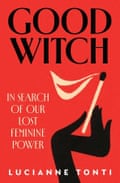
Good Witch: In Search of Our Lost Feminine Power by Lucianne Tonti is available in Australia now through Simon & Schuster






















 English (US) ·
  French (CA) ·
  French (FR) ·