

 2 hours ago
6
2 hours ago
6
PROTECT YOURSELF with Orgo-Life® QUANTUM TECHNOLOGY
Orgo-Life the new way to the future Advertising by AdpathwayZAMBIA · HEALTH
Key Facts
- —The country Zambia is a landlocked copper producer of about 21 million people that counts Washington as its biggest health donor.
- —What happened Health Minister Roma Chilengi said on Sunday 4 October that Zambia is ready to sign its US health deal.
- —What changed A clause on sending disease specimens to the United States was dropped; he said no specimen would leave Zambia.
- —How big Chilengi says Washington would provide US$1.5 billion over five years, with the yearly amount falling as Zambia raises its own health spending.
- —The bigger picture By September, the United States had signed 35 health pacts under its new aid strategy, including with six of Zambia’s neighbours.
- —The catch The final text is not public, and an opposition leader wants it published before anyone signs.
- —What comes next Chilengi hoped the memorandum would be signed during the week that began on Monday 5 October.
Zambia’s US health deal is ready for signing, Health Minister Roma Chilengi said on Sunday 4 October. A clause that would have sent Zambian disease specimens to the United States has been removed.
Under the five-year memorandum, Washington would provide US$1.5 billion for Zambia’s health system, with the amount falling each year, the minister said. Zambia would raise its own health spending in return, so programmes continue once American money tapers off.
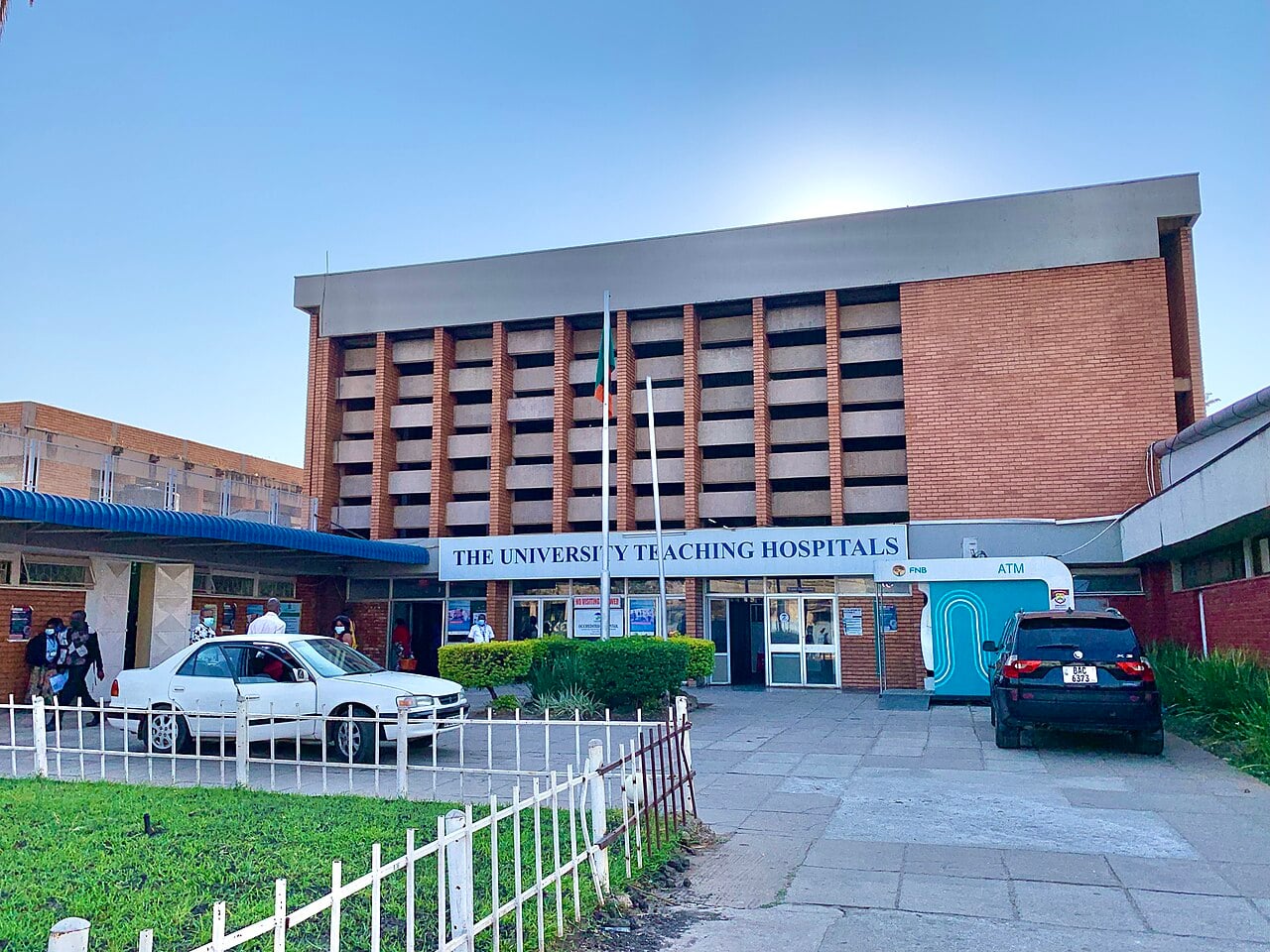
What the Health Minister Said on State Television
Chilengi spoke on the Sunday Interview, a programme on ZNBC, Zambia’s state broadcaster. He said the two governments had settled the disputes that stalled the US health deal earlier this year.
“We are completely aligned,” he said of the memorandum of understanding, or MOU. “We are completely comfortable with the MOU that has been finalised now.”
The biggest change in the US health deal concerns biological specimens, the samples that health workers collect to track disease outbreaks.
“We have completely dropped the specimen-sharing requirements. No specimen would leave this country as a result of that MOU,” he said.
Talks ran long. Zambia suspended the signing earlier this year to allow more diplomatic and technical discussion, the state-owned Zambia Daily Mail reported.
Chilengi led the Zambia National Public Health Institute before he became health minister on Monday 14 September. President Hakainde Hichilema named him among the first four ministers of his new term.
The minister kept his tone warm towards Washington. He called the US government “our biggest supporter to the health sector” and “a very cherished partner”.
What the Specimen-Sharing Clause Required
Health GAP, a US-based HIV advocacy group, published a draft of the memorandum in March. It said both countries “shall negotiate a specimen sharing arrangement” covering physical samples and related data, including genetic sequence data.
The clause applied to germs with “epidemic potential” and set a deadline of five days after detection. Both sides intended the arrangement to last 25 years.
Chilengi pointed to a mismatch. Parts of the original proposal would have run for 25 years, he said, even though the money covered only five.
Zambia also sought clear rules on intellectual property and benefit sharing, plus training links between Zambian and American scientists. The concern was what Zambia would gain if research on its samples produced new medicines or vaccines.
In July, Lloyd Mulenga, the ministry’s director of infectious diseases, spelled out the worry to Managed Healthcare Executive, a US health journal. “If vaccines are developed from the specimens shared from Zambia, will Zambia have access to those?”
How the Minerals Link Was Broken
The leaked draft also tied the health money to a separate “Bilateral Compact”. According to the text, the US secretary of state proposed that compact to Zambia’s president on 17 November 2025.
Under clause 6.2 of the draft, the memorandum would end at once if no compact was agreed by 1 April 2026.
In early May, Foreign Minister Mulambo Haimbe objected to attempts to link the US health deal to a proposed critical minerals agreement. He said each should be judged on its own merits and raised concerns about citizens’ privacy.
Talks with US officials at the UN General Assembly in New York settled the point, Lusaka Times reported on 29 September. “The linking, the coupling of the critical minerals agreement with the health assistance… has also been set aside,” Haimbe said.
The opposition wants proof, Lusaka Times reported on Tuesday 6 October. Antonio Mwanza, who leads the opposition Democratic Progressive Party, urged the government to “publish the final agreement before signing it”.
A New Model for American Health Aid
The US health deal falls under the America First Global Health Strategy, launched by the Trump administration in September 2025. It replaces much of the old aid system with multi-year agreements signed directly with governments.
Each partner must raise its own health budget, which the State Department calls co-investment. By September 2026, Washington had signed 35 such memoranda, 24 of them in Africa.
Those deals cover US$14 billion in US health aid, a State Department fact sheet says. Partner countries add more than US$10 billion of their own.
In February, the Ministry of Health said Zambia’s yearly health spending would climb under the proposed memorandum. It projected about US$628 million in 2026, rising to more than US$1 billion by 2030.
Six of Zambia’s eight neighbours have signed: Angola, Botswana, the Democratic Republic of the Congo, Malawi, Mozambique and Tanzania. Not every government agreed.
Ghana’s President John Dramani Mahama has said his cabinet rejected a proposed US$109 million compact, calling the terms “humiliating”. Zimbabwe walked away from its own talks over control of health data, Lusaka Times reported.
What It Means for US Readers
The US health deal is paid for by American taxpayers through the State Department. The leaked draft covered HIV, tuberculosis, malaria, mother-and-child health, vaccination and disease surveillance.
PEPFAR, the US HIV programme begun in 2003, committed nearly US$7 billion to Zambia in its first two decades, the US Embassy says. The same draft credits US investment with helping more than 1.3 million Zambians now on HIV treatment.
On 2 September, Washington marked the arrival of US-funded lenacapavir in Lusaka. The twice-yearly HIV prevention drug is made by Gilead Sciences (Nasdaq: GILD).
For investors, the minerals question matters more, because Zambia is a large copper producer. Washington backs the Lobito Corridor, a transport corridor linking Zambia’s Copperbelt with Angola’s Atlantic port of Lobito.
In May, Haimbe said Zambia would not accept preferential treatment of foreign companies over its critical minerals. “Me being in Beijing does not mean that I’m against Washington, and vice versa,” he said in September.
What Is Not Known
The final text of the US health deal has not been released. Haimbe said in September that the disputed provisions would be “replaced completely”, but the new wording is not public.
The money has also shifted during the talks. President Hakainde Hichilema announced a five-year health package worth US$1.5 billion in November 2025, Lusaka Times reported.
The leaked draft then listed US$1.01 billion from Washington for 2026 to 2030, falling from US$321 million in the first year. In May, Lusaka Times put the proposed memorandum at US$2 billion.
Chilengi now speaks of US$1.5 billion from Washington. A Lusaka Times report on 29 September put the direct US contribution at “more than US$1 billion”, and the yearly split is not public.
It is also unclear how the final text handles intellectual property and access to any vaccines built on Zambian samples. No signing date or venue has been announced.
More: Zambia news in English, every day from The Rio Times.
Frequently Asked Questions
What is Zambia’s US health deal?
Zambia’s US health deal is a five-year memorandum of understanding. Health Minister Roma Chilengi says Washington would provide US$1.5 billion, with the yearly amount falling while Zambia raises its own health spending.
What was the specimen-sharing clause?
A draft said both countries would negotiate sharing samples and genetic data on epidemic-prone germs within five days of detection. It was meant to last 25 years, and Zambia says it has now been removed.
Is the deal linked to Zambia’s copper and other minerals?
An early draft made the health money depend on a separate Bilateral Compact. Foreign Minister Mulambo Haimbe said in September that the link to a critical minerals agreement had been set aside.
What is the America First Global Health Strategy?
It is the Trump administration’s health-aid policy, launched in September 2025. Washington signs multi-year agreements directly with governments, which must also raise their own health budgets.
When will the US health deal be signed?
Health Minister Roma Chilengi hoped it would be signed during the week that began on Monday 5 October. Neither government has announced a date or venue.
Sources: Lusaka Times, 6 October 2026; Zambia Daily Mail, 6 October 2026; Zambian Observer, 5 October 2026; Solwezi Today, 5 October 2026; Lusaka Times (Haimbe, New York talks), 29 September 2026; Lusaka Times (Haimbe press briefing), 5 May 2026; Lusaka Times (cabinet appointments), 14 September 2026; Lusaka Times (draft amounts, November 2025 pledge), 25 January 2026; Lusaka Times (Ministry of Health statement), 4 February 2026; Health GAP (draft Zambia MOU), 16 March 2026; US Department of State fact sheet, 24 September 2026; US Embassy in Zambia, 2 September 2026; Managed Healthcare Executive, 31 July 2026.
This article was produced by The Rio Times’ automated newsroom system. How we use AI · Report an error · Editorial responsibility: Matthias Camenzind, Editor-in-Chief









 English (US) ·
  French (CA) ·
  French (FR) ·