

PROTECT YOURSELF with Orgo-Life® QUANTUM TECHNOLOGY
Orgo-Life the new way to the future Advertising by Adpathway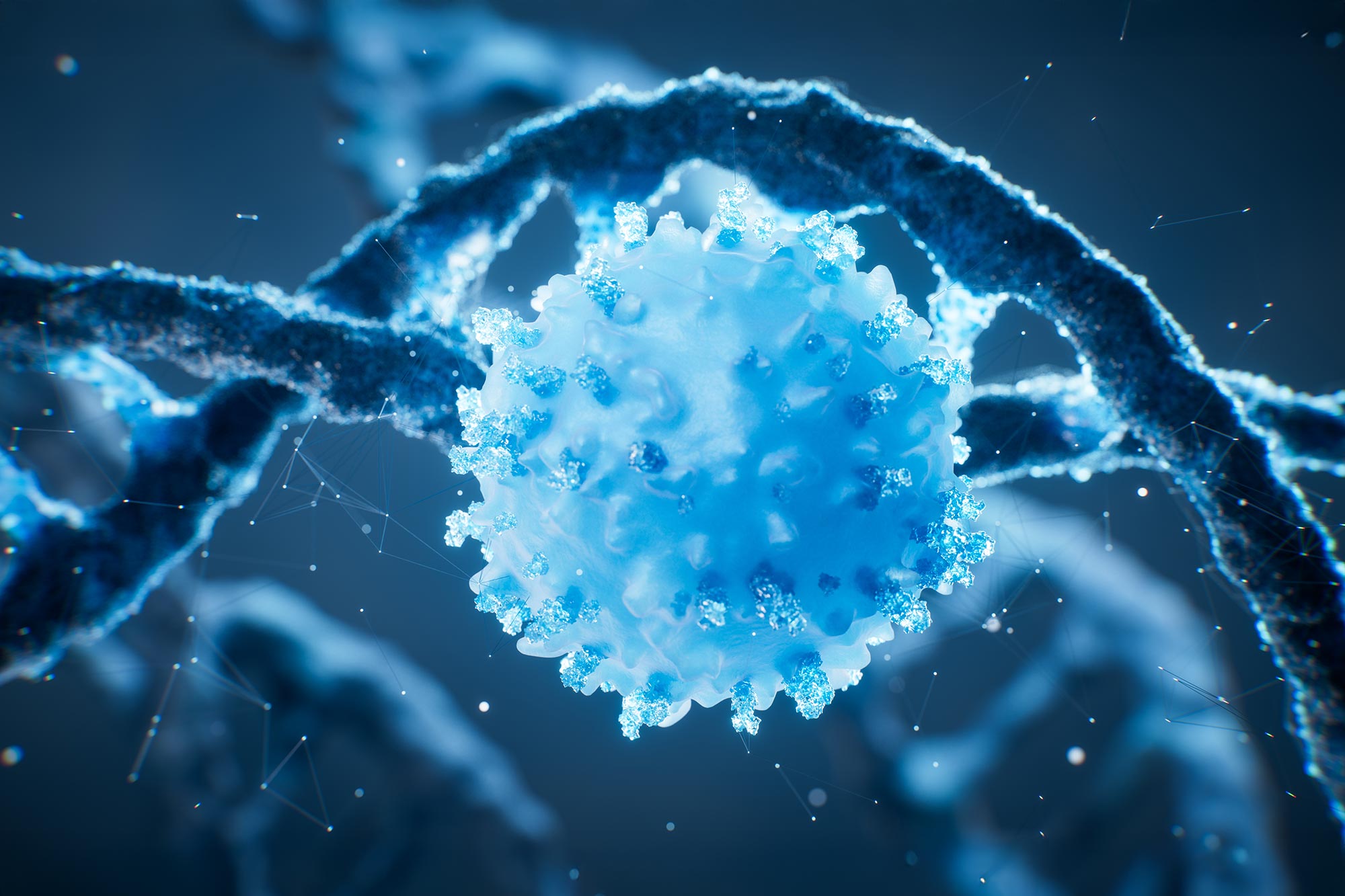 BAF mutations affect a protein complex that helps regulate gene activity by controlling how DNA is organized and accessed inside cells. Credit: Shutterstock
Researchers have identified an unexpected molecular vulnerability in cancers carrying BAF mutations.
Mutations found in roughly 20% of human cancers may promote tumor growth by changing how DNA is organized inside cells. Researchers have identified a mechanism that allows a regulatory protein to reshape the genome’s three-dimensional structure, altering the activity of genes involved in cell division.
The study, published October 28 in Nature, links these changes to mutations affecting a protein complex called BAF. Scientists at Weill Cornell Medicine found that blocking a key protein involved in the process reversed the cancer-promoting effects in an animal model, suggesting potential new approaches to treatment.
How Cancer Mutations Change DNA Accessibility
The BAF complex helps control gene activity by regulating how accessible DNA is to other proteins. Its numerous subunits are encoded by more than two dozen genes, and mutations affecting these components occur in cancers of the breast, ovaries, liver, and lymphatic system. Until now, researchers had struggled to explain how such mutations could contribute to malignancy across so many different tissues.
The new findings challenge expectations about how BAF normally functions. “We normally think of the BAF complex as making DNA more accessible, and so we expected its loss to have the opposite effect,” Dr. Meydan said. “Instead, its loss made DNA more accessible to CTCF, with surprisingly far-reaching effects.”
CTCF helps organize DNA into distinct regions by establishing boundaries that influence which genes interact with regulatory elements. These interactions depend partly on how DNA folds and loops within the nucleus. When BAF activity is lost, CTCF gains access to sites that would normally be less accessible, potentially disrupting this intricate organization.
A Shared Mechanism Across Different Cancer Types
“The challenge for us was to find a potential cancer-promoting effect occurring across many different cell types and tissue models,” said Dr. Barisic, who is also the John P. Leonard, M.D./Gwirtzman Family Research Scholar in Lymphoma.
Using several animal and cell models with impaired BAF function, the researchers discovered that CTCF binding increased at thousands of locations throughout the genome. This widespread change reorganized DNA loops and folds, disrupting normal connections between genes and the regulatory regions that control their activity. The resulting shifts in gene expression encouraged faster cell division.
Evidence from mouse experiments and human cancer patient data further supported CTCF’s involvement. In particular, disruptions affecting CTCF were associated with better patient outcomes. The researchers also demonstrated that deleting CTCF in an animal model could reverse the effects of BAF mutations, providing experimental evidence that the protein contributes to the cancer-promoting process.
New Molecular Targets for Cancer Treatment
The team identified two additional protein complexes, PBAF and ISWI, that cooperate with CTCF in driving these changes. Removing either complex also blocked the effects of BAF mutations in experimental models, making all three potential targets for future therapies.
“These findings help us establish a unifying mechanism for one of the most common classes of cancer mutations, and identify CTCF and its partner proteins as candidate therapeutic targets in these cancers,” said study co-corresponding author Dr. Darko Barisic, an assistant professor of cancer biology in medicine and a member of the Sandra and Edward Meyer Cancer Center at Weill Cornell Medicine.
Although the experiments identify promising molecular targets, researchers have not yet established whether blocking these proteins can safely treat cancer in humans. The next challenge is understanding precisely how increased CTCF binding changes the genome and finding ways to interfere with that process.
“We’re currently investigating in more detail what this extensive gain of CTCF does to the genome, and we hope before long to find a drug that blocks this process,” Dr. Barisic said.
Reference: “SWI/SNF complexes shape 3D chromatin architecture through CTCF and cohesin” by Sonia Debek, Cem Meydan, Christopher R. Chin, Jiali Yu, Ceyda Durmaz, Ioanna Tsialta, Benedikt Pelzer, Constance Maurer, Arnold Ou, Alejandra Laguillo-Diego, Laurianne Scourzic, Sravya Tumuluru, Matt Teater, Rui Wu, Brian Darsow, Martin A. Rivas, Jose Luis Marin-Rubio, Matthias Stadtfeld, Effie Apostolou, Christopher E. Mason, Kojo S. J. Elenitoba-Johnson, Viviana I. Risca, Ari Melnick and Darko Barisic, 28 October 2026, Nature.
DOI: 10.1038/s41586-026-11197-w
Never miss a breakthrough: Join the SciTechDaily newsletter.
Follow us on Google and Google News.























 English (US) ·
 French (CA) ·
 French (FR) ·