

 2 months ago
59
2 months ago
59
PROTECT YOURSELF with Orgo-Life® QUANTUM TECHNOLOGY
Orgo-Life the new way to the future Advertising by Adpathway5 min readNew DelhiJun 20, 2026 04:54 AM IST
 IT Act Section 69A empowers the government to block access to “information” through any “computer resource” as an emergency measure, say if sovereignty and integrity of a country is threatened.
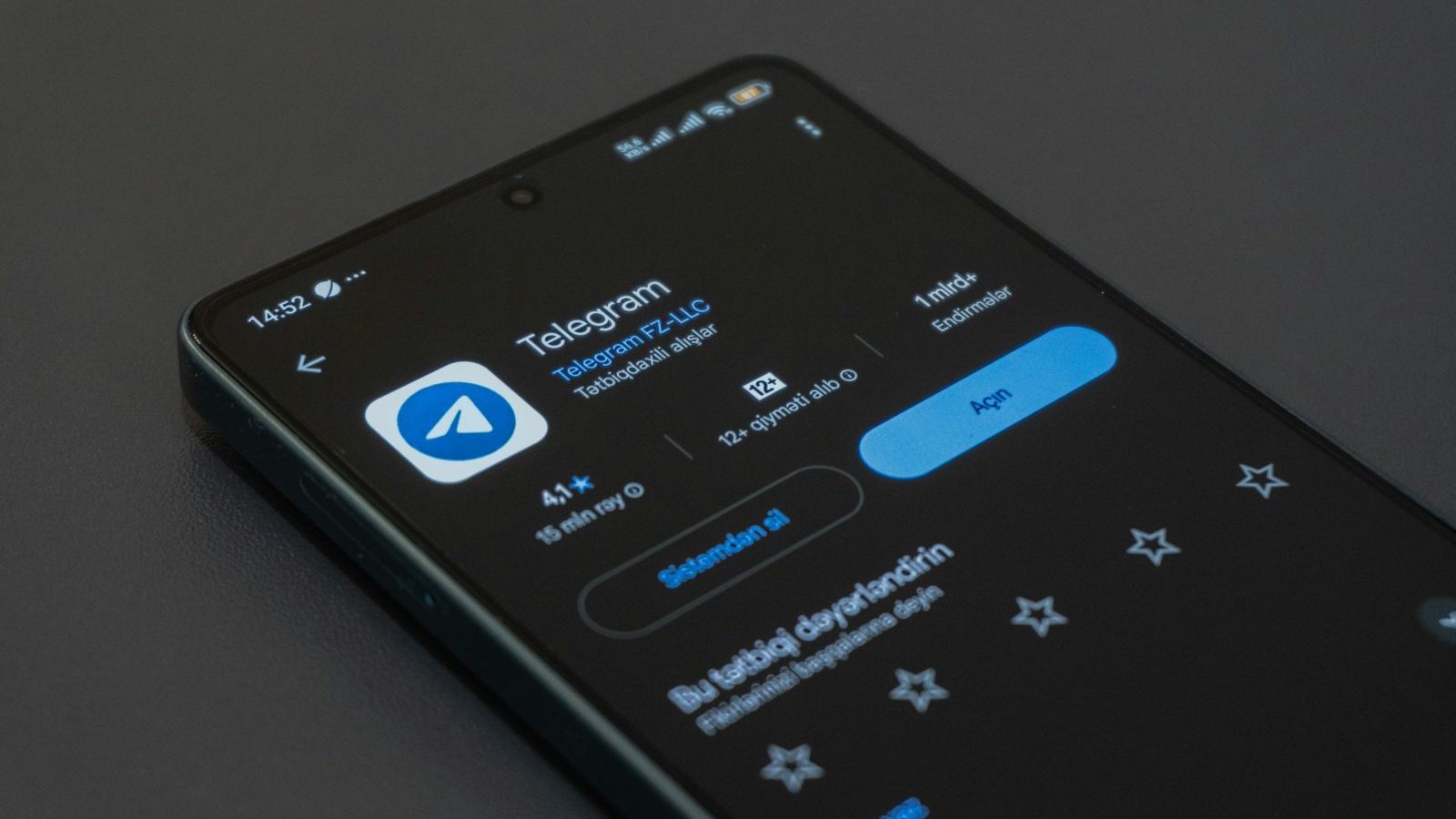
Upholding the Centre’s order directing temporary blocking of message application Telegram until June 22, ahead of the NEET-UG 2026 re-examination this Sunday, the Delhi High Court said Friday that the government is “empowered” to issue emergency blocking directions to not only individual users, but also platforms or applications like Telegram.
Dismissing Telegram’s plea challenging the June 16 blocking order, Justice Tejas Karia held the government action to be proportionate and the “least restrictive measure” for achieving the objective of potential misuse of the platform ahead of the NEET-UG retest on June 21, and preventing potential public order implications.
“The temporary blocking of Telegram under the Orders is operative only until 22.06.2026, while the disabling of the message-editing feature is confined to the period until 30.06.2026. The limited temporal scope of these measures demonstrates that they are narrowly tailored and confined to the period strictly necessary for securing the stated objective,” Justice Karia said.
The High Court also took into consideration the Ministry of Electronics and Information Technology’s June 16 and June 18 orders that entity-specific actions, including reporting and removal of channels, groups, bots and accounts were “repeatedly found to be ineffective and inadequate”.
Weighing the blocking action through the lens of whether the objective to prevent misuse of the platform outweighed the ability of 150 million users in India to access the platform for lawful purposes, Justice Karia held it to be a proportionate measure, taking into account the platform’s unique architecture, which made it susceptible to platforming widespread dissemination of misinformation.
The temporary blocking order, issued by MeitY on June 16, and also confirmed by a review committee on June 18, was in exercise of the government’s powers under the Information Technology (IT) Act section 69A and its associated Rules.
IT Act Section 69A empowers the government to block access to “information” through any “computer resource” as an emergency measure, say if sovereignty and integrity of a country is threatened.
Story continues below this ad
While Telegram had argued that such power can be exercised only with respect to “specific information” and cannot be construed to imply “a blanket restriction on an entire intermediary platform”, the High Court disagreed.
Justice Karia said the legislative intent was that “the expression “information” is required to be construed expansively”, and thus “there is no reason to exclude an application or platform from the ambit of the said expression”.
“An application or platform, in its ordinary and commonly understood sense, is a computer programme or software designed to perform specified functions for an end user. In view of the express inclusion of “codes”, “computer programmes” and “software” within the definition of “information” under Section 2(1)(v) of the IT Act, there is no reason to exclude an application or platform from the ambit of the said expression,” he said.
Also read | Changes recommended in JEE Advanced
Also relying on the definitions of “computer resource” and “computer” under the Act, he held that the same makes “it evident that information generated, transmitted, received, stored, or hosted through such software-based infrastructure falls within the ambit of Section 69A of the IT Act.”
Story continues below this ad
“An application or platform performs logical, arithmetic and memory functions through electronic, magnetic or optical impulses, and includes input, output, processing, storage, computer software and communication facilities connected with a computer system or computer network. Accordingly, this Court is of the view that (the government) was empowered under Section 69A of the IT Act to issue directions for blocking public access to Telegram,” the High Court ruled.
Read | Telegram ban not foolproof against VPNs, but curbs NEET fraud market: NTA chief
It declined to interfere with the MeitY’s temporary blocking order on the ground that there was application of mind while taking the decision, even though Telegram had asserted otherwise, and due process was followed.
The High Court noted that the temporary blocking order disclosed reasons why it was taking this measure: to prevent “potential grave implications for public order in the country and for preventing the commission of cognisable offences arising from circulation of examination-related misinformation and purported examination papers on Telegram, particularly in light of prior incidents relating to NEET-UG 2026.”
















 English (US) ·
  French (CA) ·
  French (FR) ·