

 2 hours ago
2
2 hours ago
2
PROTECT YOURSELF with Orgo-Life® QUANTUM TECHNOLOGY
Orgo-Life the new way to the future Advertising by AdpathwayJune 17, 5.50 am: “Irfan, Islamic naya saal shuru hua hai. Moharram ka mahina”
May 22, 6.37 am: “Irfan, aaj barish ho rahi hai. Is saal garmi ke baad ki pahli baarish… maine video nahin nikali… tujhe bhejti thi
May 3, 6.14 am: “Janam din mubarak ho Irfan, or aaj hi Bhaijaan ka nikah bhi hai. Dua karna sab thik ho. Ameen”
May 3, 8.08 pm: “Abhi hum raaste mein hain. Inshaallah 10-11 baje tak pahuchenge. Bhaijaan Scorpio chala raha hai, dulha bana hai or khud ki gaadi chala raha hai”
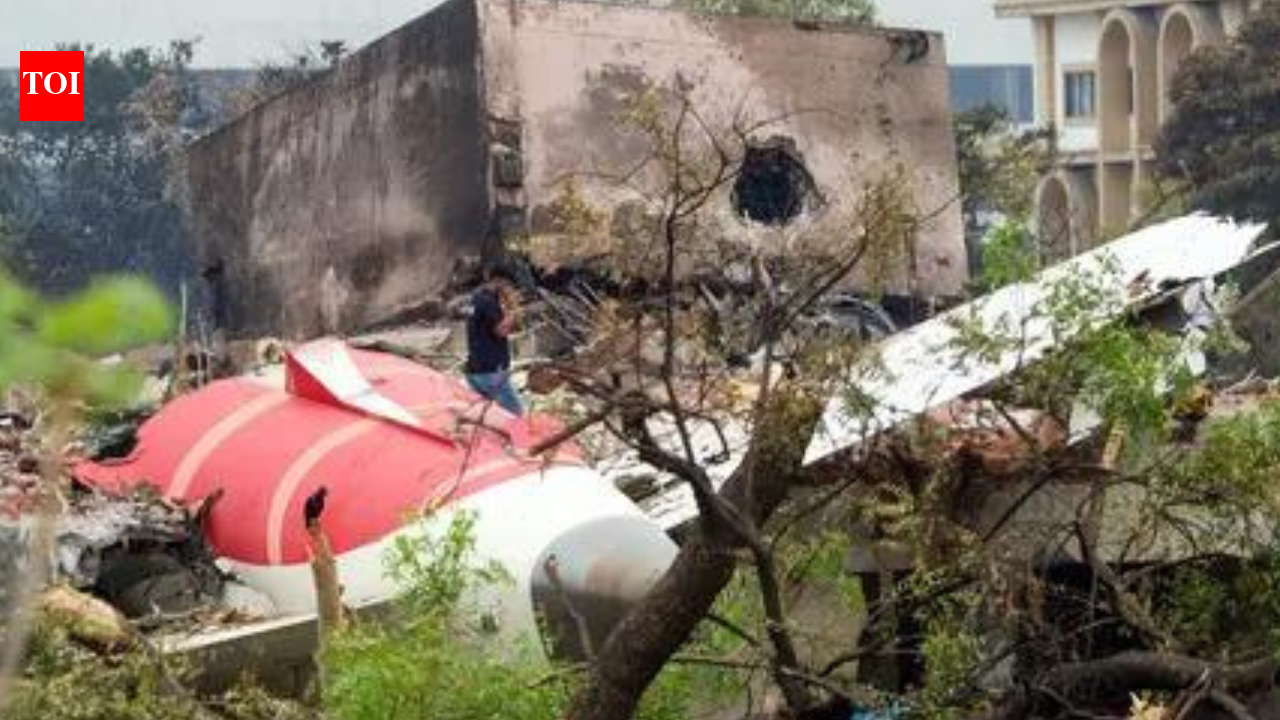
On June 12, 2025, 22-year-old Irfan Shaikh, an attendant on AI-171, was killed when the Air India Boeing 787 Dreamliner crashed in Ahmedabad, seconds after take-off. Every few days, sometimes several times a day, Taslim Samir Shaikh sends a text to his phone number, kept activated by the family – and updates him on what’s happening with their lives.
Taslim tells him about the first rain post-summer, the start of Moharram, and his elder brother’s wedding. They chose his birthday for it, she reminds Irfan, as she wishes him, so that they have something to celebrate that day.
It’s something Irfan would like, believes Taslim. Not a day passed when her younger son, who moved to Mumbai after getting a job at the age of 19, did not speak to his family, says the 46-year-old.
Story continues below this ad
Having done a course at Frankfinn Institute in Pune, Irfan had joined Air Vistara as cabin crew, and after Air Vistara merged with Air India, was flying to international destinations like Mauritius.
Every time he flew, Irfan would follow a routine. He would call or message when he left for his flight, then when he reached the airport, again when he had boarded, soon after landing, and finally drop a line or connect with Taslim after he reached the hotel where he was staying.
On June 12, 2025, too, Irfan called. In the taxi taking the cabin crew to the Ahmedabad airport for the Gatwick London-bound flight, he made a two-minute video call to Taslim. The time was 10.07 am, three-and-a-half hours before the crash.
The moment they heard of the accident, the family rushed to Ahmedabad by plane, trying Irfan’s phone every few minutes. It kept ringing till the evening, they say, but no one answered. “We thought Irfan may be busy. As a flight attendant, it was his duty to help rescue passengers…,” says father Samir Noormohammed Shaikh, 50.
Story continues below this ad
By the time they got to Civil Hospital, Ahmedabad, hopes of any survivors had been quashed. There was eventually only one, a passenger, Vishwas Kumar.
The Shaikhs spent nine days more in Ahmedabad before they could take Irfan’s body home. Sitting in the living room of the family’s two-room flat in Sant Tukaram Nagar in Pimpri Chinchwad, Samir talks of an endless wait, made worse by “insensitive” officials and politicians “vying for photo-ops”. Every time it happened, the rescue operations were halted, he says, as Irfan’s grandmother Shanubi Noormohammad Shaikh, 73, and Taslim break down.
Irfan’s elder brother Amir brings down a small plastic box from a shelf, holding Irfan’s uniform, a stained white shirt, a waistcoat, trousers, socks and underwear, all torn. “This is the last uniform that Irfan wore,” Amir says.
Every time they see the clothes, the same questions dog him, says Samir. “If Irfan’s body was completely charred (as the authorities said), how is it that his clothes didn’t get burnt?”
Story continues below this ad
The family also asks why it took nine days for the body to be released to them. “Why didn’t they conduct a DNA test and release the body immediately?” Samir says, adding that there was only one male Muslim flight attendant and hence identification could have been easy.
Praful Pansheriya, Minister of State with Independent Charge for Health, Family Welfare and Medical Education with the Gujarat government, says the authorities did everything possible to ease the pain of the families. For days following the crash, “forensic doctors did not eat, sleep, take a break”, he says. “Bhayanak sthiti thi (It was horrible), and they kept working to match DNA.”
Samir says he even contemplated going back to the Ahmedabad crash site later. What if his son had got injured in the head, lost his bearings, and was roaming around in the fields, he thought. The family persuaded the 50-year-old against it.
Now, they are striving to get Irfan’s phone back. Authorities retained electronic devices found at the crash site as part of investigations. Earlier this year, Air India released 25 of these, including tablets and phones. Samir says Irfan’s phone was not among the 5,000-odd personal effects Air India shared on its website for family members to identify and claim.
Story continues below this ad
On February 19, he sent an email to Air India with photographs of the purchase bill of Irfan’s phone and its IMEI details. They got a response from AI Personal Effects saying their request was being reviewed and they would hear back “as soon as possible”.
An Air India spokesperson told The Indian Express, “All recovered digital devices underwent mandatory screening… The (pending) cases largely relate to instances where documentation is incomplete or where families have chosen not to receive the items. We continue to work in close coordination… to bring closure to all pending cases, wherever possible.”
Pointing out that the crash investigation report is also pending, Samir says: “The country must improve its disaster-management protocol. Relatives should be handed the body as soon as possible. Politicians and other outsiders should not be allowed to contaminate the site.”
Irfan’s phone is an invaluable repository for them of his memories, the photos and videos he had, the music he loved. This is why they have kept his number active too, as well as installed a duplicate SIM in another phone. It only receives incoming calls, and sometimes Irfan’s friends ring the number and they talk.
Story continues below this ad
Getting Irfan’s phone would also be a closure the family feels it was denied, as they were advised not to open the coffin in which Irfan’s remains came home due to all the chemicals used to preserve his body. Police personnel escorted the coffin till the burial to ensure the family didn’t act impulsively.
Sobs Shanubi, 73: “We could not give our child a ritual bath or see his face.”
The messages are to tell Irfan that he is not forgotten. Every Friday, the family also visits the 22-year-old’s grave carrying his favourite attars (perfumes). Recently, they found a hand-written note there, by a friend of Irfan’s telling him he had bought a bike. “I hope in some other universe, I can give you a ride,” wrote the friend.
Hope after all can’t be crushed, Taslim says. Despite all that she knows, “when I don’t get a reply to my messages to Irfan’s number, I get upset”, she says. “But, if I don’t talk to my son, how will I live?”










 English (US) ·
  French (CA) ·
  French (FR) ·