

 13 hours ago
2
13 hours ago
2
PROTECT YOURSELF with Orgo-Life® QUANTUM TECHNOLOGY
Orgo-Life the new way to the future Advertising by AdpathwayHumans love to have their adrenaline levels spiked as a means of entertainment. The market for global horror films confirms this, with an estimated growth of $224.5 billion by 2035, representing a projected CAGR of 7.2%.
Even in horror, there are numerous sub-genres to enjoy, of which body horror seems to be capturing the limelight. One may flee from monsters in the dark, but how to escape the horrors of your own flesh and blood? Nothing is too extreme, be it mutation, infection, or an invasive alteration.
While the body is a part of an individual’s identity, the idea of blurring those perfectly recognizable boundaries can seem compelling. What’s truly fascinating is the way cinema uses this sub-genre to challenge the integrity of the human form.
So, a grotesque mutation may purely exist to provoke shock and disgust in one film, whereas the same may be a means to explore aging, identity, or beauty in another. Are you ready for a deeper look into one of cinema’s most visceral forms of horror? Then, keep reading this article.
The Place Bodily Integrity Holds in Body Horror Cinema
What would your first reaction be if you were to wake up one day and see your body changed in ways you never imagined, or would never consent to? Even if it all started as barely noticeable, there will come a time when you won’t feel like yourself anymore. Perhaps your reflection in the mirror will get unfamiliar, or your movements will feel strange.
By and by, your body may feel like something separate from you. When that anchor for the self is removed, what is left? The appeal of horror itself may explain why audiences are willing to confront that question. Emory University shared the interesting take of psychologist Kenneth Carter. He stated, “What horror lets you do is practice being afraid in a place where you know you’re safe.”
Body horror makes the controlled encounter particularly intimate because its source of fear is not necessarily an external creature or supernatural force. Plus, the human body, more than a fleshly tent for the soul, is the physical medium for experiencing ourselves and the world.
Bodily integrity is not about a perfect, youthful, or unchanging body. Essentially, the physical self must remain the following:
-
Recognizable, so one can still identify themselves in their appearance and physical presence
-
Bounded in the sense that a discernible distinction exists between one’s body and what surrounds it
-
Continuous, which means retaining a sense of being the same person despite ordinary changes
-
Autonomous, so the physical self is not controlled or altered by something beyond the individual’s will
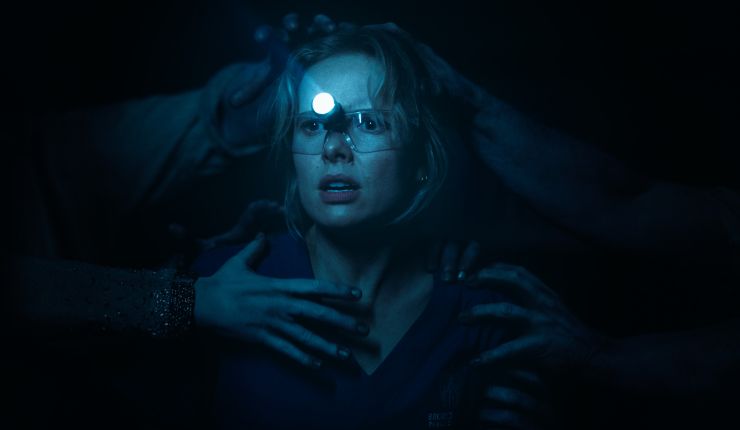
Body horror can (and often does) place these assumptions under pressure, which makes it precisely disturbing. On that note, David Cronenberg’s The Fly (1986) offers a striking example of an involuntary, gradual alteration into a fly after a science experiment goes wrong.
On the other end of the spectrum was The Substance (2024), where the transformation to one’s younger self was sought deliberately, only for it to become disastrous. Especially with the latter film, the motivation behind the choice to alter the body was relevant regarding the integrity of the human form.
The desire was rooted in fears about aging and social relevance. Speaking to IndieWire about the origins of the film, writer-director Coralie Fargeat recalled, “I had this huge wave of: ‘My life is going to be over. I’m not going to be interesting anymore. No one is going to look at me anymore.”
A part of bodily integrity also has to do with autonomy, which was questioned by the film. If a person chooses to change their body, is that choice entirely independent or driven by external fears and expectations?
Unlike the simplicity of Brundle in The Fly, whose transformation was imposed on him, The Substance reveals the complexity of the human psyche. Hence, body horror challenges bodily integrity not only when things are out of control, but also when control is uncalculated.
Disrupting the Boundaries of the Human Form Onscreen
As much as body horror cinema is about what’s grotesque and fearsome, it’s equally about fascination. Directors, cinematographers, and makeup artists take great delight in smudging the lines of what’s acceptable and what’s not. Sometimes the flesh may merge with technology. Other times, a threat enters the body and produces consequences that no one imagined.
At the 97th Academy Awards in 2025, The Substance won Makeup and Hairstyling, with Pierre-Olivier Persin, Stephanie Guillon, and Marilyne Scarcselli receiving the award. The film was also nominated for Best Picture, Directing, Actress in a Leading Role, and Original Screenplay.
That recognition makes it clear that so much revolves around an altered body, especially the storytelling and artistic language. The sub-genre can disrupt the human form in the following ways:
-
Invasion, with something foreign entering or taking over the body
-
Mutation, with the body developing characteristics that were never supposed to be there
-
Fusion, with human flesh merging with another organism or technology
-
Fragmentation, with the body being divided, distorted, or physically altered
-
Intervention, with the body being manipulated through scientific or technological attempts
Consider John Carpenter’s The Thing (1982), which still stands as a breathtaking exploration of invasion. On the other hand, David Cronenberg’s Videodrome (1983) focused on blurring the boundary between flesh and technology. Screens, signals, and physical bodies all start reacting in disturbing ways until the body itself becomes an interface (scary, indeed!).
On that note, it’s worth remembering that body horror can also turn scientific or medical intervention into a source of uncertainty. While this isn’t to suggest that medicine or technology are inherently dangerous, the desire to modify the body in both can have unpredictable consequences.
That distinction is important because real-world interventions involve a lot more complexity than their fictional counterparts. Questions about treatments, adverse effects, and alleged injuries can become matters of medical evidence and causation. For instance, the Dupixent lawsuit belongs to that real-world legal context rather than the fictional logic of body horror.
TorHoerman Law notes that the litigation involves allegations from plaintiffs claiming that the medication contributed to cutaneous T-cell lymphoma. The relevance here is not of the lawsuit itself, but the question it places around the human body:
What happens when something introduced to treat one part of the body is alleged to produce consequences elsewhere?
It may not be as fantastical as the transformations of The Fly or Videodrome, but then, cinema has its way of exaggerating a concern into nightmare territory, right?
Where Body Horror Cinema Draws the Line
The human body becoming the most unsettling frontier in the media? Perhaps even that’s acceptable, but filmmakers still need to draw a line before it simply becomes… a lot. Now, the answer to that depends on the viewer.
A 2025 YouGov survey of 1,123 US adults found that 30% said they loved or liked body horror movies. 56% said they disliked or hated them, with another 13% being unsure. It looks like the sub-genre is a sword dividing audiences. What seems like daring filmmaking to one viewer, another may find gratuitous, repulsive, or simply exhausting.
Vulture published a feature on the 25 gnarliest body horror movies in 2024. What’s interesting is that not all films that got featured are frightening just because they feature bloody or grotesque bodies. It boiled down to which ones were able to turn what’s generally familiar into something so strange that viewers can’t help but witness in shock.
That brings us back to the question of where the line is drawn. A body-horror sequence can serve several purposes, as follows:
-
Shock, often produced through gore, distortion, or transformation
-
Characterization, which allows physical change to reveal in a character’s face or psychological state
-
Metaphor, by giving visible form to anxieties surrounding aging, illness, identity, or sexuality
-
Social commentary, where the physical discomfort is used to examine beauty, conformity, and vulnerability
If two or more of these elements are present, then even the grotesque can become more than a visual spectacle. In some cases, disgust takes center stage, and there is nothing wrong with that. However, it can never be the sole aim of a film.
At the heart of it, responses like “that was gross” should open into questions about identity, mortality, or control. Hence, a balance is more desirable than relentless escalation. Subtle changes to the skin, limbs, or gradual progression of a complete metamorphosis drive the message home. After all, the monster does not need to show all its teeth to cause a stir, right?
FAQs
What makes body horror different from other horror sub-genres?
Body horror places the human body at the center of fear rather than relying primarily on an external monster or supernatural threat. Mutation, invasion, infection, or fragmentation can make familiar flesh feel strange. It challenges assumptions about identity, autonomy, and what it means to remain recognizably human.
Why do filmmakers use bodily transformation to explore deeper themes?
Bodily transformation can turn abstract anxieties into something audiences can actually see. Aging, beauty, identity, and social expectations can all become physical experiences onscreen. Therefore, the grotesque serves as more than a shock; it can become a metaphor for psychological conflict, cultural pressure, and changing perceptions of the self.
When does body horror become more than graphic or shocking imagery?
Body horror becomes more substantial when its disturbing imagery serves a larger purpose. Transformation can reveal character, explore identity, question autonomy, or provoke reflection on mortality and vulnerability. Graphic effects may create the initial reaction, but the strongest examples leave audiences with something to contemplate.
Important Data and Stats At a Glance
|
Global horror films market projected growth |
Expected to become $224.5 billion by 2035, at a CAGR of 7.2% |
|
97th Academy Awards in 2025 |
The Substance won Makeup and Hairstyling, with Pierre-Olivier Persin, Stephanie Guillon, and Marilyne Scarselli receiving the award |
|
2025 YouGov survey of 1,123 US adults |
|
|
2025 worldwide survey of 68,000 people across 15 markets |
|
Perhaps the greatest trick body horror cinema has pulled is making something familiar feel unsafe. A 2025 worldwide survey of 68,000 people across 15 markets found that 24% wanted to see more horror movies in theaters. The figures rose to 40% among those under 24 and 36% among 25- to 34-year-olds.
However, the endurance power of this sub-genre lies in making aging, beauty, and illness the focal point despite the monstrous appearance. Perhaps there is no universal line. At the end of the day, the question remains: Is it possible to truly escape body horror, or would the only way out be detachment from one’s own self?

Discover more from
Subscribe to get the latest posts sent to your email.

Paul
Administrator
The founder of The People's Movies, started the site 20th November 2008.The site has excelled past all expectations with many only giving the site months and it's still going strong. A lover of French Thrillers, Post Apocalyptic films, Asian cinema. 2009 started Cinehouse to start his 'cinema education' learning their is life outside mainstream cinema. Outside of film, love to travel with Sorrento, Guangzhou and Manchester all favourite destinations.Musically loves David Bowie, Fishbone, Radiohead.
















 English (US) ·
  French (CA) ·
  French (FR) ·