

 6 hours ago
7
6 hours ago
7
PROTECT YOURSELF with Orgo-Life® QUANTUM TECHNOLOGY
Orgo-Life the new way to the future Advertising by AdpathwayMOROCCO · BUSINESS
Key Facts
—The cargo: About 54,000 tonnes of triple superphosphate arrived at the Port of New Orleans, OCP North America said on 17 August. It is the first Moroccan phosphate fertilizer shipment to the United States in roughly five years.
—Why it could sail: Proclamation 11038, signed on 29 June 2026 under section 318(a) of the Tariff Act of 1930, declared an emergency and authorised temporary duty-free entry. The implementing notice from the Commerce Department took effect on 8 July.
—Temporary by design: The window runs for up to eight months, or until the emergency is terminated. Approved shipments must enter within 60 days of authorisation or revert to the standard duty.
—The order still stands: The countervailing duty order dates from April 2021, following a petition by the Mosaic Company. Commerce preliminarily found on 24 July 2026 that revoking the order would likely lead to continued or recurring subsidisation, at a rate of 20.04 percent. That is what it estimates would prevail without the order, not a duty being charged now. The trade commission’s parallel injury review is still open.
—The rate history: OCP’s original rate was 19.97 percent. Amended results published on 12 January 2026, after litigation at the Court of International Trade, trimmed it to 2.11 percent for the 2020–21 review period.
—Who OCP is: The group is 94.12 percent owned by the Moroccan state, with Banque Centrale Populaire holding the balance, on the group’s own disclosures. Revenue rose 17.5 percent in 2025 to about US$11.4 billion, while net profit fell 13 percent.
—The reserve base: Morocco holds roughly 50 billion tonnes of phosphate rock reserves, about 68 percent of the world total. Those figures conventionally include deposits in Western Sahara, a territory whose status remains disputed.
—The squeeze: China restricted phosphate fertilizer exports from mid-March 2026, covering DAP, MAP and certain NPKs, and has extended the curbs at least through August.
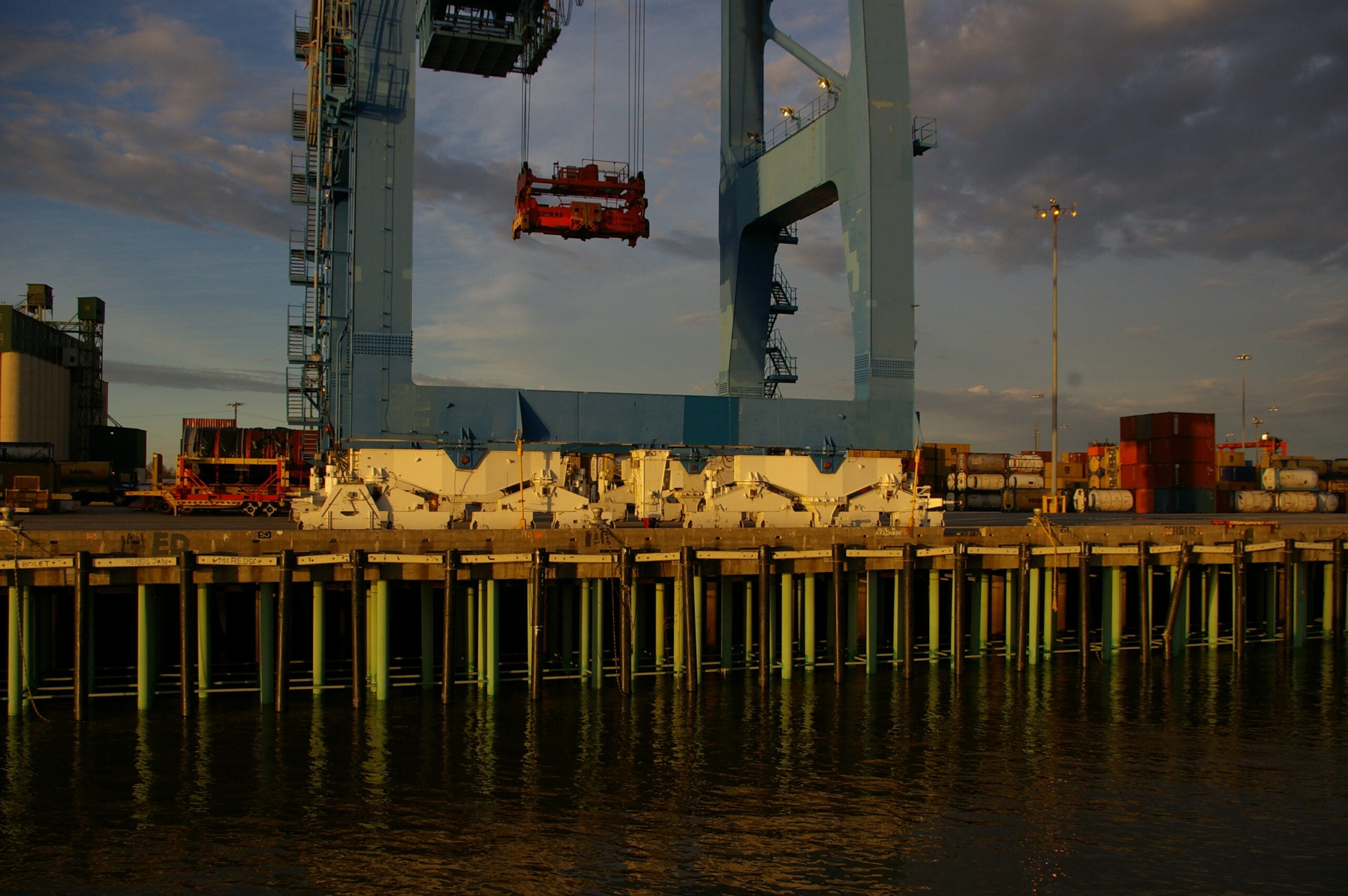
Moroccan phosphate fertilizer has entered the United States for the first time in roughly five years, after a cargo of about 54,000 tonnes docked at the Port of New Orleans. It sailed through a temporary emergency window, not a repealed tariff.
One-stop reference
Company Intelligence
Every listed company in Latin America — financials, ownership and structure for 1,450+ companies across 26 exchanges, in one place.
How Moroccan phosphate got back into a closed market
The mechanism matters more than the cargo. On 29 June the US president signed Proclamation 11038 under section 318(a) of the Tariff Act of 1930, a rarely used emergency provision that allows duty-free importation of specified goods.
Commerce’s implementing notice took effect on 8 July, letting importers apply for duty-free entry shipment by shipment.
This is not a repeal. The countervailing duty order on Moroccan phosphate fertilizer, in force since April 2021, is untouched.
What changed is that individual cargoes can now be waved past it for a limited period, up to eight months or until the emergency is declared over. Approved shipments have 60 days to arrive.
The trigger, on trade-press reporting, was supply rather than diplomacy. Mosaic, the American producer whose 2020 petition brought the duties in the first place, has been curtailing output in Florida, Louisiana and Brazil because of a sulphur supply squeeze that Mosaic’s chief executive attributed to the closure of the Strait of Hormuz and a blockade in Kazakhstan.
A five-year absence, and what it cost
The duties arrived in April 2021 with an original rate for OCP of 19.97 percent, high enough to price Moroccan product out of the American market almost entirely.
The rate then moved. After litigation at the Court of International Trade, Commerce published amended results on 12 January 2026 setting OCP’s rate for the 2020–21 review period at 2.11 percent.
American farm groups have put a number on the intervening years. A Texas A&M study commissioned by Representative Pat Fallon estimated the duties added about US$6.9 billion to US phosphorus fertilizer costs from the 2021 through the 2025 growing seasons, US$3 billion of it in corn alone.
That is the political economy behind a single vessel. A trade remedy designed to protect one domestic producer became, over five years, an input cost carried by the people buying fertilizer.
The order is not gone, and it may come back higher
Anyone reading this as the end of the dispute should look at the calendar. On 24 July 2026, three weeks after the emergency window opened, Commerce published preliminary results of its statutory sunset review.
Its preliminary finding was that revoking the order would be likely to lead to the continuation or recurrence of a countervailable subsidy, at a rate it put at 20.04 percent for OCP and all others. That is the rate Commerce estimates would prevail if the order went away, not a new duty. It is marginally higher than the original 2021 rate. The International Trade Commission’s own five-year injury review, which it decided in June to conduct in full, has not reported.
So two arms of the same government are, for now, pointing in opposite directions. One has opened a temporary door; the other is preparing to keep the wall standing behind it.
For a buyer, that argues for treating the window as a supply opportunity with an expiry date rather than a structural change in the market.
What Morocco actually controls
The reason any of this is globally significant is concentration. Morocco holds about 50 billion tonnes of phosphate rock reserves, roughly 68 percent of the world total, on the latest US Geological Survey figures.
That is reserves, meaning economically extractable at current prices and technology, rather than the larger and vaguer category of resources. The distinction is often blurred in the trade press.
One caveat belongs in any honest account. The conventional statistics for Morocco include the Bou Craa deposits in Western Sahara, a non-self-governing territory whose status is contested.
OCP itself is a state instrument as much as a company, 94.12 percent owned by the Moroccan government. Its 2025 revenue rose 17.5 percent to about US$11.4 billion, though net profit fell 13 percent on a higher tax charge.
Why one cargo matters beyond one cargo
Phosphate is one of the few inputs in modern agriculture with no substitute. There is no synthetic route to it and no recycling stream at scale, which is why supply concentration in a single country reads as a strategic question rather than a commercial one.
The current squeeze makes the point. China began restricting phosphate fertilizer exports in March 2026 and added licensing requirements from June, removing a major swing supplier from the market.
US net import reliance for phosphorus has climbed from 1.7 percent in 2000 to 13.3 percent in 2024, on figures compiled from USGS data by the University of Illinois. A country that was close to self-sufficient is now a buyer.
For readers in Latin America the parallel is direct rather than academic. Brazil imports the large majority of its fertilizer, and the same concentration that put an American emergency proclamation in the Federal Register is the one that sits behind every soy harvest in Mato Grosso.
Frequently Asked Questions
Has the US removed its tariff on Moroccan phosphate?
No. The countervailing duty order from April 2021 remains in force, and a preliminary sunset review published on 24 July 2026 found that revoking it would likely lead to continued subsidisation, at an estimated 20.04 percent. That is the rate Commerce says would prevail without the order, not a duty now being charged.
Why was this shipment allowed in?
Proclamation 11038, signed on 29 June 2026 under section 318(a) of the Tariff Act of 1930, authorised temporary duty-free importation of Moroccan phosphate fertilizer. The window runs for up to eight months or until the emergency is terminated.
How much phosphate does Morocco hold?
Morocco holds about 50 billion tonnes of phosphate rock reserves, roughly 68 percent of the world total on US Geological Survey figures. Those statistics conventionally include deposits in Western Sahara.
Who owns OCP Group?
OCP Group is 94.12 percent owned by the government of Morocco, according to the US Geological Survey. Its 2025 revenue rose 17.5 percent to about US$11.4 billion while net profit fell 13 percent.
This article was produced by The Rio Times’ automated newsroom system. How we use AI · Report an error
The Rio Times · Power Map
See who really holds power in Latin America
Click to open the Power Map →

















 English (US) ·
  French (CA) ·
  French (FR) ·