

 2 months ago
99
2 months ago
99
PROTECT YOURSELF with Orgo-Life® QUANTUM TECHNOLOGY
Orgo-Life the new way to the future Advertising by AdpathwayLast night, I was playing TFT like I have done so many times over the last seven years. Nothing dramatic. Just another game, another board, another attempt to stabilize, another moment of trying to forget the stress of real life for a while.
You can open Table of Contents show
Then I saw that: Mortdog left Riot Games and Teamfight Tactics.
I do not think I fully processed it at first. I just stared at it. It felt unreal in that very specific way gaming news sometimes does when it is not just “news” to you. It is not like reading that some developer left a company. It is not like seeing a balance patch, a system change, or a new set mechanic getting revealed.
This one hit differently.
It shocked me. It broke me a little. Honestly, it felt like a small part of me died.
Why Mortdog Leaving Riot Games Hit Me So Hard
That may sound dramatic to someone who does not understand what TFT has meant to me. But I have been playing this game from the start. TFT has been my stress buster, my escape, my comfort game, and one of the few things I could return to when life felt too heavy.
Coincidentally, these last seven years were also some of the toughest years of my life. Through all of that, TFT was there. And more than that, Mortdog was there.
To me, Mortdog was not just a developer attached to TFT.
To me, Mortdog was TFT.
That is why this news hurts so much. When you follow a game for years, you do not only remember the sets, the champions, the augments, or the comps. You remember the voice that explained why things changed. You remember the person who made the game feel less like a product and more like an ongoing conversation.
For TFT, that person was Mortdog.
The Announcement That Changed Everything
Mortdog announced his X profile @Mortdog departure through a long post on X, and the response showed exactly how much he meant to the TFT community. The screenshot alone says a lot. The post had already crossed 2.9 million views, with thousands of replies, reposts, likes, and bookmarks. For a game developer’s farewell post, that kind of reaction is not normal. It is the kind of response you see when someone has become more than an employee behind a game.
What stood out even more was the tone of the replies. This was not a comment section filled with anger, drama, or cheap shots. It was mostly wholesome support, gratitude, memories, and respect from players, creators, and Riot colleagues who clearly understood what TFT was losing. People were not just reacting to a job change. They were saying goodbye to a person who had been part of their daily relationship with the game.
That is what made the announcement hurt even more. Mortdog’s post did not feel like a corporate exit note. It felt like a community goodbye letter. He thanked the people he worked with, the fans who supported TFT, and everyone who let him bring some fun into their world. And judging by the response, he did exactly that for a lot more people than he probably realized.
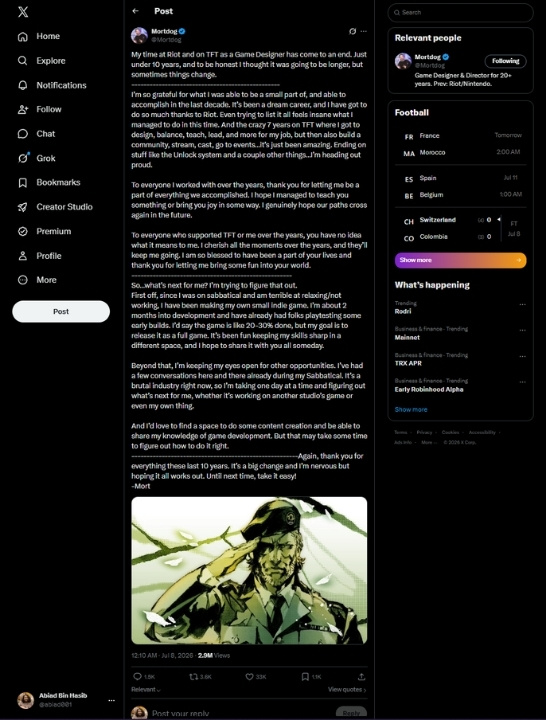
“Mortdog Left Riot Games and TFT” is one of the worst things to happen in 2026. Mortdog’s statement was simple, but the words were heavy. He said his time at Riot and TFT as a game designer had come to an end after just under 10 years. He also said he thought it was going to be longer, but sometimes things change.
That one line says so much and still explains almost nothing.
It leaves you sitting there with questions, but no real answers. Was it his decision? Was it Riot’s decision? Was there disagreement? Was it something behind the scenes? Nobody outside the situation really knows, and I do not want to pretend I know.
Necrit made a similar point in his video about Mortdog. He said it is useless to try to figure out the full truth because anything is possible from the outside. Frodan also reacted to the wording as vague and sudden, especially because Mortdog did not seem to have a clear next job lined up.
That is part of what makes it feel so strange. If someone leaves a game to take a big new role somewhere else, it still hurts, but at least the story has a shape. This does not feel like that.
Mortdog had been on sabbatical. He had already stepped back from parts of the public-facing TFT routine. Then suddenly, the break became an ending.
And for fans like me, that ending does not feel clean. It feels like someone removed one of the main reasons the game felt alive.
Mortdog Was Never Just the TFT Guy
For many newer players, Mortdog may feel inseparable from TFT. Honestly, I understand that completely because that is how I see him too. But one thing Necrit pointed out in his video is that Mortdog’s Riot story did not begin with TFT.
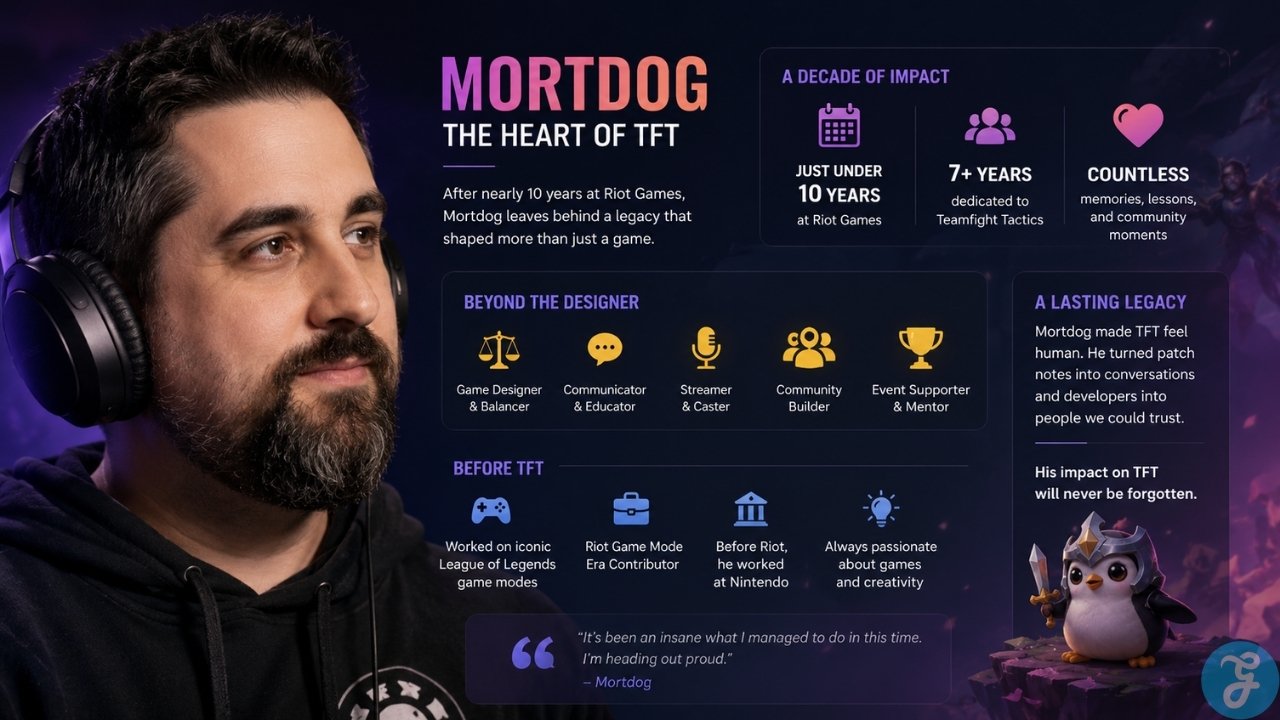
Before he became the face most players associate with Teamfight Tactics, Mortdog worked on several memorable League of Legends game-mode projects. Necrit talked about the old Riot game-mode era and how players got modes like Ascension, Doom Bots, Hexakill, One for All, Nexus Siege, Porro King, Invasion, Odyssey, Butcher’s Bridge, and Nexus Blitz.
Mortdog was connected to that larger creative era. Necrit specifically mentioned Odyssey, Butcher’s Bridge, and Nexus Blitz as part of Mortdog’s history before TFT fully became his identity.
That matters because it shows something bigger about him. Mortdog was not just someone who maintained a game after it became popular. He was part of the kind of experimental Riot work that made players excited to log in and try something different.
And before Riot, Necrit also mentioned that Mortdog had worked at Nintendo. That detail almost feels fitting. Even before TFT, he had already been around games and systems that shaped how players think about fun, clarity, and design.
So yes, Mortdog became the TFT guy. But his career history shows he was always more than one title, one set, or one game.
His Contributions at Riot Went Beyond Balance Changes
When people talk about Mortdog, it is easy to reduce his work to patch notes and balance changes. That would be a mistake.
His Riot career included game design, balancing, teaching, leading, streaming, casting, attending events, supporting creators, and building a community around TFT. In his own farewell message, he mentioned how much he got to do over the last decade, especially during the seven years he spent on Teamfight Tactics.
That is the part that makes his contribution so difficult to measure. You cannot simply list a few mechanics and say, “That was his impact.” His real contribution was bigger than that.
He helped make TFT feel like a living game.
He explained why things were changing. He helped players understand why something was buffed, nerfed, removed, adjusted, or reworked. He gave context to decisions that would have felt cold and frustrating if they only appeared in patch notes.
Frodan also brought up how Mortdog supported the competitive scene and community events. According to Frodan, Mortdog hosted tournaments out of his own pocket, including a $5,000 4v4 tournament years ago, long before that type of format became more common.
He casted. He supported creators. He showed up to co-streams. He helped people in the scene grow.
That is not normal developer behavior.
That is someone treating a game like a community, not just a product.
Mortdog Was Never Just Another Developer
Mortdog’s impact on TFT was not only about design. Of course, he helped design, balance, teach, lead, and shape the game. He was there through so much of TFT’s life that it is hard to separate the game’s identity from his voice.
But what made him different was not just what he did behind the scenes.
It was what he did in front of everyone.
He talked to us.
That sounds simple, but it is not. In live-service games, developers usually hide behind patch notes, official posts, and carefully polished communication. Mortdog did the opposite. He put himself on the front line.
He answered feedback. He explained balance decisions. He played his own game. He pushed ladder. He streamed. He made patch rundown videos. He showed up when people were angry, confused, or tired of a meta.
And yes, sometimes the community was brutal.
That is why his presence mattered so much. It was not only about transparency. It was about emotional access. TFT players did not feel like they were shouting into a wall all the time. They felt like someone on the other side actually heard them, even when he disagreed.
The Man Who Became the Face of TFT
Necrit described this well. When a developer becomes the spokesperson for a dev team, they also become the target. If something goes wrong, players do not blame a faceless system. They blame the person they can see.
For TFT, that person was often Mortdog.
That is where the whole “Mortdogged” meme came from. He became the face of everything good, bad, funny, frustrating, and chaotic about the game.
That kind of visibility is not easy. It takes a toll. It would take a toll on anyone. If you create something and thousands of people criticize it, mock it, attack it, or misread it every day, that does something to you.
But Mortdog kept showing up for years.
And that is why I respected him so much.
He was not some invisible name in patch credits. He was the person explaining the game, defending decisions, admitting mistakes, and trying to make players understand why TFT worked the way it did.
That kind of direct connection is rare in modern gaming.
Mortdog Made Patch Notes Exciting
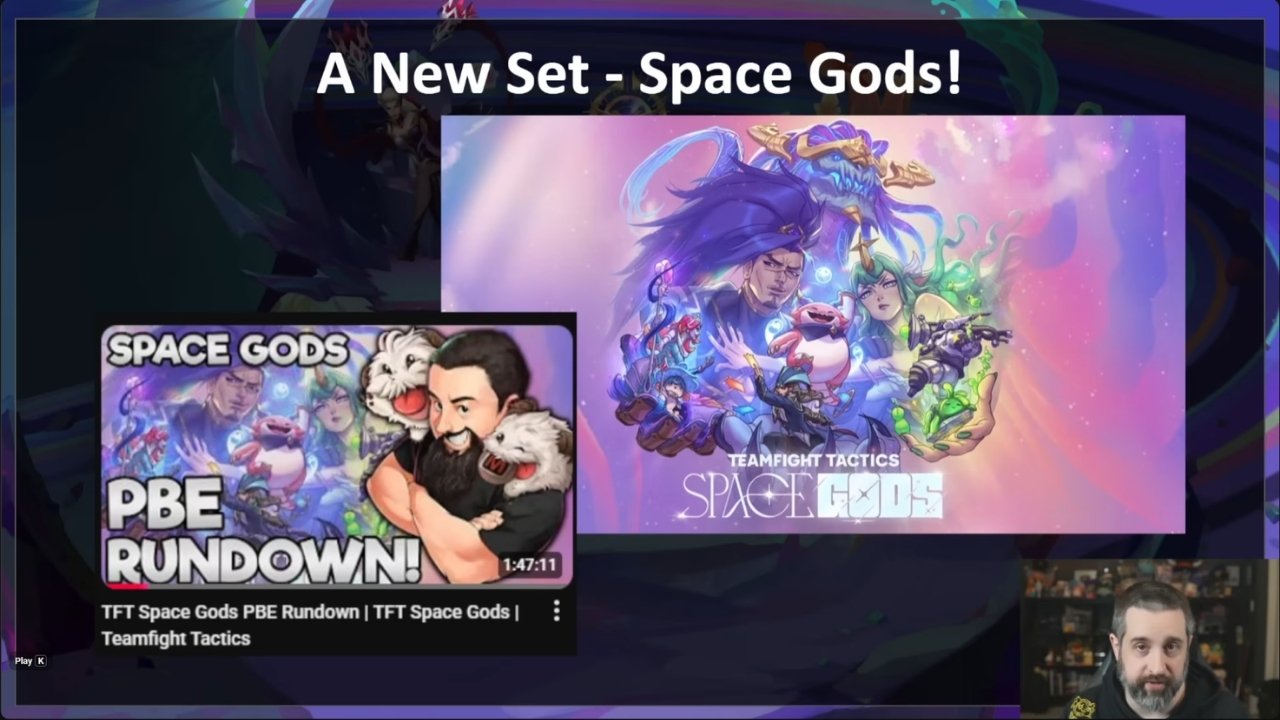
I always waited for Mortdog’s patch note videos. Not just because I wanted to know what was buffed or nerfed, but because of how he talked about the game.
The way he explained decisions showed passion. Even when I disagreed with a change, I could feel that he cared. He cared about TFT as a competitive game. He cared about TFT as a community. He cared about the little details most players never see.
His passion made my love for TFT stronger.
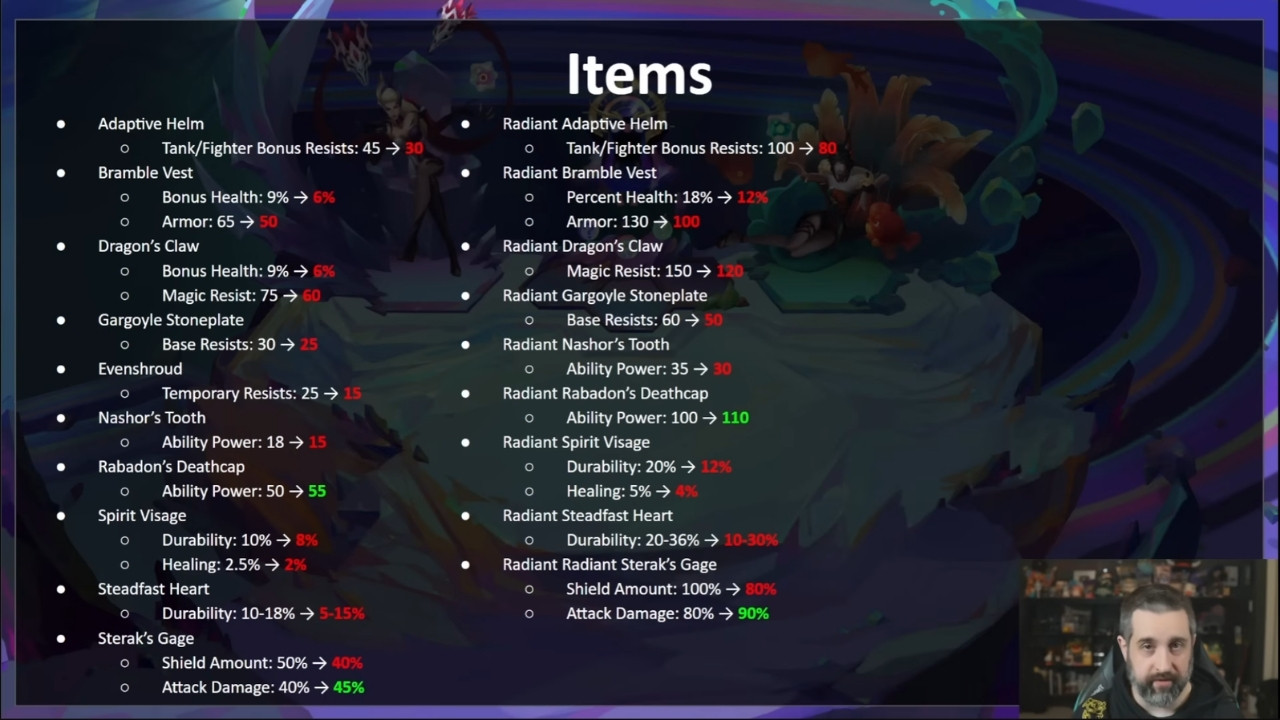
That is the thing people outside this community may not understand. Mortdog did not just communicate information. He transferred passion. He made balance changes feel like part of an ongoing conversation instead of a cold product update.
He made TFT feel like a game being built by people who actually played it, argued with it, suffered with it, and loved it.
For me, those patch note videos were part of the TFT experience. They were not extra content. They were part of the ritual. A new patch did not fully feel real until Mortdog talked through it.
Now that ritual is gone.
The Living Breathing Bridge Between Developers and Players
Frodan said something in his video that stuck with me. He talked about how Mortdog felt like one of us because he actually walked the walk. He played ladder. He got tilted. He went through the same pain points as the rest of the community.
That made the relationship different.
Mortdog was not some executive voice from a distance. He was in the trenches.
That is rare.
And now it is gone.
There was something comforting about knowing that the person helping shape TFT also had to live with TFT. He knew what it felt like when something was overtuned. He knew what it felt like when ladder got frustrating. He knew what it felt like when the meta became exhausting.
That did not mean every decision was perfect. It did mean the game felt cared for by someone who understood it from the inside.
The 6 AM Story That Says Everything
Necrit also brought up a story that says a lot about who Mortdog is. He said that in one video, when he talked about writing lore for TFT and going to Riot headquarters, he remembered seeing Mortdog working alone in an empty office at around 6 AM.
That image is hard to forget.
A quiet office. Early morning. Nobody around. Mortdog already working.
That is not a random detail. That is the kind of detail that explains why players felt his dedication.
You cannot fake that kind of commitment for seven years. You cannot fake it through patch rundowns, streams, events, Reddit replies, balance discussions, community backlash, and endless set cycles.
At some point, the mask would fall if it was only corporate performance. But with Mortdog, it never felt like a mask. It felt like obsession, discipline, and love for the game.
That is why this departure feels so painful. It is not just that a developer left. It is that one of the most visibly dedicated people behind TFT is no longer there.
What Does Mort’s Departure Mean for TFT
Mortdog leaving Riot Games, does not automatically mean TFT is over. I know that. TFT is bigger than one person. The team is bigger than one voice. There are still talented developers like Kent working on the game, and it would be unfair to erase their work just because Mortdog became the most visible figure.
But it would also be dishonest to pretend nothing has changed.
Frodan made a fair point when he said that if TFT cannot survive without Mortdog, then the game was always structurally vulnerable. He also warned people not to attack the remaining developers, and he is right. They did not personally create this moment for us to be angry at them. They are also probably losing a mentor, a colleague, and a friend.
So this is not me saying TFT is dead.
But something has changed.
Frodan said the current team can still do good work, and I believe that. But his bigger worry was about the future: the leadership, the communication, the long-term vision, and whether TFT can still feel as personal without Mortdog.
That is the part I keep thinking about.
Because without Mortdog, TFT does not only lose a designer. It loses one of its clearest emotional anchors.
His Legacy Is More Than TFT Itself
Mortdog’s legacy is not just that he worked on TFT. It is that he helped define what TFT felt like.
That is a much bigger thing.
Plenty of developers work on great games. Far fewer become part of the emotional identity of those games. Mortdog became that for TFT because he was visible, honest, stubborn, passionate, and deeply involved in the community.
Necrit called him the “grandfather of TFT,” and I understand why.
It does not mean he alone created everything. It means he became the person people associated with the game’s growth, mistakes, personality, and soul.
When TFT left beta and players wondered what would happen next, Mortdog was there answering questions about balance, sets, and the future. Slowly, he became “the TFT guy.”
And for me, he stayed that way.
That is the legacy.
Not just systems. Not just sets. Not just mechanics. Not just balance changes.
His legacy is that for years, TFT felt like it had a human voice behind it. A voice that could be blunt, passionate, defensive, funny, wrong, right, tired, or excited, but always present.
That is why losing him from TFT feels so personal.
Will TFT Feel Like Every Other Live-Service Game Now?
Without him, will TFT just become another live-service game where we read official patch notes, watch calendar updates, and scream into the void when something feels wrong?
Mortdog made TFT feel human. He was not perfect. Sometimes he pushed back too hard. Sometimes he got frustrated with the community. Sometimes he was wrong. Frodan admitted that too.
But Frodan also pointed out something important: when Mortdog was wrong, he could walk it back. He tried to explain. He tried to educate. He tried to help players understand the process, even when the process was messy.
That transparency was special.
It spoiled us a little, honestly. Maybe we did not always realize how good we had it. We had a senior developer who would talk through balance, design, mistakes, player frustration, and future ideas in a way most games never get.
We had someone who made the wall between players and developers feel thinner. Now that wall feels like it is getting taller again. And I hate that feeling.
What Does the Future Look Like for Mortdog?
The other bittersweet part is what comes next for him.
Mortdog said that while he was on sabbatical, because he is apparently terrible at relaxing, he started making his own small indie game. He said it was around two months into development, already had some early playtesting, and was maybe 20 to 30 percent done. His goal is to release it as a full game.
That detail feels painfully Mortdog.
Even during a sabbatical, he was still making something. Still testing ideas. Still keeping his design skills sharp. Still building.
He also said he is keeping his eyes open for other opportunities, whether that means working at another studio, doing his own thing, or finding a proper way to create content around game development.
Part of me is excited about that.
If anyone deserves to make something of his own, it is him. If anyone has earned the chance to build a game without carrying the entire emotional weight of a massive community on his shoulders, it is him.
And if he makes a game, I will absolutely pay attention. Not because I expect it to be TFT, but because I trust the way he thinks about games.
Still, selfishly, I am sad.
Because as exciting as his future might be, TFT without Mortdog still feels wrong right now.
Coming to Terms: The Version of TFT We Knew Is Over
Mortdog leaving Riot means the version of TFT I knew is over.
Not the game. Not the board. Not the ladder. Not the augments, traits, sets, comps, patch cycles, or late-night queues. Those things will continue.
But the era where I could wait for a Mortdog patch video and feel like the game was being explained by someone who loved it as much as I did?
That era is over.
That hurts more than I expected.
Maybe because TFT was never just a game for me. During some of the hardest years of my life, it was one of the few things that gave me routine. It gave me distraction when I needed distance from stress. It gave me something to think about when I did not want to think about everything else.
And Mortdog was part of that comfort.
His videos, his explanations, his passion, his presence, all of it made the game feel steady.
So when I say this news broke me a little, I mean it.
It feels like losing a familiar voice in a room I have been sitting in for seven years.
Community Skepticism About TFT Without Mortdog
I do not know what TFT becomes from here. I do not know if the next era will still feel special. I do not know if I will adjust, or if the game will feel a little emptier every time I queue up.
Maybe a great set will come and remind me why I love this game. Maybe the team will find a new communication style that works in its own way. Maybe Mortdog’s influence will remain through the people he mentored and the systems he helped build.
I hope so.
But right now, I just feel sad.
I feel grateful too. Grateful for the years. Grateful for the patches. Grateful for the explanations. Grateful for the passion that made me love TFT more deeply.
Grateful that someone cared enough to work at 6 AM, talk to angry players, host events, make videos, stream ladder, and keep trying to make the game better.
Thank You Mortdog
For me, the news that stated Mortdog left Riot Games is bitter-sweet. While I am sad that one of my favorite games will never be the same, at the same time it gives me something to be hopeful for. Mortdog is not gone from gaming. He is not gone from life. He is just no longer with TFT.
But for those of us who loved TFT just because of him, that “just” is doing a lot of heavy lifting.
Thank you, Mortdog.
For the game. For the passion. For the patch notes. For making TFT feel alive when I needed it most.
I do not know how to feel about TFT without you yet.
But I know this: for seven years, you made the game better. And for some of us, you made life a little easier too. I will definitely play the game Mortdog is making. To end this piece I will use the words Mortdog uses: “Until next time, take it easy”.














 English (US) ·
  French (CA) ·
  French (FR) ·